
A fixed VHP room can be validated against ISO 22441 only after someone has confirmed that the standard actually applies to what is being validated. Project teams sourcing a pharmaceutical airlock, suite, or biosafety laboratory cycle sometimes find the standard cited in supplier documentation as if it settles the question of compliance. Whether it does depends on what the standard was written to cover, and what the room project still has to establish on its own.
ISO 22441 Covers Medical-Device VH2O2 Sterilization Processes
ISO 22441:2022 defines a framework for low-temperature vaporized hydrogen peroxide sterilization. Its scope, as the standard itself states, addresses the development, validation, routine monitoring, and control of that sterilization process where it is applied to medical devices. This is a process standard built around a specific category of product: discrete devices subjected to a defined sterilization cycle with the goal of achieving a sterility outcome for that device.
That framing matters because it shapes every assumption embedded in the standard’s guidance. A medical-device sterilization cycle deals with a known load type, typically packaged items with defined material compatibility, placed in a chamber or enclosure built for that purpose. The validation approach that ISO 22441 describes, covering cycle development, routine monitoring, and control, is built around this load-and-chamber relationship. Where the load, the enclosure, and the purpose match that description, the standard’s methodology is directly relevant.
Where they do not, the methodology does not automatically transfer. A fixed VHP room is not a sterilization chamber for packaged devices. It is a space, often with irregular geometry, penetrations, fixed equipment, and materials that were never selected with vaporized hydrogen peroxide compatibility in mind. The purpose of treating that room is also different: in a pharmaceutical or biosafety context, the goal is typically biodecontamination of a surface or environment, not sterility assurance for a manufactured device moving through a defined process step.
This distinction is not a matter of degree. It is a difference in what is being treated, what outcome is being sought, and what evidence demonstrates that the outcome was achieved. A project team evaluating a VHP system for a room should ask whether the supplier’s reference to ISO 22441 describes the chemistry and general process science behind hydrogen peroxide vapor generation, or whether it is being used to suggest that the room cycle itself is already validated because the generator’s development process referenced the standard. Those are different claims, and only one of them is supported by the standard’s stated scope.
Room Biodecontamination Falls Outside That Automatic Applicability
| Application context | What ISO 22441 establishes | What it does not establish automatically |
|---|---|---|
| Low-temperature VH2O2 sterilization for medical devices | A framework for process development, validation, routine monitoring, and control | Suitability for a pharmaceutical room or biosafety laboratory cycle |
| Fixed-room biodecontamination | No automatic applicability from the medical-device sterilization scope | That the room cycle is compliant, validated, or suitable for its specific load |
The practical consequence of the medical-device scope is that a room-level decontamination cycle carries no automatic presumption of compliance, validation status, or suitability for a specific load simply because the equipment generating the vapor was developed with reference to ISO 22441. The standard supplies a disciplined framework for an adjacent process; it does not extend that framework’s conclusions to a different application context by reference alone.
This separation is easiest to see by comparing what changes between the two contexts. A medical-device sterilization cycle treats a load with known geometry, known material properties, and a defined chamber environment, so cycle development can rely on established relationships between vapor concentration, exposure time, and lethality for that load. A fixed room introduces a different set of variables: surface materials that vary across walls, fixtures, equipment housings, and seals; airflow patterns shaped by the room’s mechanical design; and a treatment objective that may be defined as log-reduction biodecontamination of surfaces rather than sterility assurance of a packaged item. Where these variables differ from the medical-device case, the cycle parameters, monitoring approach, and acceptance logic have to be established for the room itself, not inherited from a standard written around a different load.
This does not mean the standard is irrelevant to room projects. The general process science behind vapor generation, condensation behavior, and the relationship between environmental conditions and microbial inactivation is common ground. What does not carry over automatically is the conclusion that a given room cycle is compliant, validated, or fit for its specific load, purely because the generator referenced in the project was developed against ISO 22441. The project still needs its own evidence that the specific room, with its specific load and configuration, achieves the decontamination outcome it claims.
A project team should treat any supplier statement that invokes ISO 22441 for a room application as a statement about the generator’s development background, not as a substitute for room-specific validation. The question to ask is direct: what evidence exists for this room, this load, and this cycle, independent of the standard’s medical-device scope.
Project Inputs the Standard Does Not Define for a Fixed VHP Room
| Project decision area | Inputs the room project must define |
|---|---|
| Room-cycle scope | Containment boundary and intended decontamination purpose |
| Cycle application | Load and distribution |
| Cycle control | Monitoring and aeration |
| Completion decision | Release criteria |
Because ISO 22441 does not define a fixed-room cycle, the project team has to supply the inputs that make such a cycle meaningful. These inputs are not generic checkboxes; each one changes how the cycle is designed and how its success is measured.
The containment boundary and the intended decontamination purpose come first, because they determine what “success” means for this room. A boundary defined around a single enclosure differs from one that includes connected transfer equipment, and a purpose defined as terminal decontamination before maintenance access differs from one defined as routine between-batch treatment. Where the boundary or purpose shifts, the acceptance criteria for the cycle shift with it, because the question being answered changes from “is this enclosure ready for the next production step” to “is this space safe for personnel entry.”
Load and distribution follow from the boundary definition. A room with dense equipment, shadowed surfaces, or materials with different vapor absorption characteristics requires a different distribution strategy than an empty shell. If the load configuration changes between validation and routine use, for example through added equipment or altered layout, the distribution pattern validated earlier may no longer represent the as-used condition, and the project needs a method for recognizing when that threshold has been crossed.
Monitoring and aeration are where the cycle’s internal control logic lives. Monitoring establishes whether the vapor concentration and exposure achieved across the room’s distribution pattern meet the defined target, using the kind of biological and chemical indicator placement that a room-level validation protocol has to specify for itself. Aeration determines how the room returns to a condition suitable for re-entry or resumed operation, and the criteria for judging that return are a project decision, not a standard’s default.
Release criteria close the loop: they define what evidence is checked before the room is declared ready, and whether that evidence is indicator-based, sensor-based, or a combination suited to the room’s specific risk profile. A portable generator setup used for a BSL-3 or BSL-4 space will need release criteria matched to that containment context, distinct from criteria appropriate to a GMP transfer enclosure. None of these five inputs is supplied by ISO 22441; all five are supplied by the project.
GMP and Biosafety Context Must Be Established Separately
| Project context | Evidence contribution | Boundary to retain |
|---|---|---|
| GMP qualification | The user requirements specification is a validation-life-cycle reference, and design qualification verifies design compliance with those requirements | Exact qualification stages and acceptance criteria remain project-specific |
| Biosafety | Site risk assessment informs proportionate control measures | Biosafety guidance does not replace national rules or the site-specific risk assessment |
Once the room-specific inputs are defined, the project still sits inside a regulatory or biosafety framework that governs how that evidence is organized and accepted. ISO 22441 does not substitute for either framework, and the two frameworks are not interchangeable with each other.
In a GMP context, EudraLex Volume 4 Annex 15 treats the user requirements specification as a reference point carried through the validation life cycle, and requires design qualification to verify that the design complies with those requirements. This means the room’s VHP cycle parameters, monitoring approach, and release criteria need to trace back to requirements the project owner defined at the outset, and design qualification is the stage where that traceability gets checked. The exact qualification stages that follow, and the acceptance criteria attached to each, remain specific to the project; Annex 15 sets the life-cycle logic, not a fixed template that applies identically to every room.
In a biosafety context, the governing logic is different. The WHO Laboratory Biosafety Manual describes an evidence- and risk-based approach in which a site risk assessment informs proportionate control measures. Rather than tracing back to a user requirements specification, the biosafety case for a given cycle rests on whether the controls match the risk the assessment identifies for that specific laboratory and its specific agents and procedures. This is summary-level guidance; it does not replace national regulatory requirements or the site’s own risk assessment, both of which carry authority the manual itself does not claim.
A project that sits across both contexts, such as a pharmaceutical facility with a biosafety-rated area, cannot resolve its evidence plan by picking one framework and ignoring the other. The GMP life-cycle logic and the biosafety risk-based logic answer different questions: one asks whether the design meets defined requirements, the other asks whether controls are proportionate to assessed risk. A project team should identify early which framework, or which combination, governs their specific room, because that determines what documentation structure the VHP cycle evidence needs to fit into before QUALIA or any other supplier’s equipment selection can be reviewed against it.
Evidence Needed to Validate the Actual Room Cycle
Bringing the earlier points together, the evidence that actually validates a fixed-room VHP cycle has to come from the room itself, assembled against whichever framework governs the project, rather than inherited from the sterilization standard behind the generator.
The starting point is a clear statement of the containment boundary and decontamination purpose, because every other evidence element is scoped against that definition. From there, the load and distribution analysis needs to reflect the room’s actual configuration, including the materials, fixtures, and geometry present when the cycle runs in practice, not an idealized or earlier version of the layout. If the room’s configuration changes after initial validation, that distribution analysis needs to be revisited, because a cycle proven effective for one load arrangement does not carry forward automatically to a materially different one.
Monitoring data, generated through the biological and chemical indicators placed according to the room’s own validation protocol, demonstrates that the vapor concentration and exposure achieved at each monitored location met the defined target across the distribution pattern, including locations the project identified as harder to reach. Aeration data demonstrates that the room returns to the condition the release criteria require before re-entry or resumption of operations. Together, these form the basis for the release decision, which should be defined in terms specific to the room’s purpose, whether that purpose is routine between-use treatment or decontamination ahead of a maintenance or entry event.
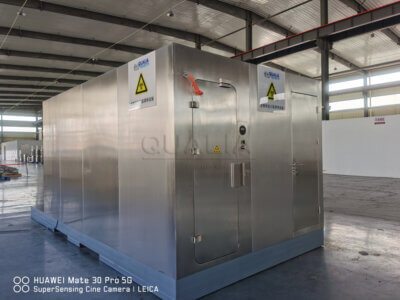
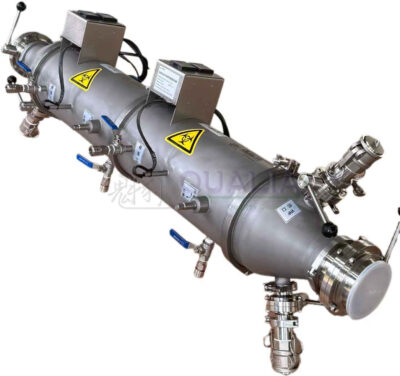
This evidence package sits inside the GMP or biosafety framework established for the project: traceable to a user requirements specification and checked through design qualification where GMP governs, or justified against a site risk assessment where biosafety governs. A supplier’s generator, such as the kind of VHP hydrogen peroxide generator used in a room-level setup, contributes the equipment capability and interfaces that make this cycle physically achievable, but the validation case itself is built from the room-specific load, distribution, monitoring, and aeration data described here, not supplied by the equipment’s own development history. When a project team brings its containment boundary, load configuration, and governing framework into a configuration or quotation discussion, that information is what allows the equipment selection to be matched to the cycle the room actually needs to run, rather than to a generic specification disconnected from the project’s own evidence plan.
Frequently Asked Questions
Q: Does ISO 22441 certification or alignment automatically validate a fixed VHP room cycle?
A: No. ISO 22441 addresses low-temperature vaporized hydrogen peroxide sterilization processes for medical devices; a fixed-room project still needs evidence that its actual cycle is suitable for the room boundary, intended purpose, load, and site requirements.
Q: How should a project team use ISO 22441 when planning room biodecontamination?
A: Use it only for the process-development, validation, routine-monitoring, and control concepts that are relevant to the project. Record separately how the room-specific user requirements, applicable GMP or biosafety context, site risk assessment, and national rules shape the evidence plan.
Q: What should be defined before evaluating a fixed VHP generator for a room project?
A: Define the containment boundary, intended decontamination purpose, expected load and distribution conditions, monitoring approach, aeration needs, and release criteria. These inputs create the basis for comparing a proposed system with the actual room-cycle requirements.
Q: Can selecting the generator close the validation gap left by ISO 22441’s scope boundary?
A: No. Product selection cannot by itself demonstrate that a pharmaceutical room or biosafety laboratory cycle is compliant, validated, or suitable for its specific load; the proposed system must be assessed against the project’s user requirements and evidence plan.
Q: What changes when both GMP and biosafety considerations apply to the same room?
A: The evidence plan must address both contexts. GMP qualification should trace the design to the user requirements, while the biosafety risk assessment should inform proportionate controls; project-specific acceptance criteria and applicable national rules still need to be established.