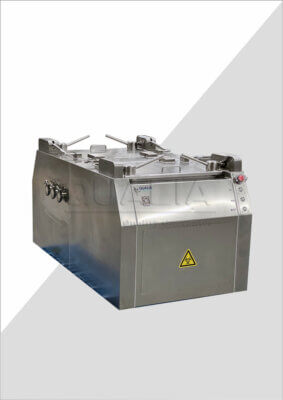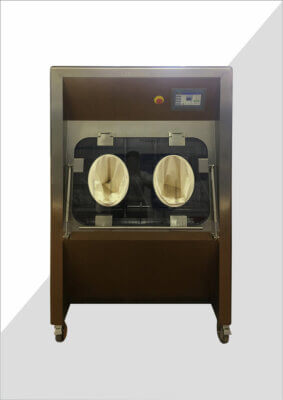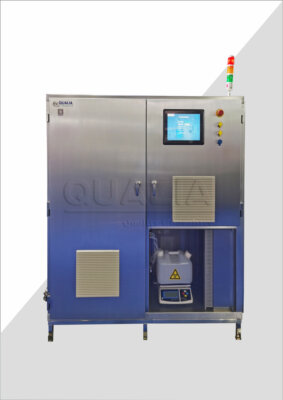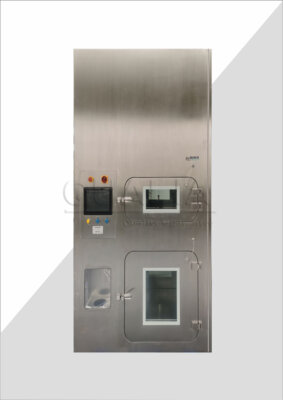

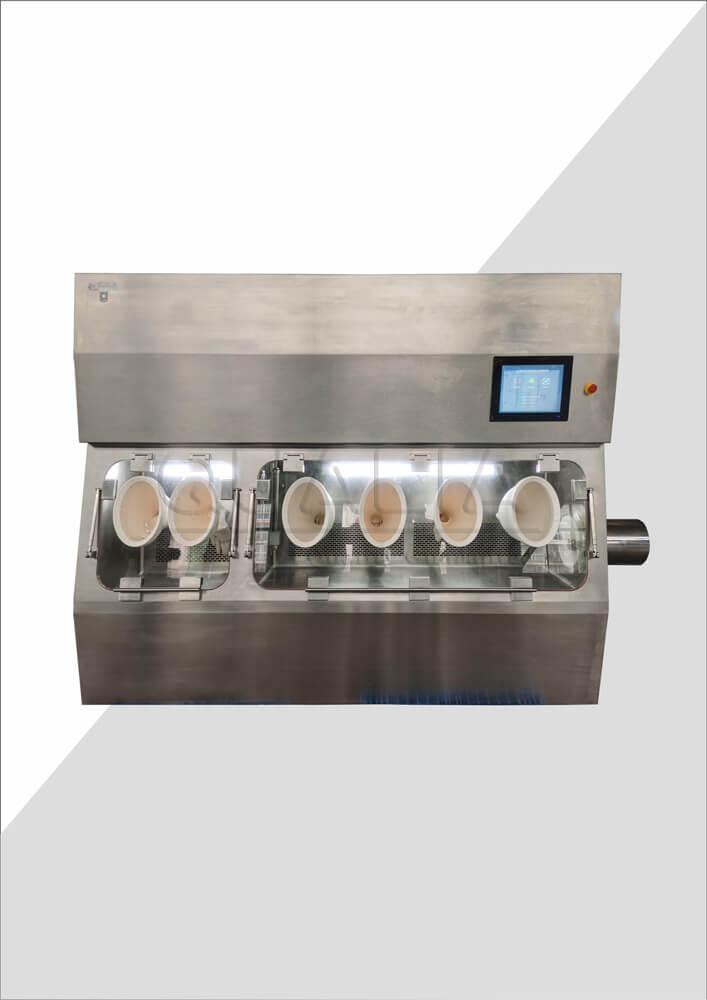
Different Types of Isolator
| Isolators | Type |
| Aseptic Isolator / Sterility Test Isolator (Positive Pressure) | ORBS (Open Type) |
| CRBS (Closed Type) | |
| Biosafety Isolator (Negative Pressure) | P3/P4 Biosafety Protective Isolator (Closed Type) |
| OEB Protective Isolator (Closed Type) |
What is the Biosafety Isolator?
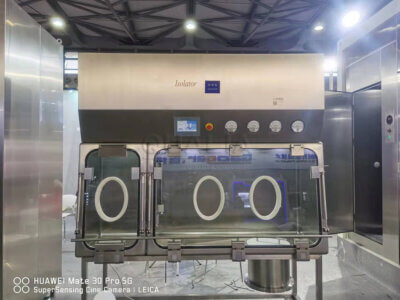
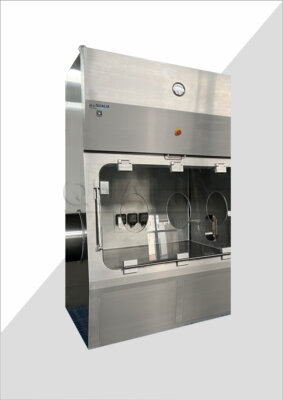
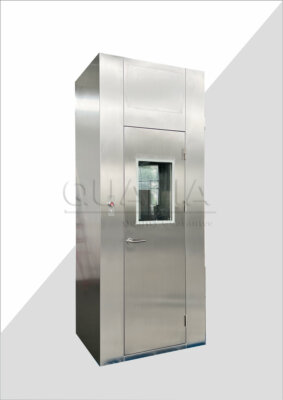
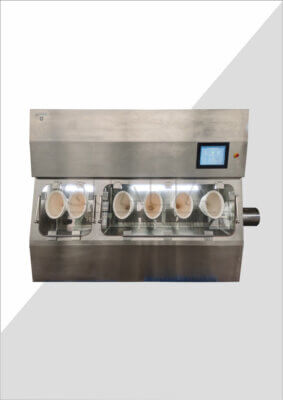
The “Biosafety Isolator” is a proprietary enclosed isolation system developed and manufactured by Shanghai QUALIA. It is designed for OEB production protection as well as for sterile production, aseptic experiments, biological experiments for biosafety, production involving sensitizing/toxic substances, and the breeding of Specific Pathogen Free (SPF) level laboratory animals.
Features of QUALIA's Biosafety Isolator
The Biosafety Isolator, developed with precision, upholds internationally recognized standards and caters to a variety of safety requirements with superior construction and integrated control systems.
- Sterility and Safety:
- Provides ISO Class 5 unidirectional total exhaust airflow, ensuring a sterile work area throughout the manufacturing process.
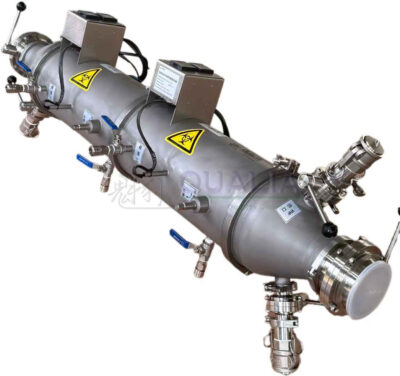
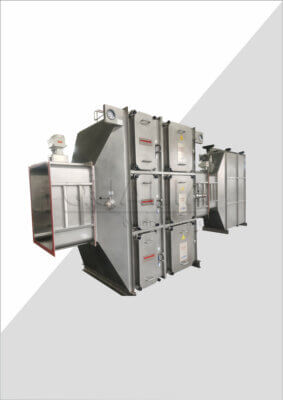
- Equipped with a dual exhaust HEPA filter through the Bag-In Bag-Out (BIBO) system, minimizing accidental exposure during filter replacement.
- For added safety, protective handles are ensured on doors and the option to real-time monitor the inner chamber’s air tightness with alarm systems exceeding set values, safeguarding against unexpected exposure risks.
- In case of special risks or emergency faults like door seal or glove damage leading to isolator negative pressure imbalance, an automatic protection system activates to maintain inward airflow.
- Customization and Compliance:
- High containment level with pressure decay test performance of +1000pa for 20 minutes with no leakage below +750pa.
- Stainless steel structure with superior full-welding, fine detail treatment, and interior weld surface roughness up to 0.3um.
- Adaptive exhaust systems that could be separately configured to user needs, including options for in-situ decontamination/scanning devices and achieving sterile A-grade environments.
- Innovation and Integration:
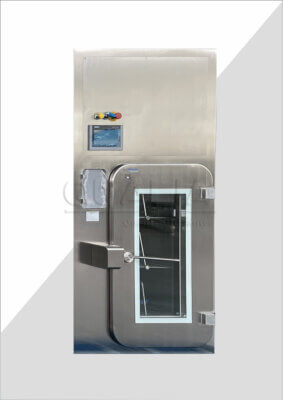
- Standalone control modules for easier electrical maintenance, reducing time and cost, with the option to choose Siemens industrial computers or touch screens for operation and parameter monitoring.
- SCI Class III isolated units feature plug-and-play capabilities, ideal for clients without access to 100% duct systems, achieving pressures up to -250Pa with optional integrated fan exhaust module systems.
- Design and Verification:
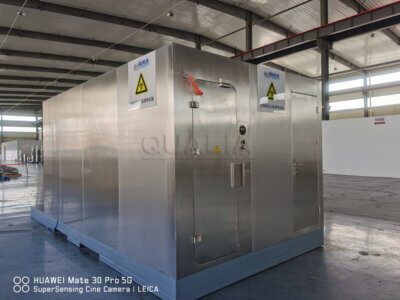
- Modular design for large isolators allows for on-site assembly, avoiding unnecessary transportation issues.
- Built-in VHP generators are an option for all isolators, ensuring operational safety and sterilization reliability, sharing a control system with the isolators for single-point validation and maintenance.
- Professional verification documentation and services are provided with all validation process control achievable at every node.
Compliance with Standards:
- Meets international cGMP standards.
- Conducts Class 3 pressure tests as per ISO 10648-2.
- Maintains ISO 14644-1 air cleanliness at an ISO 5 level.
- Offers quick purging times.
- Complies with USP <797> and <800>.
Biosafety Isolator Gallery
QUALIA Biosafety Isolator Multi-Station Modular_1
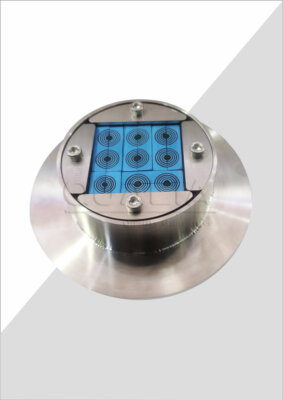
QUALIA Biosafety Isolator's Gloves Details_1
QUALIA Biosafety Isolator Multi-Station Modular 2_1
QUALIA Biosafety Isolator Multi-Station Modular 1_1
QUALIA Biosafety Isolator Installation Site Processing 3_1
QUALIA Biosafety Isolator Installation Site Processing 2_1
QUALIA Biosafety Isolator Installation Site Processing _1
QUALIA Biosafety Isolator inside view with Bio-safety lsolation Damper Top installation in Integrity testing_1
QUALIA Biosafety Isolator FAT Integrity Test_1