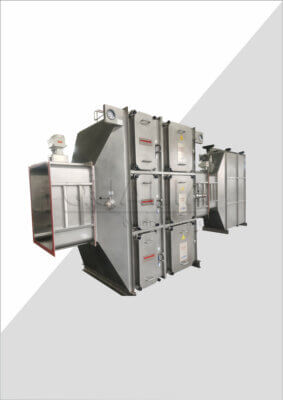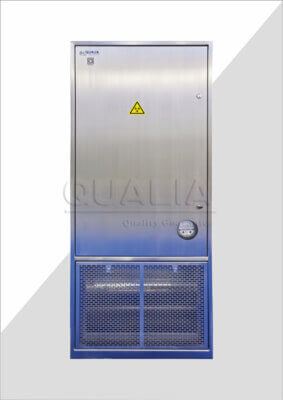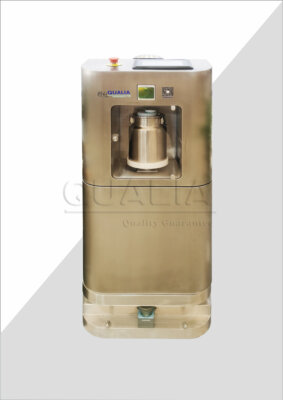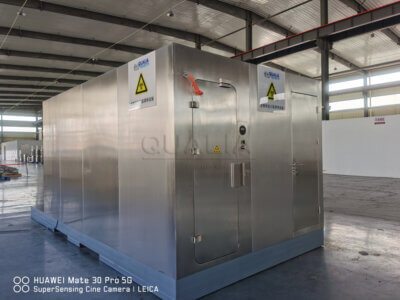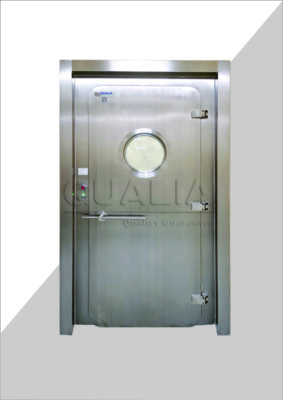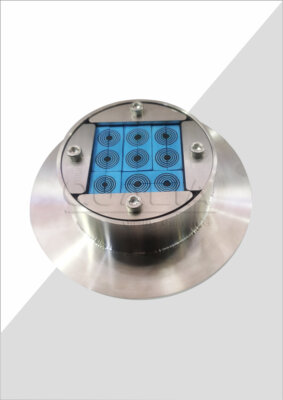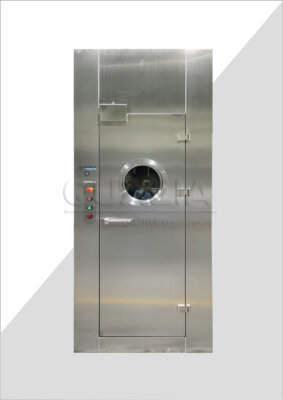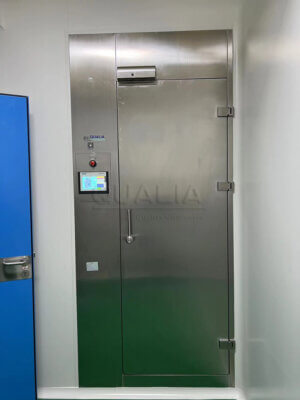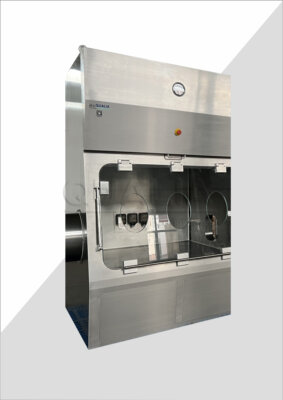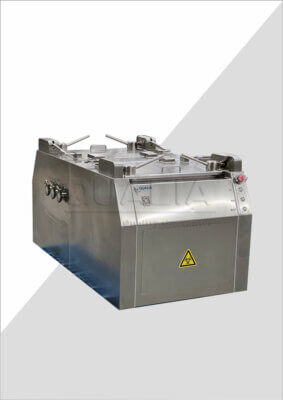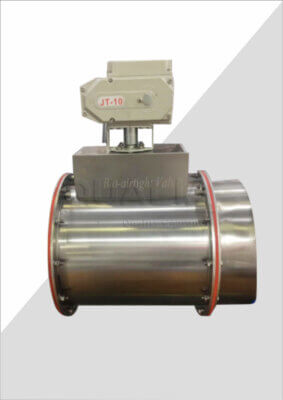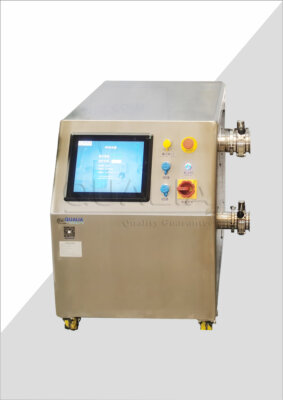

When an HPAPI isolator or cRABS loses its boundary, the question is not whether the system can recover but whether the project has already defined what “recovery” means before the event happens. A control-system fault, a damaged glove, or a lost transfer connection produces exposure risk the moment the barrier stops performing as designed — and the response that follows is only as good as the plan written before the failure, not the judgment applied during it.
Define Credible Boundary Failures and Detection Signals
A boundary failure plan starts by naming the failures the project treats as credible, not by describing containment in general terms. Loss of extraction, a damaged glove or seal, a disconnection during transfer, a spill inside the enclosure, and a control-system fault each represent a different mechanism by which the barrier between hazardous material and the operator or environment stops functioning as intended. Treating these as a single category of “containment failure” removes the distinctions a response plan depends on, because the detection signal, the immediate consequence, and the correct safe state differ by mechanism.
Loss of extraction changes the pressure relationship the enclosure relies on to keep contaminated air moving inward rather than outward; a damaged glove or seal creates a direct breach at a known location; a transfer disconnection exposes an interface that was closed a moment before; a spill changes the surface and material distribution inside the enclosure without necessarily changing the boundary itself; a control-system fault may affect monitoring, interlocks, or airflow logic without a single identifiable physical breach. Each of these produces a different detection signature — a pressure or airflow alarm, a visual observation, a monitoring excursion, or a logic fault reported by the control system itself — and the plan has to specify which signal corresponds to which credible failure so that whoever is present can identify the event rather than diagnose it from first principles under pressure.
Where the governing objective is operator and environmental protection rather than product sterility, the credible-failure list is built around exposure pathways, not around product contamination pathways. This matters because an aseptic barrier system and a containment system can share mechanical features — glove ports, transfer devices, pressure control — while the failure that matters for one is not the failure that matters for the other. A pressure excursion that threatens product sterility in an aseptic context is evaluated against a different consequence than the same excursion in an HPAPI containment context, where the concern is material escaping toward the operator or the room. The project’s exposure-control basis, not the equipment category alone, determines which failures belong on the credible list and which detection signals the plan treats as triggering events rather than routine alarms.
Set the Safe State for Airflow, Power, Seal, and Transfer Losses
Once a credible failure is detected, the plan has to specify what the system and the operator do next, and that safe state is not the same action for every failure type. Stopping all motion is the correct response where mechanical movement would extend a breach or disturb settled material, but it is the wrong response where maintaining controlled airflow depends on equipment that must keep running to preserve a negative pressure relationship. A plan that defaults to a single safe-state instruction — stop everything, evacuate everything — removes the differentiation the actual engineering requires.
Where the failure is loss of extraction, the safe state generally depends on whether an alternate air path or backup extraction exists to preserve directional airflow; if it does, the priority is maintaining that airflow rather than immediately opening the enclosure. Where the failure is a damaged glove or seal, the safe state centers on isolating the breached section — sealing it, bagging it, or otherwise interrupting the direct pathway — without necessarily affecting airflow elsewhere in the system. Where the failure is a transfer disconnection, the safe state depends on whether material was in transit at the moment of failure, because holding material in place until the connection can be assessed is a different action than continuing a transfer that was already underway. Where the failure is a control-system fault, the safe state may require isolating the affected section from the rest of the system while preserving manual or backup control elsewhere, since a logic fault in one part of the control architecture does not necessarily compromise the physical boundary.
The safe state a project adopts also depends on whether the equipment is an isolator or a cRABS, because the degree of physical separation from the surrounding room differs between these configurations and changes what “isolating a section” can mean in practice. A system with full physical separation from the room offers different isolation options than a system that maintains a more open relationship with the surrounding environment, and the safe-state logic has to be written against the specific equipment configuration rather than against containment equipment as a general category. Confirming which safe-state logic applies to which failure, and under which equipment configuration, is project-specific work that has to happen before the failure occurs, not during it.
Limit Intervention by Role, Protective Controls, and Monitoring
| Intervention decision | What the response plan must predefine | Karar sınırı |
|---|---|---|
| Authorized intervention | Who may intervene for each credible failure | Intervention remains within the project-defined role boundary |
| Protective controls | Which protective controls are required for the planned intervention | The required controls depend on the failure and exposure-control basis |
| İzleme | What monitoring is required during the intervention | Monitoring must be defined for the specific recovery scenario |
| Escalation | When evacuation or specialist recovery replaces routine operator action | Routine intervention stops at the predefined escalation point |
Once a safe state is reached, the next decision is who acts, and a response plan that leaves this open invites exactly the kind of improvised judgment that increases exposure risk during the event with the least margin for error. The plan has to predefine, for each credible failure, which role is authorized to intervene, because a routine operator addressing a minor glove inspection is a different authorization boundary than a specialist recovery team addressing a control-system fault that has compromised monitoring across a section of the system.
Authorization alone does not complete the picture. The protective controls required for an intervention change with the failure: a breach affecting a defined area calls for controls matched to that specific exposure pathway, while a system-wide control fault may call for protective measures that address the possibility that monitoring itself cannot be trusted during the intervention. Monitoring during the intervention has to be specified separately from monitoring during normal operation, because the failure that triggered the event may have degraded the very systems that would normally confirm the intervention is proceeding safely.
The point at which routine operator action stops and evacuation or specialist recovery begins is a predefined boundary, not a judgment made in the moment. Where the exposure-control basis treats a failure as recoverable by trained operating staff under defined protective controls, routine intervention continues. Where the same category of failure exceeds the protective controls available to operating staff, or where monitoring cannot confirm the boundary is holding, the plan has to specify that escalation to specialist recovery or evacuation replaces operator action — and that this replacement happens automatically at the predefined point rather than being decided during the event. The underlying question for the project team is whether the plan draws this line explicitly for each credible failure, because a plan that leaves escalation to discretion has not actually limited intervention at all.
Structure Cleanup, Decontamination, and Waste Recovery by Scenario
Recovery from a boundary failure is not a single cleanup procedure applied uniformly; it is a set of actions that differ by what caused the failure and what the material did during it. A spill inside an enclosure that otherwise maintained its boundary presents a different recovery problem than a breach that may have allowed material to reach the surrounding room, because the second scenario requires addressing surfaces and air outside the original enclosure that the first does not.
The decontamination method itself depends on the material and the surfaces involved — a method suited to a contained internal surface may not be appropriate once material has reached external surfaces, fixtures, or air handling components, and a method that addresses surface contamination does not necessarily address material that has entered an airflow path. Waste generated during cleanup also has to be classified according to where the material came from and what decontamination step it has already undergone, because waste recovered from inside a controlled boundary follows a different handling logic than waste generated during an intervention that extended outside that boundary.
Where a transfer disconnection is the triggering failure, the recovery sequence has to account for material that may remain in two separated locations — inside the system and inside the transfer device or container that was disconnected — and each location may require its own assessment before either is declared clear. Where a control-system fault is the triggering failure without a physical breach, the recovery question shifts from material cleanup toward confirming that no uncontrolled release occurred during the period the controls were degraded, which is a verification question rather than a decontamination task.
Structuring cleanup this way means the plan cannot specify “decontaminate and clear waste” as a single step. It has to specify, for each credible failure scenario, what surfaces or volumes are in scope for decontamination, what the decontamination method addresses and does not address, and how resulting waste is classified before it leaves the controlled area. A project team reviewing its own plan should be able to trace each credible failure to its own cleanup and waste pathway rather than finding a single generic procedure applied regardless of scenario.
Verify Repairs, Boundary Integrity, Controls, and Containment Performance
| Verification layer | Kontrol edilecek kanıtlar | What it does not establish alone |
|---|---|---|
| Repair verification | Documented verification that the required repair is complete | Boundary integrity, control function, or containment performance |
| Boundary integrity check | Results against the project-defined boundary method and acceptance criteria | Control function or containment performance |
| Control check | Results against the project-defined control checks and acceptance criteria | Boundary integrity or containment performance |
| Containment performance assessment | Evaluation under a defined scenario and conditions | A universal pass; the scenario, acceptance criteria, and interpretation remain project-specific |
Before a system returns to service, several distinct forms of evidence have to be assembled, and none of them substitutes for another. A repair being complete is not the same claim as the boundary being intact, and the boundary being intact is not the same claim as the control systems functioning correctly, and all three together are not automatically the same claim as the containment performance the project requires.
Repair verification confirms that the specific work identified by the cause assessment has been carried out and documented. This is necessary but narrow: it establishes that a known defect has been addressed, not that the surrounding boundary or control architecture is sound. Boundary integrity checking is a separate activity, assessed against whatever method and acceptance criteria the project has defined for that boundary, and it establishes physical integrity without saying anything about whether the control systems that manage airflow, pressure, or monitoring are functioning as intended. Control checks address that separate question, confirming that the control architecture performs against its own defined criteria, independent of whether the physical boundary has been separately verified.
Containment performance assessment sits above these individual checks. Where a project requires this evidence, it is evaluated under a defined scenario and defined conditions — following the structure described in SMEPAC-based evaluation methodology — and the result applies to that scenario, not as a universal confirmation that the system is safe under every operating condition. A system can pass a repair verification and a boundary check and still require a containment performance assessment before the project considers restart evidence complete, depending on what the exposure-control basis specifies for that type of failure.
The practical implication is that a project team cannot treat any single layer as sufficient. Where the failure involved a physical breach, boundary integrity checking is central but does not confirm control function. Where the failure involved a control-system fault without a physical breach, control checking is central but does not confirm boundary integrity, and a project may still reasonably ask whether containment performance should be reassessed given the degraded period, even without a known breach. What the project needs to define in advance is which layers of evidence are required for which failure category, so that restart evidence is assembled against a known requirement rather than assembled until someone decides it looks sufficient.
Authorize Restart Only After Cause, Deviations, and Evidence Are Closed
| Restart gate | Kapanma kanıtı | Why restart remains blocked |
|---|---|---|
| Cause assessment | Documented assessment of the failure cause | The cause assessment is incomplete or unresolved |
| Cleanup or decontamination | Completion evidence matched to the recovery scenario | Cleanup or decontamination closure is missing |
| Deviation and investigation | Documented deviation, failure investigation, and reported conclusions | The deviation or investigation remains open |
| Technical evidence package | Closed repair, boundary, control, and any project-required containment performance evidence | Evidence has not met the predefined project criteria |
| Final approval | Recorded approval against the project’s exposure-control basis | Restart has not been authorized against that basis |
Restart authorization is the point where every preceding decision converges, and the plan has to treat it as a gate with distinct closure conditions rather than a single sign-off. A documented cause assessment has to be complete, identifying what actually failed and why, because restart without a closed cause assessment risks returning a system to service with an unaddressed failure mode still present. Cleanup or decontamination evidence has to be matched to the specific recovery scenario that applied, confirming that the actions taken correspond to what the failure actually required rather than a generic cleanup step applied without reference to the scenario.
Deviation and investigation records have to be closed in the sense described by Annex 15’s qualification and validation framework — predefined acceptance criteria, documented deviations, a failure investigation, and reported conclusions — because an open deviation means the project has not yet reached a documented conclusion about what happened and whether the response was adequate. The technical evidence package assembled from repair verification, boundary integrity checks, control checks, and any required containment performance assessment has to meet the acceptance criteria the project defined before the failure occurred, not criteria judged acceptable after the fact.
Final approval is recorded against the project’s exposure-control basis specifically, which means the approval references the framework that governs acceptable exposure for that HPAPI and that system, not a general statement that the equipment appears to be functioning. Where the cause assessment points to a mechanical or seal-related failure, the evidence package centers on boundary integrity and repair verification, with control checks confirming nothing secondary was affected. Where the cause assessment points to a control-system fault, the evidence package centers on control checks and a documented determination of whether the degraded period allowed any uncontrolled release, with containment performance assessment considered where the project’s exposure-control basis calls for it following that category of event.
A project team preparing for this stage benefits from having the restart gate defined before any failure occurs, including which roles sign off on which closure condition and what evidence format the review expects — because when QUALIA’s technical and application teams work with a project to configure an OEB4/OEB5 izolatör or cRABS, the boundary methods, control architecture, and interfaces that system presents become part of what the project’s restart evidence has to address, and defining that evidence structure in advance is what allows a failure, when it occurs, to end in a documented restart rather than an open question about whether the system is actually ready to run again.
Sıkça Sorulan Sorular
Q: What should be defined before an HPAPI containment upset occurs?
A: Prepare a scenario-based response for each credible failure, including the safe state, authorized roles, protective controls, monitoring, escalation point, recovery approach, and restart evidence. The plan should be tied to the project’s exposure-control basis rather than treated as a generic emergency procedure.
Q: When should routine operator intervention stop?
A: Routine intervention should stop at the predefined escalation point for that failure scenario. If the event falls outside the authorized role boundary or the required protective controls and monitoring cannot be maintained, the response should move to the project’s evacuation or specialist-recovery route.
Q: Can one recovery procedure cover a loss of extraction, a damaged glove, and a transfer disconnection?
A: A common response framework can cover them, but the actual safe state and recovery steps need to be defined by scenario. Each failure should be checked for the appropriate motion, airflow, isolation, material-hold, cleanup, decontamination, and waste decisions before the procedure is approved.
Q: Is a completed equipment repair enough evidence to restart operation?
A: No. Restart also requires documented cause assessment, scenario-appropriate cleanup or decontamination, closed deviation and investigation work, boundary and control checks, any project-required containment performance evidence, and final approval against the exposure-control basis.
Q: Does a successful containment performance assessment clear every future operating condition?
A: No. It supports only the defined scenario and conditions under which the assessment was performed. The team should compare the result with project-specific acceptance criteria and confirm whether the recovered operating scenario requires additional evidence before restart.