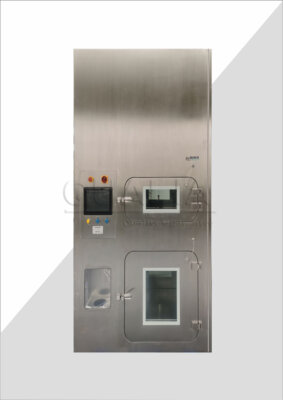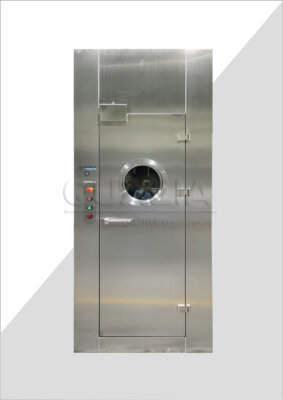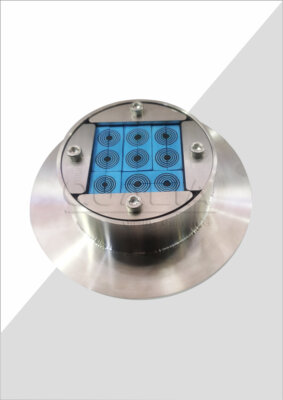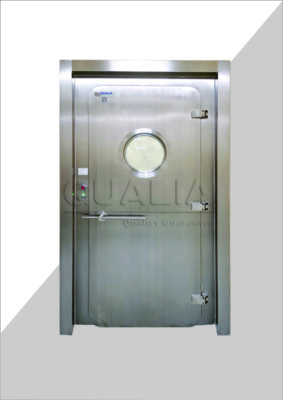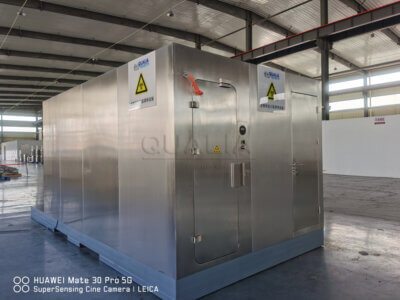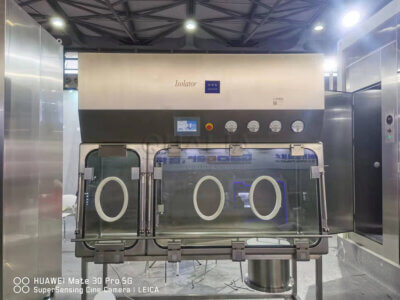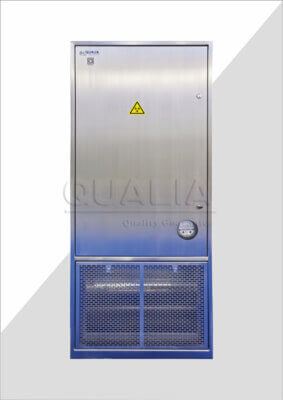
A Vacu-Pass cord and cable port sits at the boundary between two disciplines that RFQ documents often blur: the wall system that establishes the containment plane, and the service schedule that defines what actually has to pass through it. When bidders quote against a nominal opening size instead of a defined cable and conduit list, the resulting prices are not comparable, and the installed transit can end up undersized, over-specified, or mismatched to the wall detail it was meant to seal. Getting the RFQ right means separating what the project must specify from what the supplier is being asked to configure.
Service schedule inputs for a comparable transit quotation
A cable or conduit port is priced against a defined population of penetrations, not against a single opening dimension. The number of cores, their outside diameters, and the mix of cable versus conduit all determine how the transit body is configured internally, so a bidder working from an assumed count will size and price a different product than one working from the project’s actual list. Where the schedule changes between bidders, so does the quoted product, even if the outer opening looks identical on paper.
Spare positions are part of this same schedule, not an afterthought. A port configured with no reserve capacity forces a future penetration to become a new wall opening, with all the containment-plane and sealing work that implies. Where the project anticipates additional instrumentation, power, or data runs later in the facility’s life, that reserve has to be stated as a foreseeable spare position at the RFQ stage, because the internal grommet or module layout is fixed at manufacture, not adjusted afterward.
This is also where revision control becomes a quotation issue rather than a documentation formality. Cable and conduit schedules change during design as instrumentation lists firm up. If bidders are pricing against different revisions of the same schedule, the resulting bids are not describing the same product, even when every other RFQ input is identical. Stating the revision a bid is based on lets the project team confirm that every price reflects the same cable count, the same diameter list, and the same spare-position assumption before any comparison is made on cost. This is the kind of structured input that a supplier’s configuration and quotation review depends on: the schedule the project issues is what determines whether Vacu-Pass, or any comparable transit, is being sized correctly for the application.
| Schedule item | Project input to issue | Bid comparison use |
|---|---|---|
| Cables | Quantities and outside diameters | Compare prices against the same cable count and size list |
| Conduits | Quantities and outside diameters | Compare prices against the same conduit count and size list |
| Spare positions | Foreseeable spare positions | Check that each bid addresses the same stated reserve |
| Schedule revision | Revision-controlled service schedule | Identify the revision on which each price is based |
Wall detail and containment-plane assumptions to send each bidder
A transit is not a standalone product; it is configured to close a specific opening in a specific wall assembly, and the wall assembly determines what that configuration has to achieve. Wall thickness, construction (solid partition, panel system, or built-up assembly), and finish all affect how a sleeve or transit body is fitted and sealed, so a bidder working from a generic wall assumption cannot commit to a configuration that will actually fit the project’s wall.
The location of the containment plane within that wall detail matters independently of the wall’s construction. Where the containment plane sits at the inner face, the outer face, or mid-wall changes where the seal has to be made and how the transit interfaces with the surrounding finish. Two bidders working from the same nominal wall type but different assumptions about containment-plane location will propose different sealing approaches, and only one of those approaches will match the as-built condition. This is not a detail that can be inferred from a generic wall type description; it has to be shown.
The proposed sleeve or opening detail is the third input that has to travel with the RFQ. Where the project has already fixed a sleeve type or opening geometry, the transit has to be configured to that physical interface rather than to an idealized opening. Where the sleeve or opening is still open for the bidder to propose, that should be stated explicitly, because it changes what the bidder is pricing: a component to fit an existing interface, or a proposed interface as part of the offer. Sending the actual wall assembly, the containment-plane location, and the sleeve or opening detail together lets each bidder quote against the same physical interface rather than against their own assumptions about what that interface looks like.
| Interface input | Project detail to provide | Quotation assumption to compare |
|---|---|---|
| Wall assembly | Actual wall assembly at the penetration | Transit configuration is priced for that assembly |
| Containment plane | Its location in the wall detail | Bidder uses the same containment-plane location |
| Sleeve or opening | Proposed sleeve or opening detail | Bidder prices against the same physical interface |
Sleeve, opening, seal and conduit-end scope in the price
A product name does not assign scope. Naming a cord and cable port in an RFQ does not, by itself, establish who supplies the sleeve, who prepares the wall opening, who installs the transit body, or who closes around each conduit end once cables are run. These are four separate work items, each of which can sit with the equipment supplier, the installing contractor, or the facility’s own trades, depending on how the project has organized the work.
Where the sleeve is treated as part of the transit product, the supplier’s price includes it; where the sleeve is treated as a civil or structural element installed ahead of the transit, it sits outside that price and has to be coordinated separately so the transit arrives configured to fit a sleeve that already exists. The same logic applies to opening preparation: cutting and finishing the wall opening is a distinct trade activity from installing the transit into it, and a bid that is silent on this point may or may not include it.
Conduit-end closure deserves particular attention because it is easy to assume it is inherent to “installing” the transit, when in practice it may be treated as a separate close-out step performed after cables are pulled, sometimes by a different party than the one who mounted the transit body. Where this step is left unassigned, the project can end up with a transit installed and sealed at the wall face but individual conduit ends left open, which undermines the boundary the transit was installed to maintain. Stating each of these four items separately in the RFQ, and requiring each bidder to state them the same way in return, removes the ambiguity that a single line item like “supply and install transit” would otherwise carry.
| Work item | Allocation to state in the RFQ and each bid |
|---|---|
| Sleeve supply | Which party supplies the sleeve |
| Opening preparation | Which party prepares the opening |
| Transit installation | Which party installs the transit |
| Conduit-end closure | Which party closes around each conduit end |
Local penetration checks versus facility-level test evidence
Test scope is the point where RFQs most often conflate two different kinds of evidence: a check performed on the penetration itself, and evidence generated at the level of the assembled room or facility. These are not interchangeable, and a bid that offers one should not be read as satisfying a request for the other.
A local inspection of the penetration seal is a check performed at the transit itself, confirming that the seal around the wall opening and around each conduit or cable end has been made correctly. The Canadian Biosafety Standard, Third Edition, addresses this kind of visual inspection of penetration seals, including wiring and conduits, and describes smoke-pencil checks as part of that same inspection where inward airflow at the penetration is a requirement of the space. Where that inward-airflow condition applies to the project, a smoke-pencil check becomes a relevant local test; where it does not, requesting it adds a test that does not match the facility’s design basis.
Local leak-location testing is a related but distinct concept. The Swiss Expert Committee for Biosafety’s recommendation on structural and technical safety measures in BSL-3 laboratories treats cable and media penetrations as part of a fumigatable boundary, and explicitly distinguishes checking the tightness of a local penetration from testing the tightness of the assembled room. That recommendation is nonbinding and does not establish a universal test limit or an approval for any specific transit product, but the distinction it draws is the one an RFQ needs to preserve: a passed local test at the Vacu-Pass installation says something about that penetration, not about the room’s overall integrity.
Assembled-room tightness evidence, where a project’s applicable facility plan calls for it, is generated at a different scope entirely and under different conditions than a local check. The Canadian standard’s room pressure-decay provisions do not apply to every BSL-3 laboratory, so whether this evidence is required at all is a project-specific determination, not a default expectation of every containment penetration. An RFQ that asks for “test evidence” without specifying local versus assembled-room scope leaves bidders to guess which one is being requested, and the resulting bids will not be comparable.
| Evidence item | Supplied basis | RFQ boundary |
|---|---|---|
| Penetration-seal visual inspection | The Canadian standard addresses seals including wiring and conduits | Name the local inspection plan and request its record |
| Smoke-pencil check | The Canadian standard addresses this where inward airflow is required | Include only where that condition applies |
| Local leak-location check | The Swiss BSL-3 recommendation distinguishes local leak location from assembled-room tightness testing | Specify the local test scope without treating it as whole-room evidence |
| Assembled-room tightness evidence | It is distinct from local leak location; Canadian room pressure-decay provisions do not apply to every BSL-3 lab | Request only if required by the applicable facility plan and keep its evidence separate |
Bid clarifications and record deliverables to settle before award
Before award, the project team should be able to confirm that every bid responds to the same schedule revision, the same wall and containment-plane detail, the same allocation of sleeve, opening, installation, and conduit-end work, and the same distinction between local and assembled-room test evidence. Where any of these four items differs across bids, the prices being compared are not describing the same scope of supply, regardless of how similar the line-item totals appear.
Two categories of clarification are worth separating at this stage. The first is scope clarification: confirming, in writing, which party performs each of the sleeve, opening, installation, and conduit-end tasks, so that a gap in the installed system cannot later be attributed to an assumption embedded in the RFQ rather than a decision made by the project. The second is evidence clarification: confirming which local inspection or test plan applies to the penetration itself, and whether any assembled-room evidence is being requested under a separate, facility-level test plan. Naming the local test plan and requesting its record as a discrete deliverable keeps that record distinct from anything generated later at the room level.
Record deliverables tied to the transit itself belong in this same pre-award conversation. Where the project has issued a revision-controlled service schedule, the awarded bid should reference that same revision by identifier, so the record trail connects the priced configuration to the schedule it was built from. Where local inspection or leak-location checks are part of the awarded scope, the deliverable should specify what record is produced and how it is distinguished from any assembled-room test report the facility plan may separately require.
For the equipment side of this coordination, the Vacu-Pass Cord and Cable Port‘s configuration is fixed by the schedule and wall inputs the project supplies, which is also why maintaining that same schedule going forward, and coordinating any later change in cable count or spare-position use with the installed transit, remains a project responsibility rather than something the transit resolves on its own. Settling scope allocation and evidence boundaries before award, rather than after installation, is what allows the awarded price and the awarded test scope to match what the project actually receives.
Frequently Asked Questions
Q: Can a bidder quote a Vacu-Pass transit from the nominal opening size alone?
A: No. Provide a revision-controlled schedule of cable and conduit quantities, outside diameters, and foreseeable spare positions, along with the actual wall assembly, containment-plane location, and proposed sleeve or opening detail. Ask each bidder to identify the schedule revision used for its price.
Q: Does a Vacu-Pass quote automatically include sleeve supply and installation work?
A: No. State who supplies the sleeve, prepares the opening, installs the transit, and closes around each conduit end. Compare those allocations before treating the quoted prices as equivalent.
Q: Can a local penetration check stand in for assembled-room tightness evidence?
A: No. Specify the local inspection or leak-location scope and its record separately from any assembled-room evidence. Request the latter only if the applicable facility plan requires it.
Q: When should a smoke-pencil check be included in the penetration test scope?
A: Include it where inward airflow is required; do not assume it applies to every BSL-3 project. Name the local inspection or test plan in the RFQ and ask each bidder to identify the record it will provide.