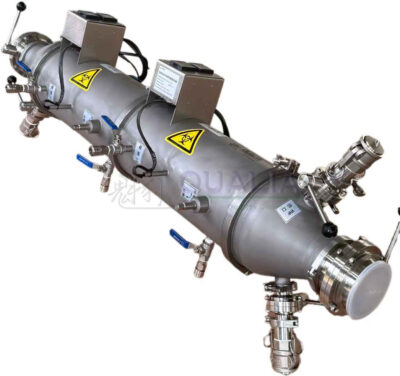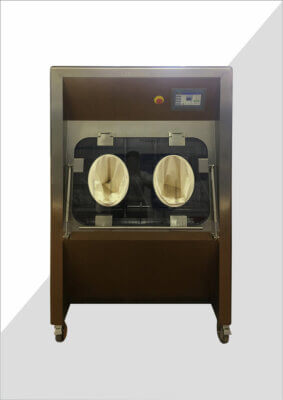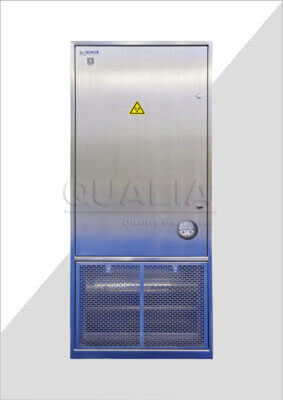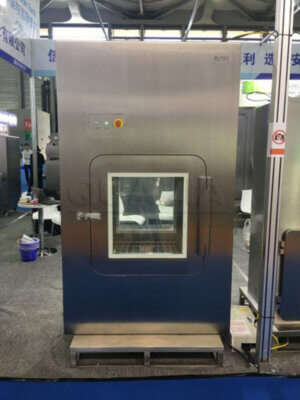

An isolator built for aseptic filling and an isolator built for sterility testing can share the same enclosure geometry, the same glove ports, and even the same VHP generator, yet answer to different questions. One protects the product from the operator and the room. The other protects the test result from false positives introduced by the room, the operator, or the sample itself. Before specifying either, the buyer has to decide which question the equipment is actually answering, because the answer changes what “suitable” means for the project.
Process Boundaries That Distinguish Manufacturing From QC Sterility Testing
Aseptic manufacturing and QC sterility testing are different processes with different starting conditions, even when the enclosure in front of the operator looks identical. In manufacturing, the isolator sits inside a production line: product enters already in-process, components arrive through defined transfer paths, and the isolator’s job is to maintain a controlled environment around an active production step. In sterility testing, the isolator sits inside a QC laboratory: the sample has already left manufacturing, and the isolator’s job is to create an environment clean enough that any contamination found in the test can be attributed to the sample itself, not to the test environment.
That difference in starting condition is why the same hardware can serve two distinct process boundaries. A manufacturing isolator’s boundary is drawn around a production step that must remain uncontaminated while output is generated. A sterility-testing isolator’s boundary is drawn around a test method that must remain clean enough that a negative result means something and a positive result is defensible. Where the process boundary is drawn changes what counts as “inside scope” for contamination control, for intervention design, and for the qualification evidence the buyer eventually has to produce.
This matters because a specification written for one boundary does not automatically transfer to the other. A manufacturing isolator qualified for a filling line was qualified against the materials, interventions, and output volumes of that line. Moving the same qualification logic to a sterility-test application without re-examining the process boundary risks qualifying the box without qualifying the use. Conversely, an isolator validated for sterility testing was validated against a test method’s sample flow and intervention pattern, not against a manufacturing throughput or a Grade A aseptic process.
The practical boundary-setting exercise is the same in both cases: identify what enters the enclosure, what happens to it inside, and what leaves, then ask whether the controls around that sequence match the process the isolator is meant to serve. The materials handled, the manipulations performed, and the release decision attached to the output are what actually separate a manufacturing application from a QC application, not the physical resemblance of the enclosures.
Product, Operator, and Environmental Protection Objectives
Once the process boundary is clear, the next judgment is which protection objective governs the equipment. Aseptic manufacturing is a product-protection objective: the isolator exists to keep the product from being contaminated by the operator, the room, or the materials passing through. Everything about chamber design, airflow, and transfer methodology in that context is organized around keeping contaminants away from an open or exposed product.
Sterility testing shares the same physical mechanism of exclusion, but the protection objective is narrower and more specific. The isolator is not protecting a batch of product moving toward a patient; it is protecting the integrity of a test result. Contamination control still matters, but what is being defended is the validity of the sterility determination, not the commercial product itself. This is a subtle but consequential distinction: a sterility-test isolator does not need to address the same scale of product exposure a filling line does, but it does need to exclude environmental and operator-introduced contamination rigorously enough that a positive result in the test can be trusted as a true positive.
Neither of these is an operator- or environmental-protection objective. Where a project also carries a containment requirement — because the material being tested or manufactured is hazardous to the operator or the environment — that is a separate objective layered on top of, not substituted for, the aseptic or sterility-testing function. An isolator’s capability to exclude contamination from entering does not establish its capability to contain a hazardous substance from escaping, and a containment-rated enclosure does not automatically deliver the microbiological control an aseptic or sterility-testing application requires. These are evaluated against different acceptance logic and different evidence.
The practical consequence for a buyer is that stating “we need an isolator” is not a complete scope statement. A project needs a statement of which protection objective is governing — product protection for manufacturing, test-result integrity for sterility testing, and separately, whether operator or environmental protection is also required — because each objective drives different design priorities, different monitoring points, and different qualification evidence.
Workflow Differences in Manipulation, Transfer, and Waste Handling
| Workflow input | Question for the aseptic manufacturing scope | Question for the QC sterility-testing scope | Boundary established by the answer |
|---|---|---|---|
| Handled materials | Which materials are handled within the manufacturing process boundary? | Which materials are handled within the sterility-test process boundary? | What the isolator and its transfer and cleaning requirements must cover |
| Open manipulations | Which manufacturing steps involve open manipulation inside the enclosure? | Which sterility-test steps involve open manipulation inside the enclosure? | Where product protection, chamber pressure, and monitoring requirements apply |
| Intervention frequency | How often does the intended manufacturing workflow require interventions? | How often does the intended test workflow require interventions? | The intervention pattern that the transfer, monitoring, and qualification approach must address |
| Waste route | How does waste leave the manufacturing process boundary? | How does waste leave the sterility-test process boundary? | The waste-transfer path that must be included in cleaning and transfer requirements |
| Release responsibility | Who holds release responsibility for the manufacturing use? | Who holds release responsibility for the sterility-testing use? | Which intended use and evidence set the release decision covers |
The protection objective sets the goal; the workflow is where that goal becomes a concrete specification. Manufacturing and sterility-testing applications diverge sharply once the actual sequence of handling is mapped out, and this divergence is what a URS has to capture precisely.
Open manipulation is one axis of difference. A manufacturing isolator may be designed around a continuous or semi-continuous process with a defined pattern of interventions tied to line operation — stoppages, adjustments, component replenishment. A sterility-testing isolator is built around a discrete test method, where the manipulations are sample introduction, membrane filtration or direct inoculation, and incubation preparation. The frequency and nature of these interventions differ, and so does the exposure window during which contamination could be introduced. Where interventions are frequent and tied to ongoing production, transfer and glove-port design need to tolerate sustained use; where interventions are infrequent but highly sensitive to any contamination event, the emphasis shifts toward the cleanliness of each individual manipulation rather than throughput.
Transfer methodology follows the same logic. What enters a manufacturing isolator is typically production components and bulk product; what enters a sterility-testing isolator is typically a limited number of discrete samples alongside test media and consumables. The transfer path has to be sized and controlled for what is actually moving through it, and a transfer system designed for one material flow does not necessarily suit the other without reconfiguration.
Waste handling diverges as well. Manufacturing waste streams relate to the production process itself, while sterility-testing waste includes used samples, spent media, and filtration residues that may carry their own handling requirements distinct from a production waste route. How waste exits the process boundary has to be defined for the intended use, not assumed from a similar-looking application.
Release responsibility closes the loop on workflow differences. In manufacturing, release responsibility sits with the quality function signing off on a batch. In sterility testing, release responsibility sits with whoever is accountable for the validity of the test result — a different decision, resting on different evidence, even when the same organization holds both roles. Mapping these five inputs against the intended use, rather than assuming equivalence between manufacturing and testing contexts, is what lets a buyer write a workflow specification that matches the actual process rather than a generic isolator description. This mapping is also the information that QUALIA’s project review relies on when configuring an isolator against a stated manufacturing or sterility-testing use, since the transfer, intervention, and waste-handling specification follows directly from how the buyer defines these inputs.
Bio-Decontamination and Monitoring Evidence for Each Use
| Evidence source | Aseptic manufacturing use | QC sterility-testing use | Decision boundary |
|---|---|---|---|
| ISO 13408-6:2021 | Supports isolator specification, selection, qualification, bio-decontamination, validation, operation, and control for aseptic processing | Provides limited applicability principles only | Does not specify sterility-test-isolator requirements and does not replace applicable GMP or compendial requirements |
| EU GMP Annex 1 (2022) | Supports the use of isolators as barrier technology for Grade A aseptic processing within a facility contamination-control strategy | Does not establish sterility-test-method compliance | Does not establish occupational-containment protection |
| USP General Chapter 71 Sterility Tests | Does not provide the cited basis for aseptic-isolator specification | Identifies the broad sterility-testing scope and membrane-filtration context | Verify the applicable compendial passage before stating method requirements or compliance conclusions |
The evidence a buyer can cite also depends on which use is being specified, and conflating sources across uses creates gaps that only surface at qualification or inspection.
ISO 13408-6:2021 addresses isolator systems for aseptic processing of health care products, covering specification, selection, qualification, bio-decontamination, validation, operation, and control for that application. It is a substantial reference for a manufacturing-use isolator. For sterility-testing applications, the same standard offers only limited applicability principles — it does not set out sterility-test-isolator requirements as a complete specification, and it does not substitute for the GMP or compendial requirements that actually govern a sterility test. A buyer citing ISO 13408-6 to justify a sterility-testing isolator’s design needs to be clear about which parts of that standard apply by general principle and which parts simply do not reach that application.
EU GMP Annex 1 (2022) describes isolators as barrier technology supporting Grade A aseptic processing within a facility’s overall contamination-control strategy. This is manufacturing-context guidance, written for sterile-manufacturing environments. It does not establish compliance with a sterility-test method, and it does not establish occupational-containment protection — a different claim entirely, relevant only where containment is also part of the project scope.
USP General Chapter 71, addressed through its harmonization page, identifies the broad scope of sterility testing and membrane filtration as a method family. It is directly relevant to the sterility-testing side of this comparison, but the harmonization page itself is metadata-level: a buyer needs to verify the actual applicable compendial passage before treating any specific method requirement as settled, rather than inferring full method compliance from the existence of the chapter.
The pattern across these three sources is consistent: each one speaks authoritatively to one side of the manufacturing/testing divide and offers only limited or no support for the other. A specification that borrows bio-decontamination or monitoring language from a manufacturing-isolator standard to justify a sterility-testing isolator’s qualification — or the reverse — is combining evidence across a boundary the sources themselves do not cross. The VHP bio-decontamination cycle itself is a mechanism common to both applications, but the cycle’s configuration and the evidence used to justify it still need to be matched to the specific use, which is also why cycle configuration for sterility and material safety is treated as its own technical question distinct from isolator qualification generally.
Scope Statement Buyers Can Carry Into the URS
A scope statement that resolves this comparison for a specific project needs to state, in plain terms, which process the isolator serves, which protection objective governs it, and which evidence set applies to that objective. For a manufacturing application, the statement should identify the production step the isolator supports, confirm that product protection is the governing objective, and reference the aseptic-processing qualification pathway — including bio-decontamination, validation, and operational control — as the applicable evidence base. For a sterility-testing application, the statement should identify the test method the isolator supports, confirm that protection of test-result integrity is the governing objective, and reference the compendial sterility-test requirements alongside whatever limited isolator-design principles apply from aseptic-processing standards.
Where a project also carries a containment requirement because the handled material is hazardous, that objective needs its own line in the scope statement, stated separately from the aseptic or sterility-testing objective rather than folded into it. An isolator configured for one objective does not inherit suitability for another by default; each has to be confirmed on its own terms during project review.
The scope statement should also state, rather than assume, the workflow inputs already identified: what materials are handled, what manipulations occur, how frequently interventions are expected, how waste exits the boundary, and who holds release responsibility. These are the inputs a supplier needs to configure transfer systems, glove-port arrangement, and bio-decontamination cycles appropriately, and they are the inputs QUALIA’s aseptic isolator and sterility-test isolator offering is configured against during quotation and project review, rather than assumed from a generic isolator request.
Where the project evidence already available supports a clear statement of process and objective, the buyer can move directly into equipment comparison. Where it does not — for example, where the intervention pattern or waste route has not yet been fixed — that gap is exactly the information the project team still needs to resolve before an isolator specification can be written with confidence, because changing that input changes the transfer design, the monitoring points, and the qualification evidence the equipment will ultimately have to support.
Frequently Asked Questions
Q: Can one isolator specification cover both aseptic manufacturing and QC sterility testing?
A: Potentially, but only after the two intended uses are defined as separate process scopes. Similar enclosure components do not establish that the same chamber pressure, transfer, cleaning, monitoring, and qualification requirements fit both workflows.
Q: Which decisions should come before selecting chamber pressure or transfer features?
A: Define the intended process boundary and the product, operator, and environmental protection objectives first. Then use the handled materials, open manipulations, intervention pattern, and waste route to determine what the pressure and transfer requirements need to address.
Q: Does evidence for Grade A aseptic processing also prove compliance for QC sterility testing?
A: No. ISO 13408-6 and EU GMP Annex 1 support defined aseptic-processing decisions, but they do not by themselves establish sterility-test-method compliance; verify the applicable compendial requirements for the intended test process.
Q: What should a project team prepare before comparing supplier proposals?
A: Prepare a separate workflow description for each intended use that identifies handled materials, open manipulations, intervention frequency, waste route, and release responsibility. Add the protection objectives and the evidence each use must produce so proposals can be compared against the same boundary.
Q: Does an isolator selected for product protection automatically establish operator protection?
A: No. Product, operator, and environmental protection are separate objectives, and EU GMP Annex 1 does not establish occupational-containment protection. State the operator-protection objective explicitly and identify what project-specific evidence will be used to evaluate it.