Facilities that commission a chemical shower for BSL-3 containment and then attempt to adapt it for a BSL-4 spacesuit laboratory rarely discover the gap in the nozzle coverage geometry until validation testing fails on the suit’s reinforced back panel. That failure happens late — during commissioning, or worse, during regulatory review — and it almost always requires full system replacement rather than modification. The divergence between BSL-3 and BSL-4 chemical shower requirements is not incremental; it is categorical, spanning contact time, effluent volume, pressure validation conditions, chemical selection, and the regulatory framework that governs ongoing operational compliance. Understanding where those differences are mandatory versus where they remain discretionary determines whether the shower system you specify will support certification or stall it.
Where BMBL BSL-4 exceeds BSL-3 requirements: the mandatory versus risk-based distinction for chemical shower at each level
The foundational distinction between BSL-3 and BSL-4 chemical shower requirements is not technical — it is jurisdictional. At BSL-3, the decision to install a chemical shower is risk-based. A biosafety officer or facility designer evaluates the agents being handled, the nature of procedures, and the PPE ensemble in use, and may or may not include a shower in the exit pathway. At BSL-4, that discretion disappears. The CDC BMBL 6. Baskı mandates the chemical shower as a non-negotiable exit requirement for all spacesuit laboratories, and the facility must validate its own suit decontamination process as a condition of maintaining certification with national regulators.
That validation obligation has a direct procurement consequence. A BSL-3 facility can specify a shower system against generic industry norms and document the rationale informally. A BSL-4 facility must generate validation data — against its specific suit, its chosen chemical agent, and its actual operating pressure conditions — and that data must be defensible to regulators. A system that was adequate for BSL-3 risk-based use may not generate the documentation depth required at BSL-4.
| Requirement Aspect | BSL-3 | BSL-4 |
|---|---|---|
| Chemical Shower Mandate | Risk-based, optional | Mandatory, non-negotiable exit requirement |
| Süreç Doğrulama | Not specified (risk-based decision) | Must validate own suit decontamination process to maintain certification with national regulators |
The practical implication is that BSL-4 shower system selection cannot be deferred to a late design phase or treated as a secondary infrastructure decision. Once the containment level is fixed, the shower becomes a regulatory asset with its own validation lifecycle, not just a safety feature.
Spacesuit decontamination requirements: contact time, coverage geometry, and chemical agent differences from standard BSL-3 personnel shower
A 30-second contact time is a common benchmark for BSL-3 personnel shower cycles. A validated BSL-4 spacesuit decontamination protocol operates at a fundamentally different scale: 2 minutes of chemical exposure followed by a 3-minute water rinse, for a total cycle time of 5 minutes. That difference is not a conservative safety margin — it is the cycle length required to demonstrate efficacy against the agent categories present at BSL-4, and it drives nozzle design, pressure specifications, and effluent system capacity in ways that compound across the full system.
Coverage geometry is where most retrofit failures originate. Nozzle arrays validated on standard BSL-3 PPE — gloves, gowns, respirators — are designed around relatively flat, flexible surfaces. A positive-pressure spacesuit introduces a different geometric problem: the suit’s rigidity creates shadow zones at the reinforced back panel, shoulder seam junctions, and around the visor housing. Standard coverage patterns that perform adequately on conventional PPE often fail to deliver consistent disinfectant contact in those areas. Validation protocols for BSL-4 require confirmation that disinfectant reaches those specific hard-to-reach zones using test coupons attached directly to the suit surface — a requirement that reflects real-world failure modes, not theoretical caution.
The nozzle design criteria that emerge from this constraint are meaningfully specific. Design guidance suggests arrays in the range of 20 nozzles operating at 18–20 psi to achieve full top-to-bottom suit coverage. These figures should be treated as planning benchmarks, not universal specifications — the precise configuration will depend on chamber dimensions and suit geometry — but they indicate the order of magnitude difference from a standard shower head arrangement.
| Parametre | BSL-3 Personnel Shower | BSL-4 Spacesuit Decontamination |
|---|---|---|
| İletişim Süresi | Typically 30 seconds | 2 minutes chemical, followed by 3 minutes rinse water (total 5 minutes) |
| Kapsam Doğrulaması | Standard nozzle geometries validated for PPE | Must confirm disinfectant reaches hard-to-reach areas (visor, back, limbs) using attached test coupons |
| Nozul Tasarımı | Not specified in research points | Designed with specific geometry (e.g., 20 nozzles) and pressure (18-20 psi) to achieve full top-to-bottom suit coverage |
The downstream consequence of under-specifying nozzle geometry is discovered during validation, not during installation. A shower that delivers water uniformly may still fail disinfectant coverage testing if pressure drops at the suit’s extremities reduce dwell time below the required threshold. Commissioning engineers should confirm nozzle performance under full-load conditions before coupling the system to the suit decontamination protocol.
Chemical agent selection for BSL-4: why BSL-4 programs sometimes specify peracetic acid or chlorine dioxide rather than sodium hypochlorite
Chemical agent selection at BSL-4 is driven by two distinct forces: the biological spectrum of threat agents handled, and the regulatory environment governing disinfectant formulations in the facility’s jurisdiction. These forces do not always point in the same direction.
In the United States, Canada, Australia, and parts of Asia, Micro-Chem Plus (MCP) — a quaternary ammonium compound-based detergent disinfectant — has established itself as the common baseline chemical agent for BSL-4 spacesuit showers. Its use at major programs provides an operational reference point for validation, and the existing body of data on its performance against relevant agent categories makes it a defensible starting point for new facilities. However, “established baseline” is not the same as “universally optimal.”
The threat agent profile at BSL-4 includes pathogens with characteristics that create genuine chemical selection trade-offs. Non-enveloped viruses, some of which demonstrate resistance to formaldehyde and reduced sensitivity to quaternary ammonium compounds at standard concentrations, appear in BSL-4 agent lists at facilities working with hemorrhagic fever viruses and related organisms. For those programs, peracetic acid or stabilized chlorine dioxide may offer broader sporicidal and virucidal activity. Some European BSL-4 laboratories have moved to peracetic acid not primarily for efficacy reasons, but because EU restrictions on nonylphenol ethoxylates limit the use of certain QAC-based formulations. Regional regulatory drivers, in other words, can override efficacy-based selection logic entirely.
| Kimyasal Ajan | Primary Region(s) of Use | Key Selection Driver |
|---|---|---|
| Micro-Chem Plus (QAC-based) | US, Canada, Australia, parts of Asia | Established common baseline for design and validation |
| Peracetic Acid (PAA) | European BSL-4 laboratories | EU restrictions on nonylphenol ethoxylates in disinfectants |
The practical consequence for system design is that chemical agent selection should be confirmed before the shower system is specified — not after. Peracetic acid and chlorine dioxide impose different materials compatibility requirements on chamber surfaces, nozzle materials, and seal components than QAC-based formulations. A chamber designed and validated for one agent category cannot be assumed to perform equivalently with another without compatibility testing and re-validation. Facilities that defer this decision to the commissioning phase regularly face material replacement costs and validation restarts.
Effluent treatment for BSL-4: higher chemical volumes, longer dwell cycles, and the EDS capacity specifications that result
Effluent volume at BSL-4 is not a rough multiple of BSL-3 — it is a different design problem. A single BSL-4 suit decontamination cycle can generate approximately 126 liters of chemical effluent and 318 liters of rinse water. Per cycle. That total approaches 450 liters of liquid waste that must be captured, held, neutralized or treated, and disposed of in compliance with local environmental and biosafety requirements before the system is available for the next user.
A BSL-3 effluent decontamination system (EDS) sized for a 30-second cycle generating a fraction of that volume cannot absorb BSL-4 operating loads without significant capacity expansion. In most cases, the capacity gap is wide enough that retrofitting is not a realistic option — the tank volume, chemical dosing systems, dwell monitoring, and drainage infrastructure all require reconfiguration at a cost and timeline that typically exceeds new system installation. Facilities that have attempted to upgrade BSL-3 EDS capacity for BSL-4 use have generally found that the civil infrastructure work alone — floor penetrations, secondary containment, utility connections — makes full replacement the more predictable path.
The EDS capacity specification must also account for operational scenarios beyond a single user cycle. If two researchers decontaminate in close succession, or if a system fault requires the cycle to be rerun, the EDS must have sufficient reserve capacity to absorb back-to-back loads without compromising the dwell time of the first batch. Sizing exclusively for a single nominal cycle creates operational fragility that may not surface until the facility is in active use. Commissioning the EDS independently — verifying hold volume, neutralization chemistry, and drain timing under consecutive cycle conditions — is a validation step that is often omitted from factory acceptance protocols and must be added explicitly to the site acceptance plan.
For programs designing a new BSL-4 suit laboratory, the most defensible approach is a dedicated spacesuit decontamination shower with its own EDS, sized to the actual cycle volumes and cycle frequency the program expects to operate. Sharing EDS capacity with other facility liquid waste streams introduces regulatory complexity and can compromise the traceability of effluent decontamination records required by select agent programs.
SAT testing under BSL-4 operating conditions: the pressure conditions and suit compatibility tests that must be added to the commissioning protocol
Factory acceptance testing for chemical shower systems is typically conducted under ambient pressure conditions using clean water or low-concentration surrogate solutions. That test environment does not reflect the conditions under which a BSL-4 spacesuit shower actually operates, and the gap between factory test conditions and actual use conditions is where commissioning failures concentrate.
BSL-4 spacesuit laboratories maintain negative pressure differentials in the suit corridor — typically as part of a multi-zone pressure cascade that separates the clean side from the containment environment. A shower system validated at ambient pressure may deliver meaningfully different flow rates, nozzle spray patterns, and coverage geometry when operating against the negative pressure conditions of the live facility. This test condition is rarely included in manufacturer factory acceptance protocols because it cannot be replicated without the installed building infrastructure. It must be added explicitly to the site acceptance testing (SAT) protocol by the facility engineer, not assumed to be carried forward from factory data.
Surrogate challenge testing adds a second layer of SAT complexity specific to BSL-4. Demonstrating decontamination efficacy for licensing requires more than confirming that water contacts all suit surfaces. Validation testing should use a surrogate virus — typically a Risk Group 2 organism appropriate for open-bench handling — dried onto suit material coupons with an organic soil load that mimics the contamination conditions of actual use. Clean-surface testing at BSL-4 is difficult to defend to regulators because it does not reflect the soil burden that a spacesuit may carry after a procedure involving biological materials. Facilities that complete SAT on clean surfaces and present that data for regulatory review often receive requests for repeat testing under soiled conditions, adding months to the certification timeline.
Suit material compatibility testing represents a third SAT component that is specific to BSL-4. The chemical concentrations used in spacesuit showers, applied across repeated cycles over the facility’s operational life, can degrade suit materials — particularly glove ports, visor seals, and suit fabric at stress points. Verifying that the selected chemical agent at operational concentration and contact time does not compromise suit integrity over repeated cycles is both a safety requirement and a qualification prerequisite. This testing should be documented as part of the commissioning record, not left to the suit manufacturer’s general material compatibility data, which may not reflect the specific concentration-contact time combination the facility is using.
For facilities referencing the DSÖ Laboratuvar Biyogüvenlik El Kitabı 4. Baskı, the design and maintenance monograph provides useful framing on the validation documentation expectations for containment support systems — though specific SAT protocol elements for spacesuit showers require adaptation to the national regulatory context and the specific agents involved.
Regulatory oversight specific to BSL-4: what USDA APHIS Select Agent regulations add to BMBL requirements for shower systems
BMBL provides the design and operational framework for BSL-4 facilities, but it does not operate in isolation for programs handling CDC or USDA select agents. USDA APHIS Select Agent Program regulations impose a separate and ongoing layer of compliance obligations that extend well beyond the initial certification of the shower system.
Under CDC/DSAT requirements applicable to registered select agent entities, facility support systems — including the chemical shower and its associated EDS — are subject to recurring testing and documented performance verification. This is not a one-time commissioning event. It creates an operational obligation to maintain test records, demonstrate continued system function against defined performance criteria, and make those records available during inspections. A shower system that was certified during initial facility approval but has not been subject to documented periodic testing is a compliance liability, not a compliant system.
The practical consequence for facility managers is that the shower system must be integrated into the facility’s select agent safety plan and standard operating procedures from initial commissioning. Inspection readiness requires not just that the system functions correctly, but that the documentation trail — cycle logs, maintenance records, periodic revalidation data — is current and organized. Gaps in recurring testing records have resulted in corrective action findings at otherwise well-maintained BSL-4 facilities, because the regulatory expectation is continuous documented compliance, not point-in-time certification.
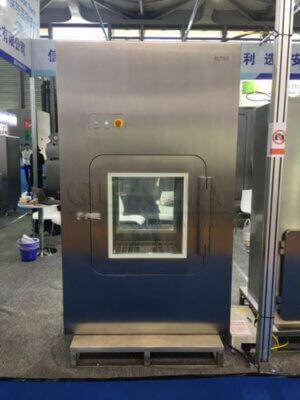
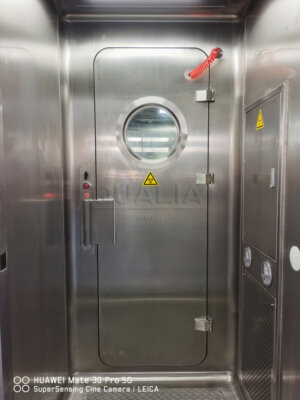
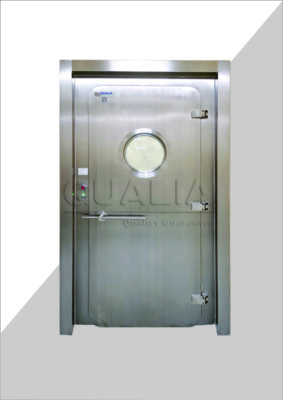
There is also a procurement implication. Shower systems specified for BSL-4 select agent programs must support the data capture and logging requirements that recurring compliance documentation demands. Systems without cycle logging, chemical concentration verification, or automated fault recording create documentation burdens that fall on operations staff and introduce transcription risk into the compliance record. Specifying data logging capability at procurement — rather than adding it as a retrofit — avoids a common mid-lifecycle infrastructure problem. For programs evaluating containment shower systems for this application, Qualia Bio’s mist shower systems are designed with BSL-4 containment requirements in mind, including the operational specifications that select agent programs demand.
For teams earlier in the BSL-4 planning process, a broader review of the critical differences between BSL-3 and BSL-4 containment can help establish the full scope of infrastructure divergence before shower system specifications are written.
The decision points that determine whether a BSL-4 chemical shower system will support certification or complicate it are mostly upstream of fabrication: chemical agent selection relative to agent profile and jurisdiction, EDS capacity relative to actual cycle volumes and back-to-back use scenarios, nozzle geometry relative to the specific spacesuit in use, and SAT protocol scope relative to what regulators will expect to see in documentation. Each of those decisions is easier to get right at the design phase than to correct during commissioning or regulatory review.
Before specifying a system, confirm the chemical agent choice is finalized and materials compatibility can be verified against that agent. Define the SAT protocol — including negative pressure operating conditions and soiled-coupon surrogate challenge testing — before installation, not after. Size the EDS for realistic operational loads, not nominal single-cycle volumes. And build the recurring compliance documentation structure into the system from the start, because select agent regulations treat the shower as a monitored support system with an ongoing verification obligation, not a one-time certified installation.
Sıkça Sorulan Sorular
Q: Can a BSL-3 chemical shower ever be upgraded for BSL-4 spacesuit use, or does it always require full replacement?
A: Full replacement is almost always the practical outcome. The gaps are not limited to nozzle geometry — EDS tank volume, chemical dosing infrastructure, drain timing, and civil work such as floor penetrations and secondary containment all typically require reconfiguration at a cost and timeline that exceeds new system installation. Facilities that have attempted BSL-3-to-BSL-4 retrofits have generally found the civil infrastructure work alone makes replacement the more predictable and defensible path.
Q: At what point in the facility design process should the chemical agent be selected — and what happens if that decision is deferred?
A: Chemical agent selection must be finalized before the shower system is specified, not after. Peracetic acid and chlorine dioxide impose different materials compatibility requirements on chamber surfaces, nozzle materials, and seal components than QAC-based formulations such as MCP. A chamber designed and validated for one agent category cannot be assumed to perform equivalently with another without full compatibility testing and re-validation. Facilities that defer this decision to the commissioning phase regularly face material replacement costs and validation restarts that add months to the certification timeline.
Q: What happens after SAT is complete — does the shower system require ongoing testing to remain compliant under select agent regulations?
A: Yes, and this is a distinct obligation from initial commissioning. CDC/DSAT requirements for registered select agent entities mandate recurring testing and documented performance verification of facility support systems, including the chemical shower and its EDS. A system certified at initial approval but lacking a current record of periodic revalidation, cycle logs, and maintenance documentation is a compliance liability during inspections. The shower must be integrated into the facility’s select agent safety plan from the start, with data logging and fault recording built in at procurement rather than added as a retrofit.
Q: Does the negative pressure in the BSL-4 suit corridor affect shower performance, and how should that be tested?
A: Yes — and this is a test condition that manufacturer factory acceptance protocols almost never include, because it cannot be replicated without the installed building infrastructure. A shower validated at ambient pressure may deliver different flow rates, spray patterns, and coverage geometry when operating against the actual negative pressure differential in the suit corridor. This condition must be explicitly added to the site acceptance testing protocol by the facility engineer before installation, not assumed to be carried forward from factory data.
Q: Is the coverage geometry and nozzle specification for a BSL-4 spacesuit shower significantly different from what a standard shower designed for BSL-3 PPE would deliver — and does that affect procurement decisions?
A: The difference is substantial enough to treat them as separate procurement categories. Standard nozzle arrays validated on BSL-3 PPE — gloves, gowns, respirators — are designed around flat, flexible surfaces. A positive-pressure spacesuit creates shadow zones at the reinforced back panel, shoulder seam junctions, and visor housing that standard coverage patterns routinely fail to reach. BSL-4 design guidance points to arrays in the range of 20 nozzles operating at 18–20 psi as a planning benchmark for full top-to-bottom coverage — an order of magnitude difference from a conventional shower head arrangement. Because this failure is discovered during validation rather than installation, specifying a system without spacesuit-specific coverage geometry built in carries significant certification risk.
İlgili İçerikler:
- Buğu Duşları Nasıl Çalışır? Atomizasyon Mekanizması Temas Süresi ve Muhafaza Çıkışlarında Damlacık Dağılımı
- BSL-3 Personel Dekontaminasyonu için Sis Duşu ve Hava Duşu: Hangi Çıkış Protokolü Uygun
- BMBL 5. Baskı Kapsamında Sis Duşu Gereklilikleri: BSL-3 Çıkış Protokolleri Neleri İçermelidir?
- Hava Duş Nozulları: Yüksek Hızlı Temizlik
- Mist Duş Teknik Özellikleri: Hazne Boyutları Nozul Çıkışı ve GMP Tesisleri için Malzeme Standartları
- Sis Duşu Sistemleri: BSL-3 ve BSL-4 Personel Dekontaminasyonu için Teknik Referans
- BSL-4 Suit Protokolleri: Araştırmacı Güvenliğinin Sağlanması
- Hava Duşu Testi: Performans Doğrulaması
- Sis Duşu Kalifikasyon Protokolü: GMP ve BSL-3 Uyumluluğu için IQ OQ ve PQ Dokümantasyonu