
A bio-decontamination cycle qualified on an empty isolator chamber tells the reader very little about what happens once trays, instruments, or packaged components occupy that same space. The question that matters for cycle development is not whether vapor can reach every exposed surface, but whether the load configuration actually used in production lets it do so, and how the study proves that. Getting this wrong does not show up as a failed cycle; it shows up later, as a surface that was never actually challenged during qualification.
Load Features That Change Vapor Distribution and Surface Access
An isolator’s bio-decontamination cycle is developed and qualified against a defined chamber condition, and the load placed inside that chamber is part of that condition, not an incidental detail. Vapor-phase decontamination depends on the vapor reaching and remaining in contact with a surface, and anything introduced into the chamber changes the paths available for that contact. A geometry that leaves open sightlines and airflow paths behaves differently from one that creates enclosed or restricted zones, even where the total volume of material in the chamber is similar.
This matters because the same isolator, operated with different loads, is not a single validated condition — it is potentially several. Where a laboratory or production group changes what goes into the chamber between qualification and routine use, the physical basis for the original study no longer automatically applies. The cycle parameters, exposure time, and indicator placement that were justified for one load configuration carry an assumption about how vapor moves through that specific arrangement.
The practical consequence for selection and configuration is that a buyer evaluating isolator bio-decontamination capability needs to ask not only what cycle parameters a system achieves, but what load condition those parameters were established against. A system demonstrated only against an empty chamber answers a narrower question than one demonstrated against a representative, defined load. ISO 13408-6 frames isolator bio-decontamination validation, operation, and control as part of the aseptic-isolator system scope, without specifying a universal cycle design — which means the load condition used during development is a project-specific decision, not a fixed specification that transfers from one isolator installation to another.
Where the isolator will handle a stable, narrow range of materials, the load condition is easier to define and hold constant. Where the isolator supports varied campaigns or product types, the load condition itself becomes a variable that the cycle development program has to account for across more than one configuration.
Shadowed Locations, Dense Packing, and Absorbent Materials
| Load condition | Effect to evaluate | Study implication |
|---|---|---|
| Shadowed locations | The load can shield surface access | Include the shadowed location when selecting suitable positions for physical measurements and, where appropriate, biological indicators |
| Dense packing | Packing density can restrict vapor movement | Treat packing density as a study variable within the defined load configuration |
| Absorbent materials | The material can absorb or retain the decontaminant | Include the material in the defined load family and worst-case justification |
Three load characteristics recur across isolator applications, and each changes a different part of the decontamination mechanism. A shadowed location is any surface that the load geometry places out of direct vapor contact — behind, beneath, or between items in a way that the chamber’s distribution pattern does not reach as effectively as an open surface. Shadowing is a function of the load’s arrangement relative to the chamber’s circulation, not a fixed property of any single item, which means the same component can be shadowed in one loading pattern and fully exposed in another.
Packing density affects a different mechanism: how freely vapor can move through the space between items. A loosely arranged set of items may permit circulation to continue largely as it does in the empty chamber, while a densely packed arrangement can restrict that movement enough to change local vapor concentration or contact time, even if no individual item is shadowed. Density is therefore a condition to test deliberately rather than infer from the load’s total volume.
Absorbent or retentive materials introduce a third mechanism, independent of geometry: the material itself interacts with the decontaminant, either taking it up or releasing it more slowly than an inert surface would. This changes the local exposure profile at that surface regardless of whether it is shadowed or densely packed, and it can also affect how quickly the chamber returns to a condition suitable for aeration or release.
Because these three mechanisms operate independently, a load can present any combination of them, and a study that addresses one without the others leaves a gap. The practical response is to treat each as its own variable within a defined load family, so that a worst-case justification accounts for shadowing, density, and material behavior together rather than assuming that controlling one controls the others.
Worst-Case Configurations for Physical Measurements and Indicators
| Elemento probatorio | Record that must remain linked | Decision value and boundary |
|---|---|---|
| Worst-case configuration | Defined load family and the justification for the selected configuration | Shows why the study represents routine use more directly than an empty chamber alone; it does not establish a universal load pattern |
| Physical cycle data | Item location and orientation alongside the physical cycle data | Supports investigation when the study evidence shows a failure |
| Biological indicators, where appropriate | Item location and orientation alongside indicator placement, with process-specific indicator choice and critical parameters | Provides evidence at suitable locations for the defined process; it does not establish a universal cycle recipe |
Once load families are defined, the cycle development program needs a configuration that represents the hardest case within each family — not the most severe condition imaginable, but the condition that the defined family’s actual variation can plausibly produce. This is the basis for using a justified worst-case load rather than treating the empty chamber as the routine qualification case. GMP UE Allegato 1 frames controlled isolator bio-decontamination as something validated through physical measurements and, where appropriate, biological indicators at suitable locations, with the standard explicit that indicator choice and critical parameters are process-specific rather than governed by a universal recipe.
That framing has a direct consequence for what a buyer or validation team should expect to see as evidence. A worst-case configuration is only meaningful if it is traceable: the defined load family, the reasoning for selecting that configuration as representative, the physical cycle data collected during the study, and the specific placement and orientation of each item and indicator all need to stay linked as one evidentiary record. Physical measurement without recorded item location tells the reader that a parameter was met somewhere in the chamber, not that it was met at the shadowed or densely packed location the load actually presents.
Biological indicators, where the process uses them, extend this same logic rather than replacing it. Indicator placement has to reflect the same suitable locations the physical data addresses, chosen for the specific process rather than assumed from a generic layout. Annex 1’s language on suitable locations and ISO 13408-6’s position that no universal load pattern or cycle recipe applies both point toward the same practical requirement: the evidence has to be built around this isolator’s defined load, not imported from a general assumption about isolator behavior.
Where a failure does occur during qualification or in routine monitoring, this traceability is what allows the investigation to mean something. A physical reading or a positive indicator without a recorded location and orientation leaves the investigator guessing at which load feature was responsible, while a linked record points directly at the shadowed surface, the dense zone, or the absorbent material involved.
Cycle Development Evidence Across Defined Load Families
A cycle development program that covers more than one load family has to decide how much evidence each family needs on its own, versus how much can be reasoned from a worst-case family that is argued to bound the others. This is a judgment about representativeness: a worst-case configuration developed for one family does not automatically justify a different family unless the shadowing, packing density, and material behavior of the second family fall within the range the first already tested.
Where load families share similar geometry and materials but differ only in minor placement details, a single worst-case justification may reasonably extend across them, provided the justification explicitly addresses why the variation between families does not introduce a new shadowed location or a new absorbent material. Where families differ meaningfully — a change in packaging type, a different item geometry, or the introduction of a material with different absorption behavior — the evidence built for one family does not transfer, and a separate assessment is needed.
This is also where the distinction between validating an empty chamber and validating a defined load family has its clearest practical effect. An empty-chamber qualification cannot support any load family’s worst-case claim, because it contains none of the three mechanisms — shadowing, packing density, or material interaction — that a loaded cycle has to address. It establishes that the chamber and generator can perform under the simplest possible condition, which is a necessary but not sufficient basis for routine use involving any real load.
For a project team assembling this evidence across multiple load families, the practical task is building a matrix that shows which family each worst-case study covers, what physical and indicator evidence supports that family, and where the justification for extending coverage to a related family is documented rather than assumed. This matrix becomes the reference point for later decisions about whether a new load configuration fits an existing family or requires its own study — a judgment that recurs whenever the production or laboratory group introduces a new item, packaging format, or arrangement into the isolator’s routine use.
Requalification Triggers After Load or Material Changes
| Change area | Compare with the qualified study | Requalification decision focus |
|---|---|---|
| Geometria del carico | Orientation, packing density, and shadowed surface access | Whether the prior worst-case configuration remains justified |
| Materiale | The material’s absorption or retention of the decontaminant | Whether the defined load family still represents the changed material |
| Imballaggio | Packaging within the defined load configuration | Whether the qualified configuration still represents the load |
| Sensori | Sensors associated with the physical cycle data | Whether the existing physical evidence remains applicable |
| Transfer practice | Transfer practice represented by the routine load configuration | Whether the qualified configuration still represents routine use |
Because the original qualification is tied to a specific load family and worst-case configuration, any change that could plausibly alter shadowing, packing density, or material interaction is a candidate for requalification review, not a change that can be absorbed silently into routine operation. The review itself is a judgment exercise: the question is whether the change moves the load outside the condition the original worst-case study represented, not whether the change is large in an absolute sense.
A change in load geometry — a different orientation, a new arrangement, or an item that packs more densely than the qualified configuration — raises the question of whether the original worst-case justification still holds, since the whole basis for that justification was a specific relationship between geometry and vapor access. A change in material raises a separate question centered on absorption and retention behavior, independent of whether the geometry changed at all. A change in packaging introduces both possibilities at once, since packaging can alter both the physical arrangement of items and what surface is actually exposed to vapor.
Two further categories matter because they affect the evidence rather than the load itself. A change in sensors used to collect physical cycle data raises the question of whether the existing physical evidence remains applicable, since the qualified cycle’s acceptance basis was built around specific instrumentation and placement. A change in transfer practice — how items move into and out of the chamber — can alter the load configuration that actually occurs in routine use, even where the nominal load family on paper has not changed.
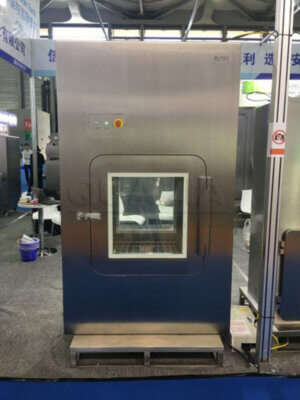
Each of these change categories calls for a documented assessment rather than an assumption either way, and the content linked under VHP cycle requalification after load pattern, sensor, or material changes addresses how that assessment is structured once a change of this kind is identified. Where a project team is still working out what load families and worst-case configurations to define in the first place, the earlier-stage question — how to define VHP pass box load patterns before cycle development begins — is the more relevant starting point, since requalification logic depends on having a defined baseline to compare against.
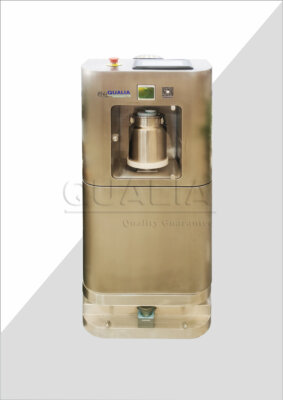
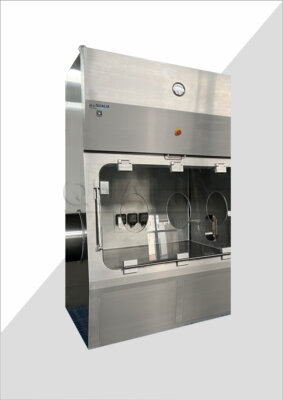
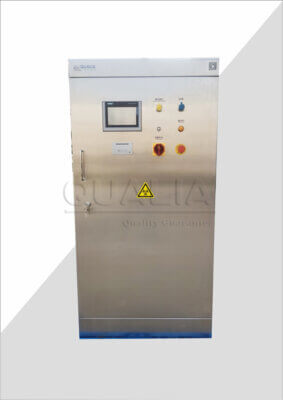
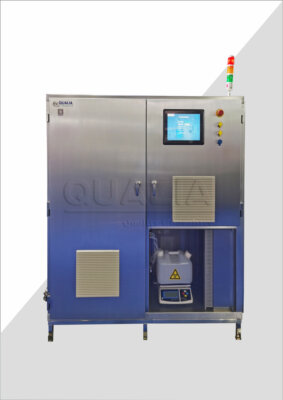
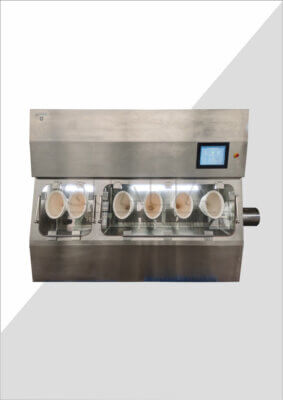
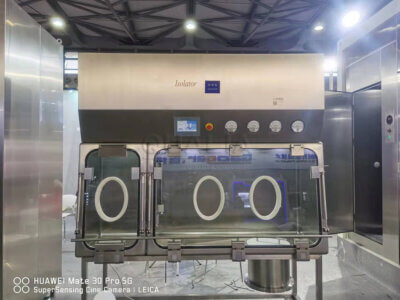
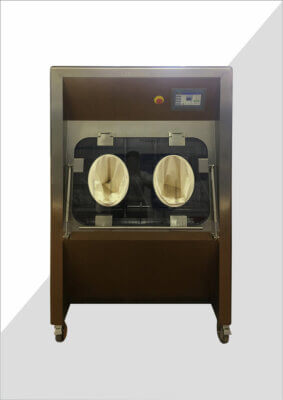
For isolators intended for sterility testing or other aseptic-processing applications, Qualia configures the aseptic isolator and sterility test isolator systems within its Isolatore asettico / Isolatori per test di sterilità line to match the project’s intended load condition, and the load families, materials, and transfer practice the customer defines are the information that shapes how that configuration and the associated cycle development approach are reviewed during the project discussion.
Domande frequenti
Q: Can an empty-chamber study represent routine isolator use?
A: An empty chamber alone does not represent a routine loaded condition. Define the relevant load families and justify a worst-case configuration that includes factors such as orientation, packing density, shadowed surfaces, and absorbent materials.
Q: How should a worst-case load pattern be selected when routine loads vary?
A: Compare the load features that can affect vapor movement or surface access, then document why the selected configuration represents the most challenging supported condition. The largest or most densely packed load should not be assumed to be worst case without considering geometry, materials, and shielding.
Q: What records make a load-related study failure easier to investigate?
A: Keep each item’s location and orientation linked to the physical cycle data and, where appropriate, biological-indicator placement. Also record the process-specific indicator choice and critical parameters so the affected location and evidence can be traced together.
Q: Can one successful load pattern establish a universal cycle recipe?
A: No. The evidence applies to the defined process, load configuration, suitable measurement locations, and process-specific indicator approach used in the study; it does not establish one load pattern or cycle recipe for every application.
Q: Does every change to a routine load require requalification?
A: Each material change should first be assessed against the qualified study. Requalification should be considered when a change in load geometry, material, packaging, sensors, or transfer practice means the prior worst-case configuration or physical evidence may no longer represent routine use.