
A material transfer SOP governs the sequence between a load’s approval and its release into clean or controlled space, but a sequence that looks complete on paper can still fail if staging, treatment, and release decisions are not each tied to a verifiable condition. The practical question for a laboratory director, QA reviewer, or EHS manager is not whether an SOP exists, but whether every step in it can be checked against a defined state rather than an operator’s judgment at the time.
State approved loads, packaging, roles, and pre-entry checks
| Control area | SOP must state | Decision supported |
|---|---|---|
| Approved load types | Which load types are approved for the transfer process | Whether the proposed load is within the approved scope |
| Packaging preparation | Required packaging preparation before staging | Whether the packaging is ready for the validated process |
| Staging limits | The site’s staging limits before chamber entry | Whether staging remains within the approved boundary |
| Operator roles | The responsible operator for pre-entry, cycle, release, and unloading steps | Who may perform or authorize each step |
| Pre-entry condition | The condition required before a load enters the chamber | Whether chamber entry may proceed |
Before any transfer SOP can function, it has to define what is allowed to move through the process at all. An approved load type is not a generic description of “materials” or “components”; it is a defined category tied to the packaging configuration, surface characteristics, and treatment compatibility that the site’s validated process can actually address. Where a load falls outside that defined scope, no downstream step in the SOP can compensate, because the treatment and staging controls were established against the approved category, not the material actually present.
Packaging preparation sits upstream of this same boundary. A packaging configuration that was never evaluated against the site’s treatment method introduces uncertainty before the load reaches the chamber, regardless of how rigorously the later steps are executed. This is why packaging requirements belong in the SOP itself rather than in a separate assumption: the condition that makes a transfer valid has to be checked before staging begins, not inferred afterward.
Staging limits exist for a related but distinct reason. A staging area that holds more material than the SOP’s boundary allows, or holds it longer than intended, creates ambiguity about which items have been checked against pre-entry conditions and which have not. The limit is not primarily about space; it is about keeping every item in staging traceable to a known status.
Operator roles matter because each step in this sequence, from pre-entry inspection through cycle initiation to release and unloading, involves a judgment that has consequences if made incorrectly. Where a role is undefined, two outcomes become possible: a step is performed by someone without the authority or training to make that specific judgment, or no one takes responsibility for confirming it at all. Defining who performs each step, and who is authorized to approve movement to the next step, closes that gap.
The pre-entry condition is the point where all of these elements converge. A load is eligible to enter the chamber only when its type is approved, its packaging has been prepared to the required state, it has remained within staging limits, and the responsible operator has confirmed the condition. If any one of these is unresolved, chamber entry should not proceed, because the integrity of everything that follows depends on starting from a known state.
Stage materials without mixing untreated, treated, and released status
The core risk in staging is not physical contamination in the ordinary sense; it is status ambiguity. A staging area that does not physically or procedurally separate untreated, treated, and released material creates conditions where an operator can reasonably mistake one status for another, particularly during periods of higher activity or when multiple transfers overlap in time.
This is a segregation problem before it is a workflow problem. Where untreated and treated loads share a staging zone without a positive means of distinguishing them, such as physical separation, labeling tied to a status, or a one-way flow path, the SOP’s downstream controls lose their reference point. A treatment step that is correctly executed on the wrong load, because the load’s actual status was misidentified during staging, produces a result that is procedurally compliant but substantively wrong.
The condition that changes the level of control needed is the degree to which staging areas are shared across transfer types or across time. Where a single staging area serves multiple load categories or multiple points in the transfer sequence, the SOP needs an explicit method for marking status, not just a general instruction to avoid mixing. Where staging areas are physically dedicated to a single status at a time, the burden on labeling and operator vigilance is lower, because the physical configuration itself enforces the separation.
Either approach can satisfy the underlying requirement, but the SOP should state which one applies and why, because an SOP that is silent on the method leaves the determination to individual operators at the moment of use. That is precisely the condition this section of the SOP exists to prevent: a transfer sequence where the status of a given load depends on who is asked, rather than on a defined and visible state.
Apply the validated wipe-down or decontamination sequence
| Treatment element | SOP must specify | Evidence boundary |
|---|---|---|
| Agent | The site’s validated wipe-down or decontamination agent | No agent is universal across sites or processes |
| Coverage | The validated coverage method | Completion is judged against the validated method, not an unstated generic technique |
| Contact or dwell condition | The validated contact or dwell condition | A generic duration does not replace the site-specific validated condition |
| Material compatibility | The compatibility limits that apply to the load materials | A validated treatment condition does not establish compatibility beyond those limits |
The treatment step is where a generic instruction becomes most dangerous, because a plausible-sounding duration or wipe pattern can appear procedurally complete while deviating from what the site actually validated. EU GMP Annex 1 addresses this directly for sterile manufacturing and aseptic-isolator contexts, where it calls for validated transfer disinfection or suitable systems, with bio-decontamination cycle parameters controlled for the isolator process rather than left to a generic figure. The same logic applies more broadly to any decontamination step feeding controlled space: the agent, coverage method, contact or dwell condition, and compatibility limits have to be the specific ones the site validated, not a plausible industry default.
The agent is site-specific because chemical compatibility, material surface characteristics, and the organisms or residues of concern vary by process. An agent validated for one site’s materials and targets is not interchangeable with another’s without revalidation, even where both are drawn from a similar chemical class.
Coverage method matters because the same agent applied with a different technique, a different contact pattern, or a different sequence of surfaces can produce different treatment outcomes on the same load. An SOP that specifies the agent but not the coverage method leaves a gap an operator has to fill with judgment, and that judgment is exactly what the validated method was meant to replace.
Contact or dwell condition is the step most often reduced to a generic duration, and that reduction is the error Annex 1’s framing is meant to prevent. A dwell condition validated for one material, one agent concentration, and one surface configuration does not transfer automatically to a different combination. Where the load material changes, or the agent or its concentration changes, the previously validated dwell condition may no longer apply, and the SOP should make clear that the dwell condition is tied to the validated combination, not treated as a standalone number that applies regardless of context.
Material compatibility closes the loop: a treatment condition validated for effectiveness against a target organism or residue says nothing about whether that same condition degrades or damages the materials being treated. Where a load introduces a new packaging material, surface coating, or construction, compatibility has to be reassessed before the existing validated condition is assumed to apply. This connects directly to approved load types: expanding what counts as an approved load without revisiting compatibility limits reintroduces the same risk the pre-entry controls were meant to close.
Control dwell, door states, alarms, and release authorization
Once treatment begins, the SOP’s job shifts from specifying a method to controlling a sequence of states, each of which has to be visible and attributable to a responsible operator. Door opening, interlock acknowledgement, cycle start, hold, release, and unloading are not interchangeable steps that can be bundled into a single “process complete” status; each represents a distinct point where the system or the operator confirms that a condition has been met before the next action is permitted.
The reason this sequence matters more than its individual steps is that a controlled transfer process depends on interlocking these states so that an action out of sequence is either prevented or at least flagged. A door that can be opened before cycle completion, or a release that can be granted without the preceding hold being resolved, converts a controlled sequence into one where sequence integrity depends entirely on the operator remembering the correct order, rather than the system enforcing it.
Interlock acknowledgement deserves particular attention because it is the point where a system-level control intersects with an operator’s action. Where an interlock exists but acknowledgement is not tied to a specific, responsible operator, the interlock can become a step that is acknowledged reflexively rather than as a genuine confirmation that the underlying condition is satisfied.
The condition that changes the complexity of this control is whether the process includes a hold state between treatment completion and release. Where a hold state exists, release authorization becomes a distinct decision, separated in time from cycle completion, which allows a reviewer to apply judgment before material moves forward. Where no hold state exists, release is effectively automatic upon cycle completion, and the SOP needs to make clear what conditions the automated completion itself confirms, since no separate human checkpoint follows it.
Release authorization is the point where responsibility has to be unambiguous. An SOP that identifies a role responsible for release, but does not specify what that role must confirm before authorizing it, leaves the authorization step procedurally present but substantively empty. The authorization should be tied to specific, checkable conditions: that the cycle completed as defined, that no alarm condition remains unresolved, and that the load’s documentation matches what is expected for that transfer.
Handle spills, failed cycles, rejected loads, and manual recovery
| Exception | Controlled path to define | Release boundary |
|---|---|---|
| Spill | The site’s spill response path | Transfer and release follow the defined recovery condition rather than an improvised response |
| Alarm | The applicable alarm response path | Release follows the stated authorization condition after the alarm path is addressed |
| Failed cycle | Quarantine or repeat-cycle path | A failed cycle cannot be treated as a successful release |
| Rejected load | The site’s rejection or quarantine path | The load remains outside release until the approved disposition is reached |
| Manual release or recovery | The authorized manual-release path | Manual action does not bypass release authorization |
Every transfer SOP eventually encounters a condition it did not plan to encounter directly: a spill during staging or unloading, a cycle that fails to complete as defined, a load that does not meet the criteria for release, or a situation that requires manual intervention outside the automated sequence. How the SOP treats these moments determines whether an exception remains a controlled deviation or becomes an improvised breach of the transfer boundary.
A spill response path has to be defined before it is needed, because a spill occurring during an active transfer sequence creates pressure to resolve it quickly, and that pressure is precisely when an undefined response is most likely to default to whatever seems reasonable in the moment rather than to a predetermined path. The SOP should state not just that a spill must be addressed, but what addressing it requires before the transfer sequence can resume, and who is authorized to make that determination.
A failed cycle presents a different problem: the treatment step did not complete as validated, so the load’s status is now uncertain rather than simply unsuccessful. Treating a failed cycle as equivalent to a successful one, even informally, defeats the purpose of validating the cycle at all. The SOP needs a defined path, whether that is quarantine pending review or a repeat cycle under stated conditions, so that a failed cycle automatically routes away from release rather than requiring someone to notice and intervene.
A rejected load follows similar logic but originates from a different cause, often a pre-entry or post-treatment inspection finding rather than a cycle-level failure. The rejection or quarantine path should be distinct enough that a rejected load cannot reenter the approved flow without going through whatever disposition process the SOP defines.
Manual release or recovery is the highest-risk path because it exists specifically to handle situations the automated or standard sequence did not anticipate. The condition that governs this path is whether manual action is itself subject to the same authorization logic as standard release. Where manual recovery can bypass the authorization step that would otherwise apply, the exception path becomes a way around the SOP’s core control rather than a controlled extension of it. Defining who may invoke manual release, under what documented conditions, and what confirmation is still required before material is treated as released keeps this path from becoming the point where the entire SOP’s logic breaks down.
Record each transfer so deviations and requalification triggers remain visible
| Record area | Evidence to retain | Review decision supported |
|---|---|---|
| Load and packaging | Approved load type and packaging preparation | Whether the transfer stayed within the approved load scope |
| Staging and entry | Staging status, applicable limits, and the pre-entry condition | Whether the load was eligible to enter the chamber |
| Treatment execution | Validated agent, coverage method, contact or dwell condition, and material-compatibility limits | Whether execution can be compared with the validated process |
| Cycle and door control | Door states, interlock acknowledgement, cycle start, hold, alarms, release, and unloading status | Whether the controlled sequence can be reconstructed |
| People and authorization | Responsible operators and release authorization | Who performed or authorized each controlled step |
| Exceptions | Spill, failed-cycle, rejected-load, quarantine, repeat-cycle, or manual-release path used | Whether deviations and recovery actions remain visible |
| Validation disposition | Predefined acceptance criteria, documented deviations, conclusions against criteria, and any requalification trigger | Whether the record supports the release and validation review |
A transfer record exists to let someone who was not present reconstruct what happened and judge whether it matched what the SOP required. EudraLex Volume 4 Annex 15 frames this at the qualification level: approved protocols, predefined acceptance criteria, documented deviations, and conclusions drawn against those criteria. Applied to a transfer record, this means the record has to connect each step back to the criteria that were supposed to govern it, not simply log that steps occurred.
The record’s value depends on whether it captures enough detail to answer specific questions later. Did the load fall within the approved type? Was packaging preparation complete before staging? Did the load remain within staging limits, and what was its status at each point? Was the treatment step executed with the validated agent, coverage, and dwell condition, and were material-compatibility limits respected? Each of these questions maps to a control established earlier in the SOP, and the record is only useful if it preserves the information needed to answer them after the fact, not just a confirmation that “the procedure was followed.”
Door and cycle control records serve a related but distinct purpose: they let a reviewer reconstruct the sequence itself, confirming that interlocks were acknowledged, holds were resolved, and release followed authorization rather than preceding it. Where this sequence cannot be reconstructed from the record, a reviewer has no way to distinguish a transfer that followed the controlled sequence from one that did not, even if the outcome appeared normal.
Exception records close a different gap. A spill, failed cycle, rejected load, or manual release that is not documented as such effectively disappears from the record, which means any pattern across multiple transfers, the kind of pattern that might indicate a validated condition no longer holds, becomes invisible. This is where the record connects to requalification: Annex 15’s framing of documented deviations and conclusions against acceptance criteria implies that deviations are not just individually resolved but collectively reviewed, because a recurring deviation may indicate that the original validated condition needs to be reassessed rather than that each instance was an isolated event.
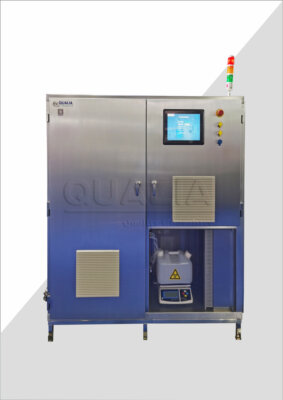
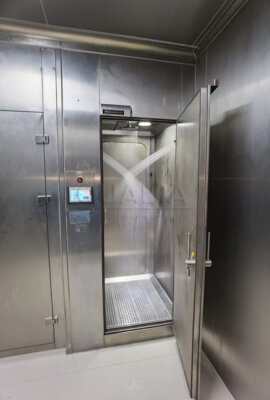
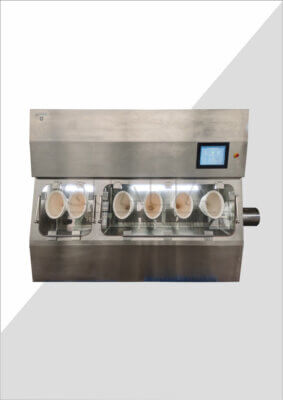
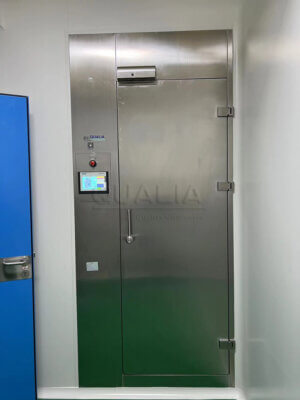
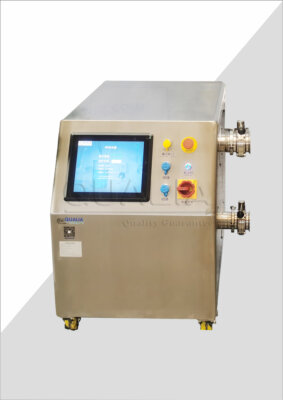
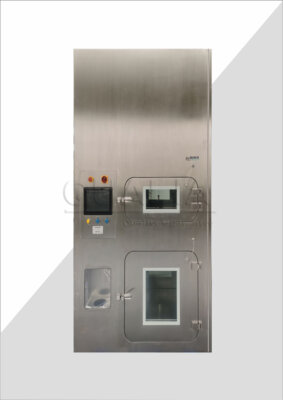
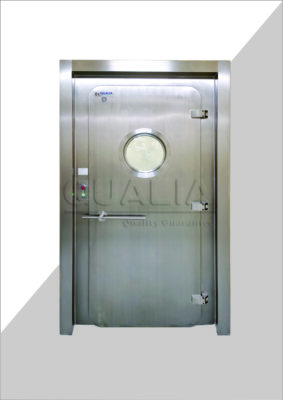
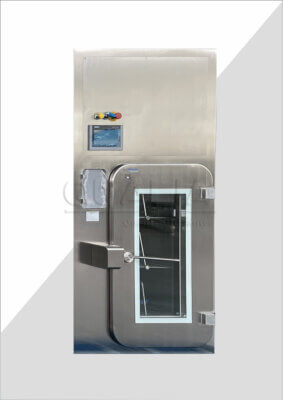
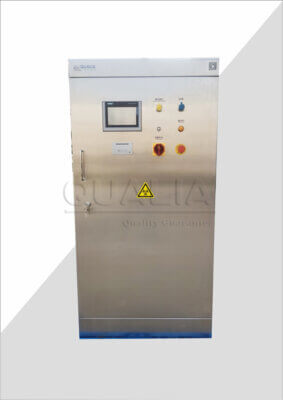
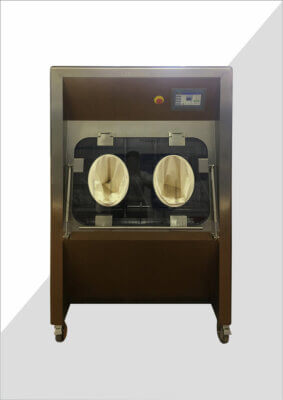
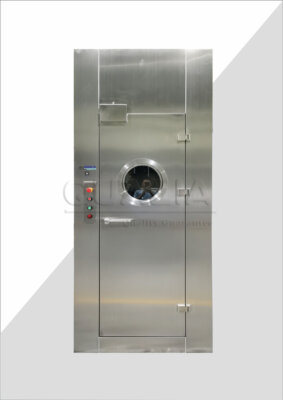
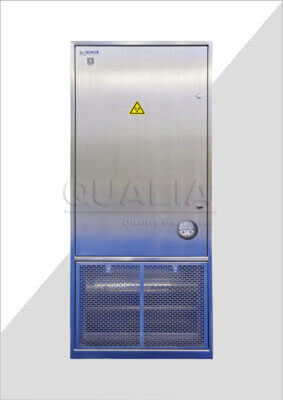
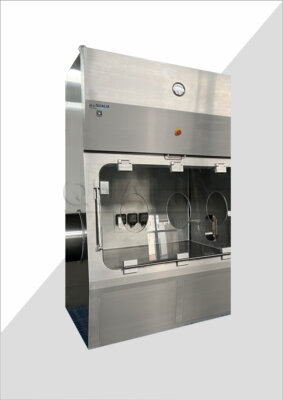
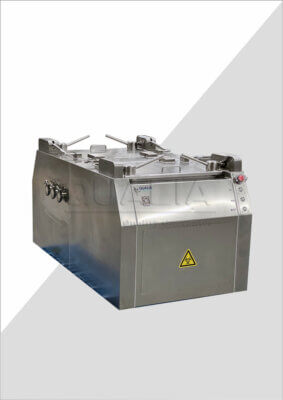
When a project team brings this kind of transfer record to a supplier conversation, whether for a pass box, dunk tank, or VHP transfer system, the record’s structure is what lets that conversation move efficiently: the information Qualia needs to evaluate configuration or interface questions is largely the same information the SOP already requires the site to capture, including load types, staging conditions, and validated treatment parameters. Where the record cannot answer basic reconstruction questions, a requalification review, or an equipment review tied to an interface like a pass box door or dunk tank cycle, has to rebuild context that the record should have already preserved, which is a condition the project team can confirm is addressed before relying on the SOP in practice.
Frequently Asked Questions
Q: Can one material transfer SOP apply to every load and packaging format?
A: Only loads and packaging within the approved scope should use the SOP. Before staging, confirm the load type, packaging preparation, applicable staging limits, material compatibility, and required pre-entry condition; route anything outside those boundaries through the site’s defined assessment and approval process.
Q: How should operators prevent confusion between untreated, treated, and released materials?
A: Keep each status visibly identifiable and segregated throughout staging and transfer. The SOP should state who confirms each status change and which completed condition allows the material to move to the next step.
Q: Is a standard wipe-down time enough to define the treatment step?
A: No. The executable step must use the site’s validated agent, coverage method, contact or dwell condition, and material-compatibility limits; a generic duration cannot replace those validated variables.
Q: What should happen after an alarm, spill, or failed cycle?
A: Follow the predefined exception path and keep the load outside release until the stated recovery and authorization conditions are met. Depending on the site’s approved procedure, that path may involve quarantine, rejection, a repeat cycle, spill response, or an authorized manual recovery.
Q: What evidence should be checked before a load is released?
A: Confirm that the record identifies the load and packaging, staging and entry status, treatment execution, door and cycle states, alarms, responsible operators, exceptions, and release authorization. Any deviation should be documented and assessed against predefined acceptance criteria and the site’s stated requalification triggers.