
A material transfer system that passes factory testing can still fail on site if the installation, the challenge sequence, or the load-specific cycle evidence does not match how the equipment actually operates once installed. Deciding which qualification stage should produce which piece of evidence is not a documentation formality; it determines whether gaps in coverage surface during qualification or after the system is already in use. The practical question for a project team is not whether FAT, SAT, IQ, OQ, and cycle evidence are all required, but which requirement belongs to which stage, and what happens when that assignment is unclear.
Assign each requirement to the right qualification stage
| Qualification stage | Evidence focus | Decision boundary |
|---|---|---|
| Factory acceptance test (FAT) | Assembled functions before shipment | Does not replace the site suitability review or installation-sensitive checks |
| Site acceptance test (SAT) | Utilities, interfaces, alarms, interlocks, and damage after receipt that may be affected by installation or transport | Confirms site-sensitive evidence after receipt |
| Installation qualification (IQ) | Installed configuration, utilities, documents, and calibrated instruments | Confirms the installed state against approved criteria; it does not replace operational challenges |
| Operational qualification (OQ) | Operating ranges, sequences, alarms, interlocks, and failure states | Demonstrates challenged operation against approved criteria; it does not establish a representative load cycle |
| Load-specific cycle evidence | Intended process conditions, representative load patterns, monitoring locations, deviations, and the release decision | Applies to the intended load and cycle; it does not establish universal cycle parameters or an indicator plan |
Every requirement in a user requirements specification implies a type of evidence, and that type of evidence is only available at certain points in the equipment’s life. A function that can be exercised on an assembled unit before it leaves the factory produces one kind of evidence; a function that depends on how the unit sits in its final location, connects to site utilities, or interacts with adjacent equipment produces a different kind. Where a requirement is treated as satisfied by whichever test happens to be convenient, rather than by the test capable of producing valid evidence for that requirement, the qualification record ends up with gaps that are not visible until someone tries to trace a requirement back to its evidence.
This is why EudraLex Volume 4 Annex 15 treats installation qualification, operational qualification, and performance qualification as addressing distinct evidence, and treats factory acceptance testing as something that may be supplemented by site acceptance testing rather than replaced by it. The logic carries into any project: if a requirement concerns an installation-sensitive condition, no amount of factory testing resolves it, because the condition that matters does not exist until the unit is installed. If a requirement concerns a function that is identical whether the unit sits in a factory or in its final location, repeating that test on site adds confirmation but does not usually change what is known.
The practical task for the buyer or validation lead is to walk through the requirements list and ask, for each line, which stage can actually generate the relevant evidence. Where a requirement spans more than one condition, for example a sequence that must run correctly but is also sensitive to how it was wired or configured during installation, the requirement may need evidence split across two stages, with each stage covering only the part it can actually test. Leaving that split implicit invites a document that claims full coverage while actually resting on partial evidence.
The assignment also affects how vendor-supplied data gets used. Annex 15 allows vendor documentation to inform qualification, but subject to site suitability review, meaning a vendor’s own test record does not substitute for confirming that the same conditions hold once the equipment is on site. A buyer working from a requirements list benefits from marking, early, which items are expected to be demonstrable from vendor evidence subject to that review, and which items have no possible source other than a site-specific test.
Separate factory tests from installation-sensitive site checks
The distinction between FAT and SAT is not about location for its own sake; it is about which conditions the test environment can actually reproduce. A factory setting can assemble the unit, power it, and run it through its functions, but it cannot reproduce the utilities, physical interfaces, and transport history that only exist once the equipment reaches its final site. Any requirement that depends on those site-specific conditions cannot be closed at FAT regardless of how thoroughly the factory test is run.
This has a direct configuration consequence. If a system is assembled and tested as a single unit at the factory and then shipped intact, the set of things that can change between FAT and installation is relatively contained, but still includes things like connection integrity, calibration drift during transport, and whether the receiving utilities match what was assumed during the factory test. If a system is partially assembled on site, more of its functional behavior becomes installation-sensitive by definition, because functions that depend on the completed assembly cannot be fully exercised until that assembly exists.
Alarms and interlocks deserve particular attention in this split. A factory test can confirm that an alarm or interlock responds correctly under the wiring and configuration present at the factory. It cannot confirm that the same response holds once the unit is connected to site-specific control systems, site utilities, or adjacent equipment, because those connections did not exist at the time of the factory test. Any interlock or alarm whose correct operation depends on an external system reachable only after installation needs to be retested at SAT rather than assumed carried over from FAT.
Physical damage is a separate category of installation-sensitive evidence, distinct from functional performance. A unit can function correctly and still have sustained transport damage that has not yet manifested as a functional failure. Where the requirements list treats “no damage” as implicitly covered by functional testing, the buyer should confirm that a visual and physical inspection is a distinct, recorded step within SAT rather than an assumption folded into a pass/fail functional result.
The boundary question for the buyer to raise with the supplier is which specific functions were demonstrated at FAT under conditions that differ from the final installation, and which of those functions therefore require a distinct SAT challenge rather than a repeat of the same test under the same assumptions.
Verify installation, utilities, documents, and calibrated instruments at IQ
| IQ evidence area | Evidence to verify | Decision relevance |
|---|---|---|
| Installed configuration | The installed configuration is documented and checked against the approved configuration | Ties the IQ conclusion to the equipment as installed |
| Utilities and interfaces | Installation-sensitive utilities and interfaces are verified and any open item remains visible | Shows whether the installed system is ready for operational challenge |
| Documents | Required documents are available and correspond to the installed configuration | Vendor documents still require a site suitability review |
| Calibrated instruments | Instruments used for qualification have the required calibration evidence | Keeps the IQ conclusion tied to supported measurement evidence |
Installation qualification confirms what was actually installed, not what the equipment is capable of doing. This distinction matters because a correctly installed system and a correctly operating system are different claims, each requiring its own evidence. IQ closes the gap between what was specified or ordered and what physically exists at the site, including the configuration, the connected utilities, and the documentation that describes both.
A configuration check at IQ is only meaningful if there is an approved configuration to check it against. Where the approved configuration is not clearly fixed before installation, for example because configuration decisions were still being finalized as installation proceeded, the IQ record risks comparing the installed state against a moving target rather than a fixed reference. This is a condition the buyer should resolve before installation begins, not during the IQ review itself, because resolving it afterward usually means re-opening decisions that should have already been closed.
Utilities and interfaces present a related problem. A utility connection can appear complete without being verified against the parameters the equipment actually requires to operate as intended. Where a utility is shared with other equipment or is routed through intermediate infrastructure, confirming that the connection meets the equipment’s requirements becomes a site-specific check that cannot be inferred from the fact that a connection physically exists.
Document completeness at IQ is not a bureaucratic add-on; it is the mechanism by which later stages can rely on the installed state without re-verifying it from scratch. Where vendor documentation exists for the installed equipment, that documentation still requires a site suitability review, consistent with how Annex 15 treats vendor data as informative rather than automatically sufficient. The IQ record should show not just that documents exist, but that someone has confirmed they correspond to what was actually installed, since discrepancies between as-built conditions and documentation tend to surface at the least convenient stage if not caught here.
Calibrated instruments close this section’s scope. Any instrument used to generate qualification evidence, whether during IQ itself or in later stages, needs calibration evidence that predates its use. An IQ conclusion that rests on measurements from an instrument without current calibration is not a reliable conclusion regardless of how the measurement itself reads.
Challenge sequences, interlocks, alarms, and operating limits during OQ
| OQ area | Challenge to perform | Evidence boundary |
|---|---|---|
| Operating sequences | Run each approved sequence through its required states | A sequence result does not substitute for separate alarm or interlock challenges |
| Interlocks | Challenge each approved interlock condition and record the actual response | Compare the response with the approved interlock criterion |
| Alarms | Challenge each approved alarm condition and record the actual response | Compare the response with the approved alarm criterion |
| Operating limits | Challenge the approved operating range | Record the result against the applicable approved limits rather than assuming a universal range |
| Failure states | Challenge approved failure states and document the observed response | Record any departure from the approved criterion as a deviation |
Operational qualification is where the equipment is pushed against its approved operating criteria rather than simply observed running under convenient conditions. The distinguishing feature of OQ evidence is that it records what actually happens when a specific condition is challenged, compared against what the approved criterion says should happen, rather than recording that the equipment ran without incident.
Sequences, interlocks, alarms, and operating limits are different categories of challenge, and a result in one category does not stand in for a result in another. A sequence can complete successfully while an interlock within that sequence has never actually been triggered during the test, because the sequence ran under conditions that never caused the interlock condition to occur. Where OQ testing is designed only around normal-path sequence completion, without deliberately forcing the conditions that trigger interlocks and alarms, the resulting record demonstrates that the equipment works when nothing goes wrong, which is a narrower claim than demonstrating that the equipment responds correctly when something does.
This is particularly relevant for systems with safety-relevant interlocks or alarms tied to material transfer, where the condition the interlock protects against may not arise naturally during a normal operating cycle. The OQ challenge needs to deliberately create the triggering condition, observe the actual response, and compare it against the approved criterion, rather than relying on the absence of an alarm during normal operation as evidence that the alarm works.
Operating limits introduce a different kind of judgment. A limit challenge needs to test behavior at or near the approved boundary, not simply confirm that the equipment operates correctly somewhere comfortably inside that boundary. Where a limit is set for a specific reason tied to the process or the equipment’s protective function, testing well within that limit does not generate evidence about what happens as the system approaches it.
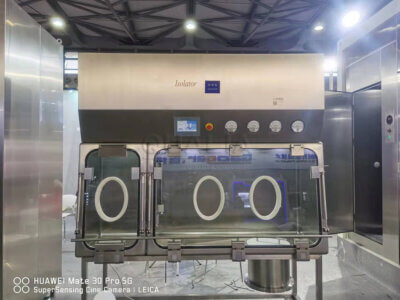
Failure-state testing extends this logic further: it asks not just whether the equipment performs correctly under normal and boundary conditions, but what happens when something fails, and whether that failure produces the approved response rather than an unpredictable one. Any gap between the observed failure response and the approved criterion is a deviation, not a footnote, and needs to be recorded and assessed as such rather than resolved informally during testing. The related operational qualification considerations for transfer and containment-adjacent equipment extend into how specific functions, such as those in VHP, BIBO, pass box, or APR door systems, are structured for evidence during OQ, since the interlocks and alarms relevant to material transfer often sit at the interface between these systems and the surrounding process.
Prove representative load cycles and document deviations before release
| Evidence element | What the cycle record should show | Release boundary |
|---|---|---|
| Representative load pattern | The load pattern represented by the cycle evidence | The evidence applies to the represented pattern |
| Intended process conditions | The process conditions to which the cycle evidence applies | The result does not establish different process conditions |
| Monitoring locations | The locations used to monitor the cycle | No universal monitoring or indicator plan is implied |
| Deviations | Each deviation and its documented assessment against approved criteria | The release decision must account for the recorded deviations |
| Release decision | Whether the evidence supports release for the intended load and process conditions | Acceptance remains tied to the approved project-specific criteria |
Load-specific cycle evidence answers a question that OQ cannot answer on its own: does the system perform as required under the load and process conditions it will actually see in use, rather than under the idealized or minimal conditions used to challenge individual functions. A cycle that passes under a light or unrepresentative load does not establish that the same cycle will perform correctly under the load the process actually generates, because load characteristics can change how material moves, how a cycle distributes its effect, or where monitoring would need to be placed to detect a failure.
This is the stage where EU GMP Annex 1‘s treatment of transfer control and decontamination cycle evidence becomes directly relevant: cycles need to be validated and controlled based on evidence appropriate to the sterile-manufacturing context in which they operate, recognizing that Annex 1 does not supply universal cycle parameters or a fixed indicator plan that applies across all projects. The specific parameters, monitoring locations, and indicator approach have to be established for the load and process actually in use, not assumed from a generic template.
Representativeness is the governing concept here. A load pattern used for cycle qualification needs to reflect the load the equipment will handle in production, in terms of how material is arranged, how much of the available capacity is used, and where the most resistant points in that load are likely to sit. Where production load patterns vary across different products or batch configurations, a single representative pattern may not cover every case, and the project needs to decide whether one qualified pattern bounds the range of expected loads or whether multiple patterns need separate cycle evidence.
Monitoring location selection follows directly from load representativeness. A monitoring point that is well placed for one load configuration may not be the point most likely to show a failure under a different configuration. There is no universal monitoring or indicator plan that applies regardless of load; the placement has to be reasoned from where the cycle is expected to be least effective given the specific load pattern being qualified.
Deviations recorded during cycle testing need individual assessment against the approved criteria that apply to that cycle, rather than being treated as resolved simply because the overall cycle result looked acceptable. A release decision built on cycle evidence has to account for what each deviation means for the specific load and process conditions tested, and the decision applies to that load and those conditions rather than establishing a general conclusion about the equipment’s performance under different conditions.
Close traceability, open items, and handover responsibilities
| Closure item | Record needed | Closure boundary |
|---|---|---|
| URS traceability | The stage and evidence that demonstrate each URS requirement | An unmapped requirement remains an open item |
| Vendor-test reuse | The vendor test accepted without site repetition, the site suitability review, and the reason repetition is unnecessary | Vendor evidence alone does not establish site suitability |
| Deviations | The affected approved criterion, documented assessment, and resulting decision | A deviation is not closed merely because the test stage is complete |
| Open items | The remaining action, current status, and effect on acceptance or release | Open work stays visible until a documented decision closes or carries it forward |
| Handover responsibilities | The named project party and required handover action for each remaining item | Responsibility is project-specific and should not be assigned generically |
A qualification package is only as useful as its ability to show, on demand, which requirement is covered by which piece of evidence and why. A traceability matrix exists to answer that question directly: for each requirement in the URS, which stage produced the relevant evidence, and where a vendor test is being relied on without repetition on site, what justifies that reliance. Where this mapping is left implicit, a reviewer has no efficient way to confirm that every requirement actually has supporting evidence, as opposed to evidence that simply exists somewhere in the package without a clear link back to the requirement it was meant to satisfy.
Vendor-test reuse is a recurring point of ambiguity in this closure process. Accepting a vendor’s factory result without site repetition can be reasonable, but only where the site suitability review has actually been performed and documented, consistent with how Annex 15 treats vendor documentation as informative rather than automatically acceptable. Without that review on record, the traceability matrix cannot honestly claim the requirement is closed; it can only claim that evidence exists from a context that has not been confirmed to match the site.
Deviations and open items are related but distinct categories, and conflating them creates closure problems. A deviation records a departure from an approved criterion along with its assessment and resulting decision; closing the test stage in which the deviation occurred does not automatically close the deviation itself, particularly if the assessment concluded that further action is needed. An open item records remaining action and its current status, and it needs to stay visible, with a documented effect on acceptance or release, until a decision explicitly closes it or carries it forward into another stage or into routine operation.
Handover responsibility is where this closure work becomes operational rather than documentary. Each remaining item, whether an open action or a deviation still being tracked, needs a named party responsible for the required action, because responsibility assigned generically tends to default to no one in particular once the project moves into routine use. This is also where the customer’s own project information, including the requirements and acceptance criteria established earlier in the project, feeds into how Qualia’s configuration and quotation review is approached for equipment the customer is sourcing, since the traceability expectations set at this stage shape what evidence a supplier is asked to provide at FAT, SAT, and OQ. Where handover documentation for the broader project, including URS, FAT, SAT, and the IQ/OQ/PQ sequence, has already been structured for a related containment or BSL project, aligning the material transfer qualification package to the same traceability logic reduces the chance of a requirement falling through the gap between what the vendor tested and what the site confirmed.
Frequently Asked Questions
Q: When can factory acceptance test evidence be reused instead of repeating the same test on site?
A: Reuse it only when a site suitability review confirms that the vendor test addresses the applicable URS requirement and the traceability record explains why repetition is unnecessary. Utilities, interfaces, alarms, interlocks, transport damage, and other installation-sensitive conditions still need appropriate site evidence.
Q: What should the project team prepare before material transfer qualification begins?
A: Prepare the approved URS and acceptance criteria, the intended operating sequences and challenge conditions, the installed configuration and utility information, applicable calibration and equipment documents, and representative load and process conditions. This lets each requirement be assigned to the stage that can produce the relevant evidence.
Q: How should transport or installation changes after FAT be handled?
A: Keep the FAT record, then identify which utilities, interfaces, functions, alarms, interlocks, or equipment conditions could have changed after shipment or installation. Those affected items should be checked at the appropriate site stage, with damage and unresolved differences recorded as visible open items.
Q: Does a successful OQ support release of a pass box, dunk tank, or VHP pass box for an intended load?
A: OQ alone does not establish load-specific cycle evidence. Release for an intended load should be tied to the represented load pattern, applicable process conditions, monitoring locations, recorded deviations, and approved project-specific criteria.
Q: How should a qualification deviation affect the release or handover decision?
A: Assess it against the specific approved criterion it affects and document the resulting decision. The record should show whether the issue is closed or carried forward, its effect on acceptance or release, the remaining action, and the project party responsible for that action.