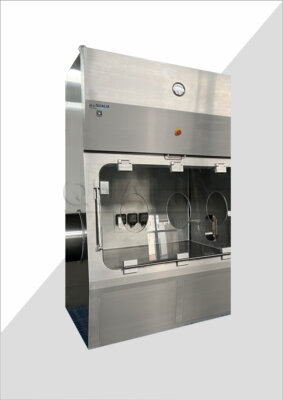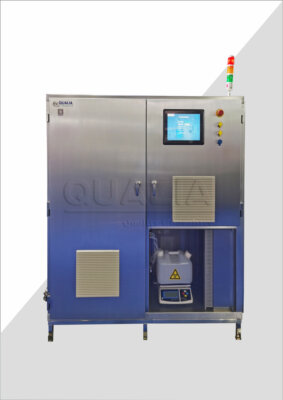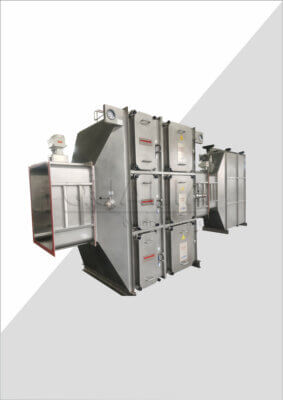


A BSL-3/4 facility entering the final test phase generates a specific decision problem: which results prove integrated performance, and which merely prove that equipment is present and powered. Getting that sequence wrong does not just waste time re-running checks. It produces a handover package where the test team cannot say, with confidence, why a given result remains valid once something upstream changes. The sequencing question matters because biosafety containment depends on systems working together under failure conditions, not on each component passing its own isolated check.
Prerequisites That Must Be Stable Before Integrated Testing
| Readiness gate | Evidence to check before proceeding | Decision boundary |
|---|---|---|
| Installation completeness | The installation is complete for the systems entering the test sequence | Dynamic results should not be used as integrated-performance evidence before this gate is met |
| Calibrated instruments | Instruments used for the planned checks have current calibration evidence | Results depend on the applicable test context and project protocol |
| Utilities proven | Required utilities have been demonstrated before individual equipment and cross-system challenges | A utility dependency that is not stable can invalidate later evidence |
| Individual equipment functions proven | The equipment functions needed for the planned integrated challenges have been demonstrated | Cross-system challenges follow equipment-level proving |
| Approved acceptance criteria | Predefined project criteria are agreed before execution | The cited frameworks do not supply site-specific acceptance values |
Before any integrated test result can be treated as evidence of containment performance, the test team needs confidence that the physical and instrumentation baseline will not shift mid-sequence. Installation completeness is the first condition, not because incomplete installation makes testing impossible, but because a dynamic result recorded against a system still being finished cannot be distinguished from a result that reflects the finished configuration. If ductwork, door hardware, or control wiring is added after a dynamic check, that check no longer describes the system being handed over.
Calibrated instruments sit alongside installation completeness for a related reason. A pressure or flow reading is only as good as the instrument producing it, and an instrument with lapsed or unverified calibration turns an apparently clean result into an unverifiable one. This is not a formality; it changes what the number in the test record actually means. Where the project protocol requires a specific test context, per ISO 14644-3:2019, the recommended apparatus and procedures for installed cleanroom and clean-zone performance parameters only produce comparable results when the applicable test context is defined in advance, since the standard’s abstract notes that it does not establish site-specific acceptance values without that context.
The practical consequence for sequencing is that a project team cannot shortcut from “the equipment is installed” to “the system is ready for cross-system challenges.” Each gate has to be closed in order: installation, then calibrated instrumentation, then proven utilities, then individual equipment functions, and only then the challenges that span system boundaries. Skipping ahead does not save time if the skipped step later invalidates results obtained afterward, because every later result inherits the uncertainty of the step it depended on.
What changes this judgment from project to project is the degree of interdependency built into the facility design. Where systems are more tightly coupled, an unstable prerequisite propagates further before it is caught. Where equipment functions more independently, an unstable prerequisite stays local longer. Either way, the question the test team must answer before starting is the same: which gate are we actually past, and what evidence closes it, as opposed to simply what has been installed or switched on.
Installation and Utility Checks That Protect Later Results
Utilities function as the quiet precondition behind almost every subsequent test, which is why proving them individually, before any cross-system challenge is attempted, protects the integrity of everything that follows. A utility that appears stable under static conditions can behave differently once it is asked to support a dynamic, cross-system event, and if that difference is not caught early, it surfaces later as an anomaly that looks like an equipment fault rather than a utility dependency.
The reasoning here is sequential rather than additive. Proving a utility is not simply one more item on a checklist; it is the condition that makes every later equipment-level and cross-system result interpretable. If a utility dependency is not confirmed stable, a failure during a later interlock or pressure-control challenge becomes ambiguous: did the equipment fail, or did the utility supporting it fail first? Separating those two failure modes after the fact is harder than preventing the ambiguity by sequencing correctly in the first place.
This is also where individual equipment functions need to be demonstrated on their own terms before they are asked to participate in a challenge that spans multiple systems. A door interlock, an exhaust damper, or a decontamination cycle each has a function that can be verified in isolation. Only once that isolated function is confirmed does it make sense to ask how the equipment behaves when it must coordinate with another system’s response. Reversing this order means that a cross-system failure cannot be traced back to its origin with confidence.
The condition that changes how much weight this step carries is the complexity of the utility architecture itself. Where utilities are shared across multiple containment zones or equipment types, the case for proving them individually before integration becomes stronger, because a shared utility failure has a wider blast radius across the test sequence. Where utilities are more segmented by system, the dependency chain is shorter and easier to isolate if something behaves unexpectedly later.
Equipment Functions to Prove Before Cross-System Challenges
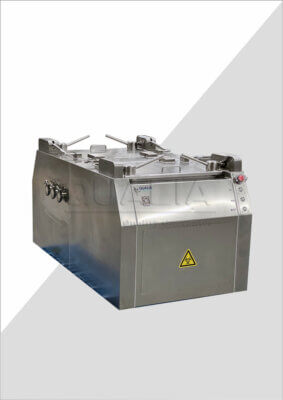
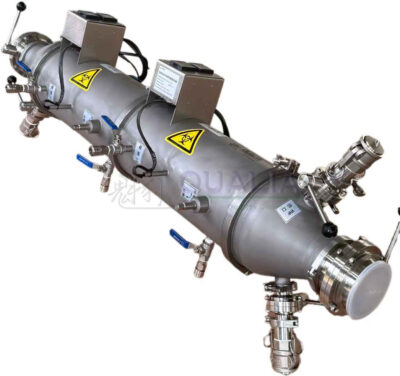
The governing rule at this stage is straightforward to state and easy to violate under schedule pressure: prove what a piece of equipment does on its own before asking it to participate in a challenge that depends on another system responding correctly at the same time. A door interlock, a pressure-control sequence, an exhaust response, a decontamination cycle, or a waste-treatment sequence each has a discrete function. Confirming that function in isolation establishes a known baseline against which any later, more complex behavior can be judged.
The reason this ordering matters is diagnostic, not procedural. When equipment has already been proven to perform its individual function correctly, a problem that appears during a cross-system challenge can be attributed to the interaction between systems rather than to the equipment itself. Without that baseline, a test team facing an unexpected result during an interlock or decontamination sequence has no way to separate “the door mechanism failed” from “the door mechanism was never confirmed to work and is now failing for the first time under a compound condition.” The first is a cross-system finding; the second is a gap in the test sequence that should have been closed earlier.
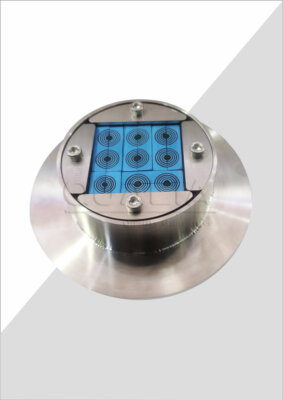
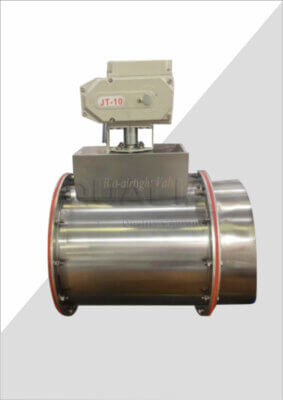
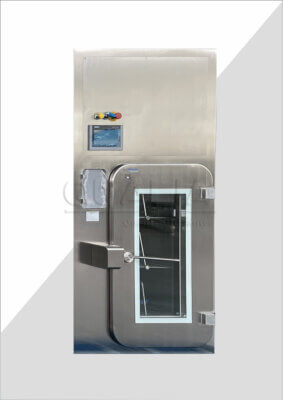
This single principle extends across every equipment type the sequence touches, because the mechanism is the same regardless of which boundary is being tested. Whether the system involves door interlocks and airflow response, or decontamination equipment and waste-treatment sequencing, the governing question is identical: has this function been demonstrated to work before it is asked to do so as part of a larger coordinated event? A bio-safety isolation damper and a pneumatic seal APR door each perform a distinct function within the containment envelope, and each needs its own function confirmed before it is treated as a known, reliable input to a cross-system challenge.
What changes the practical weight of this step is how many systems a given piece of equipment touches. Equipment that only interacts with one other system presents a narrower diagnostic problem if something goes wrong later. Equipment that sits at the intersection of several systems, such as a door that affects both airflow balance and access control, carries more consequence if its individual function was not confirmed first, because a cross-system failure involving it has more possible origins to rule out.
Failure Scenarios for Airflow, Alarms, Interlocks, and Power
| Credible state | Response evidence to define before execution | Applicable boundary |
|---|---|---|
| Power loss | The expected safe response to loss of power | The project protocol must set the expected response and acceptance criteria |
| Exhaust loss | The expected exhaust-control and alarm response | Airflow and alarm expectations depend on the facility design, risk assessment, and applicable local rules |
| Door conflict | The expected door-interlock response | The project protocol must define the challenged conflict state and expected response |
| Alarm acknowledgement | The expected acknowledgement response during the failure simulation | An acknowledgement check does not by itself establish recovery |
| Recovery | The expected response as the system recovers from the challenged state | Recovery evidence must be evaluated against the agreed project criteria |
Once individual equipment functions and utilities are proven, the sequence moves to deliberately challenging the system under credible failure states. This is a different kind of test than anything performed earlier, because it is not asking whether equipment works under normal conditions; it is asking whether the system responds safely when something fails. Power loss, exhaust loss, door conflict, alarm acknowledgement, and recovery each represent a distinct failure state, and each requires its expected safe response to be agreed and documented before the simulation is run, not interpreted afterward based on whatever happened.
This sequencing requirement exists because failure-mode testing without a predefined expected response turns every result into a judgment call made after the fact, which is precisely the kind of ambiguity a handover package needs to avoid. If the expected response to an exhaust loss is not written down in advance, then whatever the system does during the simulated loss becomes the de facto standard, rather than being measured against an agreed criterion. The CDC/NIH BMBL 6th Edition addresses this directly for BSL-3 airflow monitoring and BSL-4 ventilation interlocks, deviation alarms, entry, and decontamination functions, though as U.S. advisory best practice, the facility-specific details still follow the applicable risk assessment and local rules governing that particular project.
The failure states are not interchangeable in what they test. A power loss challenge asks how the system behaves when its primary energy source is removed, which has implications for every powered function in the containment envelope simultaneously. An exhaust loss challenge isolates one specific airflow function and asks whether its loss is detected and responded to correctly. A door conflict challenge tests whether the interlock logic resolves a specific contested state the way the design intends. Alarm acknowledgement testing checks whether the system correctly registers that a human has responded to an alert, which is a distinct question from whether the underlying condition has actually been resolved. Recovery testing asks whether the system returns to a safe, known state once the challenged condition ends, and this has to be evaluated against the same agreed criteria as the initial failure response, not assumed from the fact that the failure response itself was acceptable.
The condition that changes which failure scenarios matter most for a given project is the facility’s specific risk assessment and containment design. A facility with a particular configuration of shared exhaust across multiple zones faces different consequences from an exhaust loss than one with more segmented exhaust architecture. This is exactly why the expected response has to be defined by the project protocol rather than assumed from a general principle: the correct safe response is a function of the specific facility, not a fixed answer that applies uniformly.
Retest Logic After Deviations or Configuration Changes
| Event or record | Question the test team must resolve | Evidence needed for the decision |
|---|---|---|
| Deviation | Which test result or dependency was affected? | The recorded deviation and its relationship to the test sequence |
| Configuration change | Which earlier results remain valid after the change? | The changed configuration and the dependencies of the affected results |
| Retest decision | Which affected checks must be repeated? | Approved acceptance criteria and the documented reason for the selected retest scope |
| Completed retest | Does the new result satisfy the approved criteria? | The retest result, any remaining deviation, and the reported conclusion |
A deviation or a configuration change discovered partway through the test sequence raises a question that is easy to underestimate: which earlier results are still valid, and which now need to be repeated? This is not automatically “retest everything” nor is it automatically “retest only the item that changed.” The correct scope depends on understanding the dependency chain that the earlier sections of the sequence established.
If a configuration change affects a utility that multiple equipment functions depend on, then every result that relied on that utility being stable is now in question, even if the equipment itself was not directly touched. This is the direct consequence of the sequencing logic used earlier: because later results depend on earlier gates being closed, a change to an earlier gate reopens the validity of everything built on top of it. The test team’s task is to trace that dependency chain forward from the point of the deviation or change, not simply to re-run the specific check where the deviation was first observed.
EudraLex Volume 4 Annex 15 describes the relevant qualification framework for this reasoning, covering the FAT and SAT relationship, IQ/OQ/PQ stages, predefined criteria, deviations, and reported conclusions. As a GMP qualification framework, it establishes that project protocols set the equipment-specific stages and limits, and that vendor evidence still needs a suitability review against those project-specific criteria. The retest logic described here operates within that same structure: a deviation is recorded, its relationship to the test sequence is resolved, a retest scope is decided against approved acceptance criteria, and the retest result is then evaluated to confirm the original conclusion either holds or needs revision.
What differs between a deviation and a configuration change is the direction of the question. A deviation asks which result or dependency was affected by something that did not go as expected during testing. A configuration change asks which earlier results remain valid after something was deliberately altered. Both require the same underlying discipline: identifying the dependency, deciding the retest scope against agreed criteria, and documenting why the new result does or does not satisfy those criteria. Where the change is isolated to a single piece of equipment with no shared dependencies, the retest scope can remain narrow. Where the change touches a utility or a function that other systems depend on, the retest scope has to follow that dependency outward, regardless of how contained the original change appeared.
Handover Evidence That Preserves Test Sequence and Traceability
| Handover element | Traceability question | What the record should preserve |
|---|---|---|
| Test sequence | Were installation completeness and calibrated instruments established before dynamic results were used? | The order of prerequisite, equipment, cross-system, and scenario checks |
| Dependencies | Which stable utilities or equipment functions does each integrated result depend on? | The link between each result and its prerequisites |
| Acceptance criteria | What approved criteria governed the test? | The predefined project criteria used to judge the result |
| Deviations | What departure occurred and which evidence did it affect? | The deviation and its effect on the sequence or result |
| Retests | What was repeated after a deviation or configuration change? | The retest scope, result, and applicable approved criteria |
| Reported conclusion | Why does the result remain valid after changes and retests? | The documented basis for the handover conclusion |
The handover package is where every earlier sequencing decision either holds together or falls apart under scrutiny. A biosafety officer or facility engineer reviewing the package after the fact is not present for the testing itself; they are relying entirely on the record to answer a specific question for each result: why is this still valid, and what does it depend on? If the record does not preserve that chain, the result is a package full of individually plausible test outcomes with no demonstrated relationship to each other.
This is why the order of testing has to be visible in the handover record, not just the outcomes. A reviewer needs to see that installation completeness and calibrated instruments were established before dynamic results were generated, that utilities and individual equipment functions were proven before cross-system challenges were attempted, and that failure scenarios were run against predefined expected responses rather than evaluated after the fact. Without that visible order, the package cannot distinguish a properly sequenced test program from one where steps were run out of order and happened to produce acceptable-looking numbers anyway.
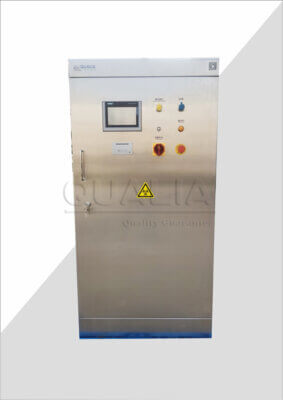
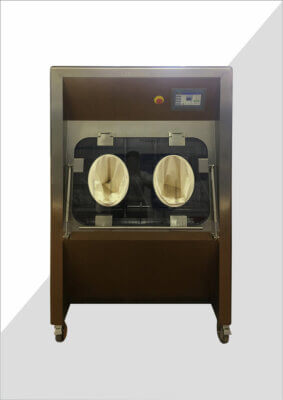
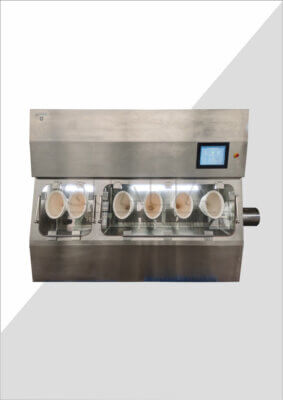
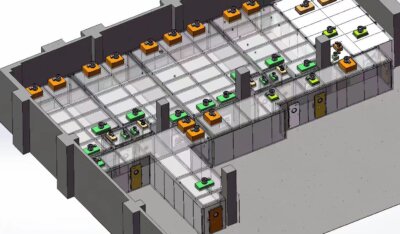
Dependencies matter here for the same reason they mattered during the retest logic: each integrated result rests on specific utilities or equipment functions being stable, and the handover record needs to state what those dependencies were. This is what allows a later reviewer, or a later retest decision, to trace backward from any given result to the conditions it assumed were true at the time. Qualia Bio’s role in a project of this kind connects most directly to this traceability requirement, since the configuration details supplied for a BSL-3/4 module laboratory, isolation dampers, or APR doors during project review become part of the dependency picture that later test and handover documentation needs to reference accurately.
Deviations and retests need the same treatment in the handover record as they received during the testing itself: what departed from the expected result, which evidence it affected, what was repeated, and against what approved criteria. A handover package that omits a deviation because it was eventually resolved removes the information a future reviewer needs to understand why the final result is trustworthy rather than simply convenient. The reported conclusion for each result should state plainly why it remains valid after whatever changes and retests occurred along the way, which is the only way the package supports confident return-to-service decisions without requiring the original test team to be consulted every time a question arises later.
Frequently Asked Questions
Q: How should the team turn the integrated testing sequence into a practical schedule?
A: Build the schedule from dependencies: installation completeness and instrument calibration first, then utilities, individual equipment functions, cross-system controls, and credible failure and recovery scenarios. Each test should identify the earlier evidence it relies on so a failed prerequisite can be traced to every affected downstream result.
Q: Can factory or vendor test evidence be used in place of an installed-site result?
A: Only when the project protocol accepts that evidence for the relevant stage and its suitability for the installed configuration and dependencies has been reviewed. If it does not demonstrate the actual utility, control, interlock, or scenario context, keep the installed check open rather than assuming the evidence is equivalent.
Q: Is alarm acknowledgement enough to close a failure-mode test?
A: No. Alarm acknowledgement and system recovery are separate parts of the evidence. Define the expected safe response, acknowledgement behavior, and recovery response before execution, then assess each against the agreed project criteria.
Q: What should the test team do when a cited standard does not provide a site-specific pass limit?
A: Approve project-specific acceptance criteria before testing begins. Set them for the applicable test context, facility design, risk assessment, and local requirements instead of treating a general framework or test method as the facility’s acceptance value.
Q: Can earlier test results remain valid after a configuration change?
A: Yes, but only when a documented dependency assessment shows which results were affected and why the others remain valid. Repeat the affected checks and record the retest scope, result, applicable criteria, and conclusion in the handover package.