
How much acceptance testing does a BSL-4 suit-laboratory need compared with a BSL-3 facility, and where does that extra scope actually come from? The honest answer is not a fixed multiplier tied to the biosafety level label — it comes from the agent risk, the intended procedures, the primary containment approach, and the facility concept the project has actually selected. Treating “BSL-3” or “BSL-4” as a shorthand for a fixed test list skips the step that determines whether a test is even relevant to the facility in front of you.
Risk and Intended Work Set the Acceptance Baseline
A biosafety level designation communicates a containment category, not a test procedure. It tells a reader the general boundary of the facility’s intended use, but it does not by itself specify which functions require verification, what evidence demonstrates that each function performs as intended, or which interfaces matter for a given project. The acceptance scope has to be derived separately, from the same inputs that drove the facility design in the first place: the agent or agents the laboratory is built to contain, the procedures personnel will actually perform, the primary containment equipment selected for the work, and the facility concept chosen to support it.
This matters because two facilities carrying the same biosafety level designation can have different acceptance scopes if their procedures or primary containment differ. Where a project relies heavily on primary containment equipment to isolate the agent during manipulation, certain facility-level tests may carry different weight than they would in a project where the facility envelope itself is doing more of the containment work. Where intended procedures involve work that generates aerosols or requires open manipulation outside primary containment, the facility interfaces supporting that work need verification that a project with more contained procedures might not require in the same form.
The consequence for a project team is that the test matrix cannot be copied from a prior project solely because the biosafety level matches. Each function proposed for testing needs a stated reason tied to the agent risk, the procedure, the containment device, or the facility concept — not simply “this is what BSL-3 facilities test” or “this is what BSL-4 facilities test.” A biosafety level alone does not define the full test list; a site-specific risk assessment does. This is consistent with the WHO Laboratory Biosafety Manual‘s position that risk assessment informs proportionate biosafety controls, though that guidance operates at summary level and does not substitute for a site-specific risk assessment or for the applicable national rules governing a particular project.
For a reader building a test matrix, the practical task at this stage is not yet to list functions — it is to confirm that the agent risk, procedures, primary containment, and facility concept have each been documented clearly enough that every later test can be traced back to one of them.
Shared Containment Functions Across BSL-3 and BSL-4 Projects
Some containment functions appear in both BSL-3 and BSL-4 projects because the underlying engineering problem — keeping a hazardous agent from moving where it should not go — does not disappear at either level; it is addressed with different scope and different supporting interfaces. Where a function is genuinely shared, the acceptance question is not whether to test it but how the project’s specific configuration changes what passing evidence looks like.
The judgment a reader needs here is procedural, not a checklist: a function should only be classified as shared after it has been checked against the agent, the intended procedures, the primary containment, and the facility concept for both the BSL-3 and BSL-4 reference projects in question. A function that looks identical on paper — described the same way in two different project specifications — can still require different test conditions, different alarm responses, or different acceptance thresholds depending on what the facility concept demands around it. Labeling something “shared” too early, before that check, risks either under-testing a BSL-4 implementation of the function or over-specifying a BSL-3 implementation with criteria that belong to a different concept.
This distinction also affects who owns the evidence. Where a function is shared, the project team benefits from assigning one evidence owner who understands both the common engineering principle and the level-specific conditions that vary its acceptance criteria, rather than splitting ownership in a way that lets the level-specific variation go unverified. Where a function is not shared — where it exists in one level’s facility concept and not the other’s — that boundary needs to be stated explicitly in the project documentation, so that a reviewer encountering the test matrix later does not assume it applies more broadly than the project intends.
The practical output of this section’s reasoning, for a reader assembling their own matrix, is a short rule: do not mark a function shared by name alone; mark it shared only after its conditions have been compared across both reference concepts.
BSL-3 Tests for Access, Airflow, Exhaust, and Decontamination
For BSL-3 work, acceptance commonly needs to close a defined set of functional areas: access control, inward directional airflow, exhaust protection where applicable, alarms, and decontamination provisions. Each of these addresses a distinct containment mechanism, and each one’s acceptance evidence depends on project-specific conditions rather than a universal numeric setpoint.
Access control verification confirms that entry into the controlled area follows the sequence and restrictions the facility design intends, which depends on how the project has defined its access boundary and what procedures occur inside it. Inward directional airflow testing confirms that air moves from less contaminated to more contaminated areas as intended, but the acceptance evidence for this depends on the facility’s room relationships and the ventilation design actually installed, not on a figure assumed from the biosafety level alone. Exhaust protection, where the facility concept includes it, requires evidence that exhaust air is handled consistently with the project’s containment approach; “where applicable” matters here because not every BSL-3 concept treats exhaust the same way, and a reader should confirm whether the project’s design includes an exhaust protection function before assuming a test for it is required. Alarms need verification against the specific conditions they are meant to signal, which again traces back to the facility’s airflow and access design rather than to a fixed general rule. Decontamination provisions require evidence that the installed means of decontamination function as the facility concept intends for the materials, surfaces, or spaces that require it.
The condition that most changes interpretation across these areas is whether the project team has documented why each function is included and what acceptance looks like given the specific facility configuration, or whether the team has assumed a standard setpoint carried over from general guidance. The CDC/NIH BMBL 6th Edition describes access, airflow, exhaust, and decontamination provisions relevant to BSL-3 facilities as U.S. advisory best practice; applying it to a specific project still requires the protocol-level risk assessment and the locally applicable rules governing that project, since advisory guidance does not substitute for either.
BSL-4 Suit-Laboratory Interfaces That Expand Test Scope
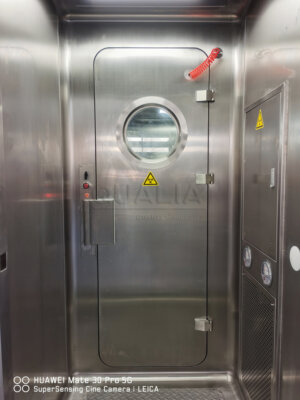
BSL-4 suit-laboratory concepts introduce interfaces that do not appear in a BSL-3 facility’s acceptance scope at all, because the suit-laboratory concept itself changes how personnel move through the facility and how the facility separates them from the agent. These additions include airtight entry, a shower-out sequence, ventilation interlocks, pressure alarms, and whole-facility decontamination provisions.
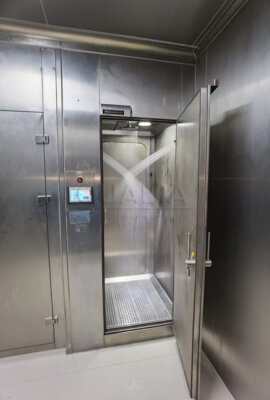
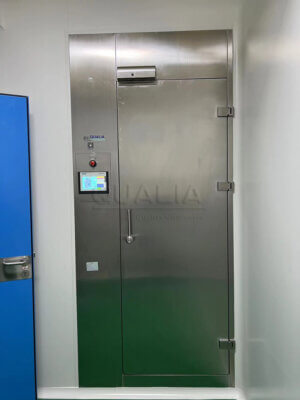
Airtight entry exists because the suit-laboratory concept depends on a sealed boundary at the point personnel cross into and out of the controlled space; verifying it means confirming that the entry mechanism maintains that seal under the conditions the facility concept specifies. The shower-out sequence exists because personnel exiting a suit-laboratory need a defined decontamination step before leaving containment, and acceptance evidence here needs to confirm the sequence operates as the facility design intends — not simply that a shower is present. Ventilation interlocks tie door or access states to airflow conditions, which means their acceptance evidence depends on confirming that the interlock logic matches the facility’s documented door and airflow relationships, not a generic interlock behavior. Pressure alarms in a suit-laboratory concept monitor conditions specific to that facility type, and their acceptance evidence should be tied to the pressure relationships the facility concept actually establishes. Whole-facility decontamination provisions address the facility as a unit rather than a single room or device, which changes what “passing” evidence looks like compared with a decontamination provision scoped to one space.
The condition that determines whether any of this applies is the facility concept itself: these interfaces belong to an applicable BSL-4 suit-laboratory concept, and they should not be transferred to every BSL-3 project. A reader evaluating a project that uses BSL-4 containment through a cabinet-line or other primary-containment-led concept rather than a suit laboratory needs to confirm which concept actually governs the facility before assuming any of these five interfaces apply. The CDC/NIH BMBL 6th Edition addresses suit-laboratory entry, shower, ventilation, alarm, and decontamination distinctions as advisory material requiring protocol-specific risk assessment and local rules in addition to the guidance itself.
Where a project’s BSL-4 facility uses a different primary containment concept than a suit laboratory, these specific interfaces may not form part of its acceptance scope at all, and the test matrix should reflect the concept actually selected rather than a generic BSL-4 assumption.
Jurisdiction and Facility Concept Change What Evidence Is Required
| Evidence driver | How it changes the acceptance scope | Decision boundary |
|---|---|---|
| Agent risk | Controls and tested functions must be proportionate to the agent risk | Use a site-specific risk assessment; the biosafety level alone does not define the full test list |
| Intended procedures | The test scope must reflect the procedures that will actually be performed | Do not treat a level designation as a substitute for the intended-use assessment |
| Primary containment | Facility acceptance must account for the primary-containment approach used by the project | Confirm the project configuration before fixing the facility test scope |
| Facility concept and mode | The selected concept determines which facility interfaces belong in acceptance | BSL-4 suit-laboratory interfaces do not automatically apply to every BSL-3 project |
| Jurisdictional requirements | National and local requirements determine applicable evidence and criteria | General biosafety guidance does not replace project-specific local requirements |
Even once a reader has identified which functions apply to a given BSL-3 or BSL-4 project, the evidence that demonstrates acceptable performance is not fixed by the biosafety level. It shifts with the agent risk governing the project, the procedures intended for the space, the primary containment approach selected, the facility concept and its operating mode, and the jurisdictional requirements that apply to that specific site.
Jurisdiction matters because national and local requirements determine what evidence a regulator or institutional biosafety authority will accept as demonstrating acceptable performance, and these requirements vary by location in ways that general biosafety guidance cannot anticipate. A project team relying solely on summary-level guidance risks preparing evidence that satisfies a general principle but not the specific documentation a local authority requires. Facility concept and mode matter for a related but distinct reason: the same biosafety level can be implemented through different facility concepts, and the concept selected determines which interfaces even exist to test — a point already relevant to why BSL-4 suit-laboratory interfaces do not transfer to a BSL-3 project built on a different concept.
For a project team coordinating with QUALIA or any other supplier during a quotation or project review, this is the stage at which project-specific information — the agent risk profile, intended procedures, selected primary containment, facility concept, and applicable jurisdictional requirements — needs to be communicated clearly enough that the proposed acceptance scope can be configured around the actual project rather than a generic assumption tied to the biosafety level alone. Confirming the facility concept before fixing the facility test scope prevents a project from acquiring acceptance criteria that belong to a different configuration.
Test Matrix Ownership Keeps Shared and Level-Specific Checks Separate
| Matrix section | What belongs in the section | Applicability boundary | Evidence ownership |
|---|---|---|---|
| Shared functions | Functions confirmed to apply across the selected BSL-3 and BSL-4 project concepts | Classify a function as shared only after considering the agent, procedures, primary containment, and facility concept | Name the project-specific evidence owner |
| BSL-3 functions | Access control, inward directional airflow, exhaust protection where applicable, alarms, and decontamination provisions | Do not assume universal numeric setpoints; apply the project risk assessment and local requirements | Name the owner for each applicable function |
| BSL-4 suit-laboratory functions | Airtight entry, shower-out sequence, ventilation interlocks, pressure alarms, and whole-facility decontamination provisions | Include these interfaces for an applicable BSL-4 suit-laboratory concept; do not transfer them to every BSL-3 project | Name the owner for each applicable interface |
| Project options | Functions selected for the specific facility configuration | Include only confirmed project options | Name the owner for each selected option |
Bringing these distinctions into a single working document is less about adding new technical content and more about organizing what has already been established: which functions are shared across the project’s BSL-3 and BSL-4 reference concepts, which functions belong specifically to the BSL-3 facility, which belong specifically to an applicable BSL-4 suit-laboratory concept, and which exist only as selected options for this particular facility configuration.
Separating these categories explicitly prevents two failure modes. The first is under-testing: treating a level-specific function as if it were generic and missing the project-specific conditions that change its acceptance criteria. The second is over-scoping: carrying BSL-4 suit-laboratory interfaces into a BSL-3 project’s test matrix because the two facilities sit on a shared site or share a design history, when the BSL-3 facility’s own concept does not include those interfaces at all.
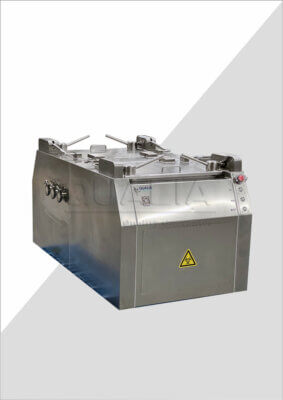
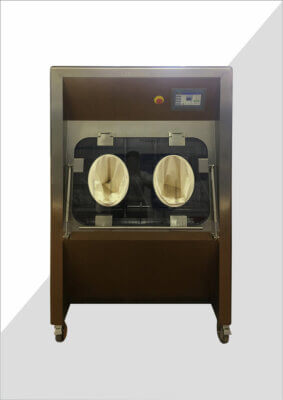
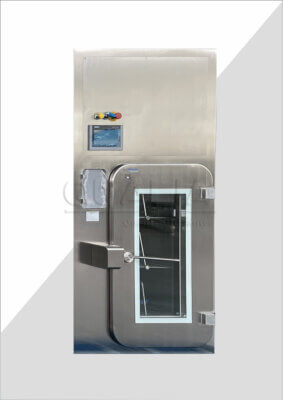
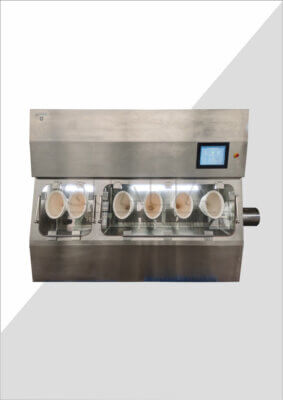
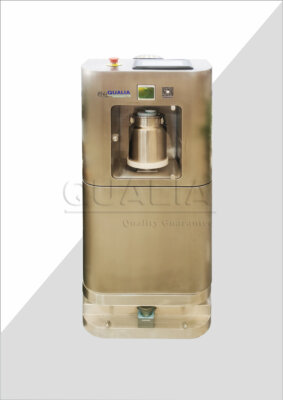
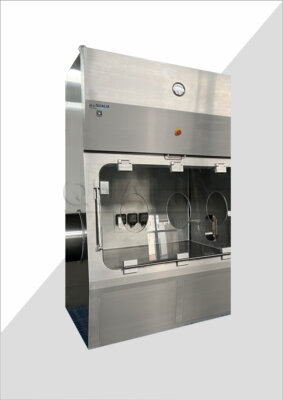
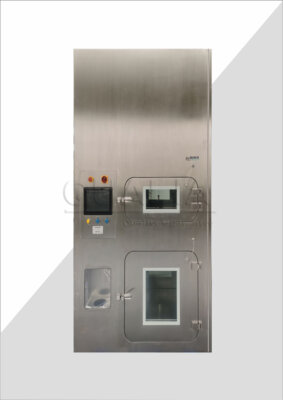
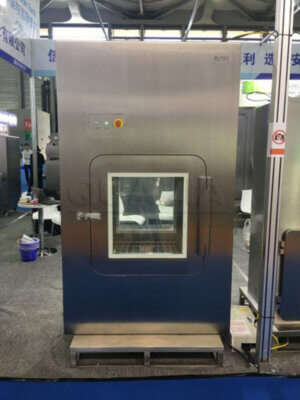
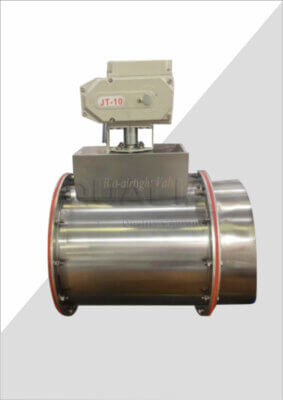
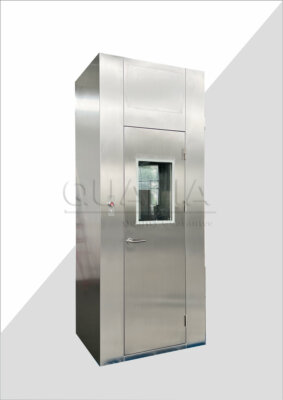
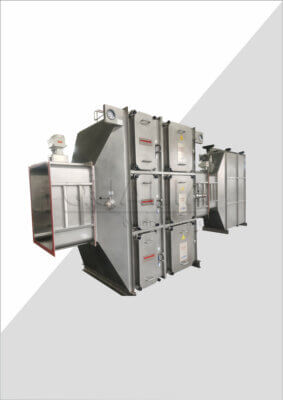
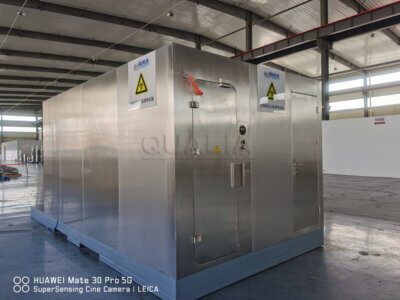
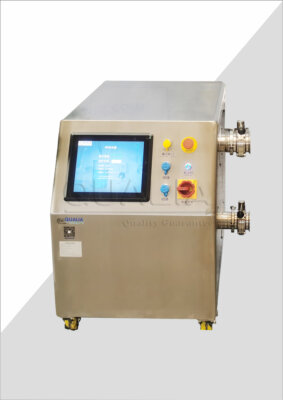
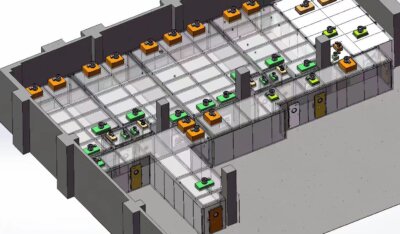
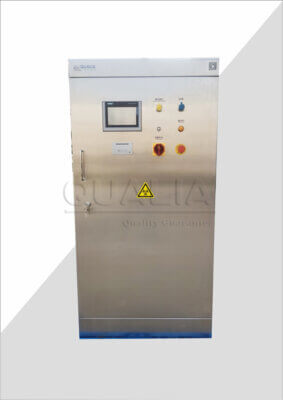
Assigning a named evidence owner to each function, rather than treating ownership as implicit, gives a project team and its reviewers a clear reference point when a test result needs follow-up or when a later facility change requires re-evaluating which functions still apply. This ownership structure also supports coordination where a supplier’s equipment — a BSL-3/BSL-4 module laboratory, a mobile module laboratory concept, or an interface such as a chemical shower — sits within a larger facility test matrix; the equipment-level function needs a clear place in the matrix and a clear owner, distinct from the facility-level functions surrounding it, so that integration and maintenance responsibilities remain traceable as the project moves from acceptance into operation.
Where a project genuinely spans both a BSL-3 facility and a BSL-4 suit-laboratory concept under one program, maintaining this separation in a single matrix — rather than two disconnected documents — gives reviewers a direct way to confirm that shared functions were evaluated consistently and that level-specific functions were not assumed to transfer in either direction.
Frequently Asked Questions
Q: Can the biosafety level alone define the acceptance test list?
A: No. Set the scope from the agent risk, intended procedures, primary containment, facility concept and mode, and applicable jurisdictional requirements; then use the BSL designation as context for those project-specific decisions.
Q: What project information should be ready before the acceptance matrix is finalized?
A: Confirm the site-specific risk assessment, intended work, primary-containment approach, selected facility concept, project options, and applicable national and local requirements. These facts determine which functions belong in the matrix and what evidence is needed.
Q: When should BSL-4 suit-laboratory interfaces be included in acceptance testing?
A: Include them when the selected project is an applicable BSL-4 suit-laboratory concept. Airtight entry, the shower-out sequence, ventilation interlocks, pressure alarms, and whole-facility decontamination provisions should not be transferred automatically to a BSL-3 project.
Q: How should numeric acceptance criteria be handled for BSL-3 functions?
A: Do not assume one universal set of numeric limits. Establish the applicable criteria from the project risk assessment, facility configuration, and local requirements for each relevant function, including access control, inward directional airflow, exhaust protection where applicable, alarms, and decontamination provisions.
Q: How can the acceptance matrix prevent scope gaps or misplaced tests?
A: Separate confirmed shared functions, BSL-3 functions, applicable BSL-4 suit-laboratory functions, and selected project options. Record the applicability basis and a project-specific evidence owner for each included function before testing begins.