
A containment equipment specification that reaches a supplier without measurable functions is not a specification—it is a purchasing intent document. The downstream cost is specific: equipment built to interpret “adequate negative pressure” or “appropriate containment” arrives at commissioning and fails to integrate with the pressure cascade, utility provisions, or material transfer paths already fixed in the room. At that stage, design changes are contractually contested, schedules slip, and the validation timeline absorbs rework that should have been resolved in a URS review meeting. The judgment that prevents this is not architectural—it is editorial. Each function in the URS either carries a measurable condition or names the supplier document that will demonstrate compliance; anything less creates a deficiency that surfaces at FAT, SAT, or inspection. What follows gives biosafety officers, QA teams, and engineering leads the criteria to judge whether a draft URS is actually ready to drive procurement and acceptance testing.
BSL and OEB functions that need measurable wording
The most consequential early mistake in a BSL or OEB URS is treating an occupational exposure band as a design target. Writing “OEB4 containment” into a requirement tells the supplier which product family to quote; it does not tell them what containment performance must be demonstrated. The practical correction is stating the actual worst-case occupational exposure limit for the compound handled—expressed in micrograms per cubic meter—so the supplier can size airflow, glove port arrangement, interlocks, and leak-test acceptance criteria against a specific threshold rather than a categorical label. A target in the range of 1 µg/m³, treated as a worst-case design figure rather than a universal regulatory floor, prevents both over-engineering for lower-risk compounds and undersized containment for the most potent materials in the scope. The distinction matters because OEB bands are administrative groupings; the actual OEL value is what drives verifiable engineering performance.
Functions that commonly arrive in URS drafts without measurable wording include: barrier integrity under operational and maintenance modes, alarm response times and setpoints, glove integrity test frequency and acceptance criteria, decontamination cycle parameters (concentration, dwell, temperature, relative humidity), airlock pressure hold times, and transfer port breach detection. Each of these is testable if it is written with a condition. None is testable if it is written as a capability description. The distinction between “shall include an alarm for pressure loss” and “shall generate an audible and visual alarm within 30 seconds of a sustained pressure loss exceeding 5 Pa below setpoint” is the difference between a requirement that can close a FAT punch list and one that cannot.
Risk-based containment classification, as supported by frameworks such as the WHO Laboratory Biosafety Manual and the CDC BMBL, ties containment level to agent risk group and transmission route—but neither source converts that classification directly into equipment performance numbers. That translation is the site’s responsibility, and it belongs in the URS before the specification reaches any supplier.
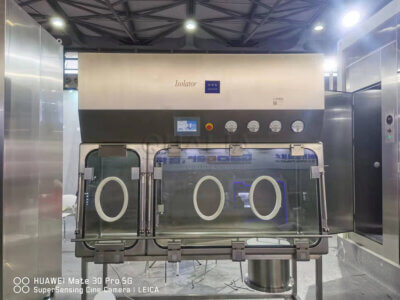
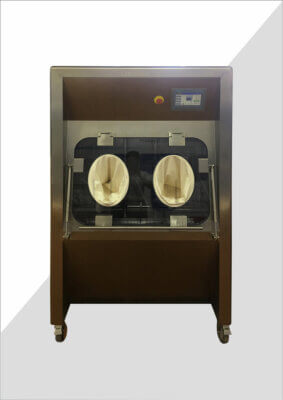
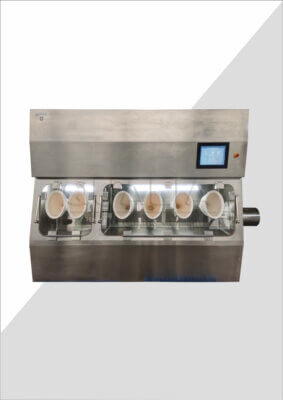
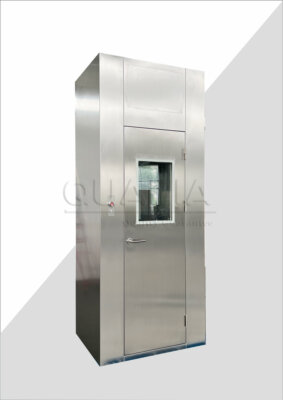
For BSL-3 and BSL-4 laboratory systems where containment is the primary design driver, the OEB4 / OEB5 İzolatör provides a useful reference point for understanding how performance targets translate into physical design constraints at the equipment level.
Interface requirements for rooms, utilities and processes
Interface omissions are the category of URS deficiency most likely to produce equipment that is technically correct but functionally incompatible. A supplier who receives complete functional requirements but no interface data will design to the functions and make reasonable assumptions about everything else. Those assumptions become conflicts at delivery.
The consequence pattern is consistent: the isolator passes factory acceptance testing against its own performance criteria, is shipped, and then cannot be installed because the doorway clearance is 40 mm narrower than the equipment footprint requires; or it is installed but the bag-out port location specified during design does not align with the waste removal path the facility team assumed would be used; or the cleaning validation fails because the URS did not specify whether manual wipe-down or CIP was the intended method, and the chamber surface geometry and drain provision reflect the supplier’s default assumption rather than the site’s process.
Each interface category introduces a specific failure mode if left unresolved.
| Interface Category | Key Specifications to Include in URS | Belirsizse Risk |
|---|---|---|
| Material Transfer & Flow | Incoming/outgoing material dimensions, waste size, cleaning method (manual, spray, CIP), flow direction (clean to dirty) with exit vestibules | Isolator doors, chamber size, exit path, and cleaning system incompatible with real-world materials |
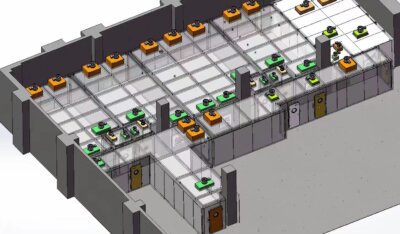
| Room Fit & Installation | Available space, ceiling height, utility panel/bag-out port/RTP locations, doorway/hallway/elevator dimensions, integrated equipment drawings and data sheets | Equipment fails physical integration, cannot be delivered or installed |
| Utility & Hazard Interfaces | Hazardous classification (Class, Division, Groups) when solvents present, separate suite exhaust through HEPA for biologic facilities, utility connection plates | Utility provisions insufficient, cross-contamination or safety non-compliance |
| Process-Specific Containment (e.g., ADC) | Containment isolator with airlock, rapid transfer port, utility connection plate within an aseptic environment | System lacks necessary containment features for potent compounds |
Hazardous area classification deserves particular attention because it is frequently omitted from early URS drafts and has a significant impact on equipment cost and lead time. If organic solvents are present in the process, specifying the hazardous classification—Class, Division, and Groups under NEC or the equivalent ATEX zone—before procurement locks the electrical design and prevents a cost impact that cannot be absorbed late in the project. Similarly, for biological manufacturing suites, the requirement that each suite exhaust separately through HEPA filtration is an interface requirement between the equipment and the building HVAC system; if the facility’s mechanical design has not yet resolved this, the URS review meeting is the appropriate place to surface that gap, not commissioning.
Resolving interface requirements before issuing the URS often exposes site utility gaps—missing connection points, unresolved differential pressure cascades, undefined flow direction decisions—that require facility design changes. This creates schedule pressure. Teams that delay interface resolution to avoid that pressure simply defer the schedule impact to commissioning, where the cost to resolve is higher and the leverage to compel changes is lower.
Acceptance criteria for pressure, airflow and barriers
Pressure, airflow, and barrier integrity criteria are the functions most likely to appear in a URS as directional statements rather than measurable thresholds—and the most likely to create FAT disputes when acceptance is undefined.
| Acceptance Parameter | Measurable Criterion | Amaç |
|---|---|---|
| Pressure Differential (Potent Areas) | Negative to adjacent vestibules/airlocks | Prevent escape of potent compounds |
| Pressure Differential (Cleanroom) | Minimum positive pressure differential of 10 Pa between cleanroom and adjacent areas | Prevent particle ingress |
| Hava Akışı Deseni | Single-pass airflow with HEPA-filtered exhaust | Çapraz kontaminasyonu önleyin |
| Barrier Integrity (Surface Residue) | Equipment containment criteria (e.g., <1 µg/m² surface residue) | Enable vendor selection and barrier integrity verification |
Two criteria in this set require framing beyond the numerical value. First, the direction of pressure differential for potent compound areas—negative to adjacent vestibules or airlocks—is not a number but a condition. The URS must specify both the magnitude and the direction, along with the hold time and monitoring method used to confirm it. A pressure differential that meets the magnitude requirement but is inverted relative to the adjacent space fails containment regardless of the number. Second, single-pass airflow with HEPA-filtered exhaust is a configuration requirement with a verification method consequence: recirculation arrangements require a different test protocol, and if the URS does not specify single-pass, a supplier quoting a recirculation system is not non-compliant by the document’s own terms.
The surface residue criterion—expressed as a maximum allowable contamination level such as less than 1 µg/m² for certain potent compound applications—is particularly important for vendor selection because it creates an objective basis for comparing containment claims across suppliers. Without this figure in the URS, supplier performance data presented during quotation evaluation cannot be compared on a common basis. With it, the criterion becomes a testable acceptance condition that carries forward into IOQ and, where applicable, occupational hygiene monitoring.
For cleanroom environments where particle ingress control is the primary concern, a minimum positive pressure differential of 10 Pa between the cleanroom and adjacent areas is a widely used design figure drawn from containment practice. It is appropriate to treat it as a planning target that will be confirmed by differential pressure mapping during qualification rather than as a regulatory mandate that is uniform across all jurisdictions and facility types.
Supplier documents that support each requirement
A URS requirement that does not name how it will be verified shifts the burden of defining acceptance onto the supplier or the site QA team at commissioning—neither of whom has the authority to retrospectively create the test basis the URS should have established. Requiring specific supplier documents within the URS converts verification intent into an enforceable deliverable.
| Supplier Document | Anahtar Teslim Edilebilir | Role in Requirement Verification |
|---|---|---|
| URS with Room Sketches & Integrated Equipment Drawings | Dimensional drawings, make/model data for all integrated equipment | Improves supplier understanding; prevents integration failures |
| Collaborative Commissioning Plan | Scope, tasks, procedures, roles as formal supplier deliverable | Ensures alignment on commissioning steps and responsibilities |
| FAT & SAT Protocols | FAT simulating completed facility; SAT using risk-based approach leveraging factory tests | Provides objective evidence before and after installation |
| IOQ Protocol | Evidence of meeting ISO14644 and FDA-cGMP requirements, including materials, temperature, humidity, differential pressure, particle studies | Verifies that performance criteria are demonstrably met |
| Turnover Package | Summary report, deficiencies, open issues | Central documentation reference for acceptance and close-out |
The collaborative commissioning plan deserves explicit mention as a URS-listed requirement because it is frequently treated as a courtesy discussion rather than a contractual deliverable. Specifying that the supplier must submit a commissioning plan defining scope, task sequence, procedures, and role assignment—before purchase order release or at a defined project milestone—establishes shared understanding of who is responsible for what during installation, functional testing, and turnover. Without it, scope boundaries between supplier commissioning, site commissioning, and IQ/OQ activities are assumed rather than agreed, and the gaps surface as disputed punch list items.
The FAT and SAT relationship warrants specific treatment in the URS. Under a risk-based approach aligned with ASTM E2500-25, FAT protocols should simulate the completed facility environment to the extent practical, and SAT protocols can leverage factory test results to avoid duplicating low-risk tests at site. For this approach to work, the URS must define which functions will be demonstrated at FAT and which will be deferred to SAT, and it must specify that FAT documentation is a prerequisite for SAT protocol development. A URS that does not address this division leaves both parties operating with different assumptions about what each test event is supposed to confirm.
The IOQ protocol requirement should reference the specific parameters that must be covered: materials of construction, temperature, humidity, differential pressure mapping, and particle studies as appropriate to the containment class. Referencing ISO 14644 as the testing framework for particle and airflow studies, and FDA cGMP requirements as the broader compliance context, gives the IOQ requirement a defined technical basis without overstating either reference as the sole governing authority.
Scope exclusions that should be written into the URS
A URS that attempts to govern everything governs nothing testably. Including process steps not directly driven by equipment function, general facility infrastructure, office spaces, and non-GMP areas creates document weight without creating verifiable requirements—and it dilutes supplier accountability by obscuring what the equipment is actually required to do.
| Dışlama Kategorisi | What to Exclude | Gerekçe |
|---|---|---|
| Non-Equipment Process Details | Process steps not specific to equipment; consider using an Equipment Requirements Specification (ERS) for equipment-specific needs | Prevents overloading the URS, reduces development timescale, and keeps requirements testable |
| Facility Infrastructure & Non-GMP Areas | Office spaces, general facility infrastructure, non-GMP areas | Clear scope boundary ensures the URS focuses on containment equipment/cleanroom functions |
| Detailed Equipment Requirements | Equipment-specific requirements that are better detailed in a separate ERS document | Shifts detailed equipment description to appropriate specification while avoiding URS bloat |
The practical recommendation to separate equipment-specific requirements into a distinct Equipment Requirements Specification (ERS) is worth treating as a drafting decision rather than a formal obligation. For complex systems—an OEB5 isolator integrated with a dispensing process and multiple material transfer ports, for example—the ERS approach allows detailed equipment configuration requirements to be developed in parallel with the URS without overloading the URS with dimensional, electrical, and mechanical detail that belongs at the equipment design stage. The URS then carries what the system must achieve; the ERS carries how the equipment will be configured to achieve it. Both documents remain testable because their scope boundaries are defined.
Writing explicit exclusions into the URS also has an audit function. When an inspection or a post-commissioning dispute raises a question about why a particular facility element was not qualified under a specific protocol, a documented scope exclusion with a rationale is a defensible answer. An absent scope boundary is not.
Approval trigger for testable user requirements
A URS should not be approved on the basis that it is complete—it should be approved on the basis that each requirement is testable. These are not the same condition. A complete URS has addressed all the relevant functions; a testable URS has addressed them in a form that can generate a pass or fail outcome at FAT, SAT, or IOQ without requiring the test team to interpret what was intended.
The practical approval check is to read each requirement and ask two questions: what evidence would confirm this requirement is met, and who is responsible for generating that evidence? If either question cannot be answered from the requirement as written, the requirement is not ready for approval. This review is most efficiently conducted as a structured walkthrough rather than an individual document review, because the answer to “who generates the evidence” often depends on how the commissioning scope is divided between supplier and site—information that exists in the commissioning plan, not in the URS itself.
The approval trigger should also be conditional on interface resolution. A URS that carries open interface items—unresolved utility specifications, undefined room dimensions, missing integrated equipment drawings—cannot be fully approved without acknowledging that those gaps will be resolved before the supplier begins detailed design. In practice, this means either deferring approval until interfaces are closed or issuing a conditional approval with a defined resolution deadline and a document revision requirement. Issuing unconditional approval against an interface-incomplete URS transfers the resolution risk to the supplier and removes the site’s leverage to enforce the interface specification that was never written.
The connection between URS approval and downstream qualification is direct: a URS that is approved with testable requirements and named supplier documents provides the basis for an IOQ protocol that does not need to reconstruct its own acceptance criteria. A URS approved without those elements produces an IOQ protocol that either invents acceptance criteria post-hoc—which is difficult to defend during inspection—or carries forward the same ambiguity into the qualification record.
The decision that determines whether a URS for BSL or OEB containment equipment is actually usable is not made during commissioning—it is made during the structured review that confirms each function has a measurable condition or a named supplier deliverable attached to it. Reviewing a draft URS before approval should be less a check for completeness and more an audit of testability: can each requirement generate objective evidence, and has the supplier document that will carry that evidence been specified and required contractually?
Before issuing a URS for supplier response, confirm that the actual worst-case OEL value in µg/m³ is stated rather than the OEB band, that interface inputs covering material dimensions, room fit, utility classification, and flow direction are documented and resolved, and that the supplier deliverable list includes a commissioning plan, FAT and SAT protocols with defined division of scope, an IOQ protocol referencing the specific parameters to be tested, and a turnover package. If any of those elements are missing, the URS is not yet at a stage where supplier accountability can be meaningfully enforced.
Sıkça Sorulan Sorular
Q: What happens if the site’s utility provisions are not yet resolved when the URS needs to be issued to suppliers?
A: Issue a conditional approval with a defined resolution deadline and a document revision requirement rather than unconditional approval. Approving a URS with open interface items—unresolved utility specifications, missing room dimensions, undefined pressure cascade—transfers the resolution risk to the supplier and removes the site’s leverage to enforce those specifications later. If the gaps are identified during URS review, that is the correct point to surface them; discovering them at commissioning means the cost and schedule impact of design changes arrives after contractual flexibility has closed.
Q: Does the URS need to cover every function of the equipment, or is there a point where adding detail creates problems?
A: More interface and functional detail improves supplier accountability, but there is a boundary where it also exposes unresolved site decisions that must be addressed before procurement can proceed. The practical limit is this: include every function that must generate a pass or fail outcome at FAT, SAT, or IOQ, and exclude process steps, general facility infrastructure, and equipment configuration detail that belongs in a separate Equipment Requirements Specification. A URS that governs more than it can testably verify dilutes supplier accountability rather than strengthening it, because suppliers cannot be held to acceptance criteria that cannot be evaluated from the document as written.
Q: If the article’s guidance applies to isolators and BSL laboratory systems, does it also apply to transfer equipment such as rapid transfer ports and interlocked doors?
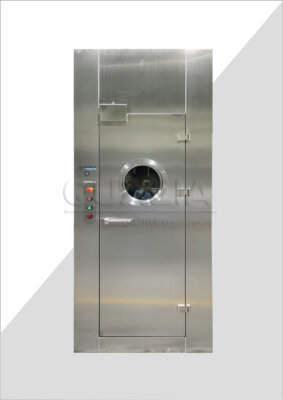
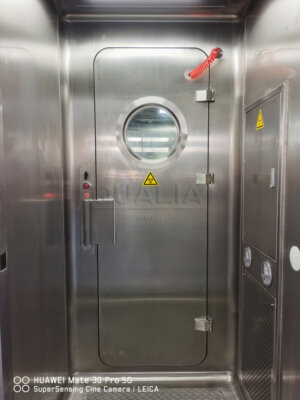
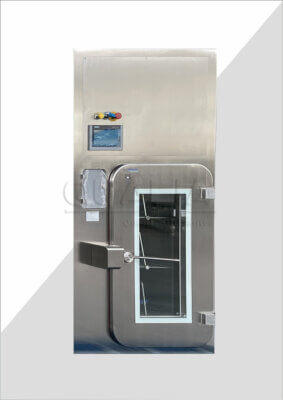
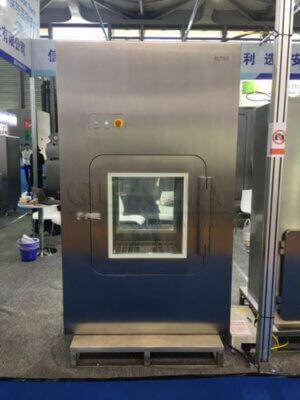
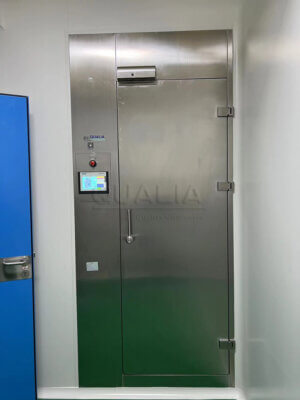
A: Yes, and transfer interfaces are among the highest-risk omissions in a URS because they sit at the boundary between the containment equipment and the room. Breach detection, interlock logic, pressure hold times across the transfer event, and dimensional compatibility with incoming container sizes are all functions that must carry measurable conditions in the URS. Equipment such as pneumatic seal doors with airlock interlocks involves the same testability requirement as the primary containment envelope—each function either has a measurable condition or names the supplier document that will demonstrate compliance.
Q: Is an OEB4 or OEB5 isolator always the right solution once potent compound handling is confirmed, or are there conditions where a different containment strategy would be more appropriate?
A: Containment equipment selection depends on the actual worst-case OEL value, not the OEB band alone. An OEB band is an administrative grouping; the OEL in µg/m³ is what drives verifiable engineering performance. A compound at the upper boundary of OEB4 may be adequately served by a configuration that would be insufficient for a compound at the lower boundary of OEB5. Before selecting equipment class, the URS should state the actual OEL figure so that airflow sizing, glove port arrangement, interlock requirements, and leak-test acceptance criteria are all anchored to a specific threshold. The equipment category follows from that value rather than determining it.
Q: Once the URS is approved and issued to suppliers, what is the next step to ensure the document actually drives procurement and acceptance testing?
A: The immediate next step is confirming that the supplier’s response maps each URS requirement to a specific design feature or a named deliverable document. A supplier response that acknowledges requirements without demonstrating how each will be met does not yet establish the accountability the URS was written to enforce. In parallel, the commissioning plan—which the URS should have required as a supplier deliverable—needs to define the division of scope between supplier commissioning, site commissioning, and IQ/OQ activities before detailed design begins. Without that alignment, the FAT and SAT protocols will be developed against different assumptions on each side, and the gaps will appear as disputed punch list items at the point where schedule pressure is highest.