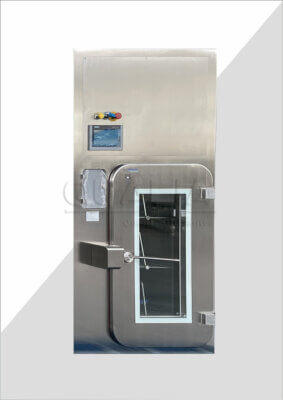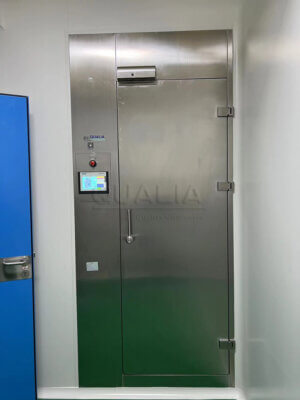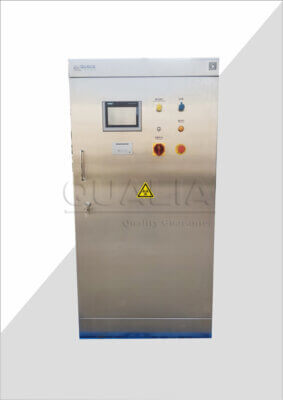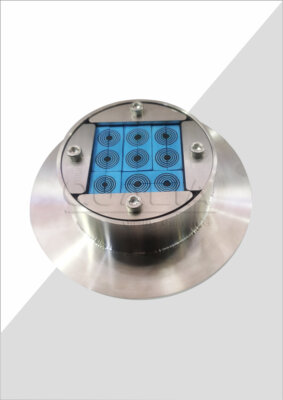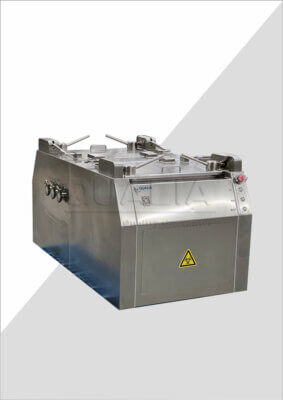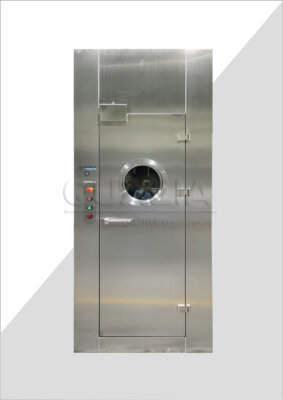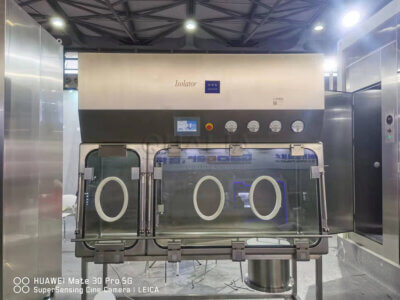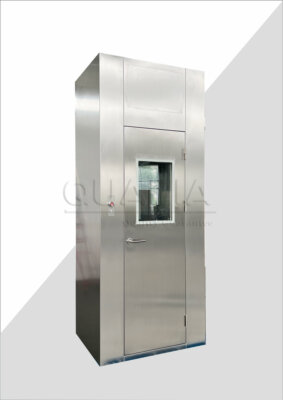

A wall penetration for a cable or cord port sits at the boundary between two documents that rarely reference each other: the wall construction package and the equipment configuration. When a Vacu-Pass bağlantı noktası is specified for a BSL-3 barrier, someone still has to decide who cuts the opening, who supplies and sets the sleeve, who terminates the conduit, and who checks that the assembled result matches what was ordered. None of that is settled by naming the product on a drawing.
Where the containment plane meets the wall opening
The containment plane is the notional surface through which the biosafety barrier runs continuously around a room. Where a cable or cord port crosses that plane, the wall opening, the sleeve, and the transit assembly all belong to a single interface, but they are frequently priced and installed by different trades who each see only their portion of it. A general contractor sees a hole to cut. An electrical or process trade sees a conduit to run. A containment-equipment supplier sees a sealed transit to deliver. If the containment plane itself is not marked on the wall detail before this division of labor happens, each trade may reasonably interpret the interface differently, and the drawing coordination problem becomes a field coordination problem instead.
This matters because the objective governing the decision is biosafety containment, not aseptic product protection. The question is not whether the port keeps a product sterile but whether the assembled wall, sleeve, and seal preserve the integrity of the barrier that separates contained space from outside space. That distinction changes what “correct” looks like at the interface. An aseptic barrier interface is judged by its effect on product exposure; a containment barrier interface is judged by its effect on the room’s tightness as a whole. The Swiss Expert Committee for Biosafety’s recommendation on BSL-3 structural and technical safety measures treats cable and media penetrations as part of the containment boundary itself, noting that their number, any reserved openings, the sealing materials used, and the tightness of the finished room all need design attention. That framing supports marking the plane early: if a penetration is understood as boundary, not as a hole with a fitting in it, the opening, sleeve, and seal stop being separate scopes of work and become one interface that has to be planned as a whole.
Where a project treats the plane as implicit rather than marked, the practical risk is not a single failed component but a set of trades each building a technically defensible piece of an interface that does not add up to a continuous boundary when assembled. Where the plane is marked and referenced in the scope split for opening, sleeve, and transit work, each trade prices and installs against the same reference, and disagreements surface on paper before they surface in the wall.
Sleeve and opening dimensions each trade must confirm
A Vacu-Pass configuration is selected against a particular sleeve and opening geometry, and that geometry has to match what is actually built, not only what was drawn. Two dimensions carry the weight of this check: the as-built wall opening and the as-built sleeve, both compared against the configuration that was ordered. This is a linked check rather than two independent ones, because a sleeve that is correct in isolation but installed in an opening of the wrong size, or an opening that is correct but fitted with the wrong sleeve, produces the same practical outcome — a transit that cannot be sealed as designed once cables are already pulled through it.
The condition that changes this judgment is timing. If the as-built dimensions are verified against the selected configuration before cables are pulled, a mismatch is a paperwork correction. If it is discovered after cables are pulled, correcting it means disturbing completed cable runs to get back to an opening or sleeve that has to be reworked. The generic construction sequence — rough opening, sleeve set, cable pull, seal — makes this a one-directional process in practice, even though nothing about the physical work requires it to be. Confirming dimensions early is a scheduling decision as much as a technical one.
Who performs this verification is a project decision, not a default. Construction trades verify against architectural drawings; the party installing the Vacu-Pass hardware verifies against the equipment’s own configuration record; neither check alone confirms that the built opening matches the selected product. A project needs one named party responsible for reconciling the as-built condition against the selected Vacu-Pass configuration, and that reconciliation needs to happen while correction is still simple rather than after commitment to a cable-pull sequence that assumes the sleeve is correct.
Conduit ends and cable-pull access at the transit
| Interface | Decision or check to resolve | Boundary to keep visible |
|---|---|---|
| Service at the wall face | Decide how the service is sealed at the wall face. | This is separate from conduit termination and any seal within the conduit. |
| Conduit termination and interior | Decide where the conduit terminates and whether a seal within it is part of the design. | The wall-face service seal does not settle this separate question. |
| Cable-pull access at the transit | Assign access at the transit; verify as-built opening and sleeve dimensions against the selected Vacu-Pass configuration before cables are pulled. | A transit quote alone does not allocate opening, sleeve, or conduit-end work. |
A single transit quote or drawing note can create the impression that sealing the service where it crosses the wall settles the whole penetration. It does not. Where a conduit is used to route cable or cord through the wall, at least three separate questions sit at the same physical location without being the same design decision.
The first is how the service — the cord, cable, or conduit itself — is sealed at the wall face, which is the function the Vacu-Pass port itself is selected to address. The second is where the conduit terminates and whether any seal is required within the conduit interior, upstream or downstream of the wall-face seal. The third is what access remains at the transit to pull cable through, and whether that access is preserved or closed off once the wall-face seal is made. Treating these as one question, because they occupy the same few centimeters of wall, is where scope gaps open between the trade that runs conduit, the trade that pulls cable, and the party responsible for the containment seal itself.
The condition that separates these questions cleanly is the presence or absence of a conduit run beyond the wall. Where cable or cord passes directly through the port without conduit, the wall-face seal is close to the entire interface, and the transit specification largely governs the outcome. Where conduit is used on one or both sides, the wall-face seal governs only the boundary crossing itself; the conduit run itself is a separate leak path if it is not addressed on its own terms, since a conduit run can convey air or vapor along its interior even when the wall-face seal around it is intact. A project scope that names only “seal the port” without separately naming conduit termination and any in-conduit seal has not actually assigned that second question to anyone.
Access for cable-pull is a related but distinct decision. Sealing components too early forecloses the ability to add or replace cable later without disturbing the finished seal; leaving access open longer than needed extends the period during which the containment boundary at that location is incomplete. Deciding how long cable-pull access stays open, and who is responsible for closing it out, belongs with the party managing the installation sequence, not with the equipment specification alone.
Seal assembly and inspection before the interface is concealed
| Check | Project action | Evidence boundary |
|---|---|---|
| Görsel inceleme | Arrange inspection of the completed barrier penetration, including conduit and wiring interfaces, before concealment. | The Canadian Biosafety Standard has containment-zone applicability and exceptions; it does not assign an installer. |
| Seal verification, where applicable | Tie any installed-wall seal check to the actual assembled condition. | Verification is conditional; no universal acceptance value is supplied here. |
Once the sleeve is set, the conduit terminated, and the cable pulled, the interface reaches a point where it is normally concealed — behind finished wall surface, behind insulation, or simply behind the next phase of construction. Before that concealment happens, two distinct checks are available, and they answer different questions.
Visual inspection confirms that the assembly looks as specified: the sleeve is set correctly, the seal material is placed where it should be, the conduit terminations are visible and accessible, and nothing about the physical assembly departs from what was designed. The Kanada Biyogüvenlik Standardı, Üçüncü Baskı, treats barrier penetrations as subject to visual inspection and, where applicable, conditional seal verification, including conduit and wiring interfaces specifically. That inspection scope is stated for containment zones under the standard’s own applicability and exceptions; it does not by itself assign which project party performs the inspection or carry a universal acceptance value outside that stated scope.
Seal verification is a separate and conditional check, distinct from looking at the assembly. Where a project requires verification of the installed seal’s performance, that check has to be tied to the actual assembled condition — the specific sleeve, seal material, and conduit configuration as built — rather than to a generic expectation of what the Vacu-Pass port is capable of in isolation. A port that performs as intended in its own qualification does not, on its own, establish that a particular field assembly of sleeve, wall material, and seal meets the same condition; the installed condition is what gets checked, not the component’s rated capability.
The consequence for scheduling is direct: inspection and any seal verification both need to happen while the assembly is still visible and accessible. If concealment happens before either check, the project loses the ability to confirm the as-built condition directly and is left inferring it from documentation instead of observation. Assigning who arranges this inspection window, and who performs any conditional seal verification, is a project decision that has to be made before the construction schedule reaches the concealment step, not after.
Responsibility matrix for installed-wall verification and handoff
| Wall-interface item | Project party or trade to name | Check or handoff to assign |
|---|---|---|
| Containment plane and opening | Name who marks the containment plane on the wall detail and who handles opening work. | Set the boundary before dividing opening, sleeve, and transit scope. |
| Sleeve and as-built dimensions | Name who handles the sleeve and who verifies the as-built opening and sleeve dimensions. | Compare with the selected Vacu-Pass configuration before cables are pulled. |
| Transit seal at the wall face | Name who assembles the seal around the service at the wall face. | Preserve access for inspection before concealment. |
| Conduit termination and any in-conduit seal | Name who resolves the conduit termination and separate in-conduit seal question. | Do not treat the wall-face seal as resolving this question. |
| Completed penetration | Name who protects the assembly, provides inspection access, performs the inspection, and owns any installed-wall check. | Tie the check to the actual assembled condition before handoff. |
Bringing the opening, sleeve, seal, conduit, and inspection questions together, the underlying pattern is that no single trade or supplier scope naturally covers all of them, and no cited standard assigns them either. The Swiss recommendation and the Canadian Biosafety Standard both describe what the containment boundary needs — attention to penetration count and sealing materials in one case, inspection and conditional seal verification in the other — without assigning which project party carries out that work. That assignment is a project-management decision, made once, in writing, before work divides across trades.
The practical allocation follows the same divisions already established: a named party marks the containment plane and owns the opening; a named party handles the sleeve and confirms its as-built dimensions against the selected configuration; a named party assembles the seal at the wall face; a named party resolves conduit termination and any in-conduit seal, kept distinct from the wall-face seal; and a named party protects the completed assembly, provides inspection access, and performs the inspection before concealment. Where a project’s Vacu-Pass configuration and cable or cord requirements are defined early, that project information is what enters the configuration and quotation review for the port itself, giving the supplier’s review the same as-built context the field verification depends on.
Where a project has a single trade managing the entire wall package under one contract, the practical consequence is that these handoffs stay internal to that trade, and the main discipline needed is documenting each check rather than negotiating boundaries between separate parties. Where a project splits construction, electrical or process trades, and the containment-equipment supplier across separate contracts, the same five items — plane and opening, sleeve dimensions, wall-face seal, conduit and in-conduit seal, and completed-assembly inspection — still need a named owner each, and the coordination burden shifts toward the project or construction manager who has to reconcile scopes across contracts before concealment. In either structure, the item not to leave unassigned is the installed-wall check tied to the actual assembled condition, since that is the check that confirms the interface as built rather than as drawn.
Sıkça Sorulan Sorular
Q: Does a Vacu-Pass transit quote also cover the wall opening, sleeve, and conduit-end work?
A: No. A transit quote alone does not allocate those tasks. Mark the containment plane on the wall detail, then name the project party or trade responsible for each interface before the scope is priced and handed off.
Q: What should be confirmed before cables are pulled through the wall interface?
A: Verify the as-built opening and sleeve dimensions against the selected Vacu-Pass configuration. Assign that check to a named project party before cable pulling begins.
Q: Does sealing around the service at the wall face settle the conduit sealing question?
A: No. Conduit termination and any seal within the conduit are separate design decisions. Resolve them explicitly instead of treating the wall-face service seal as covering both interfaces.
Q: What should the team arrange before the completed penetration is concealed?
A: Arrange access and responsibility for visual inspection of the completed barrier penetration, including conduit and wiring interfaces. Where an installed-wall seal check applies, tie it to the actual assembled condition; the supplied references do not provide a universal acceptance value.