Facilities that design a BSL-3 exit suite around a generic spray system, document it as a “chemical shower,” and proceed to Select Agent work without lab-specific validation face a specific and avoidable inspection failure: the spray coverage has never been confirmed against the suit fabric, visor, and boot materials actually worn in that lab. The retrofit consequence — pulling a validated shower system during an active program — is both operationally disruptive and expensive, often requiring re-qualification of the entire anteroom. The judgment that separates a defensible design from a compliance gap is not in the equipment hardware itself, but in the documentation layer that the institutional biosafety committee owns: what decontamination parameters were chosen, why, and how they were validated. Understanding where BMBL prescribes, where it delegates, and where it stays silent will determine whether your facility’s exit protocol survives inspection under current program scope — and under whatever the program becomes.
What BMBL Section IV-B specifies for BSL-3 shower requirements: mandatory versus risk-based obligations
BSL-3 shower requirements under BMBL are not a single fixed mandate applied uniformly across all programs — they are a framework that separates mandatory obligations from risk-based decisions, and confusing the two creates real compliance exposure.
The mandatory trigger is relatively clear: when a BSL-3 program involves Select Agents or agents that the facility or regulatory authority has designated for enhanced containment, a chemical shower becomes a required element of the exit sequence. The risk-based path is where institutions most often misjudge their position. BMBL permits the institutional biosafety committee to document a rationale for omitting a mandatory chemical shower, but that rationale must be grounded in specific factors — primarily the agent’s route of transmission and its minimal infective dose for humans. These are not administrative checkboxes; they are the biological parameters that determine whether aerosol-generating exit procedures carry a meaningful residual risk. An IBC that documents a general decontamination philosophy without anchoring it to agent-specific transmission data produces a protocol that may pass internal review but is difficult to defend when a CDC or USDA inspector asks for the underlying risk analysis.
For programs that do pursue a risk-based omission, the IBC’s position must be anchored to a validation standard that measures remaining biological agents against detection limits under in-use conditions. This is not a universally prescribed federal threshold, but rather a measurable defensibility check — the kind of quantitative reference that converts an IBC rationale from opinion into documented science. Without it, the omission is an institutional judgment call with no verifiable floor.
The consequence of getting this wrong is not just a documentation finding. It is the loss of the institutional argument that the protocol is equivalent in protective value to a chemical shower, which is the entire basis for the omission.
| Scenario | Requisito chiave | What the IBC Must Document/Validate |
|---|---|---|
| Mandatory Chemical Shower | Required when working with Select Agents or agents designated for enhanced containment. | Specific agent’s route of transmission and minimal infective dose for humans. |
| Risk-Based Shower Protocol | Allowed if the IBC documents a specific decontamination rationale. | Reference to a validation standard that measures remaining biological agents against detection limits under in-use conditions. |
How BMBL BSL-4 requirements differ: where the flexibility that exists at BSL-3 disappears
The risk-based flexibility that BSL-3 programs can use to justify a modified exit protocol does not transfer to BSL-4. This distinction matters most during facility planning, because teams that design to the minimum defensible standard at BSL-3 — treating flexibility as a permanent feature of the framework — can create a structural problem if the program later escalates.
At BSL-4, the chemical disinfectant shower in the anteroom prior to exit is fixed. There is no IBC-documented rationale that permits omission. The positive-pressure suit worn at BSL-4 represents a complete barrier between the worker and the agent, and the chemical shower is the mechanism by which that barrier is decontaminated before it is breached during doffing. Removing that step is not a risk-based option — it is a protocol failure.
The validation obligation at BSL-4 is also qualitatively different from what BMBL delegates to the IBC at BSL-3. BSL-4 facilities must conduct and document their own validation using live virus or surrogate testing under in-use conditions, specific to the suit, materials, and disinfectant in use. This is not a reference to an external standard; it is lab-specific empirical confirmation. Failure to conduct and document that validation is a certification risk, not merely an inspection finding. Institutions that treat BSL-4 validation as a one-time commissioning exercise and fail to update it when disinfectant formulations, suit materials, or nozzle configurations change are operating on outdated compliance documentation.
| Requisiti | BSL-3 | BSL-4 |
|---|---|---|
| Shower Mandate | Access required; omission permitted based on IBC risk assessment. | Fixed chemical disinfectant shower in the anteroom prior to exit; no option for omission. |
| Validation Obligation | Delegated to the IBC for risk-based protocols; may reference standards. | Must be validated by the lab itself using live virus or surrogate testing under in-use conditions. |
| Rischio di conformità | Failure to document rationale may be an inspection gap. | Failure to conduct and document lab-specific validation risks loss of certification. |
The practical implication for teams planning a BSL-3 facility: if there is any realistic probability that the program will eventually incorporate Select Agent work or seek BSL-4 certification, designing to the risk-based minimum at BSL-3 creates a retrofit problem that is far more expensive to resolve mid-program than it would have been to address in initial design.
The institutional biosafety committee’s role: the decisions BMBL delegates to the IBC rather than prescribing
BMBL’s approach to BSL-3 chemical shower parameters is to establish the framework and then delegate the substantive decisions to the institutional biosafety committee. This is not an invitation for institutional discretion — it is a transfer of documented responsibility. When an inspector asks why a specific disinfectant was chosen at a specific concentration with a specific contact time, the IBC’s documentation is the only defensible answer. If that documentation does not exist, the shower protocol has no regulatory foundation regardless of how well the hardware performs.
The three core parameters the IBC must define — chemical agent, concentration, and contact time — are the minimum specification decisions that the IBC owns. They are not universally prescribed in BMBL, which means no two institutions need to arrive at identical answers, but every institution must arrive at documented, justified answers. The disinfectant chosen must be appropriate for the agent class; the concentration must be supported by efficacy data for that agent on the surfaces being decontaminated; and the contact time must be long enough to achieve meaningful reduction under realistic conditions, including the organic soil load present on PPE after use.
| Parameter to be Defined by IBC | What to Clarify |
|---|---|
| Agente chimico | The specific disinfectant to be used in the exit shower. |
| Concentrazione | The effective concentration of the chemical agent for decontamination. |
| Tempo di contatto | The required duration the disinfectant must remain on the PPE/equipment. |
The downstream consequence of treating IBC authority as flexibility rather than responsibility is that institutions tend to underdocument. When the IBC’s decision record contains general references to “an approved disinfectant” or “sufficient contact time,” those entries cannot be validated against inspection criteria. The IBC’s role in defining these parameters is where compliance is either built or lost, well before any inspector visits the facility.
Select Agent program requirements: the additional shower compliance obligations that CDC and USDA inspectors verify
Select Agent inspection is a separate compliance tier that operates on top of BMBL, and it adds a verification step that many BSL-3 facilities are not prepared for: inspectors confirm that the facility has validated its shower system’s decontamination efficacy specifically against the PPE ensemble used in that lab. A generic spray system specification from the equipment manufacturer — coverage area, flow rate, tested against standard materials — does not satisfy this requirement. What inspectors look for is evidence that the institution tested decontamination efficacy on the actual suit fabric, visor material, and boot material worn by personnel in that specific program.
This is where a common and costly compliance failure pattern emerges. Facilities that install a well-engineered shower system, document its mechanical performance, and reference manufacturer testing in their biosafety manual often believe they have a complete compliance record. Under CDC or USDA inspection, that record may be found inadequate because it lacks lab-specific validation. The distinction is between confirming that the system delivers disinfectant and confirming that the disinfectant delivered by that system achieves the required reduction on the materials in use. These are not the same question.
The underlying framework for the chemical shower requirement comes from the CDC BMBL 6a edizione, which establishes the exit decontamination obligation that Select Agent regulations build upon. Facilities working through Select Agent registration should treat the IBC’s shower validation documentation as a pre-inspection deliverable, not as a retrospective record. If validation has not been conducted against the current PPE ensemble — or if the ensemble has changed since the last validation — the documentation gap is real and inspectable.
Documenting mist shower use in the biosafety manual: what written procedures must cover to satisfy inspection
The most consistent finding in BSL-3 Select Agent inspections is not a hardware deficiency — it is a documentation deficiency. Facilities that have functioning shower systems and well-trained personnel still receive inspection findings when the written procedures in the biosafety manual cannot be verified against the system as actually installed and operated. The gap between what the system does and what the manual says it does is where compliance fails.
Written procedures that satisfy inspection must specify operational parameters in measurable terms: disinfectant concentration, contact time, water rinse duration, and delivery parameters including nozzle type, operating pressure, and flow rate. Example values from engineering inputs — such as a 5% concentration, two-minute contact time, and three-minute rinse — are illustrative design figures, not universally mandated numbers. What matters is that the facility’s documented parameters are specific, internally consistent, and traceable to the validation that established them. A procedure that states “apply disinfectant for sufficient time” is not a procedure — it is an absence of documentation with a heading.
Validation method details must be documented with the same specificity. The biosafety manual should identify the surrogate organism or virus used in efficacy testing, the organic soil load applied during testing (to simulate real-use conditions on contaminated PPE), and the specific material coupons tested — suit fabric, visor material, boot exterior. These details are not bureaucratic formality; they are the technical record that allows an inspector to confirm that the protocol on paper corresponds to a real decontamination event that was measured.
| Categoria Documentazione | Specific Parameters Required |
|---|---|
| Parametri operativi | Disinfectant concentration, contact time, water rinse duration, delivery parameters (nozzle type, pressure, flow rate). |
| Validation Method Details | Surrogate virus used, organic soil load, specific material coupons tested (suit fabric, visor, boot). |
Missing or vague documentation exposes the institution to two simultaneous risks: a citation during inspection, and an inability to defend the protocol if a decontamination failure is ever investigated. The documentation is the protocol’s evidence base. Without it, the written procedure cannot demonstrate equivalence to any recognized standard of efficacy.
Failure scenario protocols: the decontamination procedure BMBL expects when the shower system is non-operational
The most frequently cited compliance gap in BSL-3 Select Agent inspections is not in the shower system itself — it is the absence of a written procedure for what happens when the shower system is non-operational. Facilities that invest in validated shower hardware and detailed operational SOPs often neglect the failure scenario, treating a functioning system as the only scenario worth documenting. Inspectors do not share that assumption.
A failure scenario SOP must define an alternative decontamination method that personnel can execute when the shower is unavailable. This typically involves a manual scrubbing procedure using an appropriate disinfectant at validated concentration and contact time, applied to the exterior of PPE before removal. The consequence of omitting a documented alternative is not just an inspection finding — it is a functional decontamination gap. An improvised scrubbing procedure performed without protocol guidance may not achieve the reduction in biological burden that a validated shower provides. Engineering data suggests that an undocumented backup approach can drop decontamination efficacy to less than a 2-log reduction for bacterial spores, compared to what a validated spray system achieves. That figure is a planning criterion, not a universally measured or regulated threshold, but it frames why “we will figure it out if the shower goes down” is not an acceptable institutional position.
The SOP for shower failure should include: the alternative decontamination method step by step, the disinfectant and concentration to be used, the contact time required, the verification that personnel have completed the procedure before exiting, and the reporting chain for notifying the IBC and biosafety officer of the system outage. It should also specify the conditions under which the program is suspended rather than continued under alternative decontamination — particularly for high-risk agent work where a manual procedure may not be a defensible substitute. This boundary condition is one of the harder judgment calls the IBC must document in advance, because it cannot be made reliably under operational pressure.
How to translate BMBL requirements into equipment specifications and facility design decisions
BMBL describes what must happen at the exit boundary of a BSL-3 or BSL-4 suite; it does not describe the engineering required to make it happen. The translation from regulatory framework to equipment specification is the institution’s responsibility, and the decisions made at this stage — nozzle type, spray angle, operating pressure, flow rate — determine whether the installed system can actually deliver the validated decontamination protocol.
Equipment specifications for a chemical shower must address both the chemical phase and the rinse phase separately. Nozzle type and spray angle affect coverage geometry on irregular surfaces like suit fabric folds, visor edges, and boot seams — areas where spray shadow can leave residual contamination. Operating pressure and flow rate per nozzle determine whether the disinfectant is delivered at the concentration and volume that the IBC’s protocol requires, not the concentration in the supply tank. A system that dilutes inconsistently across nozzles, or that runs at lower pressure during peak demand, may not reproduce the conditions under which the validation was conducted. Example engineering figures — such as a 75-degree spray angle at 20 psi, delivering approximately 3.14 liters per minute of chemical solution and 5.3 liters per minute during the water rinse — are design inputs that reflect specific system configurations, not universally mandated specifications. The institution must specify and verify these parameters for its own installation.
Facility design must account for the volumetric consequences of the shower cycle. Chemical consumption and water rinse volume over a full cycle — which may exceed 125 liters of chemical solution and more than 300 liters of water depending on system configuration — must be used to size chemical storage, dilution equipment, and effluent handling capacity. Undersizing any of these systems based on incomplete volume estimates does not just create operational inconvenience; it can compromise the consistency of the shower cycle, which in turn undermines the validation basis for the protocol. Effluent from a BSL-3 chemical shower also requires appropriate treatment before discharge, and that treatment system must be sized against actual cycle volumes.
| Aspetto progettuale | Specifiche principali | Purpose/Risk of Omission |
|---|---|---|
| Specifiche dell'apparecchiatura | Nozzle type, spray angle, operating pressure, flow rate per nozzle for chemical and rinse phases. | Ensures effective spray coverage against the specific PPE ensemble. |
| Facility Design Considerations | Chemical and water consumption volumes to size storage, dilution, and effluent handling systems. | Prevents operational failure or non-compliance from under-sized systems. |
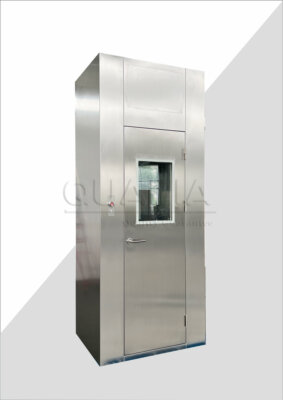
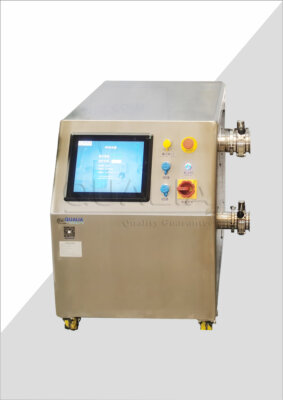
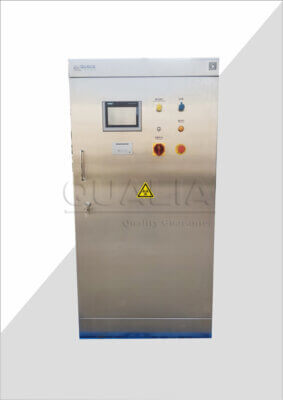
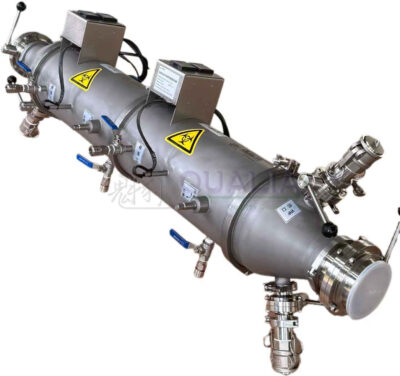
For facilities procuring shower equipment, the starting point should be the IBC’s validated protocol parameters — not a manufacturer’s standard configuration. The equipment must be specified to deliver those parameters reliably across the anticipated number of daily cycles, with maintenance intervals that do not create undocumented gaps in system performance. A mist shower designed specifically for BSL-3 exit decontamination should be evaluated against the facility’s documented nozzle, pressure, and flow requirements before procurement, not after installation. Discovering a coverage gap during post-installation validation is a qualification delay that could have been identified at the specification stage.
Compliance with BSL-3 mist shower requirements under BMBL is primarily a documentation problem, not an equipment problem. The most defensible programs are those where the IBC has documented the agent-specific rationale for each protocol decision, the validation record is tied to the actual PPE ensemble and disinfectant in use, and the failure scenario SOP is written before the shower is ever needed. Facilities that treat the shower as a facility feature rather than a documented, validated decontamination system will find that their inspection risk lives in the biosafety manual, not in the mechanical room.
Before finalizing a BSL-3 shower design — or accepting an existing system inherited from a prior program — confirm that the IBC’s protocol documentation specifies every operational parameter by name and value, that validation was conducted under in-use conditions against current materials, and that a failure SOP defines exactly what happens and at what point work must stop. If Select Agent work is part of the current or planned program, install to that standard from the beginning. The cost of a retrofit, re-qualification, and inspection remediation far exceeds the cost of the more complete system on day one.
Domande frequenti
Q: Does a BSL-3 facility that currently handles no Select Agents still need a chemical shower installed?
A: Not necessarily, but installing one from the outset is the lower-risk decision. For non-Select Agent BSL-3 work, BMBL permits the IBC to document a risk-based rationale that substitutes an alternative exit protocol — provided the rationale is grounded in agent-specific transmission and infective dose data. However, if the program has any realistic prospect of adding Select Agent work later, omitting the shower creates a retrofit obligation that requires re-qualification of the entire anteroom under an active program. The cost and operational disruption of that retrofit consistently exceeds the cost of installing a compliant system during initial construction.
Q: What happens to the validation record if the facility changes its PPE supplier and the new suit uses a different fabric or visor material?
A: The existing validation no longer covers the current PPE ensemble and must be repeated against the new materials before personnel resume work. CDC and USDA inspectors verify that shower decontamination efficacy was tested specifically on the suit fabric, visor material, and boot exterior actually worn in that lab. A change in PPE supplier introduces new surface chemistries and geometries that the prior validation did not test. Continuing to rely on the original validation record after a material change is a documentable compliance gap — the kind inspectors identify by cross-referencing the validation coupon list against current PPE procurement records.
Q: At what point should a BSL-3 program suspend operations rather than continue under the backup decontamination procedure when the shower is non-operational?
A: This threshold must be defined by the IBC in the failure scenario SOP before it is ever needed — it cannot be determined reliably under operational pressure. The IBC should specify the agent classes or risk levels for which a manual scrubbing procedure is not a defensible substitute for a validated shower. For high-consequence agents where the manual alternative cannot be shown to achieve equivalent reduction in biological burden, the default position should be work suspension until the system is restored. Facilities that leave this boundary condition undocumented are placing a judgment call that belongs in the biosafety manual into the hands of personnel responding to an unplanned system failure.
Q: Is a chemical shower required at BSL-3 exits also required by WHO biosafety guidance, or is this obligation specific to U.S. federal frameworks?
A: The obligation as an inspectable, validated exit requirement is specific to the U.S. regulatory framework under BMBL and the CDC/USDA Select Agent program. The Manuale di biosicurezza dei laboratori dell'OMS, 4a edizione addresses decontamination exit procedures at the equivalent containment level but does not impose the same Select Agent inspection infrastructure or IBC documentation standards. Facilities operating under both frameworks should treat BMBL and Select Agent regulations as the binding compliance floor for the chemical shower requirement, with WHO guidance providing supplementary design context rather than a parallel regulatory obligation.
Q: Can the IBC’s shower protocol documentation be written after the facility is constructed and the system is already installed, or does it need to precede installation?
A: The documentation must logically precede installation to be defensible, even if regulators do not enforce a formal sequencing requirement. The IBC’s protocol defines the operational parameters — disinfectant concentration, contact time, nozzle type, operating pressure, flow rate — that the equipment must be specified to deliver. If documentation is written after installation to describe what the system already does, the institution cannot demonstrate that the equipment was procured to meet a validated protocol. Instead, it can only show that the protocol was written to match the equipment — a reversal that undermines the IBC’s documented responsibility and weakens the rationale if a decontamination failure is ever investigated.
Contenuti correlati:
- Sistemi di docce a nebbia: Un riferimento tecnico per la decontaminazione del personale BSL-3 e BSL-4
- Quando passare da un laboratorio modulare BSL-2 a uno BSL-3: Valutazione del rischio e requisiti normativi
- Convalida delle docce d'aria: Garantire le prestazioni
- Manutenzione delle docce ad aria: Consigli per la cura preventiva
- Docce chimiche BSL-4: Sistemi avanzati di decontaminazione
- Test sulle docce d'aria: Verifica delle prestazioni
- Sicurezza delle docce ad aria: Conformità alle normative
- Installazione della doccia ad aria: Guida dell'esperto
- Certificazione delle docce d'aria: Garantire la conformità