
Facilities that submit validation packages with manufacturer-supplied cycle data in place of site-specific performance qualification are the most common source of inspection findings in VHP sterilization programs — not because the underlying chemistry is wrong, but because regulators require evidence generated under actual facility conditions, with the actual load. The consequence is not a documentation correction; it is a full requalification cycle conducted after equipment is installed, SOPs are approved, and submission timelines are already committed. The difference between a defensible package and a gap finding often comes down to understanding which requirements belong to the equipment standard, which belong to the process validation standard, and which belong to the facility’s own qualification protocol. What follows equips you to make those distinctions before they surface as findings.
ISO 22441: International Standard for VHP Sterilization
ISO 22441:2022 is the primary international framework governing how VHP sterilization processes are developed, validated, and routinely controlled for both medical devices and pharmaceutical applications. Its value is not in prescribing a single cycle design, but in defining a coherent validation logic that connects cycle development, sterility assurance, residuals control, and biological indicator selection into a defensible system.
The overkill half-cycle approach at the core of ISO 22441 requires demonstrating a 12 spore log reduction — established by extrapolating the time required for a 6-log reduction and doubling it to produce a margin that satisfies the sterility assurance level framework consistent with ISO 14937. This is a design figure grounded in the standard, not a universal regulatory mandate independent of it; the appropriate interpretation is that a facility following ISO 22441 must document this reduction under its validated conditions. The cycle architecture supporting this — two identical half-cycles with a conditioning vacuum phase below 1 Torr, followed by VHP injection and venting — defines the structural requirements a compliant cycle must meet, but the specific process parameters still require validation within the facility’s own equipment and load context.
One planning decision that teams frequently defer too long is biological indicator selection. ISO 22441 does not allow a single organism choice by default: Geobacillus stearothermophilus is appropriate for healthcare settings, while Bacillus atrophaeus is used for industrial terminal sterilization. Selecting the wrong organism does not simply create a documentation gap — it can render the entire validation scientifically invalid for its intended regulatory context, requiring repeat testing with the correct indicator. This decision should be locked before qualification design begins, not resolved during review.
The residuals testing requirement under section 5.4.5 of ISO 22441 is a second area where deferral creates downstream cost. Sterilant residue testing and a risk assessment tied to materials compatibility must be part of the validation package, not an afterthought appended to the submission. Facilities that treat residuals as a single pass/fail check at the end of cycle development often find the risk assessment incomplete under regulatory scrutiny.
| Requirement Area | Specification | Why It Matters |
|---|---|---|
| Cycle Development | Overkill half-cycle approach achieving 12 spore log reduction, consistent with SAL per ISO 14937. | Validates sterility assurance level. |
| Cycle Parameters | Two identical half-cycles; conditioning vacuum <1 Torr, VHP injection, and venting phases. | Defines the required cycle design for standard compliance. |
| Residuals Testing | Sterilant residue testing and risk assessment required per section 5.4.5. | Ensures residual hydrogen peroxide levels are safe and compatible with materials. |
| Biological Indicator Selection | Geobacillus stearothermophilus (healthcare); Bacillus atrophaeus (industrial terminal sterilization). | Correct BI selection avoids validation failures due to inappropriate resistance. |
The table above consolidates the four requirement areas as planning anchors. Taken together, they reflect a validation framework where each element is interdependent: a cycle that achieves the spore log reduction target but fails residuals testing, or uses an inappropriate biological indicator, is not a partially compliant cycle — it is an unvalidated one.
EN 17180: European Standard for VHP Sterilizers
EN 17180:2018 operates at a different level than ISO 22441 and addresses a question ISO 22441 does not fully answer: how should the sterilizer itself be qualified as a piece of equipment, independent of the process it runs? Where ISO 22441 governs process validation — the cycle parameters, the sterility assurance logic, the residuals framework — EN 17180 governs equipment-level performance qualification for VHP sterilizers intended for medical devices in the European market. The sterilizer manufacturer, not just the facility, carries an obligation under EN 17180 to provide documented evidence of cycle performance across defined load configurations.
The practical consequence for facilities pursuing European market access is that these two standards work in sequence, not in parallel. A sterilizer that has been qualified under EN 17180 provides a starting point — a documented baseline of equipment performance — but it does not substitute for the facility-specific process validation required under ISO 22441. Treating the EN 17180 qualification package from the equipment manufacturer as equivalent to a site-level validation is a version of the same assumption that creates inspection findings when teams rely on ASTM E2967 manufacturer data: it conflates equipment performance with process qualification.
For facilities seeking dual-market compliance — European approval under EN 17180 and EN 17180-aligned documentation alongside ISO 22441-based validation for FDA review — the planning implication is that both standards must be scoped into the qualification timeline from the outset. EN 17180 creates documentation requirements that must be collected from the sterilizer manufacturer before or during commissioning, not requested retroactively when a submission is in preparation. If the manufacturer’s EN 17180 documentation is incomplete or covers a load configuration that does not match the facility’s intended use, that gap requires resolution before the facility can build a defensible European regulatory package on top of it.
A less obvious trade-off emerges when a facility’s load configuration differs materially from the configurations tested under the manufacturer’s EN 17180 qualification. In that case, the manufacturer’s documented cycle performance data has limited transferability — and the facility may need to commission additional equipment-level testing that effectively bridges the gap between the manufacturer’s qualification scope and the site-specific load reality. Identifying this mismatch early, during equipment selection rather than during commissioning, is where EN 17180 awareness has the most direct procurement value.
ASTM E2967 Cycle Development vs Facility-Specific PQ
The most consequential compliance assumption in VHP sterilization programs is that cycle development data generated under ASTM E2967 — typically supplied by the generator manufacturer — satisfies the performance qualification requirement at the facility level. Regulatory inspectors do not accept this substitution, and the reason is technical, not procedural: ASTM E2967 cycle development is conducted under controlled, standardized conditions that will not match the spatial, thermal, or load characteristics of any specific facility environment.
Packaging validation is where this assumption most often produces a documented finding rather than a quiet correction. Facilities frequently confirm that packaging materials are chemically compatible with hydrogen peroxide and treat that confirmation as sufficient. Regulatory defensibility requires something different: evidence that the specific packaging, in the specific cycle as run at the facility, with the facility’s load configuration, does not compromise packaging integrity under those conditions. Material compatibility and cycle-specific packaging validation are not the same test, and inspectors evaluate them separately. If the facility’s submission conflates them, the gap is visible.
Condensation control is a less visible failure mode but one that surfaces at the worst possible project stage — during commissioning or early routine operation, after equipment is installed and initial documentation is complete. Devices must enter the VHP cycle clean, dry, and equilibrated to the appropriate ambient temperature; condensation on product surfaces can cause cycle failure in ways that are not predictable from a desktop review of the manufacturer’s cycle data. Confirming these pre-conditioning requirements under actual facility conditions — not assuming they are satisfied because the manufacturer’s protocol lists them — is a facility PQ deliverable, not a specification inherited from the equipment package.
| Compliance Area | Common Assumption from Manufacturer Cycle | Facility PQ Requirement |
|---|---|---|
| Packaging Validation | Packaging is considered VHP-compatible based on generic material testing. | Validate that specific packaging can be sterilized under the actual VHP cycle without compromising integrity. |
| Device Pre-conditioning | Devices are assumed clean, dry, and at ambient temperature. | Confirm devices are clean, dry, and equilibrated to proper temperature to avoid condensation that may cause cycle failure. |
| Load Configuration | Cycle development performed with standardized load sets. | Perform PQ runs using the actual facility load configuration, respecting documented weight limits (e.g., up to 50 lbs). |
| Cycle Limitations | Non-lumen cycle data may be assumed to cover all device types. | Verify that lumened devices are excluded unless the validated cycle is specifically designated for lumened items. |
Two additional constraints deserve explicit confirmation during PQ design. Weight limits documented for manufacturer cycle sets — in some equipment configurations, up to 50 lbs — must be validated against the actual facility load, not assumed to transfer. And cycle limitations regarding lumened devices are absolute, not contextual: if the validated cycle is a non-lumen cycle, lumened devices cannot be processed under it unless a specifically designated lumen cycle has been independently validated for that load. Discovering either constraint after facility PQ runs have been conducted means requalification, not documentation revision.
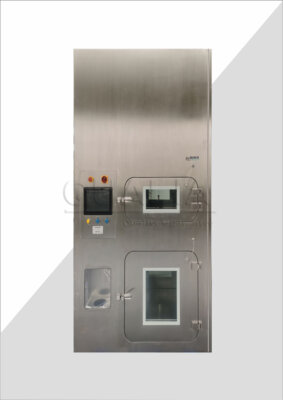
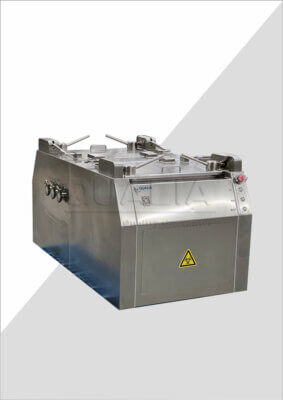
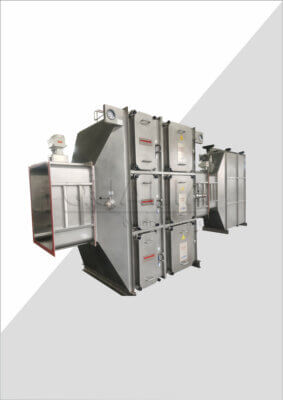
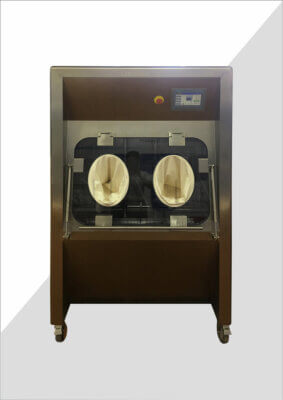
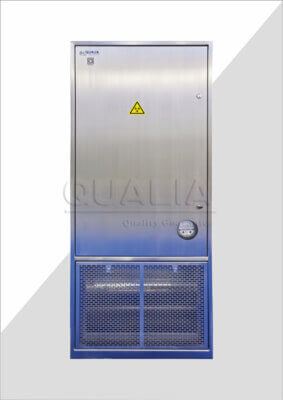
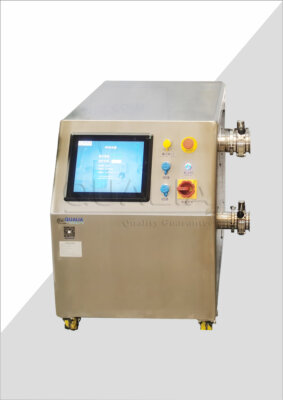
For facilities that want to compare equipment options against these facility-specific qualification demands, the Portable VHP Generator Type II/III and the VHP Hydrogen Peroxide Generator Type I represent different configurations — understanding which load configurations each supports is directly relevant to how a facility scopes its PQ protocol.
FDA Recognition and EMA Annex 1 Compliance
The FDA’s 2024 reclassification of VHP sterilization as an Established Category A process, alongside its recognition of ISO 22441:2022 as a consensus standard, carries a specific and limited implication: it reduces the documentation burden for facilities seeking FDA approval by allowing conformance to ISO 22441 to serve as evidence of cycle validation without requiring independent demonstration that the standard itself is scientifically sound. This is a meaningful planning benefit, but it is not an exemption from validation. A facility still requires site-specific performance qualification; what changes is the framework that structures that qualification and the evidentiary weight it carries with reviewers.
The OSHA permissible exposure limit of 1 ppm hydrogen peroxide over an 8-hour time-weighted average is not a design guideline — it is an enforceable exposure threshold with direct regulatory force. Facility design, engineering controls, and monitoring protocols must demonstrate that routine operation keeps personnel exposure within this limit. Facilities that treat this as an equipment specification to be confirmed by the manufacturer’s documentation, rather than a site-level safety compliance requirement, are exposed to dual regulatory risk: both from FDA on the process side and from OSHA on the occupational safety side.
EMA’s Annex 1 requirements apply within a specific scope: aseptic processing isolator decontamination cycles. This is a meaningful boundary. Annex 1 is not a general VHP sterilization standard applicable across all pharmaceutical or device contexts in Europe — it governs how VHP decontamination cycles must be designed and validated for isolators used in aseptic manufacturing environments. Facilities that are not operating aseptic processing isolators should not be referencing Annex 1 as their primary European compliance framework; EN 17180 and ISO 22441 carry that role in device sterilization contexts. Conflating the two creates documentation that appears comprehensive but contains a structural mismatch that reviewers will identify.
| Regulatory Body | Recognized Standard | Scope of Application | Key Requirement / Note |
|---|---|---|---|
| U.S. FDA | ISO 22441:2022 (consensus standard); Established Category A (2024) | Medical device and pharmaceutical VHP sterilization | Cycle validation per ISO 22441; OSHA permissible exposure limit 1 ppm H₂O₂ (8-hr TWA) |
| European EMA | EU GMP Annex 1 | Aseptic processing isolator VHP decontamination | Isolator decontamination cycles must meet Annex 1 requirements for aseptic environments |
The practical planning implication of operating across both regulatory jurisdictions is that the documentation framework must be structured at the outset to satisfy both: ISO 22441-based validation that supports FDA submission, EN 17180 equipment qualification that supports European filing, and Annex 1 compliance specifically if the facility includes aseptic isolator operations. Treating these as overlapping and therefore partially substitutable is the assumption that creates the most expensive late-stage rework.
WHO Prequalification Documentation Requirements
WHO prequalification imposes a documentation logic that is more specific than either FDA or EMA review in one critical respect: the 6-log reduction evidence must be demonstrably tied to the hardest-to-sterilize location within the actual sterilization chamber, under the most challenging load condition named in the facility’s own standard operating procedure. A generalised claim inherited from the sterilizer manufacturer’s validation package — even one that demonstrates 6-log reduction under manufacturer-defined conditions — does not satisfy this requirement.
This distinction has a direct consequence for how facilities structure their biological indicator placement during performance qualification. It is not sufficient to demonstrate adequate BI kill across the chamber in general; the facility must identify, through appropriate mapping and challenge testing, which location and which load configuration represents the most adverse conditions, and then demonstrate that the validated cycle achieves the required reduction specifically at that point. If the facility’s SOP names a maximum load condition, the PQ evidence must be generated under that load — not under a reduced or simplified load that is easier to validate but not representative of routine operation.
The documentation package for WHO prequalification will therefore need to include, at minimum: a written protocol identifying the hardest-to-sterilize location and the rationale for that determination; PQ run data demonstrating the 6-log reduction at that location under the maximum load condition specified in the SOP; and a clear audit trail connecting the SOP, the PQ protocol, and the results. Where facilities have validated their cycle under ISO 22441, the process validation framework provides a useful structural reference, but WHO prequalification reviewers evaluate the facility’s own documentation — not the standard’s requirements as a proxy.
For facilities pursuing WHO prequalification alongside FDA recognition and European filing, the documentation burden compounds in a specific way. Each regulatory body evaluates site-specific evidence; none accepts another agency’s review outcome as independent confirmation. This means the underlying PQ dataset must be strong enough to support all three documentation packages, and the SOP must be written with sufficient precision that the hardest-to-sterilize location and maximum load condition are unambiguously defined — because any ambiguity in the SOP creates a corresponding ambiguity in the evidence, which each reviewing body will resolve through additional queries or findings.
A practical check at the SOP drafting stage: if the maximum load condition described in the SOP has not been explicitly used in at least one PQ run, and the hardest-to-sterilize location has not been formally identified and documented, the facility does not yet have a WHO-defensible package regardless of the quality of the underlying cycle development data. Those two elements are the conditions under which all other evidence is evaluated.
For facilities building out their sterilization programs and evaluating which VHP equipment configuration aligns with their load and chamber requirements, the Top VHP Sterilization Equipment for 2025 review covers the landscape across use cases and facility types.
The common thread across ISO 22441, EN 17180, FDA recognition, and WHO prequalification is that each framework evaluates facility-specific evidence — not manufacturer-supplied data, not generalised claims, and not documentation borrowed from a parallel regulatory submission. The validation logic that satisfies one reviewer only fully supports another when the underlying PQ dataset was designed to be specific enough to carry that weight in the first place. Facilities that design their qualification protocols with this specificity from the beginning — locking biological indicator selection, load configuration, packaging validation, and SOP language before PQ runs begin — avoid the class of rework that occurs when submissions are in progress and gaps surface under review.
Before committing a PQ protocol, the concrete questions worth confirming are: which locations have been formally identified as hardest-to-sterilize and on what basis; whether the maximum load condition in the SOP has been tested, not just described; whether packaging validation is documented as a cycle-specific deliverable rather than a material compatibility note; and whether the selected biological indicator is appropriate for the regulatory context of the intended market. These are the points where generic validation assumptions diverge from facility-specific defensibility, and they are the points regulators evaluate first.
Frequently Asked Questions
Q: Does the FDA’s Established Category A reclassification eliminate the need for a site-specific performance qualification run?
A: No — the reclassification reduces the evidentiary burden on the validation framework itself, not the facility’s obligation to generate site-specific PQ data. What changes is that conformance to ISO 22441:2022 is now accepted as sufficient structural evidence without requiring the facility to independently justify the standard’s scientific basis. The underlying requirement remains: PQ runs must be conducted in the actual facility, with the actual load configuration, under the conditions described in the facility’s own SOP.
Q: If a facility is pursuing FDA, EMA, and WHO prequalification simultaneously, can a single PQ dataset support all three submissions?
A: Yes, but only if the dataset was designed with sufficient specificity from the outset. Each regulatory body evaluates site-specific evidence independently and does not accept another agency’s review as confirmation. The PQ dataset must include the hardest-to-sterilize location formally identified and tested, the maximum load condition from the SOP explicitly run, and packaging validation documented as a cycle-specific deliverable. A dataset built to the minimum threshold of any single jurisdiction will not carry the evidentiary weight required by the others without gap-filling runs that reopen the qualification timeline.
Q: At what point in the project timeline does a mismatch between the manufacturer’s EN 17180 load configuration and the facility’s intended load become a problem?
A: The mismatch becomes costly if it is discovered during commissioning rather than during equipment selection. If the sterilizer manufacturer’s EN 17180 qualification covers load configurations that differ materially from the facility’s actual use case, the manufacturer’s documented cycle performance data has limited transferability — and bridging that gap may require additional equipment-level testing before the facility can build a defensible European regulatory package. Identifying this during procurement, when alternative equipment can still be evaluated, avoids the scenario where commissioning-stage testing extends the qualification timeline after submission dates are already committed.
Q: Is EMA Annex 1 the correct European compliance reference for a device sterilization facility that does not operate aseptic processing isolators?
A: No. Annex 1 governs VHP decontamination cycles specifically within aseptic processing isolators used in pharmaceutical manufacturing environments. For medical device sterilization in the European market, EN 17180 at the equipment level and ISO 22441 at the process validation level are the applicable standards. Referencing Annex 1 as a primary compliance framework in a non-aseptic, device-only context produces documentation that appears thorough but contains a structural mismatch that regulatory reviewers will identify.
Q: What is the consequence of deferring biological indicator selection until after the PQ protocol is drafted?
A: It risks rendering the entire validation scientifically invalid for its intended regulatory context, requiring repeat testing. ISO 22441 does not permit a default organism choice — Geobacillus stearothermophilus is required for healthcare settings and Bacillus atrophaeus for industrial terminal sterilization. If the wrong organism is used during qualification runs, the resulting data cannot be retroactively reinterpreted as conformant; the testing must be repeated with the correct indicator under the correct conditions. Because this decision affects both protocol design and submission framing, it must be locked before qualification design begins.