
Choosing between a sterility test isolator and an open cleanroom workflow is not a comparison of room grades or equipment labels. It is a decision about where the critical manipulation sits relative to a physical barrier, and which controls have to carry the microbiological burden when that barrier is absent or present. Getting this wrong does not show up immediately; it shows up when an intervention, a transfer, or a recovery step is examined against the qualification evidence the test method requires.
Control Boundaries in an Isolator and an Open Cleanroom Workflow
| Test arrangement | Boundary around critical manipulations | Controls that remain essential outside that boundary |
|---|---|---|
| Sterility test isolator | A physical barrier separates critical manipulations from direct operator access | Defined room interfaces and operating procedures |
| Open cleanroom workflow | Critical handling occurs without a closed barrier around the manipulation | Room condition, personnel practices, and the handling sequence carry more of the operating control |
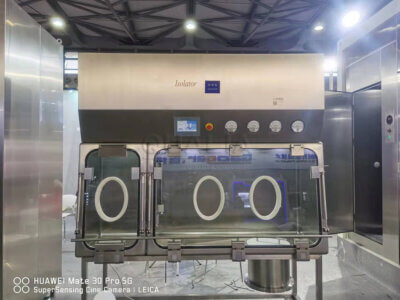
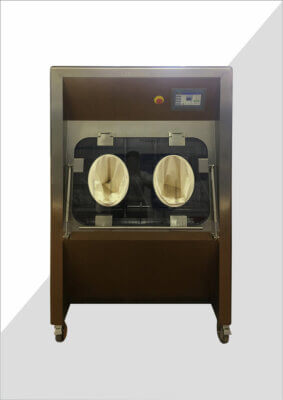
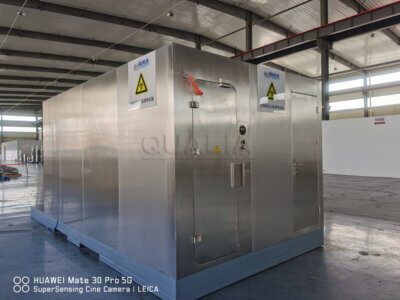
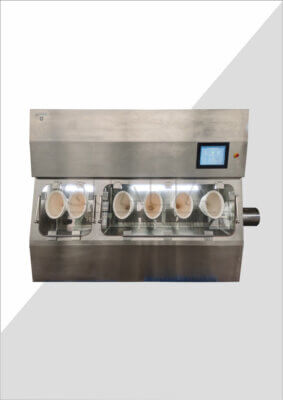
The governing question for sterility testing is where critical manipulations happen relative to a sealed barrier, because that location determines which controls are doing the microbiological work. In a sterility test isolator, the critical manipulation — the membrane filtration, the media transfer, the handling of the test article — takes place inside a closed enclosure that separates it from direct operator access. The operator acts through gloves or half-suits, not by standing in the same open air volume as the test. That barrier does not eliminate the need for control around it; it relocates where the control has to be strongest. The isolator still depends on defined interfaces to the surrounding room — how material passes in and out, how the room supports the isolator’s own environment — and on operating procedures that govern glove use, setup, and intervention sequencing.
In an open cleanroom workflow, there is no closed enclosure around the manipulation itself. The operator performs the critical steps in the same air volume the room provides, under whatever garbing, airflow, and personnel discipline the room’s operating procedures establish. This shifts a larger share of the microbiological control onto the room condition, onto personnel practice, and onto the exact sequence in which material and operator movements occur. Where a facility’s procedures and personnel discipline are consistently well controlled, an open workflow can support the test; where that discipline varies, the exposure of the critical manipulation to the open room becomes the limiting factor, because there is no barrier compensating for a lapse.
This distinction changes what the buyer should be evaluating. Comparing an isolator to a cleanroom by air classification alone misses the point: the isolator’s value is the barrier around the manipulation, not a superior room grade, and a cleanroom’s adequacy is not established by its classification alone either. The practical comparison is the path the test article, the operator, and the waste actually take, and whether a barrier sits across that path at the point where contamination risk to the test is highest. A project with a high rate of testing, multiple operators, or variable staffing conditions does not inherently favor one arrangement over the other — the relevant factor is how consistently the open-workflow controls can be maintained versus how the facility can support the barrier’s interfaces. Confirm, for the specific test activity under review, which controls the arrangement actually places where, rather than assuming either label guarantees a particular outcome.
Intervention Exposure During Testing, Transfer, and Recovery
Sterility testing is not a single moment of manipulation; it is a sequence that includes bringing the test article and materials to the point of test, performing the filtration or inoculation, and then removing waste and samples afterward. Each stage in that sequence carries its own exposure profile, and the isolator-versus-cleanroom choice changes how that exposure is managed at every stage, not just at the moment of filtration.
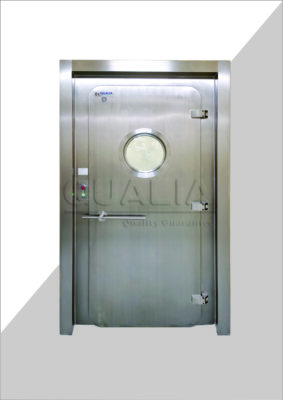
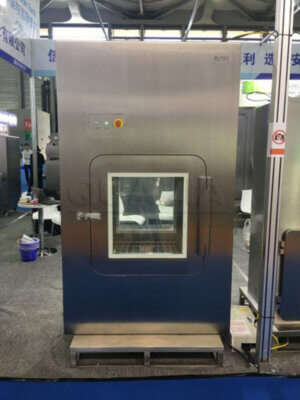
Material transfer into the test environment is often the stage most sensitive to the chosen arrangement. In an isolator, transfer occurs through a defined port or docking interface designed to preserve the barrier’s integrity while material passes through. The transfer method itself becomes part of the control: if the transfer interface or its associated procedure is not matched to the material being moved, the barrier’s value during the test proper can be undermined before the manipulation even begins. In an open cleanroom workflow, transfer typically relies on the room’s own entry controls and the sequence of gowning, wiping, or staging that personnel follow, so the discipline of that sequence substitutes for a mechanical barrier.
During the test itself, intervention exposure depends on how much direct operator action the manipulation requires and how that action is mediated. An isolator mediates it through gloves or sleeves, which introduces its own interface to manage — the integrity of that glove or sleeve becomes part of what protects the test from the operator, a consideration addressed in glove integrity testing for sterility test isolators. An open workflow mediates intervention through personnel technique and proximity, where the controlling factor is the operator’s practiced adherence to aseptic handling rather than a physical interface.
Recovery — removing the completed test materials, waste, and any contaminated items — carries exposure risk that is sometimes underweighted relative to the test itself. Where the arrangement is an isolator, recovery typically passes back through the same defined transfer interface, keeping the barrier intact until material has left the controlled space. Where the arrangement is an open cleanroom, recovery depends on the same room-level procedures that governed entry, and any deviation from that sequence at the end of the test carries the same consequence as a deviation at the start. The buyer evaluating either arrangement should trace this full path — entry, manipulation, exit — rather than evaluating the manipulation step in isolation, because a strong barrier or a well-controlled room at one stage does not compensate for a weak interface at another.
Room Classification, Barrier Integrity, and Monitoring Responsibilities
| Evidence stream | What it can establish | What it does not establish on its own |
|---|---|---|
| ISO 14644-1 cleanroom air classification | Airborne-particle classification for cleanrooms, clean zones, and separative devices | Microbiological grades, GMP room grades, or non-particle contamination controls |
| ISO 14644-7 separative-device evidence | Minimum design, construction, installation, test, and approval requirements for separative devices | Application-specific process suitability or compliance with applicable national and local rules |
| USP General Chapter 71 sterility-test basis | The broad scope of sterility testing and membrane filtration | A method requirement or compliance conclusion without verification against the applicable compendial passage |
Room classification and barrier qualification answer different questions, and conflating them is a common source of misdirected evidence requests. ISO 14644-1 establishes airborne-particle classification for cleanrooms, clean zones, and separative devices — it tells you how clean the air is with respect to particle counts. It does not, on its own, establish microbiological grades, GMP room grades, or controls for non-particle contamination. A room or isolator environment can meet a stated particle classification and still require separate microbiological evidence before it supports a sterility test claim. Anyone building a qualification package around classification data alone is missing the layer of evidence that actually addresses biological risk.
For the isolator itself as a separative device, ISO 14644-7 sets out minimum design, construction, installation, test, and approval requirements. This standard addresses the device’s construction and commissioning characteristics, not the suitability of a specific application running inside it. Its scope is acknowledged as application-independent, meaning that national and local requirements still apply on top of it, and the edition in use should be checked against current revision status. An isolator built and tested to this standard’s device-level requirements has evidence of sound construction; it does not, by that evidence alone, have evidence that a particular sterility test performed inside it will meet the applicable compendial method.
That compendial layer sits with the sterility test method itself. USP General Chapter 71 defines the identity and scope of sterility testing and membrane filtration as a source, but the specific passage governing a given method detail needs to be verified directly rather than assumed from a general reference to the chapter’s existence.
Monitoring responsibility follows from this layered structure. In an isolator arrangement, monitoring typically addresses the enclosed environment and the barrier’s own performance, while the surrounding room still carries defined interface requirements. In an open cleanroom arrangement, monitoring responsibility sits more heavily on the room’s classified environment and the personnel operating within it, because there is no enclosed zone separating the two. Where a project changes its monitoring frequency or location assumptions, it changes which standard’s evidence is actually being invoked — classification evidence, device evidence, or compendial method evidence — and the qualification package needs to reflect that distinction rather than treating one certificate as proof of the others.
Bio-Decontamination, Cleaning, and Material-Entry Evidence
Bio-decontamination, routine cleaning, and material-entry control are three distinct activities, and each produces a different kind of evidence that a sterility test arrangement needs to support. Bio-decontamination addresses the isolator’s internal environment or, in an open arrangement, the room and its surfaces, through a defined cycle intended to reduce bioburden before testing begins. The evidence this generates relates to the decontamination cycle’s own performance — its distribution and consistency within the enclosed or classified space — and does not by itself demonstrate that a specific test article or transfer item has been adequately treated, because item-level factors such as packaging and load configuration affect outcome independently of the cycle’s general performance.
Routine cleaning, by contrast, addresses ongoing surface condition between decontamination cycles or between test sessions. In an isolator, cleaning procedures apply inside a boundary that limits what can reintroduce contamination between cleans. In an open cleanroom, cleaning addresses a larger, more exposed surface and air volume, and the interval between cleaning and use interacts more directly with personnel traffic and material movement in that same space. The condition that changes the weight given to cleaning evidence is how much unprotected time or open exposure occurs between the cleaning event and the actual test.
Material-entry evidence concerns how items cross into the controlled or barrier-protected space in the first place, and this is where decontamination and transfer method intersect. An item entering an isolator through a defined transfer port carries evidence tied to that port’s own decontamination or bio-decontamination performance for the specific transfer method used. An item entering an open cleanroom through a material airlock or pass-through carries evidence tied to that airlock’s procedure and the personnel practice governing it. In both cases, the evidence a project should assemble is specific to the entry method actually used, not a general statement that “the room is clean” or “the isolator is decontaminated.” A buyer preparing a qualification package should be able to trace, for each class of item entering the test environment, which decontamination or cleaning evidence applies to that specific entry path, because a gap in one entry route is not closed by strong evidence on a different route.
Decision Conditions for the Selected Test Arrangement
The choice between a sterility test isolator and an open cleanroom workflow follows from the conditions already traced through intervention exposure, barrier interfaces, and entry evidence, rather than from a general preference for one label over the other. Where the critical manipulation involves a high degree of direct handling and the facility cannot guarantee consistent personnel practice across every test session, a barrier that separates the manipulation from the operator addresses that exposure directly, and the interfaces around that barrier — transfer ports, glove systems, room docking — become the evidence the project needs to qualify. Where the facility can demonstrate consistent, well-documented personnel discipline and a classified room environment that matches the test’s risk profile, an open workflow can support the same test, with the qualification package weighted toward room monitoring, gowning procedure, and handling sequence rather than barrier integrity.
Neither arrangement is established as adequate by its classification or its equipment type alone. A cleanroom’s ISO 14644-1 classification demonstrates particle control, not microbiological suitability for the test; an isolator’s construction to ISO 14644-7’s device requirements demonstrates sound separative-device design, not that the specific test performed inside it satisfies the applicable compendial method. The project still needs method-specific evidence tied to USP General Chapter 71’s relevant passage, verified directly rather than inferred from the chapter’s general scope.
What should guide the final selection is the actual path material and operators take during testing, transfer, and recovery, matched against where the facility can sustain control most reliably — behind a physical barrier with defined interfaces, or across an open room with defined procedures. A project team evaluating an aseptic isolator or sterility test isolator for this purpose should bring the specific test’s manipulation sequence, its transfer and recovery steps, and its existing room classification and personnel-control evidence into that review, since the configuration that is selected, and the interfaces it will need to the surrounding facility, follow directly from how that sequence is actually performed rather than from the test’s name alone.
Frequently Asked Questions
Q: What should we map before comparing an isolator with a cleanroom testing workflow?
A: Map every critical manipulation, operator intervention, material transfer, and recovery step in sequence. For each step, record whether it occurs behind the physical barrier or depends on room conditions, personnel practices, and handling outside that boundary.
Q: Does using a sterility test isolator remove the need to control the surrounding room interface?
A: No. The barrier separates critical manipulations from direct operator access, but defined room interfaces and operating procedures remain essential. The qualification plan should state which controls apply inside the barrier and which remain outside it.
Q: Can cleanroom air classification alone establish microbiological control for sterility testing?
A: No. ISO 14644-1 air classification establishes airborne-particle classification, not microbiological grades, GMP room grades, or non-particle contamination control. Treat classification as one evidence stream and identify the additional monitoring and process evidence needed for the selected arrangement.
Q: What evidence should be prepared for qualification of the selected test arrangement?
A: Prepare evidence that matches the actual control boundary: room interfaces and operating procedures, barrier integrity where applicable, monitoring responsibilities, and the planned approach to bio-decontamination, cleaning, and material entry. Verify method requirements against the applicable compendial passage and check relevant national and local rules for the project.
Q: How should we choose between an isolator route and an open cleanroom workflow?
A: Choose the route whose controls can be clearly assigned, qualified, and maintained across the real testing and transfer sequence. Compare the isolator’s barrier and interface controls with the cleanroom route’s greater reliance on room condition, personnel practices, and handling discipline, then document the evidence required for the chosen arrangement.