Frequently Asked Questions
Q: What happens to the qualification scope if the retrofit affects room pressurization logic or alarm strategy beyond the local duct section?
A: The project stops being a localized modification and enters full recommissioning territory, which means broader revalidation under frameworks such as ASTM E2500-22. Once pressure control logic or alarm thresholds are touched, the change propagates into the facility’s qualification boundary — not just the duct section — so teams should define that boundary explicitly before construction begins, not after an inspector raises it.
Q: Is a BIBO retrofit still viable if the original plant layout never accounted for crane access or bag-deployment clearance in the service corridor?
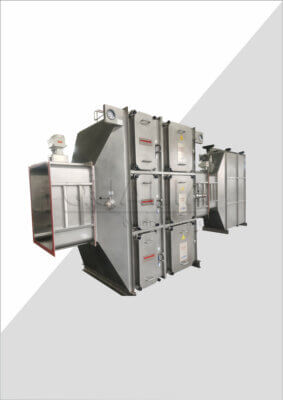
A: It may still be feasible, but access constraints become the primary engineering problem rather than the ductwork itself. Crowded service spaces require a detailed access-route study before any scope is committed to; if clearance for the housing, crane equipment, and sealed bag deployment cannot be engineered in, the retrofit introduces ongoing maintenance risk that compounds with every future filter change — not just during installation.
Q: How should teams weigh the trade-off between minimizing outage duration and completing the deeper enabling works the retrofit actually needs?
A: Shorter outages are cheaper in the near term but frequently produce unstable retrofits when controls updates, structural reinforcement, and support steel are deferred. The deciding criterion is whether the added pressure drop and housing weight can be absorbed by existing fan capacity and structural supports without modification — if they cannot, enabling works are not optional and the outage must be scoped to include them, or the retrofit will require a second shutdown within a short cycle.
Q: At what point does a BSL-3 or BSL-4 suite require a temporary pressure control plan rather than a straightforward HVAC shutdown?
A: Any time a single AHU shutdown would eliminate redundant directional airflow in a high-containment suite, a temporary pressure control plan is required before cutover begins. For potent compound or high-biocontainment environments, loss of negative pressure differential — even briefly — represents a containment breach scenario; redundant AHU capacity or a documented temporary arrangement must be confirmed as part of the shutdown sequence, not treated as a contingency.
Q: Does accelerated HEPA filter loading after a retrofit require changes to the ongoing maintenance programme, or is the original schedule sufficient?
A: The original schedule is typically insufficient once pharmaceutical powders or high-particulate processes are running through a newly retrofitted section. Increased filter loading shortens service life and steepens pressure-drop curves faster than a standard replacement interval assumes, so post-retrofit commissioning should establish a revised monitoring frequency and define the pressure-drop threshold that triggers an unscheduled change-out — before the first production run, not in response to a failure.