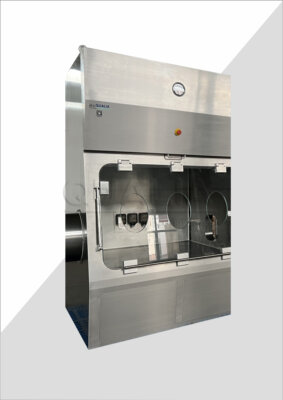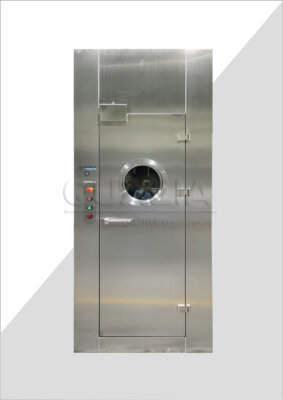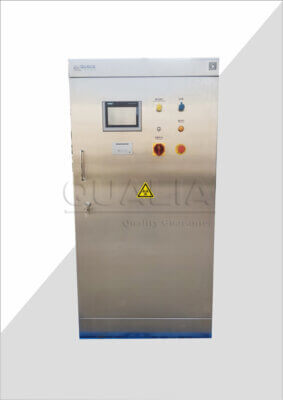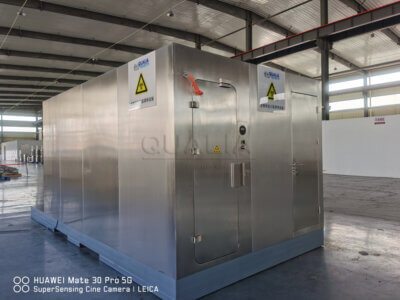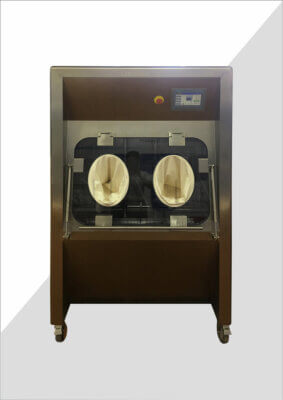


On a legacy filling line, glove ports are often inherited from an earlier layout rather than derived from the tasks operators actually perform. That inversion becomes a real constraint during a cRABS retrofit, because barrier geometry, the intervention set, and operator reach are all easier to challenge before the layout is fixed than afterwards. A task-based review gives aseptic operations and engineering teams a way to test access, visibility, and manipulation against what the line is genuinely expected to require — and to separate what drawings can answer from what needs a mock-up or project confirmation.
Map Every Intended Intervention on the Legacy Line
Start with a bounded intervention inventory, not a glove-port drawing. The list should cover the routine and corrective interventions, set-up actions, replenishment steps, sampling where applicable, adjustments, clearing tasks, and recovery actions the site expects to take place within the barrier. “Bounded” matters: an inventory that drifts into every conceivable event becomes unusable as a reach or layout input, while one that omits recovery or clearing tasks tends to surface those omissions late in the project.
EU GMP Annex 1 supports the practice of designing and authorizing interventions and considering their effects on airflow, critical surfaces, and product. That framing is useful because it ties the ergonomic question to the protection objective: an intervention that cannot be performed well is also an intervention whose contamination-control consequences are harder to control. The same source does not define ergonomic dimensions, reach limits, port spacing, operator fit, or project acceptance criteria, so the inventory should be built from the site’s own process knowledge rather than from an assumed standard list.
Keep the objective in view. A cRABS intervention review is an aseptic product-protection exercise. If the legacy line also handles hazardous compounds and operator protection is a required objective, that is a separate containment question with its own evidence boundary, and it is not resolved by an aseptic barrier layout discussion.
Review Glove-Port Position Against the Real Reach Task
For each task on the inventory, capture what the site already knows: operator position, target location, reach direction, view, tools or parts handled, required hand force or dexterity, and duration or repetition. NIOSH describes ergonomics as fitting work tasks and equipment to worker capabilities and identifies awkward posture and task demands as risk factors. That is general occupational-health guidance, not cRABS guidance — it supplies no glove-port dimensions, no pharmaceutical compliance rule, and no project-specific ergonomic conclusion, and it should not be used to derive a spacer or reach standard.
The practical value of the task-level detail is that it exposes where a port position is being justified by convention rather than by work. Glove-system dexterity and manipulation demands are a useful companion reference when translating a task list into port and glove choices (cRABS glove systems). The table below keeps the evaluation tied to actual work rather than a generic port-spacing rule.
| Task to review | Site evidence to capture | Design question |
|---|---|---|
| Intervention target | Exact component or critical location and task sequence | Can the target be accessed without an unverified workaround? |
| Operator position | Standing or seated position, approach, and relevant user variation | Does the concept need operator-based evaluation? |
| Reach and view | Hand path, arm posture, line of sight, and obstructions | Can the task be performed and observed as intended? |
| Handling demand | Tools, parts, force, dexterity, repetition, and duration known to the site | Could glove use or task demand require redesign or mock-up review? |
| Barrier and airflow interaction | Glove movement, proximity to critical surfaces, first-air path, and any door-opening need | What contamination-control evidence must accompany the ergonomic review? |
Two boundaries apply to any conclusion drawn from this table. First, there is no universal reach envelope, port spacing, posture limit, or acceptance score that can be applied across lines; the appropriate answer depends on the task mix, the operators, the component geometry, and the barrier concept. Second, port position and glove selection are configuration decisions that follow from the stated application and must be confirmed for the project. A supplier conversation at this stage is best framed around the intervention inventory and the layout constraints, which is the level at which a cRABS configuration discussion can actually be useful.
Check Airflow and Barrier Risk During Manipulation
Access review and contamination-control review are not separate exercises on a cRABS retrofit. The same arm and glove movement that solves a reach problem can disturb first-air protection, bring a glove or tool close to critical surfaces, require a door opening that the intervention set did not anticipate, or place strain on the glove and barrier. Annex 1 specifically calls out glove manipulations, first-air impact, barrier and glove integrity, and airflow effects during interventions, which is why the reach picture cannot be signed off on ergonomics alone.
The correct output of this section is a set of risk questions, not a risk conclusion. Whether a given manipulation is acceptable depends on project evidence — the barrier configuration, the airflow concept, the critical surfaces involved, and how the intervention is authorized and performed. Where the review identifies a manipulation that appears difficult or awkward, the response is not to accept it because the task is infrequent, nor to alter the barrier concept on ergonomic grounds alone. It is to hold both concerns together and route them to the design and validation discussion with the evidence each one requires.
A reach solution that increases barrier breach risk or critical-surface exposure is not an access improvement; the two questions have to be resolved together.
Capture Ergonomic Unknowns for Mock-Up or Project Review
Some tasks can be judged reasonably well from drawings, task descriptions, and component geometry. Others cannot, and the value of the review is in naming which is which. Tasks that depend on subtle hand paths, tight clearances, or partial visibility often fall into the second group, as do tasks where operator size, posture preference, or working style varies enough to change the outcome.
Mark the tasks where the judgment is genuinely unresolved — visibility uncertainties, tool or component conflicts during the sequence, handling demands that only become apparent under glove use, and any case where the site cannot describe the motion with confidence. Those are candidates for a physical or digital mock-up, structured observation, or an engineering review before the layout is fixed. Framing task-based reach, visibility, posture, and mock-up questions for a legacy line is a distinct exercise from reviewing a new build, and the route from unknown to decision should be stated explicitly (cRABS ergonomics considerations).
This is also the point where procurement questions become useful rather than premature. Once the intervention inventory, the reach tasks, and the open unknowns are documented, the site can ask a supplier precise questions: which configuration assumptions drive port placement, what interface information the supplier needs from the line and the process, what the project confirmation process covers, and how acceptance and qualification evidence is to be developed and by whom. Keep the acceptance boundaries explicit — an access review does not establish sterility assurance, and a cRABS configuration does not by itself satisfy a containment objective. Final configuration and suitability remain subject to project confirmation.
Frequently Asked Questions
Q: Is being able to reach a component enough to approve a glove-port position?
A: Reach is only one part of the task. Review whether the operator can see the target, manipulate the required tool or part, and perform the task with the relevant force, dexterity, repetition, and duration while considering effects on critical surfaces, airflow, and glove integrity.
Q: Which interventions should be included before fixing glove access?
A: Include the routine, corrective, set-up, replenishment, adjustment, clearing, and recovery tasks the site expects within the barrier, plus sampling where applicable. This prevents the layout from being judged only against easy routine actions while leaving other intended work unresolved.
Q: When is a mock-up more useful than another drawing review?
A: A mock-up or observation is useful when drawings cannot resolve the hand path, visibility, operator variation, or tool and component conflicts. Identify the specific uncertain task so the evaluation addresses an actual access decision rather than a generic reach envelope.
Q: What if the proposed access requires door opening or an awkward glove movement?
A: Treat it as a layout and intervention issue requiring review. Document the task, movement, proximity to critical surfaces, and first-air path so ergonomic and contamination-control questions are considered together before accepting the access concept.