
Selecting the correct biosafety level for a modular laboratory is a critical, high-stakes decision. Misclassifying your facility can expose personnel to unacceptable risk or waste significant capital on unnecessary containment. The choice between BSL-2 and BSL-3 is not a spectrum but a binary threshold defined by the agents you handle.
This distinction has never been more operationally relevant. The rise of modular construction has transformed the economics and deployment speed of high-containment labs, making BSL-3 capabilities more accessible. Understanding the precise requirements for each level is essential for making a compliant, cost-effective, and strategically sound investment.
BSL-2 vs BSL-3: Defining the Core Containment Difference
The Primary vs. Secondary Barrier Paradigm
The fundamental distinction between BSL-2 and BSL-3 is the shift from protecting personnel within the lab to also protecting the external environment. This is framed by the principle of primary versus secondary barriers. BSL-2 relies on primary containment—safety equipment like Biosafety Cabinets (BSCs) that create a protective micro-environment for procedures. BSL-3 mandates robust secondary containment, where the laboratory itself is engineered as a sealed, inward-airflow barrier. This core difference dictates every subsequent design, operational, and investment decision.
Application to Risk Group Classification
This barrier strategy directly maps to agent risk. For Risk Group 2 (RG2) agents, which pose moderate individual risk and have available interventions, BSL-2’s focus on technique and primary containment is appropriate. For serious or lethal Risk Group 3 (RG3) agents, the added layer of facility-wide engineering controls is non-negotiable. The selection is not discretionary; it is a direct application of risk assessment to biosafety protocols as outlined in the WHO Laboratory Biosafety Manual 4th Edition. Using a lower BSL for a higher-risk agent creates unacceptable danger.
Impact on Facility Design Philosophy
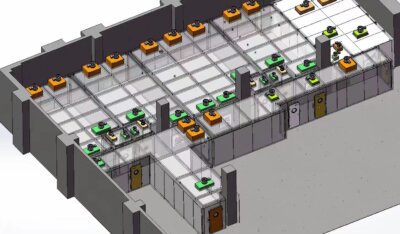
This difference creates two distinct design philosophies. A BSL-2 lab is a controlled workspace. A BSL-3 lab is a containment device. Every element, from wall seals to airflow, is part of an integrated system engineered to fail safely. In our planning, we treat the BSL-3 envelope not as a room, but as a piece of safety equipment that requires the same level of specification, validation, and maintenance.
Cost Comparison: BSL-2 vs BSL-3 Modular Lab Investment
Capital Cost Drivers
The financial leap from BSL-2 to BSL-3 is significant, driven by complex engineering controls. A BSL-2 modular lab requires standard construction, basic HVAC for comfort, and primary containment devices. A BSL-3 facility demands sealed penetrations, HEPA-filtered exhaust, negative pressure systems, and effluent decontamination, escalating both capital and operational costs. The premium is tied directly to the secondary containment mandate.
The Modular Cost Advantage
However, modular construction radically alters the cost paradigm. Prefabricated, integrated BSL-3 units offer dramatic savings and faster deployment compared to traditional builds. A comprehensive Total Cost of Ownership analysis, including financing and potential redeployment, increasingly favors modular solutions for high-containment needs. The efficiency of factory fabrication under controlled conditions reduces waste and accelerates the critical path to operational readiness.
Analyzing Total Cost of Ownership
To make an informed decision, you must look beyond initial capital expenditure.
| Cost Driver | BSL-2 Modular Lab | BSL-3 Modular Lab |
|---|---|---|
| Primary Containment | BSCs required | BSCs mandatory for all work |
| HVAC & Pressure | Basic comfort ventilation | 100% HEPA exhaust, negative pressure |
| Construction Sealing | Cleanable surfaces | Sealed envelope for fumigation |
| Effluent Treatment | Standard waste protocols | Liquid & gas decontamination required |
| Capital Cost Premium | Baseline | Significant increase |
| Modular Savings Potential | Moderate | Up to ~90% vs. traditional build |
Source: Biosafety in Microbiological and Biomedical Laboratories (BMBL) 6th Edition. The BMBL defines the fundamental facility and engineering control requirements that drive the cost differential between BSL-2 and BSL-3 levels, particularly for ventilation, containment, and effluent treatment.
Operational budgets also diverge. BSL-3 HVAC maintenance, including regular in-situ HEPA filter testing, represents a recurring cost that must be factored into long-term planning.
Ventilation & Pressure Control: BSL-2 vs BSL-3 Requirements
Mandatory Performance Parameters
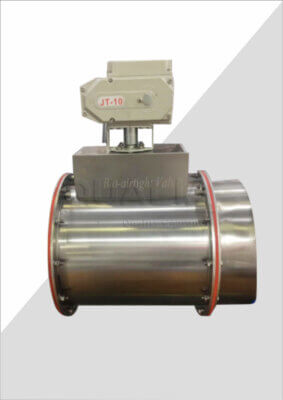
Ventilation is a primary cost and safety differentiator. BSL-2 labs typically use 6-12 air changes per hour (ACH) for comfort, with no mandated directional airflow. BSL-3 requires a minimum of 6 ACH at all times, with single-pass, 100% exhaust and mandatory inward airflow from clean to dirty areas. This directional cascade is verified against standards like ANSI/ASSP Z9.14, which provides the testing methodologies for BSL-3 systems.
The Safety ROI of Engineering Controls
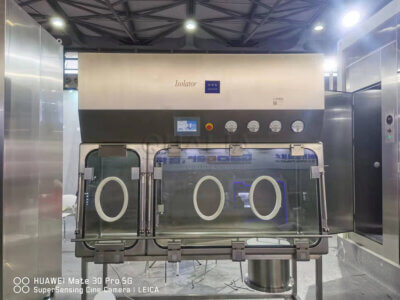
A critical insight from operational data is that increasing ACH beyond 6-12 provides minimal added safety benefit for aerosol purge, while energy costs rise dramatically. True personnel safety derives from primary containment devices, not room ventilation. This means investment should prioritize robust, well-maintained BSCs over specifying excessively high room ACH rates.
Strategies for Efficiency and Stability
Different strategies optimize each level. For BSL-2, technologies like chilled beams can maintain performance at lower ACH, yielding over 20% energy savings. For BSL-3, pressure control strategy is key; using the corridor as a controlled “anchor space” stabilizes the entire suite, preventing problem propagation. The choice of a hybrid pressure control strategy—mixing direct control in anchor spaces with offset control in labs—can enhance operational stability and efficiency.
| Parameter | BSL-2 Requirement | BSL-3 Requirement |
|---|---|---|
| Air Changes/Hour (ACH) | 6-12 (for comfort) | Minimum 6 (mandatory) |
| Airflow Direction | Not mandated | Inward airflow required |
| Air Recirculation | Permitted | 100% single-pass exhaust |
| HEPA Filtration | On BSC exhaust only | On all exhaust air |
| Pressure Differential | Not required | Negative pressure maintained |
| Energy Optimization | Chilled beams viable | Anchor space strategy key |
Source: ANSI/ASSP Z9.14. This standard provides the specific testing and performance verification methodologies for BSL-3 ventilation systems, which must demonstrate compliance with parameters like directional airflow, pressure differentials, and HEPA filtration integrity.
Construction & Sealing Standards: Modular BSL-2 vs BSL-3
The Sealed Envelope Requirement
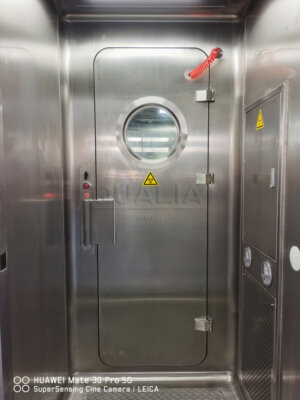
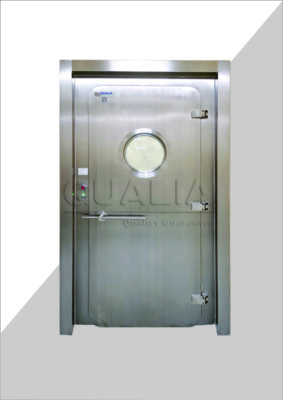
Physical construction requirements escalate sharply. BSL-2 requires cleanable, chemical-resistant surfaces. BSL-3 demands a sealed envelope to allow for gaseous decontamination, with monolithic surfaces and sealed penetrations. This is where modular construction excels, using prefabricated, welded panels with coved corners fabricated in a controlled factory environment.
Critical Component Specifications
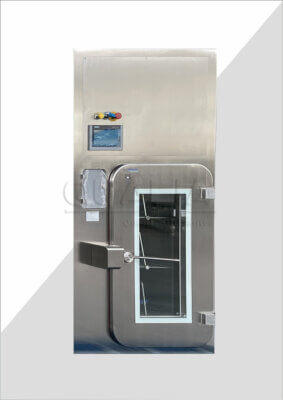
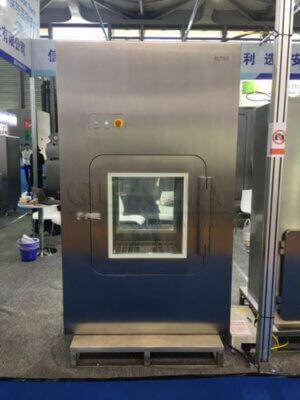
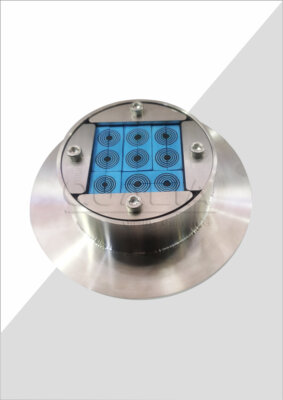
A critical binary threshold is the autoclave seal. BSL-2 may use non-airtight seals, while BSL-3 pass-through autoclaves require welded biological sealing flanges (bioseals) to maintain envelope integrity during decontamination cycles. This creates a clear, non-negotiable procurement specification based solely on the biosafety level. We specify these components early in the design process to avoid costly retrofits.
The Advantage of Prefabrication
Modular construction transforms compliance from a field challenge to a factory-controlled process. Welded seams, pre-installed utility chases, and tested panel assemblies arrive on-site as verified sub-systems. This not only ensures consistency but also significantly reduces the risk of containment failures due to construction flaws.
| Construction Feature | BSL-2 Standard | BSL-3 Standard |
|---|---|---|
| Surface Integrity | Chemical-resistant, cleanable | Monolithic, sealed envelope |
| Penetrations | Standard seals | Airtight, sealed penetrations |
| Coving | Recommended | Mandatory coved corners |
| Autoclave Seal | Non-airtight acceptable | Welded biological sealing flange |
| Decontamination Capability | Surface disinfection | Supports whole-room gaseous decontamination |
| Modular Advantage | Pre-finished panels | Pre-fabricated, welded panels |
Source: Biosafety in Microbiological and Biomedical Laboratories (BMBL) 6th Edition. The BMBL specifies the laboratory physical construction requirements, detailing the need for sealed surfaces, sealed penetrations, and gaseous decontamination capability that differentiate BSL-3 from BSL-2.
Operational & Maintenance Considerations for Each Level
Protocol Intensity and Access Control
Operational rigor intensifies with containment level. BSL-2 emphasizes standard microbiological practices and BSC use for aerosol-generating procedures. BSL-3 adds strict, logged access controls, mandatory use of BSCs for all open manipulations, and defined protocols for decontaminating all liquid and gaseous effluents before release.
Maintenance Complexity and Strategy
Maintenance complexity also increases, particularly for the BSL-3 HVAC system. This requires regular in-situ testing of HEPA filters via bag-in/bag-out (BIBO) housings, a procedure with its own containment requirements. The operational budget must account for these specialized services and potential downtime.
| Aspect | BSL-2 Operations | BSL-3 Operations |
|---|---|---|
| Access Control | General lab access | Strict, logged access control |
| BSC Use | For aerosol-generating procedures | For all open manipulations |
| Personal Protective Equipment (PPE) | Lab coat, gloves, eye protection | Enhanced PPE; may include respirators |
| Effluent Decontamination | Standard autoclaving | Defined protocols for all effluents |
| HVAC Maintenance | Standard filter changes | Regular in-situ HEPA testing (BIBO) |
| Pressure Control Strategy | Not applicable | Hybrid strategy recommended |
Source: WHO Laboratory Biosafety Manual 4th Edition. The WHO manual outlines the core operational protocols and practices, including access controls, work procedures, and waste handling, that are scaled according to the risk level and corresponding biosafety level.
A key operational insight is that pressure control strategy directly impacts maintenance burdens. A well-designed hybrid strategy minimizes nuisance alarms and system adjustments, leading to more stable and efficient day-to-day operations.
Which Biosafety Level Is Right for Your Risk Group Agents?
Starting with Definitive Agent Classification
The selection is fundamentally risk-based. Always start by definitively classifying the agents according to established risk group criteria. Risk Group 2 (RG2) agents, which pose moderate individual risk and have available interventions, are appropriately handled in BSL-2. Risk Group 3 (RG3) agents, associated with serious or lethal disease via inhalation, mandate BSL-3 containment. This classification, not future aspirations or budget, must be the primary driver.
Consequences of Misclassification
The consequences of error are severe in both directions. Using BSL-2 for an RG3 agent creates unacceptable danger to personnel and the community. Using BSL-3 for RG2 agents incurs unnecessary capital expense, higher operational costs, and increased procedural burden without a corresponding safety benefit. Regulatory audits will focus on this justification.
The Role of Risk Assessment
A formal risk assessment should document this decision. It must consider the agent’s pathogenicity, transmission route, available treatments, and the nature of the procedures (e.g., volume, potential for aerosol generation). This documented assessment becomes the foundation for your facility’s design basis and operational protocols.
Key Selection Criteria for Your Modular Laboratory Project
Evaluating Total Cost of Ownership and Speed
Beyond agent risk, several strategic criteria should guide your selection. First, evaluate the total cost of ownership, where modular BSL-3 solutions can challenge traditional economic assumptions. Second, assess deployment speed and flexibility; modular labs enable rapid, decentralized response networks, enhancing biosecurity resilience. Speed-to-operation has tangible value during outbreaks or urgent research initiatives.
Conducting a Focused Cost-Benefit Analysis
Third, conduct a cost-benefit analysis on engineering controls. Focus investment on primary containment where safety ROI is highest, rather than over-specifying room-level parameters like ACH. Allocate budget to high-quality BSCs, reliable autoclaves, and robust training programs.
Planning for Future Adaptability
Finally, consider future adaptability. The inherent mobility of a self-contained mobile high-containment laboratory offers long-term strategic value that fixed facilities cannot. A modular unit can be repurposed for different agents, relocated to respond to emerging threats, or upgraded in phases. This flexibility protects your investment against future changes in research focus or regulatory landscape.
Implementing Your Chosen Containment Level: Next Steps
Once the BSL level is selected, implementation requires meticulous planning. Engage vendors early with clear, level-specific specifications, especially for critical components like autoclave bioseals and HVAC control sequences. Commissioning and certification are non-negotiable; this includes verifying ACH, pressure cascades, HEPA filter integrity, and sealed construction through rigorous testing.
Develop comprehensive operational protocols and training programs concurrently with construction. The most perfectly engineered lab is only as safe as the personnel who operate it. Training must cover not only standard procedures but also emergency response for containment failure. Final verification should include performance testing with surrogate agents to validate both the facility’s engineering controls and the team’s operational competency under realistic conditions.
Need professional guidance to specify and implement the right modular containment solution for your Risk Group 2 or 3 work? The experts at QUALIA specialize in translating biosafety requirements into operational, certified modular laboratories. Contact us to discuss your project requirements and develop a compliant implementation plan. You can also reach our team directly at Contact Us for a preliminary consultation.
Frequently Asked Questions
Q: How do ventilation requirements fundamentally differ between BSL-2 and BSL-3 modular labs?
A: The key difference is the requirement for directional airflow and single-pass exhaust. BSL-2 labs typically use 6-12 air changes per hour (ACH) for comfort with no mandated airflow direction. BSL-3 mandates a minimum of 6 ACH with 100% single-pass exhaust and inward airflow from clean to potentially contaminated areas to protect the external environment. For projects where energy efficiency is a priority, BSL-2 designs can utilize technologies like chilled beams to maintain performance at lower ACH, while BSL-3 designs must prioritize validated pressure control systems.
Q: What is the most critical construction specification for a BSL-3 modular lab envelope?
A: The lab must be a sealed envelope capable of withstanding gaseous decontamination. This requires monolithic, cleanable surfaces and all penetrations—for utilities, ductwork, and autoclaves—to be hermetically sealed. A clear binary threshold is the autoclave seal: BSL-3 pass-through units require welded biological sealing flanges (bioseals), whereas BSL-2 may use non-airtight gaskets. This means your procurement specifications for a BSL-3 facility must explicitly call for a gastight envelope, a requirement detailed in foundational guidance like the Biosafety in Microbiological and Biomedical Laboratories (BMBL) 6th Edition.
Q: Does increasing air change rates (ACH) in a BSL-3 lab significantly improve personnel safety?
A: No, evidence indicates that increasing ACH beyond 6-12 provides minimal added safety benefit for purging aerosols, while dramatically increasing energy costs. True personnel protection derives from proper use of primary containment devices like Biosafety Cabinets (BSCs), not from ultra-high room ventilation rates. This means operational budgets should prioritize robust maintenance and validation of primary containment equipment over excessive spending on maximizing room ACH, aligning with a risk-based approach as promoted in the WHO Laboratory Biosafety Manual 4th Edition.
Q: How does modular construction change the financial comparison between BSL-2 and BSL-3 labs?
A: Modular construction radically alters the cost paradigm for high-containment facilities. While a traditional BSL-3 build is significantly more expensive than BSL-2 due to complex engineering, prefabricated integrated BSL-3 units offer dramatic capital savings and faster deployment. A comprehensive Total Cost of Ownership analysis, including potential redeployment, can increasingly favor modular BSL-3 solutions. For projects with budget constraints or a need for rapid deployment, you should evaluate modular options as they can challenge traditional assumptions about BSL-3 affordability.
Q: What operational strategy enhances stability in a BSL-3 laboratory’s pressure control system?
A: Implementing a hybrid pressure control strategy enhances operational stability. This approach mixes direct pressure control in key “anchor spaces” like corridors with offset control in individual laboratories. Using the corridor as a controlled anchor prevents pressure problem propagation throughout the entire lab suite. For facilities aiming for reliable long-term operation, you should plan for this sophisticated control strategy during design, as it is critical for maintaining the inward airflow cascade mandated for BSL-3 containment.
Q: What is the primary factor for deciding between a BSL-2 and BSL-3 containment level?
A: The decision is a direct, non-discretionary application of a risk assessment based on the agents you will handle. Risk Group 2 agents, which pose moderate individual risk, are appropriate for BSL-2. Risk Group 3 agents, associated with serious or lethal disease, mandate BSL-3 containment. This means you must start by definitively classifying your agents; using a lower BSL for a higher-risk agent creates unacceptable danger, while using a higher BSL for lower-risk agents incurs unnecessary cost and operational burden.
Q: How do verification requirements differ for BSL-3 versus BSL-2 ventilation systems?
A: BSL-3 ventilation and containment systems require formal, rigorous performance verification that BSL-2 systems do not. This includes testing HEPA filter integrity in-situ, validating pressure differential cascades, and confirming proper airflow direction. Standards like ANSI/ASSP Z9.14 provide specific methodologies for this verification. For BSL-3 implementation, you must budget for and plan this intensive commissioning phase, as it is non-negotiable for certifying the facility’s secondary containment integrity.
Related Contents:
- How to Calculate HVAC Air Changes Per Hour (ACH) Requirements for Modular BSL-2 and BSL-3 Laboratories
- Modular BSL-4 Labs: Cutting Costs Without Compromising
- Installing Modular BSL-3 Labs: Expert Guide
- Modular BSL-3 Lab Costs: Comprehensive Analysis
- Modular BSL-3/4 Labs: Rapid Deployment Solutions
- Customizable BSL-3 Labs: Tailored Modular Designs
- BSL-3 Lab Ventilation: Design for Optimal Safety
- Modular BSL-3 Labs: Rapid Construction Solutions
- BSL 2/3/4 HVAC System Design: Pressure Cascade, ACH Rates & Directional Airflow Engineering Requirements