
Before a cRABS supplier can define mechanical interfaces, the facility needs to supply its current air-system evidence, documented pressure relationships, operating states for each relevant room, and a clear list of what remains unresolved. The more precisely that information is bounded—confirmed records labeled as such, gaps flagged as gaps—the more useful the integration review becomes. Assembling that package before the first technical conversation is what separates a productive interface discussion from one that generates assumptions that have to be undone later.
Identify the Current HVAC Evidence
The starting point is a controlled set of drawings and records that describe the air system as it exists today, not as it was designed or as it was last officially documented before the most recent alteration.
Identify the Current HVAC Evidence: Buyer Review Matrix
| Existing HVAC input | Information sent | Status to preserve |
|---|---|---|
| HVAC drawing | Revision and description of later alterations | Current installation, original design or superseded |
| Room-pressure relationship | Named spaces and the existing documented relationship | Current verified, as-designed or unknown |
| Pressure record | Record reference, date and represented operating state | Source and current applicability |
| Sensing location | Existing point or drawing reference for the represented record | Verified location, design location or unknown |
| Conflicting records | Both dated versions and the discrepancy | Open confirmation owner |
Gather the current-revision room layout drawings, the air-handling unit schematic, the supply and exhaust distribution drawings, and the most recent commissioning or requalification test report for the spaces the cRABS will occupy. Each document should carry its revision number and date. If a drawing has been superseded but the replacement has not yet been formally issued, hold both: the supplier needs to distinguish what is officially documented from what is currently installed.
Revision history matters at this stage because HVAC systems in production buildings are modified incrementally—a replaced AHU, a rerouted exhaust duct, a room repurposed after a process change—and those changes are not always captured in a single updated set. Where a drawing predates a room alteration, send both the original drawing and a dated written description of the change, even if the description is informal. That pairing tells the supplier which portions of the layout are verified and which are inferred from an older reference. If a fully current, verified drawing already exists and supersedes the earlier version, that drawing alone is sufficient; the superseded version does not need to accompany it.
Alongside drawings, collect filter schedules, any HEPA terminal filter records for the target room, and pressure-monitoring trend data if the building management system retains it. Even partial trend data helps a supplier understand the operating envelope of the space under normal production, idle, and cleandown conditions.
Describe Room Relationships and Operating States
A single pressure value means little without the adjacent space it is measured against and the operating condition under which it was recorded.
For each room the cRABS will occupy or border, document the pressure cascade as a set of pairwise relationships: Room A relative to Room B, Room B relative to the corridor, and so on. For each pair, record the spaces being compared, the documented pressure differential, the source reference and its date, the operating state represented (production, idle, cleandown, or emergency), and the sensing-location drawing reference or point tag in the building management system.
Related Products
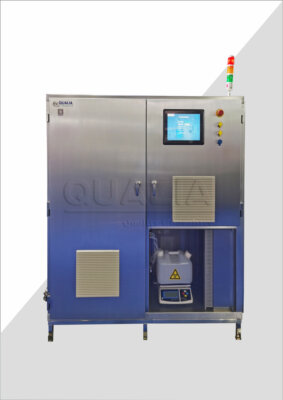
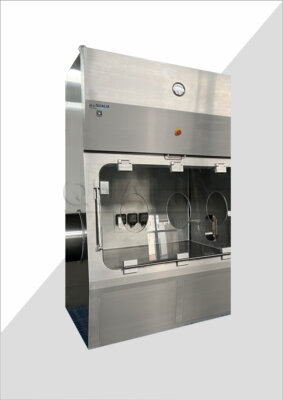
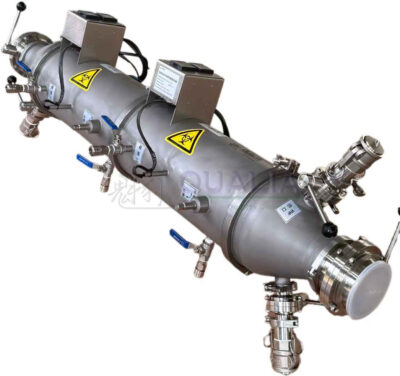
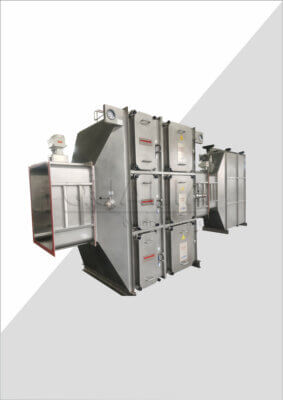
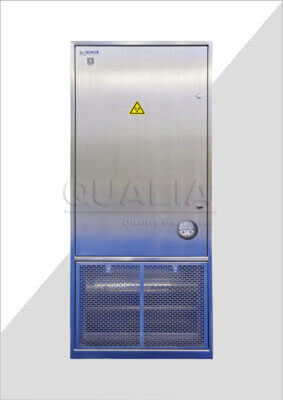
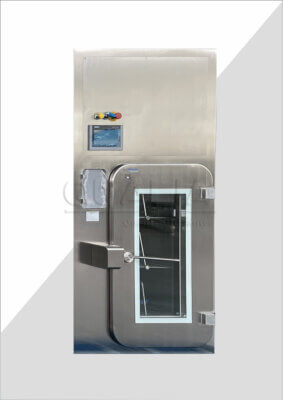
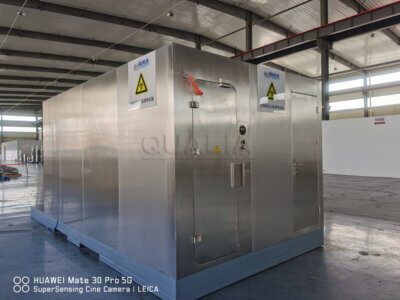
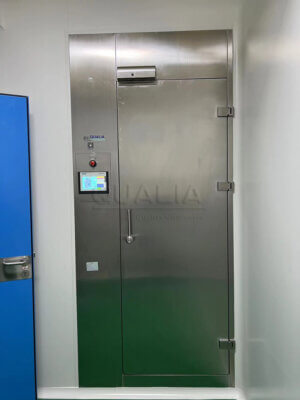
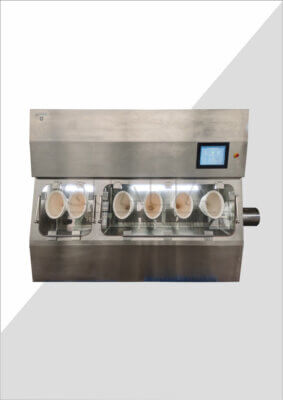
- Closed Restricted Access Barrier System – cRABS — Open the relevant equipment discussion with the intended retrofit scope and site information; the listing is not a project utility or controls specification.
Every pressure record must carry its operating state and sensing location before it is useful to an integration review.
That discipline matters because a room may hold a different cascade during cleandown than during production, and a cRABS designed around one state may behave differently when the facility shifts to another. If the cRABS will share a room with existing equipment—a filling line, a lyophilizer, another isolator—the documentation should extend to the adjoining spaces and to the pressure relationships that change when neighboring equipment cycles on or off. Describe the production state and the idle state separately for each relationship, and label each record explicitly: current verified, as-designed, superseded, or unknown.
That labeling is not bureaucratic caution. It is the mechanism by which the supplier separates observed site conditions from design assumptions. An as-designed pressure differential that was never re-verified after a room modification is not the same as a reading confirmed during a recent requalification run. If the two values agree, the label difference does not change the design. If they disagree, the label prevents the more convenient number from being treated as fact.
Consider a project where a grade B room was extended eighteen months ago to accommodate a second filling suite, and the original commissioning report covers only the first suite. The pressure data for the new portion of the room may be as-designed or unknown, while the data for the original portion is current verified. Sending a single undifferentiated pressure table from the original report would not reveal that distinction, and the supplier would have no way to know that the cRABS landing zone sits in the unverified half.
Separate Facility and Equipment Air Responsibilities
Defining which party supplies, terminates, or monitors each air connection is as important as knowing what the connection carries.
A closed restricted access barrier system manages its own internal air quality—typically through integral HEPA filtration and a controlled recirculation path—but it depends on the facility for supply air quantity, exhaust or return termination, makeup air to offset exhaust, and in many configurations a continuous pressure reference. The boundary between facility scope and equipment scope is not fixed by convention; it is negotiated at the interface and must be explicitly assigned before design can proceed.
For each connection—supply air, exhaust air, return air, monitoring signal, drain, and any VHP port if decontamination is integrated—identify the proposed supplying party, the proposed receiving party, and the physical termination point. Mark any connection where the assignment is currently open. An unassigned connection is a scope gap, and scope gaps tend to appear in both quotations or in neither, depending on which party makes the more conservative assumption.
Interface schedules are the standard tool for making those assignments visible and binding. If the facility already holds a signed interface schedule from an earlier barrier installation in the same suite, review it before the cRABS discussion: some connections may already be settled by that precedent, and others may need to be revisited because the cRABS exhaust volume or pressure sensitivity differs from the earlier equipment. Where no schedule exists, the facility should prepare a draft that lists each connection with its current assignment status—confirmed, proposed, or unresolved—and bring that draft to the integration review rather than leaving the structure to be built from scratch during the conversation.
The exhaust and monitoring interfaces deserve particular attention. The facility exhaust system governs the differential pressure the cRABS sees at its exhaust termination, and that value interacts directly with the internal cascade the equipment maintains between its work zone and the surrounding room. If the facility exhaust varies with process load—because other equipment on the same branch cycles—the cRABS controls and the facility control strategy need to be coordinated, and that coordination requires knowing who owns the exhaust termination and what variation it is expected to tolerate.
The question is not only what each air connection carries, but who terminates it, who controls it, and who is responsible when it drifts.
QUALIA’s standard interface review process works from a completed connection list in exactly this form: each line assigned, each unresolved item flagged, so that the first technical discussion starts with scope accountability rather than building it.
Related Reading
- What Existing-Site Information Should Buyers Gather Before Planning a cRABS Retrofit? — Use the wider site-information checklist before narrowing the handoff to HVAC records.
- Where Should Facility HVAC Scope End and cRABS Air-Handling Scope Begin? — Follow the air-side ownership question when dividing facility and equipment deliverables.
- How Should Buyers Define Shutdown and Installation Constraints Before a cRABS Retrofit? — Carry the information review forward into the installation-window discussion.
Resolve Conflicting Records Before Design
Contradictions between drawings and site records are common in operational facilities, and the right response to a conflict is to retain both records and surface the discrepancy rather than resolve it by choosing the more convenient value.
When a current field measurement disagrees with a drawing—a duct route that no longer matches the layout, a pressure differential that is consistently higher or lower than the commissioned value—both the measured data and the drawing should be submitted with their respective dates. The supplier cannot resolve that conflict; the facility has the site access to do so. What the supplier can do is identify which assumption would change the design and ask the facility to confirm before proceeding.
The practical instrument for handling these situations at quotation stage is a conditional quotation: a proposal that identifies each unresolved survey dependency by name, states what information is needed, and specifies who is responsible for supplying it. That structure keeps an open question from becoming an unconditional equipment commitment. If a pressure boundary or an exhaust connection is not yet confirmed, a conditional quotation says so explicitly rather than absorbing the uncertainty into a scope assumption that neither party can later reconstruct.
This applies to any fact that is unknown at the time of quotation, not only pressure data. If the room pressure relationship between the cRABS landing zone and the adjacent corridor has not been verified since a recent HVAC modification, that is a survey dependency. If the exhaust branch serving the target room has not been flow-balanced since additional equipment was connected, that is a survey dependency. Each dependency should appear in the quotation as a named item with a clear path to resolution—a site survey, a rebalancing test, or a document review—and a named responsible party.
Choosing the convenient record conceals uncertainty from the integration review; retaining both records with their dates is what keeps the dependency visible.
A documented correction can close a discrepancy without carrying both records forward. If the facility has already performed a rebalancing and produced a new verified drawing that supersedes the conflicting one, that single corrected document is sufficient. The condition is that the correction is documented and dated, so the supplier—and the qualification record—can follow the chain from the original discrepancy to its resolution.
By the time the integration review begins, the facility should have in hand: a dated drawing set reflecting current installation, a pressure record table with operating states and sensing references, a connection list with assignments marked, and a written list of open items with the responsible party named for each. That package does not need to be complete to be useful—unknown items explicitly flagged are more useful than unknown items left blank—but every item in it should be labeled for what it actually represents.
References
- EU GMP Annex 1 – Manufacture of Sterile Medicinal Products (2022) — Use the sterile-manufacturing contamination-control context to identify equipment and site interfaces for review; it supplies no project-specific pass box or cRABS acceptance values.
- EudraLex Volume 4 Annex 15 – Qualification and Validation — Distinguish supplier documentation from project qualification and acceptance decisions; reported conditions and deviations remain specific to the represented system.
- ISO 14644-7:2004 Separative Devices — Frame separative-device requirements and customer–supplier questions within the standard’s verified summary scope; detailed clauses and equipment limits are outside this summary.
- FDA Guidance – Sterile Drug Products Produced by Aseptic Processing (cGMP) — Check whether the project is within sterile aseptic drug-manufacturing guidance before treating its evidence as applicable; the saved summary supplies no retrofit test program.
Frequently Asked Questions
Q: Can we obtain an initial quotation before a site survey?
A: Yes, as a conditional offer. Identify unavailable HVAC facts and the survey dependency explicitly so later findings can be traced to the assumptions used in that offer.
Q: Should procurement combine pressure information from different room states into one figure?
A: Keep each record with its represented state and spaces instead. A consolidated handoff can organize the records without replacing their differing contexts with an unexplained figure.
Q: Who should consolidate information when the facility uses several HVAC contractors?
A: Name one buyer-side coordinator while preserving each record source and owner. The coordinator should identify conflicting room or sensing-location references rather than silently choosing one.