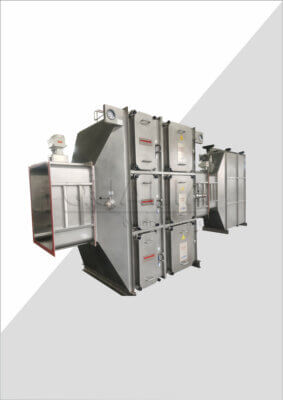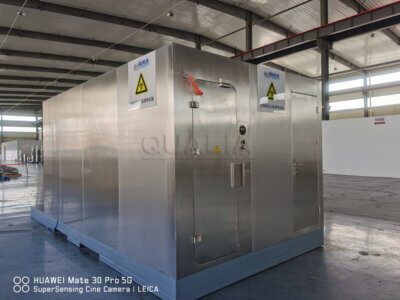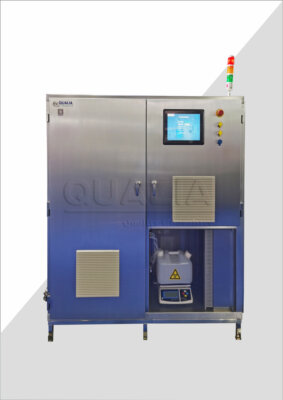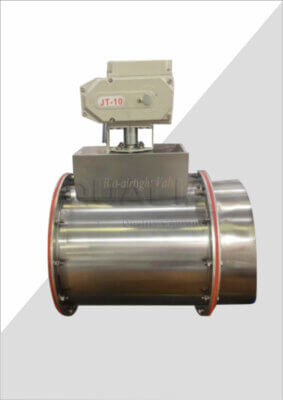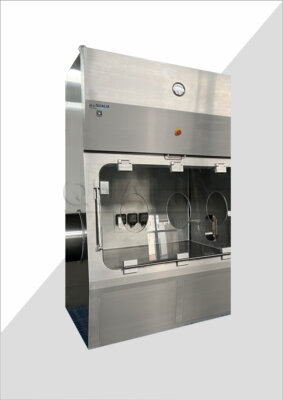

Bio-safety isolation damper cost is driven by what the damper has to seal against, not by the duct diameter alone. The main variables are the damper size and body geometry, the casing and shaft materials, the seal system and the leakage class it must meet, the differential pressure the closed blade has to hold, and the actuation and monitoring package wrapped around it. Two dampers of identical nominal size can differ widely in price when one is a bubble-tight stainless isolation damper with a pneumatic fail-closed actuator, position proving and integral test ports, and the other is a painted-steel shutoff damper with a hand lever.
A bio-safety isolation damper is a bubble-tight shutoff device placed in a containment exhaust or supply duct so the duct can be sealed, usually to allow filter housings or duct sections to be decontaminated or opened without losing the room’s pressure boundary. That duty, rather than airflow modulation, determines nearly every cost element in the build.
Specification choices that change the damper build
The specification defines the build, and the build defines the price; everything else is assembly and paperwork around that core. Size, geometry, casing material, seal system, differential-pressure duty, and the leakage requirement each change what is being manufactured, so a quotation only becomes comparable once all six are fixed in writing.
The leakage requirement is the specification that reaches furthest into the build. A damper asked to close tightly against a stated pressure needs an inflatable or compressed elastomer seal at the blade periphery, a sealed shaft penetration, and a casing stiff enough that it does not deflect away from the seal line under load. Relax that requirement and the same nominal damper becomes a simpler plate-and-frame assembly. Tighten it and the casing gauge, the weld specification, the shaft bearing arrangement and the leak-test regime all move together.
Differential-pressure duty works the same way but acts on the blade and shaft rather than the seal. A closed blade in a containment exhaust duct can see the full fan head when a downstream isolation step occurs, and the blade must stay flat and stay sealed under that load. Blade stiffening, shaft diameter and actuator torque all scale with the pressure the closed damper must hold, so a pressure figure stated as a duty rather than as a normal operating value is one of the cheapest clarifications a buyer can make.
A common specification mistake is to describe the damper by its airflow and duct size and to leave the sealing duty to the supplier’s interpretation. That produces bids built to different assumptions, and the lowest one is usually the one that assumed the least. State the hazard the boundary is protecting, the pressure the closed blade must hold, and the leakage behavior expected at that pressure, and the quotations converge on the same object.
Size, geometry, materials, and seal cost effects
Physical build cost rises with the sealed perimeter and the stiffness needed behind it, not simply with free area. A large rectangular damper has more seal length, more unsupported casing span and more blade deflection to control than a round damper of equivalent area, so geometry alone can separate two dampers passing the same airflow. Round bodies suit most containment duct runs; rectangular bodies appear where existing ductwork or plant room space forces the shape, and that constraint carries a cost.
Casing and wetted-part material follow the decontamination agent and the duct environment rather than the air itself. Stainless steel with a specified surface finish is normal where the duct will see vaporized hydrogen peroxide or liquid chemical decontamination, because the surfaces must tolerate repeated exposure and must not hold residue in weld seams or crevices. Where the specification calls for a particular grade or finish, that is a materials and fabrication decision made in the design review, and it is one of the larger single contributors to the damper body price.
Seal systems divide along similar lines to door seals elsewhere in a containment suite. An inflatable seal is pressed into contact by a utility supply, which gives a repeatable sealing force independent of actuator travel but adds a compressed-air connection, a pressure-monitoring point and a consumable elastomer element to the maintenance plan. A mechanical compression seal needs no utility and fewer connections, but it relies on actuator travel and seat geometry to develop its force, and its sealing performance is tied to blade alignment over service life. Neither is universally cheaper once the utility, monitoring and seal replacement are counted; the deciding factors are whether compressed air is already available at the damper location and how often the duct will be sealed.
Shaft penetration deserves separate attention because it is the one leak path that exists whether the blade is open or closed. Sealed or double-sealed shaft arrangements and external bearing placement cost more than a plain bushing, and they are the detail that keeps a tight blade seal meaningful.
Actuator, controls, and instrumentation scope
The actuation and control package can carry more scope and more cost than the blade assembly it drives. Actuator type, fail-safe behavior, position indication, alarms, interlocks and test ports are each separable line items, and a bid that quotes the damper body alone will look cheaper than one that includes all of them.
Actuator choice starts with the available utility and the fail-safe duty. A pneumatic actuator with a spring return drives the blade to its safe position when instrument air or control power is lost, which suits a containment boundary that must not drift open during an upset, but it requires clean dry compressed air at the damper. An electric actuator removes the air supply and its reliability burden but needs a defined response to power loss, whether that is a battery or capacitor-driven spring return or a stay-put condition. Stay-put is not a fail-safe state on a containment boundary, and whether the project needs fail-closed, fail-open or fail-last is a safety decision for the facility’s design, taken against the room pressure cascade it has to protect.
Position indication is where specifications most often diverge. Limit switches confirming fully open and fully closed are a different thing from an actuator command signal: the command says what the control system asked for, the switches say where the blade actually went. If an interlock is going to prevent a filter housing being opened unless the damper is proved closed, that interlock depends on proven position, and the proving device, its wiring and its integration into the building management system all belong in the priced scope. Alarms on travel failure, seal pressure loss or position mismatch add further field devices and further loop checks.
Integral test ports are a small hardware item with a disproportionate effect on life-cycle cost, because they determine whether the installed damper can be leak-checked in place or whether checking it means breaking into the duct. Specifying them at purchase is cheaper than adding them to a sealed containment duct later. The broader comparison between pneumatic and electric actuation turns on utility availability, fail-safe behavior and maintenance access, and it should be settled before bids are issued so that every supplier prices the same actuation philosophy.
Testing, documentation, and site-integration allowances
Installed cost is the damper price plus the work and evidence needed to put it into a live containment duct, and that second part is often the larger and the more variable. Supports, duct modifications, shutdown planning, physical access, commissioning and any repeated site testing all belong in the comparison, because they are the items that differ most between a new build and a retrofit into an operating suite.
Support and duct modification scope follows the damper’s weight and length. A heavy stainless damper with a pneumatic actuator needs dedicated support steel rather than hanging off the adjacent duct, and the flange or transition pieces that connect it to existing ductwork are fabrication work in their own right. Where the damper goes into an existing run, the achievable access for installation, for actuator removal and for future leak testing should be checked on the real plant room layout, not on the drawing, because a damper installed where the actuator cannot be reached converts every later service visit into a scaffolding job.
Shutdown planning is the allowance most often left out of a bid and most often decisive on site. Breaking into a containment exhaust duct means taking the room out of service, agreeing a decontamination step before the duct is opened, and sequencing the work so the pressure cascade is restored and demonstrated afterwards. The duration of that window, and whether it must fall outside normal operating hours, affects labor cost more than the damper hardware does.
Evidence scope should be priced as deliberately as hardware. ISO 10648-2:1994 classifies containment enclosures by leak tightness and identifies factory, acceptance, pre-commissioning and periodic checks, which is a useful reminder that leak-tightness evidence is generated at more than one point in the life of an installation and that someone has to pay for each occasion. Where the damper sits in a GMP facility, EudraLex Volume 4 Annex 15 treats the user requirements specification as a life-cycle reference, allows a justified factory acceptance test to be supplemented by a site acceptance test, and expects protocols with predefined acceptance criteria and documented deviations. Both points push in the same direction: decide before contract whether testing is done once at the factory, repeated on site, or both, because repeated site testing with witnesses is a real cost line. ISO 14644-4:2022 covers cleanroom design, construction, start-up, verification and life-cycle maintenance considerations, and is the usual framework document for that planning in cleanroom projects, though it sets no damper-specific acceptance criteria.
Which leakage class applies, and whether a given test result releases the damper for service, are decisions for the project’s approved qualification procedure and its designated approver. The purchasing task is narrower and entirely practical: make sure every bidder has priced the same tests, the same witnessing arrangement and the same documentation set.
Life-cycle cost comparison on an equal-scope basis
| Comparison basis | Scope to align across bids | Decision boundary |
|---|---|---|
| Damper build | Size, geometry, casing material, seal system, differential-pressure duty, and leakage requirement | These choices change the build being priced. |
| Actuation and controls | Actuator type, fail-safe behavior, position indication, alarms, interlocks, and test ports | This scope can extend beyond the blade assembly. |
| Installation and site work | Supports, duct modifications, shutdown planning, access, commissioning, and any repeated site testing | Total installed cost depends on these project allowances. |
| Evidence and service | Acceptance evidence, spare parts, service access, and the supplier responsibility boundary | Compare life-cycle cost only after bids share the same basis. |
Life-cycle cost comparison is only meaningful once the bids describe the same object, the same installation and the same evidence, so align the scope first and compare numbers second. Four things have to match before the arithmetic means anything: the damper build, the actuation and control package, the site work allowance, and the evidence and service boundary.
The evidence and service boundary is the one that usually goes unexamined. Two bids can quote identical hardware and still carry different costs over ten years if one includes the seal element as a stocked spare and the other treats it as a special order, or if one supplier takes responsibility through site testing and the other hands over at the factory gate. Ask each bidder to state where their responsibility ends, what spares they hold, what the expected replacement interval is for the seal and actuator, and whether the damper can be leak-checked and serviced in its installed position.
Serviceability is where hardware choices turn into recurring cost. An inflatable seal has a consumable element and a utility to maintain; a mechanical seal has fewer parts but may demand blade and seat attention as alignment drifts. A pneumatic actuator depends on instrument air quality; an electric actuator depends on its fail-safe mechanism remaining functional, which itself needs periodic proving. None of these is a disqualifier. What matters is that each is costed with the access conditions of the actual installation, because the same seal replacement is a short task in an accessible plant room and a shutdown event in a sealed ceiling void.
Consider two bids for the same duct position, both for a stainless bubble-tight damper. One prices an electric actuator with stay-put on power loss, no integral test ports and factory testing only. The other prices a spring-return pneumatic actuator, proved-closed limit switches wired to the filter housing access interlock, integral test ports and a witnessed site test. The second bid is higher, and it is also the only one that supports proving the boundary closed before a filter change. Comparing their headline figures without that scope alignment compares two different safety functions, not two prices. The same logic drives any upgrade case: the return on replacing an existing damper depends on what the replacement lets the facility stop doing, such as extended shutdowns or duct intrusions for testing.
Before approaching suppliers, have the duct size and orientation, the hazard and decontamination agent the damper will be exposed to, the differential pressure the closed blade must hold, the room pressure relationships the boundary protects, the available utilities at the damper location, the interlock and monitoring signals the control system expects, and the qualification evidence the project requires. With those defined, bids arrive describing the same damper, and the life-cycle comparison does the work it was meant to do.
Frequently Asked Questions
Q: Why can two bio-safety isolation damper bids differ even when the nominal size appears similar?
A: Size alone does not define the priced build. Compare geometry, casing material, seal system, differential-pressure duty, leakage requirement, actuation, controls, testing evidence, and installation responsibility before treating the bids as equivalent.
Q: What information should be prepared before requesting a firm project quotation?
A: Define the required size and geometry, material and seal choices, operating pressure and leakage expectations, fail-safe behavior, position indication, alarms, interlocks, and test ports. Also identify duct changes, supports, shutdown constraints, access, commissioning, site testing, and who owns each part of that work.
Q: Which site conditions are most likely to increase installed cost beyond the damper price?
A: Duct modifications, added supports, restricted access, shutdown planning, commissioning, and repeated site testing can all add project scope. Review the actual installation location and planned work window so these items are priced explicitly instead of left as assumptions.
Q: How should testing and documentation responsibilities be defined in the bid?
A: Set project-specific acceptance criteria and list the evidence expected at each agreed test or qualification stage. Assign responsibility for protocols, records, deviations, commissioning support, and any repeated site checks so documentation and test work are not omitted or priced twice.
Q: When is a life-cycle cost comparison between bids meaningful?
A: Compare life-cycle cost only after the bids use the same build, control, installation, testing, and documentation basis. Then assess included spare parts, maintenance access, service scope, and the supplier responsibility boundary for each option.