
Submitting an incomplete scope to a BSL-3 equipment supplier does not delay the project at the inquiry stage — it delays it at layout finalization or equipment procurement, when correcting exhaust routing or autoclave placement carries real redesign cost rather than a simple line-item adjustment. Teams that send a fast, vague request-for-quotation often discover the mismatch only after receiving pricing that cannot clear internal approval, because the proposal was built against assumed standards and unclarified workflows. The document a supplier produces in response to your request becomes, for private facilities, the primary record establishing what standards apply, what validation deliverables are owed, and whether governance structures are contractually in scope. Readers who work through this article will be better positioned to determine which inputs their proposal request is actually missing and what omitting each one costs downstream.
Agent Risk, Workflow, Module Scope, and Utility Inputs for an RFQ
A BSL-3 proposal request that does not specify agent risk class gives the supplier no defensible basis for sizing containment redundancy, selecting biosafety cabinet configurations, or scoping decontamination routing. The WHO Laboratory Biosafety Manual (4th Edition) provides process-reference guidance on biosafety cabinet requirements and personnel prerequisites — medical surveillance, immunizations, training, and in some programs government clearance — that collectively define what personnel controls and equipment specifications the module must accommodate. If these prerequisites are not stated in the RFQ, the supplier cannot determine whether the proposed layout supports them, and the client cannot evaluate whether the pricing reflects them.
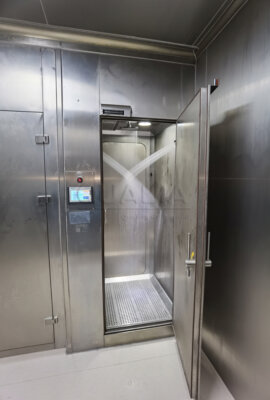
The material exit constraint is the workflow element most commonly omitted from early-stage proposal requests: nothing leaves a BSL-3 space without autoclaving or confirmed disposal. That constraint directly governs autoclave placement, pass-through integration, and the physical sequencing of the decontamination workflow. When autoclave positioning is left to late-stage layout decisions, the result is often a conflict between structural access requirements and contamination zoning that forces module redesign or expensive field modification after fabrication has begun.
The containment system’s dependence on mechanical infrastructure — HVAC, exhaust, autoclave — is a planning criterion, not a guaranteed failure condition, but it must appear in the proposal scope as a driver of backup and monitoring requirements. A failure of directional airflow or HEPA exhaust without a specified backup response protocol is not a recoverable event; it is a containment and operational shutdown event. The RFQ should treat these dependencies as design constraints requiring explicit backup specifications rather than leaving them as implied engineering judgment.
Each of the three input areas — containment systems, personnel prerequisites, and material workflow — carries a distinct consequence when left unstated.
| Area to Clarify | What the RFQ Should State | Risk if Unstated |
|---|---|---|
| Muhafaza Sistemleri | Dependence on HVAC, exhaust, autoclave; specify backup and monitoring for failure scenarios (human error, breakdown, disasters) | Loss of containment, lab shutdown |
| Personnel Prerequisites | Work conducted in biosafety cabinets; personnel need medical surveillance, immunizations, training, and possibly government clearance | Inadequate safety controls, non-compliance |
| Material Workflow | Materials cannot exit without autoclaving or disposal; autoclave integration and decontamination workflow requirements | Improper decontamination, containment breach |
Target Standards and Validation Deliverables in Proposal Requests
Private BSL-3 facilities funded outside federal programs are not subject to NIH guidelines by default. That regulatory gap is not a technical detail — it is the condition that makes the RFQ itself the governing document for standards applicability. If the proposal request does not name which standards apply, the supplier will apply their internal design baseline, which may not match the client’s validation expectations or the oversight body that will eventually review the facility.
The RFQ should state explicitly which standards framework governs: WHO Laboratory Biosafety Manual 4th Edition as a process reference, NIH Design Policy and Guidelines if the facility has elected or is required to follow them, or ASTM E2500-25 if the client is applying a science- and risk-based approach to specification, design, and verification. ASTM E2500-25 is not a universal mandate for BSL-3 facilities; it is a testing and verification framework that applies when a client has deliberately chosen it as the basis for qualification logic. Invoking it in the RFQ without that intent will produce validation deliverable structures the facility may not need and cannot easily audit against.
The validation deliverables themselves — IQ, OQ, PQ documentation, HEPA integrity test reports, pressure differential records, and biosafety cabinet certification protocols — must be listed as contract-required outputs in the proposal request. A proposal that does not enumerate expected deliverables will often produce a pricing structure where validation documentation is treated as optional scope, quoted separately, or simply absent. That omission is difficult to recover once the commercial terms are set, because adding documentation requirements after award typically repositions them as change orders rather than included deliverables.
Vague RFQ Problems: Mismatched Scope and Repeated Clarification
The absence of mandatory local or state regulatory oversight for many private BSL-3 facilities creates a practical planning problem: neither party has a default reference framework that automatically resolves scope ambiguities. When the RFQ does not specify agent risk class, containment standards, or decontamination workflow, the supplier must either assume a framework or request clarification. Most suppliers will do both, producing a proposal based on reasonable assumptions and a list of open questions — which means the client receives pricing they cannot approve internally alongside a clarification cycle they did not plan for.
That pattern is the most consistent source of proposal process delays in BSL-3 procurement. A single clarification round is usually manageable. Two or three rounds — each requiring internal alignment, a revised layout, and updated pricing — collectively cost more time than the upfront preparation would have required. More importantly, scope mismatches that surface during clarification rounds often reveal disagreements about what the proposal was intended to include, which can generate commercial disputes about what is and is not covered by the agreed price.
The failure mode is not the clarification itself. It is that repeated clarification creates progressively more ambiguous contract boundaries, because each round produces informal answers that may not be formally incorporated into the proposal documents. By the time the scope is resolved, the paper trail distinguishing included scope from excluded scope is often unclear enough to create enforcement problems during delivery.
Detailed Proposal Input Versus Faster First Inquiry Tradeoff
Sending a fast, high-level inquiry is not inherently wrong. For early-stage feasibility — understanding order-of-magnitude cost, evaluating whether a modular versus site-built approach fits the budget, or confirming a supplier’s relevant experience — a brief inquiry is a reasonable first step. The risk is treating that first inquiry as an RFQ rather than a scoping conversation, and proceeding to commercial negotiation before the inputs that govern scope have been specified.
A detailed RFQ slows the first inquiry by requiring internal alignment on agent risk, applicable standards, site constraints, and validation expectations before the request goes out. That preparation time has a clear payoff: it compresses the back half of the project by reducing redesign events, eliminating scope disputes at delivery, and producing pricing that reflects what the facility actually needs. The trade-off is real — detailed preparation takes longer upfront and sometimes requires decisions that the team is not yet ready to make. Forcing those decisions prematurely can produce a detailed but incorrect RFQ, which is not better than a vague one.
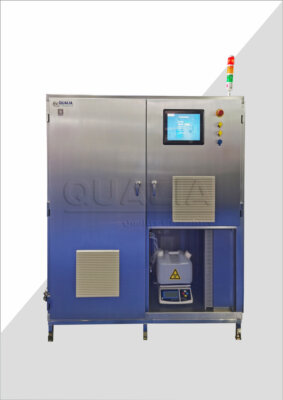
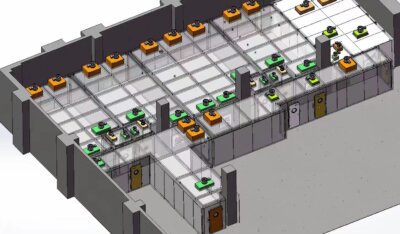
The practical threshold is scope boundary clarity. When the team cannot yet define which modules are in scope, which standards apply, and what the acceptance criteria for delivery are, a scoping inquiry is the correct instrument. When those boundaries are clear, the detailed RFQ is the correct instrument and the efficiency case for a vague inquiry disappears. The cost of ambiguity does not appear at the inquiry stage — it appears at layout finalization, where it is measurably more expensive to resolve. For facilities considering a modular or mobile configuration, understanding the deployment and infrastructure constraints early significantly affects which approach remains viable once site data is reviewed. The Mobil BSL-3/BSL-4 Modül Laboratuvarı and the fixed BSL-3/BSL-4 Modül Laboratuvarı from Qualia Bio represent different infrastructure commitment levels, and the right choice depends on site data that should be part of the RFQ rather than a post-award discovery.
Site Data Needed for Exhaust, Utilities, and Service Space
Site data is the category of proposal input most consistently treated as a construction detail rather than a procurement input, and its absence is the most common driver of costly field modifications. HVAC systems in BSL-3 environments maintain constant directional airflow through HEPA filtration, drawing significant and sustained electrical and cooling load. If electrical capacity, cooling infrastructure, and available service clearance are not documented in the RFQ, the proposed HVAC system may be sized against assumptions that do not match what the site can actually support.
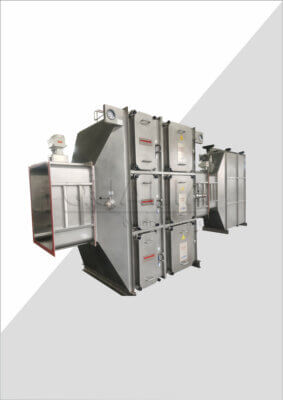
The exhaust discharge route is a specific gap that appears in BSL-3 projects with disproportionate frequency. A HEPA-filtered exhaust system requires a physically verified path from the exhaust plenum to a containment-safe discharge point. When that route is not specified in the RFQ — because it is considered a construction-phase determination — the supplier proposes an exhaust configuration based on a generic assumption. If the actual site geometry, adjacent occupied spaces, or discharge elevation requirements conflict with that assumption, the correction requires repositioning components that may already be integrated into the module structure. Where the WHO LBM Design and Maintenance Monograph provides guidance on exhaust and HVAC design logic, it is useful as a process reference for verifying that the discharge route evaluation addresses the right variables — it does not override site-specific engineering judgment, but it provides a framework for identifying what that judgment must resolve.
Backup capacity and mechanical service space are the third gap. A BSL-3 HVAC failure that eliminates directional airflow is a containment event, not a maintenance inconvenience. Redundant components must fit within the available mechanical space, and the backup power supply must be sized to carry the critical loads. Both of these are determined by site data that is known at the time of the RFQ and should be included in it.
| Site Data Category | Ne Belirtilmeli | Kayıpsa Risk |
|---|---|---|
| Utility Loads | Electrical and cooling demand for HVAC, cold storage, and key equipment | Undersized systems, non-compliant HVAC, costly field modifications |
| Exhaust Discharge Route | Physical path for HEPA-filtered exhaust with containment-safe discharge | Inability to verify safe exhaust, containment risk during failure |
| Backup & Service Space | Available backup power capacity and mechanical space for redundant HVAC components | Insufficient redundancy, loss of directional airflow on failure, lab shutdown |
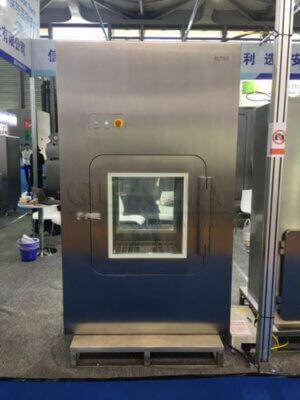
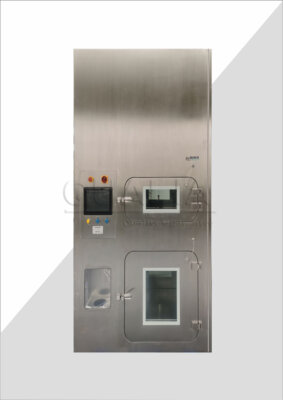
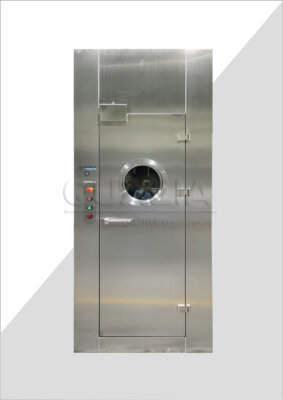
For facilities that include material transfer between zones, the exhaust and decontamination routing questions extend to pass-through equipment as well. Understanding how VHP pass-box integration interacts with containment zoning and exhaust requirements is part of the same site data conversation, not a separate procurement decision.
Proposal Readiness for QUALIA BSL-3 Laboratory Projects
A proposal request is ready to send when three conditions are true: the scope boundaries are defined, the acceptance criteria are specified, and the document deliverables are listed. Each condition represents a category of information that, if absent, produces a proposal the client cannot approve or a delivery the client cannot accept.
Scope boundaries in a BSL-3 proposal include agent risk class, the list of functional modules in scope, biosafety cabinet and decontamination workflow requirements, applicable standards, and site constraints. These are not engineering questions — they are client decisions that must be made before a supplier can build a technically complete response. Acceptance criteria translate scope into verifiable outcomes: what performance the HVAC system must demonstrate, what documentation constitutes proof of containment integrity, and what the process is for resolving deficiencies at delivery. Without specified acceptance criteria, delivery sign-off relies on informal agreement, which is difficult to enforce and easy to dispute.
Document deliverables extend beyond validation packages. The RFQ should specify whether biosafety committee oversight documentation, standard operating procedure templates, and personnel training records are in scope as supplier deliverables or as client-side responsibilities. These governance elements are often assumed rather than assigned, and that assumption creates compliance gaps after delivery when the facility is operational but the governance structure supporting it has not been formally established. Treating biosafety committee review and SOPs as proposal scope items — even where they are not strictly required by a named regulatory body — is a practical measure that prevents post-delivery operational readiness failures. For EPC and validation-sensitive projects, the parallel question of documentation standards for integrated components warrants early attention; the approach to evaluating BIBO vendors for EPC projects requiring validation documentation reflects the same document-first logic that applies to the full BSL-3 module proposal.
The most consequential preparation step before submitting a BSL-3 proposal request is internal alignment on scope boundaries — not supplier selection, not budget confirmation, and not timeline negotiation. A proposal built against an incomplete RFQ will price the wrong scope, produce validation deliverables that do not match the facility’s acceptance criteria, and surface the mismatch at a project stage where correction carries real cost. The document deliverables list, the applicable standards designation, and the site data package are the three inputs most commonly missing from initial requests, and each one has a distinct downstream failure mode.
Before the request goes out, confirm that the following are defined and documented: agent risk class and biosafety cabinet workflow requirements, autoclave and decontamination routing constraints, applicable standards framework with named documents, site electrical and cooling capacity, exhaust discharge route with physical verification, available mechanical service clearance, backup power capacity for critical containment loads, and required document deliverables including any governance scope. A proposal request that includes these inputs gives the supplier what they need to produce a technically complete, commercially approvable response — and gives the internal approvers what they need to evaluate it without another clarification round.
Sıkça Sorulan Sorular
Q: Our facility is privately funded and not subject to NIH oversight — does that change what standards we need to specify in the RFQ?
A: Yes, and it makes explicit standards designation more critical, not less. Private BSL-3 facilities outside federal programs have no default regulatory framework that automatically applies, which means the RFQ itself becomes the governing document for which standards bind the supplier. If the request omits a named standards framework — WHO LBM 4th Edition, NIH Design Policy, or ASTM E2500-25 — the supplier will apply their internal design baseline, which may not match the oversight body that eventually reviews your facility or the validation deliverables your acceptance criteria require.
Q: After submitting the proposal request to QUALIA, what should the internal team be doing while the response is being prepared?
A: Use that interval to finalize the acceptance criteria that will govern delivery sign-off. A technically complete proposal gives internal approvers the scope and pricing, but without pre-defined performance thresholds — HVAC pressure differential targets, HEPA integrity test benchmarks, documentation formats — the approval process will stall waiting for those decisions anyway. Resolving acceptance criteria before the proposal arrives compresses the internal review cycle and prevents informal agreements from substituting for enforceable delivery conditions.
Q: At what point does a high-level scoping inquiry stop being appropriate and require a full detailed RFQ instead?
A: The threshold is scope boundary clarity on three specific points: which modules are in scope, which standards apply, and what the acceptance criteria for delivery are. Until all three are answerable internally, a scoping inquiry is the correct instrument. Once they are defined, continuing with a vague inquiry adds delay rather than saving it, because the mismatch will surface at layout finalization — where redesign carries fabrication-stage cost — rather than at the inquiry stage, where it is simply a question.
Q: How does the mobile modular configuration compare to the fixed BSL-3 module in terms of what site data the RFQ must include?
A: A mobile configuration does not reduce the site data requirement — it changes which site data matters most. Fixed modules require detailed exhaust discharge routing, utility tie-in capacity, and permanent mechanical service clearance at a single location. Mobile deployments require those same inputs for each intended deployment site, plus evaluation of ground load ratings, connection interface standards, and whether each site’s utility capacity can support the containment loads without dedicated infrastructure. Treating deployment constraints as a post-award discovery rather than an RFQ input is one of the primary reasons mobile projects incur field modifications that eliminate the flexibility advantage the configuration was chosen to provide.
Q: Is biosafety committee oversight documentation worth including in the proposal scope even when no regulation explicitly requires it?
A: Yes — omitting it from the proposal scope creates an operational readiness gap that is significantly harder to close after delivery than before it. When biosafety committee review, SOP templates, and personnel training records are not assigned as either supplier deliverables or explicit client responsibilities in the proposal, they tend to remain unresolved until the facility is operational but not yet governable. At that point, establishing the governance structure requires separate effort against no contractual framework. Including these elements in the RFQ — even as client-side responsibilities rather than supplier deliverables — forces the assignment decision before it becomes a post-delivery compliance problem.