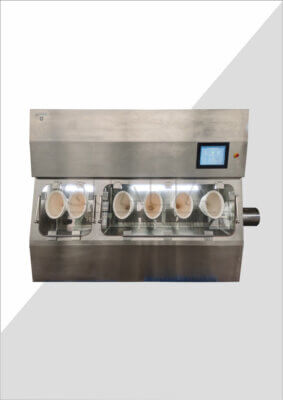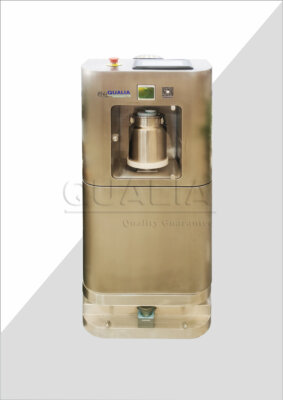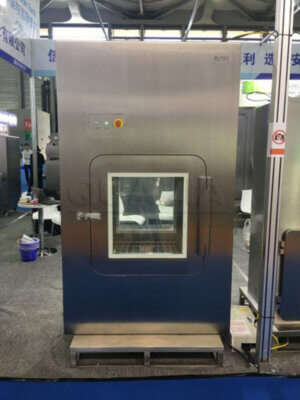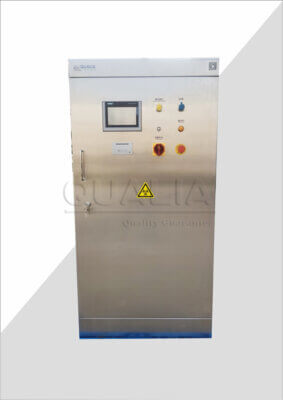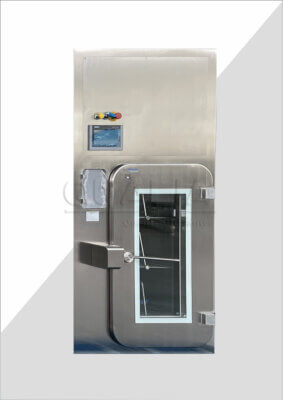


Every cRABS integration project needs the same boundary confirmed before engineering commitments are fixed: which conditions generate alarms, which generate records, and who owns each output on both sides of the buyer–supplier interface. The answer depends on three things the buyer can define early—the site alarm philosophy, what data the facility system already captures, and how long records must remain accessible after commissioning. Where those three are unresolved, cRABS alarm data record responsibility boundaries remain ambiguous, and integration scope can be misread by both parties at exactly the moment contracts are written.
Separate Alarm Events from Recorded Information
An alarm and a data record are not the same output, and treating them as equivalent is a common mistake that surfaces late in integration.
An alarm event tells an operator that a condition is outside an acceptable limit and that an action is required now. A historical record tells a reviewer that a parameter value existed at a specific time, whether or not anyone was alerted. These two outputs support different user actions: alarms drive real-time intervention; records support batch review, trending, deviation investigation and regulatory demonstration. They can sit in entirely different systems—the alarm in a building management system (BMS) or supervisory layer, the record in the equipment’s own data logger or a site historian—and each can be delivered without the other.
Related Products
- Closed Restricted Access Barrier System – cRABS — Open the relevant equipment discussion with the intended retrofit scope and site information; the listing is not a project utility or controls specification.
When you list integration events, work through every item twice: once to ask whether a live alarm is needed and once to ask whether a time-stamped record of that parameter is needed. For many events the answer to both is yes. For some—a momentary door interlock status, for example—only the record matters, because the alarm is already embedded in the equipment’s own controller logic and an additional BMS alarm would create noise. For others—a pressure differential trending toward a boundary—a record is essential but a site-level alarm may be needed only if the trend crosses a defined threshold.
Parameters that typically require both outputs in a cRABS installation include: pressure differential across the barrier, glove port integrity status, airlock interlock state, VHP concentration during decontamination cycles, and air velocity at critical openings. Parameters that often require a record without a separate site alarm include: transfer hatch position, lighting and UV lamp status, and routine HVAC supply values that the BMS already logs independently.
Mapping the event list this way before the buyer–supplier discussion starts means you arrive with a typed distinction—alarm, record or both—against each line item, rather than a list of “data points” that each party interprets differently.
Allocate Display and Acknowledgement Responsibilities
Where an alarm appears determines who is expected to act, and an alarm visible on more than one display can leave that expectation unresolved.
A cRABS installation commonly has at least three places where an alarm condition could appear: the equipment’s own HMI at the barrier, a cleanroom annunciator panel, and the facility BMS. When all three show the same alarm, the question of where it can be acknowledged—and therefore who carries the response responsibility—needs an explicit answer. If a cleanroom operator acknowledges an alarm at the barrier HMI without that acknowledgement propagating to the BMS, a facilities engineer watching the BMS panel may still see an active condition and initiate a response. The reverse is also possible.
For every alarm on more than one display, name the primary acknowledgement point and confirm whether acknowledgement at that point clears the condition elsewhere.
A site alarm philosophy document, where one exists, often already allocates primary acknowledgement by system layer. If your site has such a document, apply it before the buyer–supplier conversation and bring it to the meeting; the supplier can then map offered alarm outputs to the defined layers without having to propose a philosophy from scratch. Where no site document exists, the buyer must make an explicit allocation as part of the integration scope, because the supplier cannot safely make it unilaterally.
For cRABS, the most defensible starting allocation is: actions requiring immediate barrier intervention (door interlock trip, glove failure detected) remain acknowledged at the equipment HMI; conditions with a process impact but no immediate barrier breach (slow pressure drift, VHP residual above an aeration threshold) are acknowledged at the site BMS with a mirrored status output from the equipment. This is not the only workable allocation, but it is the right starting point for most pharmaceutical cleanroom configurations, because it keeps the barrier operator in direct control of the barrier and gives the facility team visibility without overriding the equipment’s own logic.
Confirm one further thing at this stage: which party defines and documents the required response for each acknowledged alarm. A supplier can describe what the equipment state means; only the buyer can define what the facility procedure requires in response.
Define Record Custody and Retrieval
A communication link between the cRABS and a site system can be installed, tested and commissioned without both parties having agreed which record the buyer actually relies on—and that gap becomes visible only when a record is needed for a deviation or audit.
Define Record Custody and Retrieval: Buyer Review Matrix
| Record question | What to identify | Purchase implication |
|---|---|---|
| What is retained? | Named record on each side of the transfer | Prevents a link being mistaken for an agreed record |
| Who retains it? | Equipment and site record custodians | Allocates custody across the system boundary |
| How is it retrieved later? | Readable export and access rights | Makes later use a deliverable question |
The practical question is not whether data moves but what record is retained and by whom once it has moved. Consider a project where cRABS process data are transmitted to a site historian. The historian holds a copy. The equipment’s own controller may also hold a local buffer. If the buyer’s quality procedure names the site historian as the record of reliance for batch review, then the local buffer is a backup only, and its format, retention period and access rights matter less. If the procedure has not named the authoritative copy, both records may be presented at an audit as independent sources—and discrepancies between them create a documentation problem.
Name the retained record and its custodian on each side of the transfer, for each data category. A workable structure for most cRABS projects covers four categories:
- Process parameter records (pressure differential, temperature, humidity, velocity): typically relied upon from the site historian or SCADA after transfer; the equipment local log is a backup.
- Alarm event logs (time-stamped alarm generation, acknowledgement and clearance): the authoritative record is usually the system where acknowledgement is captured—confirm this explicitly.
- Decontamination cycle records (VHP concentration profile, hold time, aeration endpoint): these often remain as the equipment’s own print-or-export output because they are procedure-specific and not naturally mapped to a continuous historian.
- Interlock and access event logs (door open/close, glove port use, transfer hatch cycle): typically low-volume and held in the equipment controller; specify format and export interval if the buyer needs periodic transfer.
Do not accept “data are available” as a deliverable description; name the format, the custodian and the interval of transfer or export for each category.
For records that need to outlive supplier support—firmware updates, controller replacements, support contract expiry—the buyer must establish at quotation stage whether a readable export format, documented access rights and a data handover procedure are included in the purchase scope. These questions are almost never resolved by the hardware specification alone. If an existing site service agreement already covers long-term data stewardship for similar equipment, verify that it extends to the cRABS record categories before assuming the gap is closed.
Related Reading
- Controls and Interlock Requirements in High-Containment Equipment RFQs: PLC, HMI, BMS and Alarm Evidence — Prepare the control and alarm questions for the RFQ discussion.
- How to Write Testable URS Requirements for Isolators, BIBO, VHP Pass Boxes and EDS — Refine the wording of buyer requirements without borrowing another equipment configuration.
- How to Trace URS Requirements Through DQ, FAT, SAT, IQ, and OQ — Follow the agreed record requirement into the project evidence chain.
Agree Evidence at the Buyer–Supplier Boundary
The integration documents that close a project are only as reliable as the open questions they were written to resolve.
A common error is to treat an unresolved alarm or record responsibility as a configuration matter to be settled during commissioning. Configuration can determine how a deliverable is implemented; it cannot create a deliverable that was never agreed. If the buyer needs an alarm output at the BMS for a specific condition and the supplier’s standard offering does not include it, the gap must appear as an open contract clarification with a named evidence owner—not as a footnote in the commissioning checklist.
When a supplier offers a standard alarm function list, request it with two things visible: which entries are fixed across all projects and which are project-dependent or excluded from the standard scope. A standard list without those markers is useful as a starting-point catalogue but tells you nothing about what is actually committed. The supplier should be able to mark each entry as standard-included, project-configurable, or not offered—and that marked list becomes the reference document against which the buyer’s integration requirement is checked.
Any alarm or record requirement that remains disputed at contract close should be held as a named open item, not resolved by assumption.
The evidence that closes each boundary item is specific and small: a data point confirmed as mapped to a named BMS tag; an acknowledgement pathway documented in the integration specification; a cycle record format confirmed in the FAT protocol; a data export procedure included in the O&M documentation package. Projects increasingly ask for this evidence to be collected into an integration boundary matrix—a single document that lists every alarm, record and display point with its agreed owner, format and location—reviewed at FAT and carried into the qualification dossier.
Before the buyer–supplier conversation, have the following ready: the site alarm philosophy or the allocation decision that substitutes for one; the named facility systems (BMS, SCADA, historian) that will receive outputs; the record categories the buyer’s quality procedure relies on; the retention period and format requirements for each; and any existing site service agreements that may already cover long-term data stewardship. These inputs determine the shape of the integration scope faster than any equipment specification, and a supplier equipped to design around them will give a more accurate scope estimate in return.
References
- EU GMP Annex 1 – Manufacture of Sterile Medicinal Products (2022) — Use the sterile-manufacturing contamination-control context to identify equipment and site interfaces for review; it supplies no project-specific pass box or cRABS acceptance values.
- EudraLex Volume 4 Annex 15 – Qualification and Validation — Distinguish supplier documentation from project qualification and acceptance decisions; reported conditions and deviations remain specific to the represented system.
- EudraLex Volume 4 Annex 11 – Computerised Systems — Define intended GMP computerized-system use, responsible parties and traceable documentation; it does not choose alarm settings, protocols or retention periods.
- ISO 14644-7:2004 Separative Devices — Frame separative-device requirements and customer–supplier questions within the standard’s verified summary scope; detailed clauses and equipment limits are outside this summary.
Frequently Asked Questions
Q: Should a standard supplier alarm list be accepted as the final scope?
A: Use it as a comparison starting point. Mark project-dependent entries and exclusions against buyer requirements so the standard list does not silently replace the intended use.
Q: Can a buyer leave record export questions until handover?
A: Resolve their purchase scope before relying on a future export. Otherwise a buyer may receive a working connection while readable files or continuing access remain outside the agreed deliverables.
Q: How should bidders price an unresolved record responsibility?
A: Ask them to state the assumed owner and identify any separately priced service. This makes a conditional price comparable without pretending the ownership decision has been made.