The decision to upgrade a BSL-2 laboratory to BSL-3 containment is a critical inflection point for any research institution. It is driven by a fundamental shift in risk profile, not merely an expansion of research scope. Misconceptions abound, often centering on an underestimation of the systemic changes required, from engineering controls to operational culture. This decision carries profound implications for capital expenditure, regulatory oversight, and long-term scientific strategy.
Navigating this transition demands more than a checklist; it requires a rigorous, evidence-based risk assessment and a clear-eyed understanding of the technical, financial, and compliance hurdles. With evolving pathogen research and stringent regulatory frameworks, making an informed, strategic choice between retrofitting an existing space and pursuing a new build is more crucial than ever. The cost of missteps is measured in both safety and significant financial loss.
Key Risk Assessment Triggers for a BSL-3 Upgrade
Defining the Definitive Triggers
The primary driver for a BSL-3 upgrade is the intentional introduction of specific high-consequence pathogens into the research portfolio. This includes agents classified for BSL-3 containment by the authoritative Biosafety in Microbiological and Biomedical Laboratories (BMBL) 6th Edition, such as Mycobacterium tuberculosis or Burkholderia pseudomallei. Work with federally regulated Select Agents is a near-certain trigger, mandating registration with the CDC or USDA beyond biosafety compliance. Activities with a high potential for aerosol generation, like large-scale fermentation or aerosol challenge studies, also necessitate a BSL-3 risk assessment, even for some agents not automatically classified as such.
The Critical Nuance of Arthropod Research
A frequently overlooked but critical trigger involves research with arthropod vectors. Industry experts emphasize that work with arthropods infected with a BSL-3 agent automatically elevates containment requirements to Arthropod Containment Level 3 (ACL-3), irrespective of the vector’s natural transmission competence. This is a non-negotiable regulatory expectation. The containment philosophy shifts because the pathogenicity of the agent dictates the required security for the vector, a point easily missed in initial protocol planning.
The Role of Context in Risk Assessment
It is vital to recognize that BSL classification is not always absolute. A nuanced, site-specific risk assessment can sometimes justify modified containment protocols. Factors like the availability of effective post-exposure prophylaxis, the use of attenuated strains, or the implementation of additional administrative controls can influence the final determination. However, this approach requires robust documentation and IBC approval, and should never be used to circumvent clear regulatory guidance for known high-risk agents.
Core Technical & Operational Differences: BSL-2 vs. BSL-3
A Philosophical Shift in Containment
The transition from BSL-2 to BSL-3 represents a fundamental change in objective: from minimizing risk to preventing environmental release. At BSL-2, primary containment devices like biological safety cabinets (BSCs) are the main barrier for aerosol-generating procedures. At BSL-3, the laboratory itself becomes a secondary containment barrier. This philosophical shift underpins every technical and operational difference, transforming how personnel interact with the space.
Engineering and Architectural Imperatives
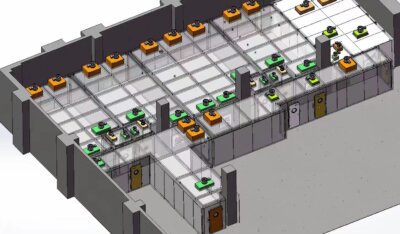
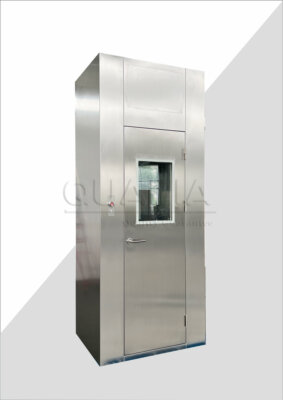
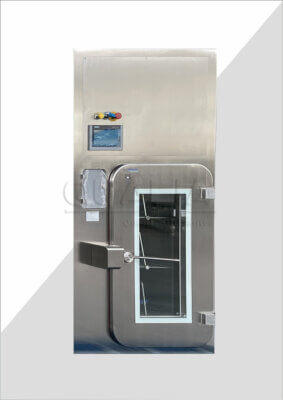
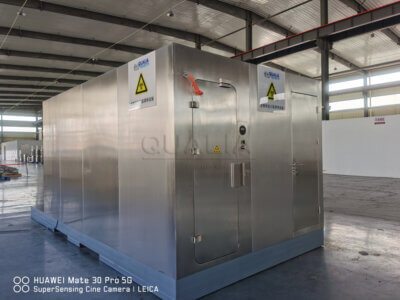
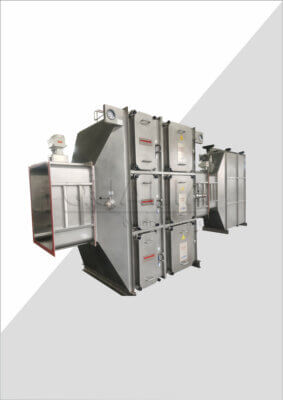
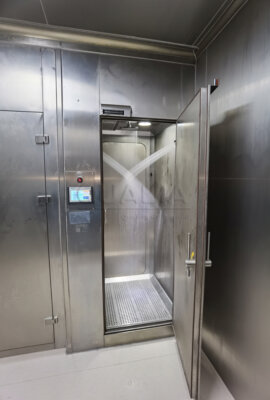
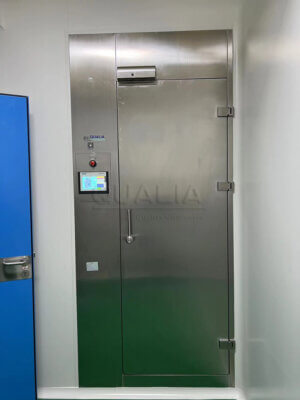
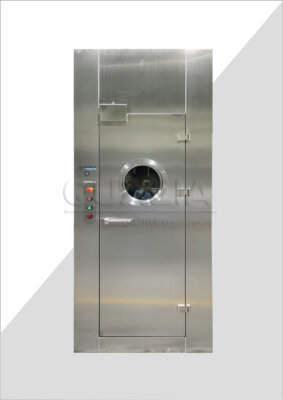
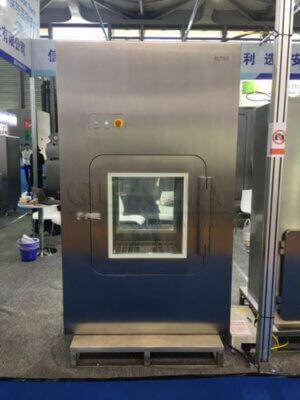
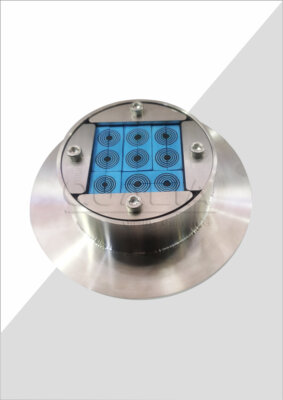
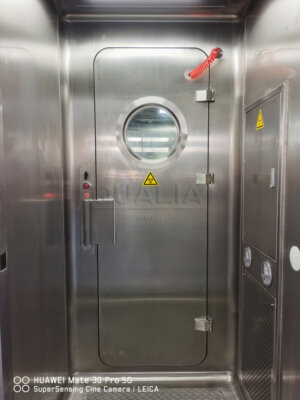
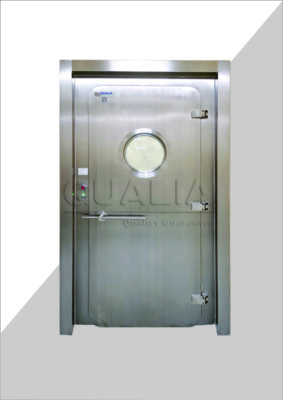
Architecturally, BSL-3 requires a sealed envelope. Walls, ceilings, and floors must be seamless and sealed to allow for space decontamination, such as fumigation. Penetrations for utilities are gasketed. Access is controlled through a vestibule or anteroom with self-closing, interlocking doors. The HVAC system is the most significant engineering change, moving from often recirculated air to a dedicated, single-pass system that maintains directional, negative airflow—exhausting all air through HEPA filtration. We compared dozens of retrofit projects and found the integration of this dedicated HVAC pathway into an existing structure to be the single most common point of cost overrun and design complication.
Transforming Operational Protocols
Operational protocols undergo a parallel transformation. All work with open vessels must be conducted within a certified Class II or III BSC. Personal protective equipment (PPE) is enhanced, often requiring respirators. Strict personnel access logs, medical surveillance programs, and comprehensive emergency response plans become mandatory. The operational tempo slows, and the administrative burden increases significantly. In my experience, scientific staff often underestimate this cultural shift, viewing the upgrade as simply adding equipment rather than adopting a new, more rigorous way of working.
The Retrofit Challenge: Cost, Timeline, and Operational Impact
Inherent Complexity of Modification
Retrofitting an operational BSL-2 lab into a BSL-3 facility is inherently more complex than a new build. The fixed floor plan imposes severe constraints on integrating architectural barriers, anterooms, and the dedicated ductwork required for negative pressure cascades. Legacy plumbing, electrical systems, and structural elements often reveal hidden costs and complications only discovered during demolition. The need to maintain partial laboratory operations during construction adds another layer of logistical difficulty, requiring sophisticated phasing plans and temporary containment solutions.
Financial and Temporal Realities
These complexities directly translate to higher costs and extended timelines. Contingency budgets must be significantly larger—often 25-40%—compared to standard construction margins. The construction schedule is less predictable and invariably longer due to the sequential phasing required to keep other areas functional. Effective project management for a retrofit demands not just construction expertise but a deep understanding of biosafety operations to minimize disruption.
The following table contrasts the key challenges between retrofit and new build approaches:
| Challenge Factor | Retrofit Impact | New Build Impact |
|---|---|---|
| Project Complexity | High (fixed floor plan) | Lower (purpose-built) |
| Contingency Budget | Significantly higher | Standard industry margins |
| Construction Timeline | Extended due to phasing | More predictable |
| Operational Disruption | High (partial ops likely) | None until completion |
| Hidden Cost Risk | High (legacy systems) | Lower |
Note: Retrofit complexity demands unique project management with higher contingency buffers.
Source: Technical documentation and industry specifications.
Mitigating Disruption Through Planning
The operational impact is profound. Leadership must engage in transparent, continuous communication with research teams about expected downtime and protocol changes. Simulation training for crisis management and stakeholder communication is not a soft skill but a critical project success factor. A well-executed communication plan can mitigate frustration and maintain institutional support throughout the disruptive construction period.
Regulatory Compliance & Oversight: Navigating the Approval Process
The Multi-Layered Approval Labyrinth
An upgrade triggers rigorous, multi-layered oversight that begins long before construction. The Institutional Biosafety Committee (IBC) must approve the foundational risk assessment, specific protocols, and final facility plans. Compliance must be demonstrated with the BMBL, OSHA’s Bloodborne Pathogens and Respiratory Protection standards, and local building and fire codes. Engaging with all relevant regulatory bodies during the design phase is paramount to avoid costly redesigns later.
The Select Agent Program Threshold
If the upgrade is driven by work with Select Agents, the regulatory landscape intensifies. The facility must be inspected and registered with the CDC/USDA Select Agent Program before the agent is brought on-site. This program adds substantial layers of biosecurity, including personnel suitability assessments (Security Risk Assessments), stringent physical security infrastructure, detailed inventory control (“count-in, count-out”), and exhaustive documentation requirements. The oversight is continuous, with mandatory annual inspections and incident reporting.
Building a Sustainable Management System
To navigate this complexity systematically, many institutions adopt a formal biorisk management framework. Implementing a system based on standards like ISO 35001:2019 provides a structured, process-oriented approach to evaluating and managing the comprehensive biorisks that necessitate BSL-3. It moves compliance from a checklist activity to an integrated management function, which is essential for sustaining high-containment operations over the long term.
BSL-3 vs. BSL-2: A Detailed Comparison of Engineering Controls
The Foundation of Secondary Containment
Engineering controls are the physical backbone of containment, and their escalation from BSL-2 to BSL-3 is definitive. At BSL-2, engineering controls are largely focused on primary containment (e.g., BSCs, centrifuges with sealed rotors). The lab space itself has minimal containment features. At BSL-3, the engineering controls create secondary containment, making the room a validated barrier against release.
HVAC: The Central Nervous System
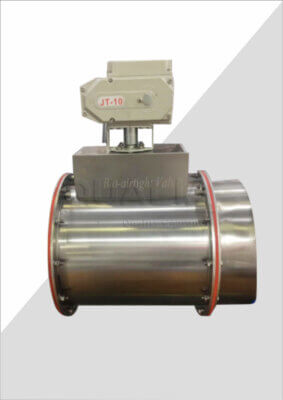
The HVAC system undergoes the most critical transformation. A BSL-3 lab requires a dedicated, single-pass system that maintains a verified negative pressure gradient relative to adjacent areas (e.g., -0.05 inches of water gauge). All exhaust air must pass through HEPA filters, typically located at the point of discharge from the building or within the lab suite. This system is monitored by alarmed pressure sensors. In contrast, BSL-2 labs often recirculate air through general building systems with minimal or no filtration.
Specialized Considerations for Unique Research
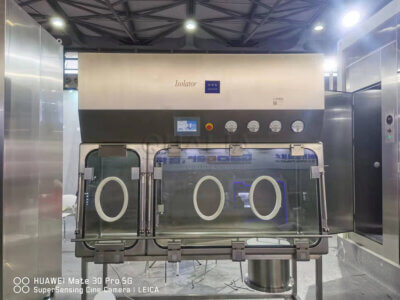
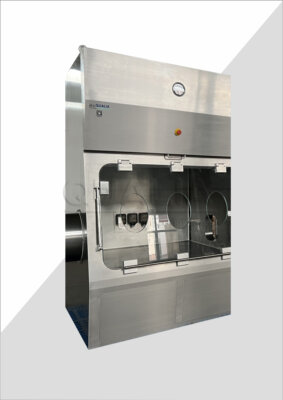
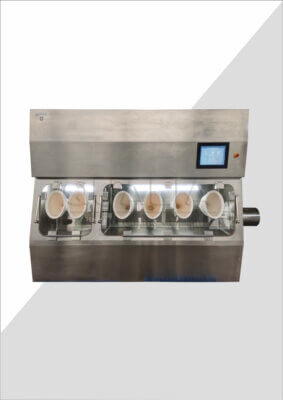
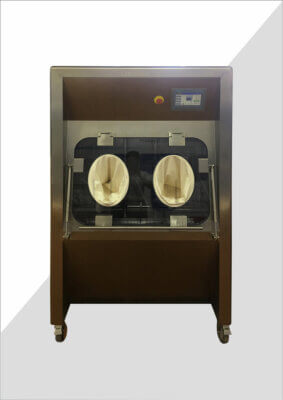
These requirements have nuanced applications. For arthropod work, standard BSC airflow can inadvertently blow small vectors into the cabinet’s filters or plenums, creating a retrieval and decontamination nightmare. Therefore, secure glove boxes or custom-designed containment spaces with very low airflow become necessary primary barriers within the BSL-3 suite. This highlights how specific research protocols directly dictate specialized engineering solutions beyond the baseline code.
The table below details the core engineering control differences:
| Engineering Control | BSL-2 Standard | BSL-3 Requirement |
|---|---|---|
| Lab Pressure | Neutral or slight negative | Negative pressure gradient |
| Air Exhaust | General building system | Dedicated, HEPA-filtered system |
| Room Sealing | Standard construction | Sealed penetrations, airtight |
| Door Operation | Manual, standard | Self-closing, interlocking |
| Decontamination | Surface cleaning only | Space decontamination capability |
Source: Biosafety in Microbiological and Biomedical Laboratories (BMBL) 6th Edition. The BMBL specifies the engineering control requirements for each biosafety level, mandating the secondary containment features that define a BSL-3 facility.
Select Agents & High-Consequence Pathogens: The Definitive Triggers
The Regulatory Bright Line
Possession, use, or transfer of a pathogen listed under the federal Select Agent Rule is one of the most unambiguous triggers for a BSL-3 upgrade. Registration with the CDC or USDA is mandatory and imposes a dual burden of stringent biosafety and biosecurity requirements. The list includes high-consequence bacteria, viruses, and toxins (e.g., Bacillus anthracis, Ebola virus, Francisella tularensis) for which the consequences of accidental or intentional release are severe.
Operational Realities and Inventory Control
Working with these agents introduces profound operational complexities. A key logistical challenge, especially for vector research, is the strict “count-in, count-out” inventory accountability. Natural biological behaviors—such as host grooming, variable egg hatch rates, or cannibalism—can make perfect accounting impossible. Protocols must therefore include pre-approved, scientifically justified explanations for discrepancies and employ multiple physical barriers (e.g., primary container within a sealed secondary container within the BSC) to mitigate the risk of a presumed release, which triggers severe regulatory consequences.
The Aerosol Transmission Imperative
Beyond Select Agents, the BMBL designates other pathogens for BSL-3 containment primarily due to their serious or lethal potential via the inhalation route. Research with these agents, such as Mycobacterium tuberculosis, is a definitive trigger. Similarly, any protocol judged to have a high potential for aerosol generation, even with a lower-risk agent, can force a BSL-3 designation through a formal risk assessment.
The following table summarizes the primary trigger categories:
| Trigger Category | Example Agents/Activities | Regulatory Consequence |
|---|---|---|
| Aerosol-Transmissible Pathogens | Mycobacterium tuberculosis | Mandatory BSL-3 containment |
| Federally Regulated Select Agents | Francisella tularensis | CDC/USDA registration required |
| Arthropod-Transmitted Research | Infected vectors (e.g., ticks) | Triggers ACL-3 requirements |
| High Aerosol Generation | Aerosol challenge studies | BSL-3 risk assessment trigger |
Source: Biosafety in Microbiological and Biomedical Laboratories (BMBL) 6th Edition. The BMBL lists specific agents recommended for BSL-3 containment and provides the risk assessment framework for determining required containment levels based on research protocols.
Evaluating Your Facility: Is a Retrofit Feasible or Is New Build Better?
Conducting a Rigorous Feasibility Analysis
Before committing to a retrofit, a dispassionate structural and systems analysis is essential. This evaluation must assess the existing lab’s capacity to support sealed room construction, the addition of an anteroom, and the routing of large, dedicated HVAC ductwork. It requires verifying floor-to-floor heights, the location of existing structural beams, and the condition of legacy MEP (mechanical, electrical, plumbing) systems. Engaging a design firm with specific high-containment retrofit experience early in this phase is critical to uncover hidden constraints.
The Strategic Alternative: Collaboration and Relocation
Organizations should rigorously compare the total cost of ownership for a retrofit against strategic alternatives. Partnering with an existing high-containment core facility at another institution or relocating a research program to a purpose-built center can be more cost-effective and faster. The documented relocation of the USDA’s Arthropod-Borne Animal Diseases Research Laboratory (ABADRL) to Kansas State University’s Biosecurity Research Institute is a prime example of this strategic approach. A comparative analysis must weigh not just construction costs, but also long-term operational efficiency, maintenance burdens, and programmatic flexibility.
Decision Framework: Key Questions
The final decision hinges on answering several key questions. Does the existing building shell and infrastructure allow for compliant BSL-3 engineering controls? Can the institution absorb the higher contingency costs and longer timeline of a retrofit? Is the disruption to other research programs acceptable? Is the need for BSL-3 space a permanent, long-term strategic direction? If the answer to any of these is no, a new build or a collaborative partnership becomes the more viable path. For those evaluating specialized containment equipment and design solutions for such a project, selecting partners with proven retrofit experience is non-negotiable.
Next Steps: Developing Your Upgrade Plan and Selecting Partners
Initiating with a Biosafety-Led Gap Analysis
The planning process must begin with a comprehensive gap analysis led by biosafety professionals, not solely the scientific end-users. This corrects the common misconception that the upgrade is driven only by scientific need rather than a holistic risk management imperative. The analysis should map current protocols, facilities, and training against BSL-3 requirements as outlined in the BMBL and other relevant standards like CWA 15793:2011, which provides a framework for systematic biorisk management.
Building a Phased Project Plan
Develop a detailed, phased project plan that incorporates robust contingency buffers for both time and budget. This plan should include distinct phases for design and regulatory approval, construction, commissioning and validation (including pressure decay testing and airflow visualization), and final operational readiness review. Each phase must have clear deliverables and decision gates. Incorporate simulation exercises for emergency response and routine operations during the commissioning phase to train staff and validate procedures before live work begins.
Selecting the Right Expertise
Partner selection is critical. Choose architectural and engineering (A&E) firms and construction managers with demonstrable experience in high-containment retrofits, not just general laboratory design. They must understand the regulatory landscape and the precision required for sealed environments. Furthermore, consider all scientific avenues. In some cases, developing alternative research models that can be conducted at BSL-2, such as using surrogate organisms or lethal challenge models for specific immune studies, may provide a viable pathway that delays or avoids the massive capital investment of a BSL-3 upgrade.
The decision to upgrade hinges on a clear-eyed evaluation of risk triggers against the reality of implementation. Prioritize a formal, documented risk assessment over assumptions. Understand that the cost and complexity of a retrofit almost always exceed initial estimates, making a comparative analysis with new build or collaboration options essential. Finally, secure institutional commitment not just for construction, but for the sustained operational and compliance costs of running a BSL-3 facility.
Need professional guidance to navigate your containment strategy? The experts at QUALIA specialize in the integrated planning and technical solutions required for such critical transitions. A structured approach from initial risk assessment to final validation is key to a successful, compliant outcome. For a detailed consultation on your specific requirements, you can also Contact Us.
Frequently Asked Questions
Q: What are the definitive regulatory triggers that force an upgrade from BSL-2 to BSL-3 containment?
A: The most definitive trigger is the planned work with high-consequence pathogens requiring BSL-3 containment as defined by the Biosafety in Microbiological and Biomedical Laboratories (BMBL). This includes federally regulated Select Agents, research with high aerosol generation potential, and work involving arthropods infected with a BSL-3 agent, which mandates Arthropod Containment Level 3. This means facilities planning to acquire or handle these agents must initiate the upgrade process before any related work begins.
Q: How does the operational philosophy fundamentally change when moving from a BSL-2 to a BSL-3 lab?
A: The core shift is from minimizing to preventing environmental release. This requires the laboratory itself to function as a secondary containment barrier, not just relying on primary devices like biosafety cabinets. A systematic biorisk management approach is essential to govern the transformed workflows, strict access controls, and comprehensive emergency protocols. For project leaders, this means biosafety professionals must lead planning to align scientific staff expectations with the reality of a completely new operational environment.
Q: What are the critical engineering control differences between BSL-2 and BSL-3 facilities?
A: BSL-3 engineering is defined by a sealed, negatively pressurized environment with a dedicated, single-pass HVAC system that exhausts all air through HEPA filtration. All surfaces must be seamless for decontamination, contrasting with BSL-2’s reliance on recirculated air and primary containment devices. If your research involves small vectors, plan for specialized primary barriers like secure glove boxes, as standard biosafety cabinet airflow can compromise containment.
Q: Is retrofitting an existing BSL-2 lab feasible, or is a new build more strategic?
A: Retrofitting is uniquely complex, facing constraints from integrating architectural barriers and dedicated airflow into a fixed floor plan, often while maintaining partial operations. Hidden costs from legacy systems are common, demanding higher contingency budgets and timelines. This means organizations should conduct a rigorous comparative analysis of retrofit costs and disruption against the strategic alternative of partnering with an existing high-containment center, which may be faster and more cost-effective.
Q: What specific challenges does working with Select Agents add to a BSL-3 upgrade plan?
A: Beyond standard biosafety, Select Agent Program registration imposes stringent biosecurity, personnel vetting, security infrastructure, and exacting inventory control. For vector research, natural behaviors like grooming complicate strict “count-in, count-out” accountability, requiring pre-approved discrepancy protocols. If your program involves these agents, plan for substantially higher compliance costs and design protocols with multiple physical barriers to mitigate the severe consequences of a presumed release.
Q: How should a facility begin planning a BSL-3 upgrade and select the right partners?
A: Start with a comprehensive gap analysis led by biosafety professionals to correct common misconceptions about the upgrade’s scope. Develop a phased project plan with robust contingency buffers and select design-build partners with proven experience in high-containment retrofits, not just general laboratory design. For long-term mission sustainability, your plan must balance regulatory compliance, scientific needs, and fiscal responsibility from the outset.
Related Contents:
- Modular BSL-4 Labs: Cutting Costs Without Compromising
- BSL-3 vs BSL-4: Key Differences in Lab Safety Levels
- BSL-3 to BSL-3+ Upgrade: Key Design Changes
- BSL-4 Standards: Global Regulations for Biosafety
- Compact BSL-4 Labs: Innovative Design Trends
- Biosafety Barriers: The Hallmarks of BSL-3 and BSL-4 Labs
- BSL-4 Viral Research: Protocols for High-Risk Agents
- Biosafety Laboratories: BSL-3 vs BSL-4 Distinctions
- Prefab BSL-3 Labs: Rapid Deployment Solutions