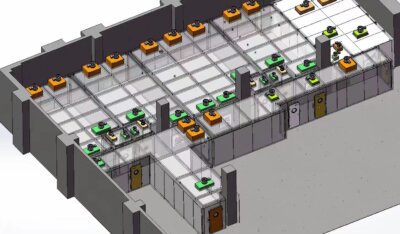

In BSL-4 laboratories, the integrity of primary containment is non-negotiable. For professionals managing these facilities, the certification schedule for Class III Biosafety Cabinets (BSCs) is a critical operational variable. Misunderstanding the mandated frequency or the conditional triggers for re-certification introduces unacceptable risk. This isn’t just about compliance; it’s about preventing catastrophic containment failure.
The stakes dictate a dynamic, not static, approach to verification. While an annual baseline is mandated, operational realities—from accidental glove tears to post-repair validation—demand immediate re-certification. Navigating this complex schedule, alongside selecting qualified providers and integrating certification into broader protocols, is a core strategic challenge for ensuring both safety and research continuity.
Understanding the Role of Class III BSCs in BSL-4 Labs
The Definitive Primary Containment
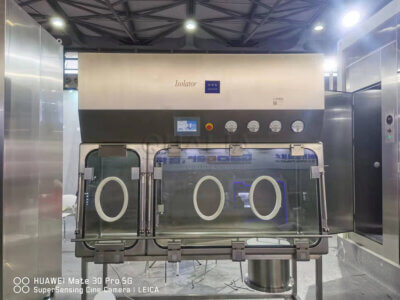
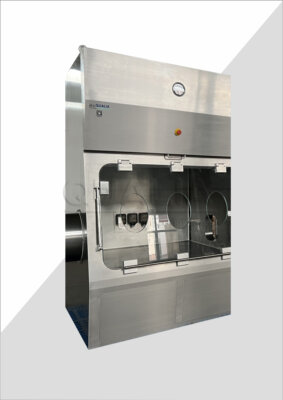
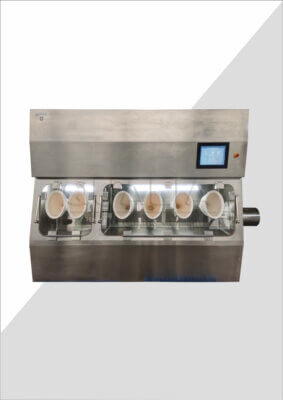
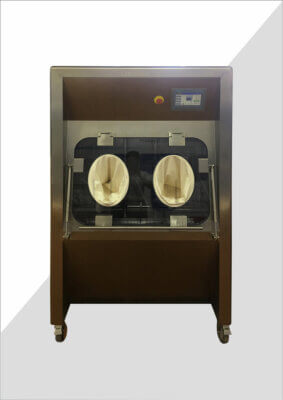
Class III BSCs, or gas-tight gloveboxes, provide absolute physical separation between personnel and high-consequence pathogens. Their sealed, negative-pressure design, with non-opening windows and attached gloves, is engineered for maximum containment. All exhaust air passes through two HEPA filters in series before release. This design is essential for safe aerobiology studies where intentional aerosol generation occurs. The facility’s entire research program on airborne pathogens is fundamentally dependent on the performance and availability of these systems.
A Strategic Dependency
The mandatory use of Class III cabinets creates a significant operational dependency. Their high cost and complexity make them a limiting resource. Any downtime for certification or repair directly constrains research scheduling and throughput. Consequently, managing their lifecycle—from procurement and installation to maintenance and certification—becomes a central pillar of facility management. Strategic planning must account for the mandatory validation events that impact laboratory uptime.
Mandatory Annual Certification: The Core Requirement
The Non-Negotiable Baseline
International consensus, codified in foundational documents like the Biosafety in Microbiological and Biomedical Laboratories (BMBL) manual, mandates annual certification as a minimum operational requirement. This is enforced through facility-specific biosafety manuals and is not a suggestion but a rigorous, evidence-based process. The annual cycle provides a fixed point of validation, ensuring the cabinet continues to meet all original design and performance specifications after a year of operation.
Impact on Operational Planning
Aligning this annual certification with broader facility safety protocols, such as decontamination cycles, is a key logistical task. The scheduled downtime required for testing must be factored into research timelines well in advance. Failure to plan for this can create significant bottlenecks. From my experience coordinating these events, the most efficient facilities synchronize cabinet certification with other mandatory maintenance windows to minimize cumulative lab downtime.
The following table outlines the core certification mandate and its operational implications.
| Requirement | Frequency | Key Driver |
|---|---|---|
| Full Certification | Annually | BMBL / Facility Mandate |
| Cabinet Integrity Verification | Every 12 months | Operational Baseline |
| Lab Uptime Impact | Scheduled downtime | Research Scheduling |
Source: Biosafety in Microbiological and Biomedical Laboratories (BMBL). The BMBL is the foundational US guideline mandating annual certification as a minimum baseline for primary containment, forming the core operational requirement enforced through facility biosafety manuals.
Key Tests in the Class III BSC Certification Process
A Comprehensive Performance Audit
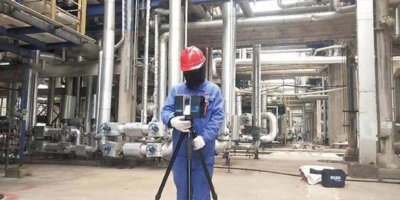
Annual certification is a point-in-time snapshot conducted by qualified professionals using calibrated instruments. It verifies every critical containment function. The process begins with a physical integrity and leak test, typically a pressure decay method, to confirm the gas-tight seal of the entire cabinet shell, seams, and glove ports. This is the first defense against containment failure.
Validating Filtration and Airflow
The integrity of both the primary and secondary HEPA filters is tested using an aerosol challenge, such as DOP or PAO, to detect any leaks in the filter media or sealing gaskets. Simultaneously, internal airflow patterns and the critical negative pressure differential are measured and validated against specifications. Alarm systems for pressure loss or filter failure are also functionally tested. This suite of tests provides assurance but highlights the industry’s future shift toward continuous, sensor-based monitoring for more dynamic safety management.
The specific tests performed during certification are standardized and critical for validation.
| Test Parameter | Method / Standard | Purpose |
|---|---|---|
| Physical Integrity | Pressure decay test | Gas-tight seal verification |
| HEPA Filter Integrity | Aerosol challenge (DOP/PAO) | Filter & seal leak check |
| Airflow & Pressure | Differential manometer | Negative pressure validation |
| Glove Integrity | Visual & tactile inspection | Barrier integrity check |
| Alarm Systems | Functional testing | Failure condition alerts |
Source: NSF/ANSI Standard 49 for Biosafety Cabinetry. This standard establishes the definitive performance testing and verification protocols for all biosafety cabinets, including the critical integrity and airflow tests required for Class III BSC certification.
When Conditional Re-Certification is Required (Beyond Annual)
Activity-Dependent Triggers
Certification frequency in a BSL-4 is dictated by operational events, not just the calendar. The annual schedule is the absolute minimum. Unconditional re-certification is required after any event that could compromise cabinet integrity or performance. This includes initial installation, any physical relocation of the unit, and following major repairs that affect structure, airflow, or filtration—such as motor replacements or HEPA filter changes.
Responding to Suspected Compromises
The most critical trigger is any suspected breach of containment. A glove tear, an internal spill, or an alarm condition necessitates immediate cabinet shutdown and decontamination. The cabinet cannot be returned to service until a full re-certification verifies integrity has been restored. This conditional requirement demands a responsive operational culture where safety protocols override research convenience, and maintenance logs are updated in real-time.
The table below details the events that mandate conditional re-certification.
| Triggering Event | Required Action | Risk Category |
|---|---|---|
| Initial Installation | Full certification | Baseline validation |
| Cabinet Relocation | Full re-certification | Integrity compromise |
| Major Repair (e.g., filter) | Post-repair verification | Performance alteration |
| Suspected Compromise (spill, tear) | Immediate re-certification | Containment breach |
Note: These are unconditional requirements; the cabinet cannot be returned to service until re-certified.
Source: Technical documentation and industry specifications.
The Regulatory Framework Governing BSL-4 Certification
A Multi-Layered Compliance Landscape
No single standard governs BSL-4 cabinet certification. Facilities must satisfy overlapping mandates from agencies like the CDC and NIH, often alongside state or local regulations. The BMBL provides the foundational requirement for using and maintaining Class III cabinets. While NSF/ANSI Standard 49 primarily addresses Class II BSCs, its rigorous performance testing protocols are universally applied as the benchmark for certifying all BSCs, including Class III.
Integrated Management Systems
Furthermore, the entire BSL-4 facility undergoes stringent verification. A systematic biorisk management framework, such as that outlined in CWA 15793: Laboratory Biorisk Management, is increasingly adopted. This Plan-Do-Check-Act model integrates the periodic verification of primary containment equipment into the facility’s overall risk management system. Navigating this complex landscape requires dedicated regulatory expertise.
The regulatory framework is built upon several key layers of guidance and standards.
| Governing Layer | Key Document/Standard | Primary Focus |
|---|---|---|
| Foundational Biosafety | BMBL (CDC/NIH) | Mandatory cabinet use & maintenance |
| Cabinet Performance | NSF/ANSI Standard 49 | Design & testing protocols |
| Facility Verification | BSL-4 Lab Protocols | Overall containment verification |
| Management System | CWA 15793 | Biorisk management framework |
Source: CWA 15793: Laboratory Biorisk Management. This framework provides the systematic Plan-Do-Check-Act model for managing all risks, including establishing procedures for the periodic verification of primary containment equipment within a BSL-4 facility.
Selecting and Qualifying a Certification Provider
Accreditation as a Minimum Bar
Given the extreme consequences of a certification error, provider selection is a critical risk mitigation decision. Providers must employ technicians accredited by recognized bodies like the Containment Equipment Testing Association (CETA) or the National Environmental Balancing Bureau (NEBB). This accreditation ensures standardized training and competency. Furthermore, all testing equipment must have calibration traceable to national standards like NIST, guaranteeing measurement accuracy.
The Trend Toward Integrated Partnerships
The complexity of BSL-4 systems is driving a consolidation of services. Few facilities maintain all necessary expertise in-house. Strategically, this makes third-party providers offering integrated services—from certification and preventive maintenance to emergency decontamination—valuable allies. A partner who understands the full ecosystem of OEB4 and OEB5 containment isolators can provide more coherent support, reducing risk and improving operational uptime.
Evaluating a certification provider requires verifying specific qualifications.
| Qualification Criteria | Required Accreditation | Strategic Value |
|---|---|---|
| Technician Training | CETA or NEBB Certified | Standardized competency |
| Equipment Calibration | Traceable to NIST | Measurement accuracy |
| Service Scope | Integrated (certification, decontamination) | Risk mitigation & uptime |
Source: Technical documentation and industry specifications.
Integrating Cabinet Certification into BSL-4 Operational Protocols
Synchronization with Facility Cycles
Cabinet certification cannot be an isolated, standalone event. For efficiency and safety, its schedule must be integrated with mandatory facility-wide decontamination and maintenance cycles. These periods render labs inoperable, creating natural windows for certification work. Poor synchronization leads to extended, unplanned downtime and research delays. Effective integration requires close coordination between biosafety officers, facility managers, and research leads.
The Critical Human Element
Engineering controls are only as effective as the personnel using them. Rigorous, ongoing training on proper glovebox operation, emergency response procedures for breaches, and strict adherence to protocols like the “two-person rule” is essential. Human error remains a significant risk factor. Strategic investment in competency development ensures that operator skill supports the technical integrity validated during certification.
Maintaining Records and Ensuring Audit Readiness
Documentation as Evidence
Meticulous records are the tangible evidence of compliance. For each Class III BSC, a permanent file must contain all certification reports, including initial, annual, and conditional re-certifications. Each report should detail tests performed, results, any adjustments made, and the credentials of the certifying professional. This documentation is a core component of the facility’s quality assurance and biorisk management system.
Audit-Readiness and Continuous Improvement
Complete records enable audit-readiness, demonstrating rigorous oversight to regulators and stakeholders. This aligns with the integrated biosecurity approach of BSL-4 labs, where equipment logs converge with agent inventories and personnel access records. Beyond compliance, analyzing this historical data supports predictive maintenance and continuous operational improvement, identifying trends before they become failures.
Record-keeping must be systematic and permanent, as outlined below.
| Record Type | Content Detail | Retention Period |
|---|---|---|
| Certification Reports | Test results, adjustments | Permanent |
| Personnel Credentials | Certifying professional info | Permanent |
| Conditional Re-Certifications | Trigger event, verification data | Permanent |
| Maintenance Logs | Repairs, part changes | Life of cabinet |
Source: WHO Laboratory Biosafety Manual, Fourth Edition. This manual promotes a risk-based approach to biosafety, establishing the essential framework for documentation and evidence of compliance that informs institutional policies for maintaining primary containment equipment.
Managing Class III BSC certification requires a dual focus: adhering to the mandatory annual baseline while maintaining vigilance for conditional re-certification triggers. The decision framework prioritizes immediate response to any suspected compromise over calendar convenience. Implementation hinges on selecting accredited providers, meticulously integrating certification into operational schedules, and investing in continuous personnel training.
Need professional guidance on implementing a risk-based certification and maintenance strategy for your high-containment isolation equipment? The experts at QUALIA can help you develop a compliant and operationally sound program. For specific inquiries, you can also Contact Us directly.
Frequently Asked Questions
Q: What is the mandatory certification frequency for a Class III BSC in a BSL-4 lab?
A: International consensus, as codified in guidance like the BMBL, mandates a minimum of annual certification for Class III cabinets. This is a foundational operational requirement, not a suggestion, and is enforced through facility biosafety manuals. This means your facility’s operational calendar must strategically schedule these mandatory validation events, as they directly impact laboratory uptime and research project timelines.
Q: Beyond the annual schedule, what events trigger an immediate re-certification of a Class III cabinet?
A: Re-certification is unconditionally required after specific risk-elevating events, including initial installation, cabinet relocation, or any major repair affecting structure, airflow, or filtration. Most critically, any suspected compromise like a glove tear, alarm, or internal spill demands immediate re-certification before returning to service. This conditional requirement means your operational culture must prioritize dynamic, condition-based maintenance logs over a rigid calendar to ensure containment integrity.
Q: What are the key performance tests included in a Class III BSC certification audit?
A: The comprehensive audit includes physical integrity and leak testing of the gas-tight shell, rigorous integrity testing of both primary and secondary HEPA filters, validation of internal airflow and negative pressure differentials, glove inspections, and functional tests of all alarm systems. These tests verify the cabinet meets all design specifications. For your facility, this point-in-time snapshot underscores the value of investing in continuous, sensor-based monitoring for more dynamic safety assurance between formal audits.
Q: How do international standards like NSF/ANSI 49 apply to Class III cabinet certification?
A: While NSF/ANSI Standard 49 primarily addresses Class II cabinets, its principles for design, construction, and performance verification are universally applied as the benchmark for certifying all biosafety cabinetry, including Class III. This standard establishes the foundational testing protocols. Consequently, your selected certification provider must demonstrate expertise in applying this standard’s rigorous testing methodologies to your specific, complex Class III systems.
Q: What criteria should we use to select a certification provider for our BSL-4 gloveboxes?
A: Select providers accredited by recognized bodies like CETA or NEBB, which ensures their technicians are trained to current standards and use calibrated equipment. Given the system complexity, prioritize specialized partners offering integrated services from certification to decontamination. This trend toward ecosystem consolidation means your institution should view a qualified third-party provider as a strategic ally for mitigating risk and ensuring uninterrupted compliance, rather than just a vendor.
Q: How should cabinet certification be integrated into broader BSL-4 operational protocols?
A: Certification must be synchronized with facility-wide decontamination cycles and supported by rigorous, ongoing personnel training on proper use, emergency procedures, and adherence to rules like the “two-person rule”. This integration is vital for safety and efficiency. Therefore, your operational planning must treat certification as a keystone event that influences research scheduling and requires strategic investment in human competency to support the technical integrity being validated.
Q: What documentation is required to prove audit readiness for Class III BSC compliance?
A: You must maintain complete, permanent records for each cabinet, including all initial, annual, and conditional re-certifications. Records should detail tests performed, results, adjustments, and certifier credentials. This meticulous documentation aligns with the integrated biorisk management approach outlined in frameworks like CWA 15793: Laboratory Biorisk Management. For your facility, this evidence trail is a critical component of the security architecture, demonstrating rigorous oversight to regulators and enabling continuous improvement.
Related Contents:
- Class III Biosafety Isolators: Ultimate Protection
- Class III Biosafety Cabinet vs Class II BSC: 12 Critical Differences for BSL-3 and BSL-4 Containment Selection
- Class III Biosafety Cabinets for Maximum Protection
- Choosing the Right Biosafety Cabinet: 5 Key Factors
- Biosafety Cabinet Installation: What You Need to Know
- Class I Biosafety Cabinets: Features & Uses
- Biosafety Cabinet Certification: Why It’s Crucial
- Class II Type B2 Biosafety Cabinets: Total Exhaust
- Biosafety Cabinet Sizes: Finding the Perfect Fit