
A validated VHP cycle can pass qualification with a clean BI set and acceptable cycle trends, then produce BI positives six months later without any change to recipe setpoints. The most common cause is not a process drift—it is a load modification, a replacement sensor, or a new packaging material that was never assessed against the existing qualification evidence. By the time the failure surfaces, the team is already in an ambiguous investigation: BI growth may reflect a genuine exposure gap, or it may reflect a measurement artifact introduced by inconsistent Tyvek use or a BI lot with no standardized D-value baseline for the specific cycle conditions. Defining which evidence must repeat—and why—before any change is approved is what prevents that investigation from consuming resources without a defensible conclusion. The sections below give validation and change-control teams a basis for making those decisions at the right point in the change process.
Load Geometry Changes That Affect VHP Exposure
A validated load configuration is not just a list of items—it is a defined vapor distribution problem. When that geometry changes, the shadow areas change with it, and the prior BI and CI placement may no longer represent the worst-case exposure zones. This is the central risk: cycle parameters can remain identical while sterilization coverage degrades silently in locations that the original qualification never challenged.
The mechanism matters here. VHP penetration is governed by diffusion rather than bulk flow, so any increase in load density, any enclosed geometry introduced by new packaging, or any tray reconfiguration that reduces inter-item spacing can create new diffusion restrictions. Restricted lumens and enclosed volumes are documented worst-case conditions under ISO 22441:2022 sterilization validation frameworks, and BI placement inside lumens or downstream of obstructions is specifically required where those geometries exist. If a load change introduces an enclosed cavity that was absent during PQ, that cavity may constitute a new worst-case location that the existing BI map does not cover.
The practical failure pattern is this: teams reposition trays for operational efficiency or change item orientation to accommodate a new product, then assume the cycle is still valid because the H₂O₂ setpoint, dwell time, and injection volume are unchanged. What has actually changed is the local vapor penetration problem, and the prior qualification evidence says nothing about the new geometry. A risk assessment—documented before the change is implemented—should answer whether the modification introduces new shadow areas and whether existing BI/CI positions still represent the worst-case exposure zone.
| Load Geometry Change | Effect on VHP Exposure | What to Clarify |
|---|---|---|
| Tray/rack reconfiguration | Alters airflow distribution, may create new shadow areas | Whether existing BI/CI mapping represents worst-case after change |
| Increased load density or material mass | Introduces diffusion restrictions, slower vapor penetration | Whether cycle dwell time and concentration adequately reach dense zones |
| Restricted lumens or enclosed geometries | Obstructs vapor paths, leaves hard-to-sterilize shadows | BI placement inside lumens and downstream of obstructions |
| Packaging or item orientation change | May form new enclosed spaces or shadow zones | Whether prior BI/CI locations capture coverage of new shadow areas |
Density increases deserve particular attention because they interact with both vapor penetration and aeration. A denser load absorbs more peroxide during the exposure phase, which can affect the concentration profile reaching locations deeper in the load. The same density increase that may appear to improve local lethality can simultaneously extend aeration time—a trade-off discussed further in the material absorption section below.
Sensor Replacement and Trend Interpretation
Replacing a VHP concentration sensor or relocating it to comply with a maintenance requirement does not automatically compromise a validated cycle, but it does change what the cycle trend data mean. The sensor was a measurement reference point during qualification. If that reference changes, the trend data from subsequent runs cannot be directly compared to the qualification baseline without first confirming that the replacement sensor reads equivalently in that chamber geometry and at the relevant concentration range.
The magnitude of what concentration data actually represents is often underappreciated. Based on practitioner-reported figures from isolator evaluation experience, relative saturation has a substantially larger influence on VHP microbiocidal efficacy than absolute concentration alone. A cycle running at 500 ppm at high relative saturation can achieve dramatically shorter D-values than the same concentration at low relative saturation—with a difference reported as roughly 12-fold in some conditions. This is practitioner judgment rather than a regulatory benchmark, but it illustrates why sensor replacement that shifts the apparent relative saturation reading—even without changing the injection setpoint—can produce cycle trend data that looks stable while the actual microbicidal conditions have shifted.
The review check before accepting a sensor replacement as a minor change: compare at least three consecutive post-replacement cycle trends against the qualification baseline for both concentration and relative saturation readings. If the trends are systematically offset, investigate whether the difference is within measurement uncertainty or reflects a change in the cycle’s effective exposure conditions. Relocating a sensor rather than replacing in-kind raises an additional question—the new position may be in a zone with different vapor dynamics than the original location, meaning it may not serve as a reliable worst-case reference even if the sensor itself is calibrated correctly.
Material Absorption Compatibility and Aeration Effects
New materials introduced into a validated load create two independent risks that are often treated as one: the risk of inadequate lethality and the risk of inadequate aeration. They can pull in opposite directions, and managing one without the other is a common oversight.
Materials with higher peroxide absorption can reduce the vapor concentration available to reach BIs and other load items—particularly in enclosed or dense configurations. At the same time, absorbed peroxide must be removed during aeration, and a material that absorbs heavily will require a longer aeration phase to reach acceptable residue endpoints. If the aeration phase was defined and validated against the original load materials, introducing a higher-absorption material may mean that the validated aeration duration is no longer sufficient. Inadequate aeration carries residual chemical risk, potential material compatibility damage, and occupational safety implications if items are transferred before the peroxide endpoint is reached. ISO 22441:2022 treatment of aeration requirements reflects this: aeration verification is part of the sterilization validation scope, not a separate operational afterthought.
The hidden trade-off is this: a new material that absorbs more peroxide may appear to improve the sterilization environment locally—by maintaining vapor contact—while simultaneously extending the aeration requirement and potentially causing cumulative compatibility damage across repeated cycles. Rubber seals, elastomers, and certain polymers are vulnerable to oxidative degradation that may not appear after a single cycle but becomes visible after repeated exposure. A qualification that addresses only the initial cycle provides no lifecycle assurance for materials used routinely. The material inspection scope in requalification should include post-cycle surface condition checks, not only BI results.
Excessive concentration during repeated cycles introduces condensation risk in addition to compatibility concerns. If a new material changes the vapor uptake profile, the equilibrium conditions in the chamber during the exposure phase may shift, and condensation in micro-environments within the load can affect both lethality distribution and material integrity. These effects are difficult to detect by cycle trend data alone and generally require physical inspection of materials after a defined number of cycles.
Evidence to Repeat After Cycle Changes
Requalification scope should be proportional to the nature of the change—but defining “proportional” requires a prior risk assessment, not a retrospective judgment made after a BI positive. The most common mistake is treating requalification as a binary choice between full PQ repeat and no action, when the defensible path is usually a targeted verification of the specific evidence affected by the change.
There is an important clarification needed when BI growth triggers an investigation: BI positives in VHP cycle monitoring do not automatically indicate a process failure. There is no standardized biological indicator D-value for vapor hydrogen peroxide systems, as noted in USP references on this subject—a reliable D-value can only be established under well-defined conditions for the specific cycle being evaluated. If BI packaging is inconsistent between the qualification run and monitoring runs—for example, if Tyvek-packaged BIs were used in qualification and stripped BIs in a subsequent run, or vice versa—the penetration difference alone can account for 1–3 log variation in spore reduction. That is a measurement artifact, not a process change. Before concluding process fragility, the investigation should verify BI lot consistency, packaging method, and placement relative to the qualified positions.
| Triggering Change | Potential Impact on Sterilization Evidence | What to Clarify |
|---|---|---|
| Load configuration change | Worst-case load may shift; prior BI/CI placement becomes unrepresentative | Whether to repeat BI/CI mapping, cycle trend data, and visual inspection |
| Major maintenance on critical components | Sensor calibration or vapor delivery dynamics may differ | Whether cycle trend, exposure uniformity, and residue endpoints need re-confirmation |
| Control system modification or software update | Execution of cycle steps may change | Whether full or partial PQ is needed: BI/CI challenge, cycle trend, residue, material inspection |
| Chamber integrity repair | Baseline leak-tightness restored; previous cycles may have been influenced by leakage | Whether to repeat cycle trend data, residue endpoints, and CI mapping |
| Repeated deviation trends or adverse performance signals | Possible underlying process issue or BI reproducibility concern | Clarify measurement system reliability before assuming process fragility; verify BI lot performance |
For changes that affect vapor delivery dynamics—such as major maintenance on a generator or chamber, or a control system modification—cycle trend data and exposure uniformity confirmation are the primary evidence categories to revisit. For load configuration changes, BI/CI mapping and worst-case placement review are primary. Annex 15 is clear that requalification scope shall be commensurate with the nature and risk of the change, and that activities may range from targeted verification to full PQ execution. What Annex 15 does not permit is skipping the risk assessment step that determines which of those options applies.
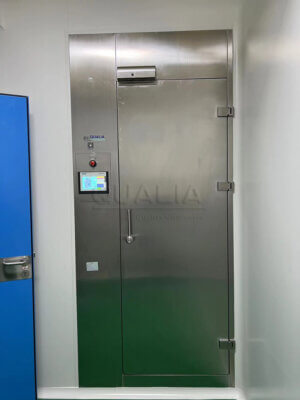
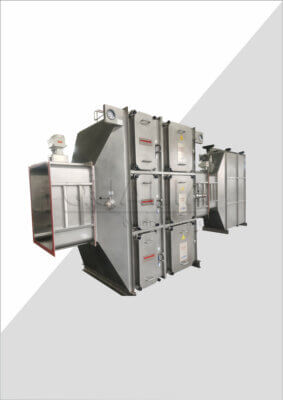
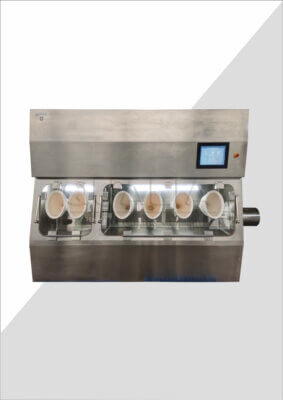
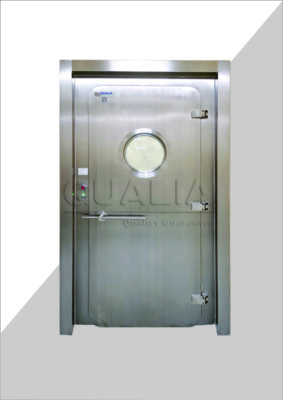
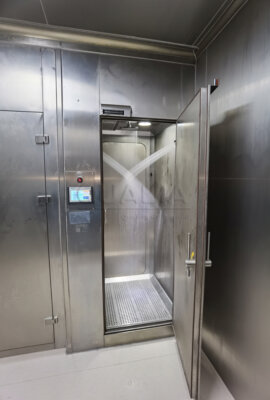
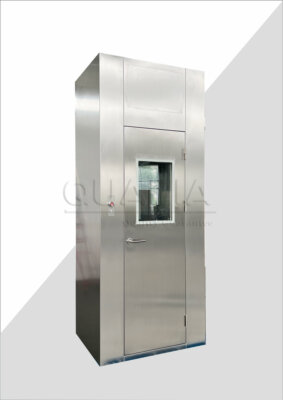
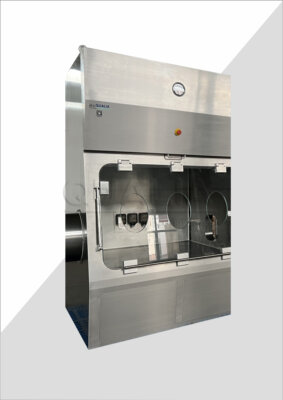
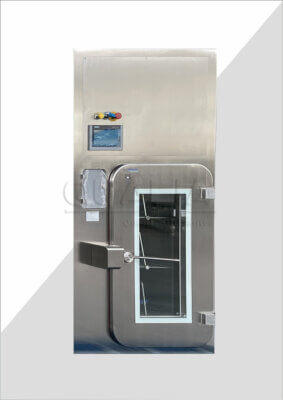
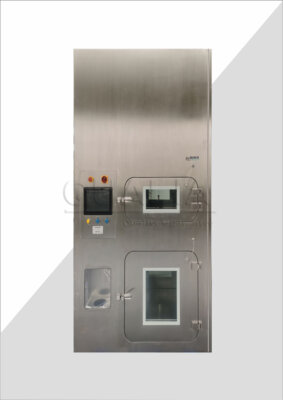
Teams using VHP pass-through transfer systems should note that load geometry and material absorption questions apply equally to pass box configurations, where chamber volume and restricted airflow paths can amplify the effects of load changes on vapor penetration. The VHP Pass Box configuration establishes a defined boundary for load placement; any change to item density or orientation within that boundary should be assessed against the original qualification evidence.
BI CI Residue and Inspection Scope
The biological and chemical indicator strategy used during requalification needs to reflect what actually changed—not simply replicate the original PQ setup without review. If the load has changed, prior BI positions may no longer be in the hardest-to-reach locations. If materials have changed, the residue endpoint data from the original qualification may not bound the new aeration requirement.
BI placement deserves explicit review in any requalification triggered by a load change. If new shadow areas have been introduced, BIs must be positioned to challenge those locations. A CI that was placed at the periphery of the original load for gross cycle confirmation may not detect a localized exposure deficiency in the interior of a denser load. CI mapping should be re-evaluated alongside BI placement, not treated as a secondary consideration.
For Tyvek-packaged BIs specifically, the penetration effect is substantial enough to be a planning variable rather than a background assumption. Published practitioner data indicates that removing Tyvek packaging from BIs can increase spore log reduction by approximately 1–3 log under otherwise identical cycle conditions. This means that if BIs were qualified with packaging in place, running monitoring cycles with unpackaged BIs produces a result that is not comparable to the qualification baseline—and vice versa. Consistency of BI presentation between qualification and ongoing monitoring is a review check that should appear explicitly in the requalification protocol.
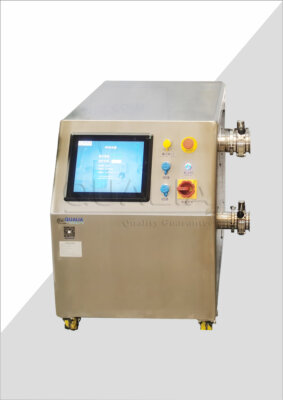
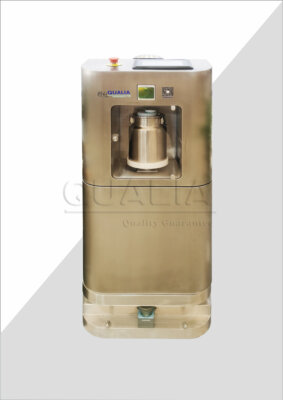
Residue endpoint verification belongs in the requalification scope whenever new materials have been introduced or aeration parameters have been modified. The accepted endpoint for aeration should be derived from the actual post-change material profile, not carried forward from prior qualification data without confirmation. For teams running portable VHP generators across multiple chambers or load types, aeration performance should be treated as equipment- and load-specific, not as a portable parameter that travels with the generator.
Change-Control Records for VHP Requalification
Change control is where requalification integrity is either preserved or quietly compromised. The most consequential rule—supported directly by EudraLex Volume 4 Annex 15—is that critical parameter limits must be defined and approved before execution and cannot be adjusted after execution to accommodate failing results. Any post-execution modification to acceptance criteria requires a documented investigation and a formal revalidation assessment. This is not a procedural preference; it is the principle that separates a defensible qualification from one that will not survive inspection scrutiny.
The failure pattern in requalification change control is specific: a team encounters a marginal BI result or a cycle trend that sits near the acceptance limit, decides the limit was set conservatively, and revises the acceptance range upward to accommodate the result. Even if the revised range is technically justifiable, doing so without a documented investigation and revalidation assessment invalidates the requalification. The record shows the limit changed after a failing result, which is precisely what inspectors look for when assessing whether validation data reflect genuine process capability.
| Control Requirement | Why It Matters | What to Confirm in Records |
|---|---|---|
| Critical parameter limits pre-defined and approved before execution | Prevents ad-hoc adjustments that could mask process issues | Limits are documented and approved prior to cycle; no post-execution alteration to accommodate failures |
| Acceptance ranges based on worst-case qualification results | Ensures criteria do not exceed demonstrated process capability | Ranges reflect actual qualification data, not broader than worst-case |
| No modification of parameter limits after failing results | Preserves validation integrity; avoids hiding true performance | Any deviation triggers documented investigation and revalidation assessment |
| Any change requires documented investigation and revalidation assessment | Ensures sterility assurance is maintained after modification | Change control records show investigation conclusion and revalidation plan approval |
Acceptance ranges should reflect worst-case qualification results, not be set generically to bracket expected variation. If a prior PQ established that the worst-case cycle trend shows a minimum concentration of 350 ppm at the defined worst-case sensor location, the acceptance limit should reflect that demonstrated capability—not a broader range that could accommodate a weaker cycle without triggering investigation. Broad acceptance ranges that are not grounded in qualification data are difficult to defend during a regulatory inspection and may indicate that the validation scope was not rigorous enough at the outset.
For teams managing requalification across multiple equipment types—including both fixed and portable VHP generation platforms—the change-control record should clearly identify which piece of equipment and which load configuration the requalification applies to. Cycle parameters qualified on one generator configuration are not automatically transferable to another without assessment, and the change-control record should make the equipment-specific scope explicit.
The most consequential judgment in VHP cycle requalification is defining the scope of evidence that must repeat—before a change is implemented, not after a BI positive forces the question. Load geometry, sensor calibration reference, material absorption, and BI presentation method are all load-specific rather than parameter-specific variables, which means a recipe that remains unchanged can produce unrepresentative results when any of those variables shift.
Before approving a change to load configuration, materials, or monitoring instrumentation, confirm which evidence categories are affected: BI/CI placement and mapping, cycle trend comparability, aeration residue endpoints, or material inspection scope. Confirm that acceptance criteria are pre-approved and grounded in worst-case qualification data. Confirm that the BI method—packaging, lot, and placement—is consistent with the original qualification. Those three checks, documented before execution, are what make the requalification defensible rather than reactive.
Frequently Asked Questions
Q: We haven’t completed our initial VHP cycle PQ yet—do these requalification principles apply while we’re still developing the load pattern?
A: Yes, they apply during development as well. Any change to load geometry, sensor position, or materials before the final PQ runs should trigger the same risk-based reassessment of worst-case zones and BI/CI placement. Treating a developmental load change as inconsequential risks locking in a geometry that won’t represent the hardest-to-sterilize condition, undermining the PQ before it’s even complete.
Q: After we decide a targeted requalification is needed for a load change, what does a practical verification run look like?
A: It typically means running the existing cycle parameters with the new load configuration while placing BIs and CIs in the newly identified worst-case locations—especially any enclosed cavities or dense regions introduced by the change. The run should also capture cycle trend data at the same sensor positions used in the baseline PQ and include residue endpoint measurements on the new materials to confirm aeration remains adequate. You’re not redesigning the cycle; you’re collecting fresh evidence that the existing recipe still sterilizes the changed load.
Q: Is a like-for-like sensor replacement—same model, same manufacturer—always considered a change that demands full requalification?
A: Not necessarily. If you can demonstrate that the replacement sensor performs equivalently to the original in your specific chamber geometry—by comparing at least three post-replacement cycle trends against the PQ baseline for both concentration and relative saturation—a documented minor change assessment may suffice. Requalification becomes mandatory when the replacement introduces a systematic offset or when the sensor is relocated to a different zone, where its reading no longer reflects the original worst-case reference.
Q: When requalifying after a load change, should I use Tyvek-packaged BIs or stripped BIs given the large penetration difference?
A: You must use the same BI presentation that was used in the original PQ runs. The 1–3 log reduction difference between Tyvek-packaged and stripped BIs means that switching presentation makes the new BI results incomparable to the qualification baseline. If the change itself merits reassessing worst-case penetration (for example, a new enclosed geometry that resembles a lumen), you can add BIs with different packaging as a secondary challenge, but the primary comparability run should replicate the original method exactly.
Q: We have a validated cycle on a fixed VHP generator. Could we use a portable VHP generator for a minor load-size change without repeating a full PQ?
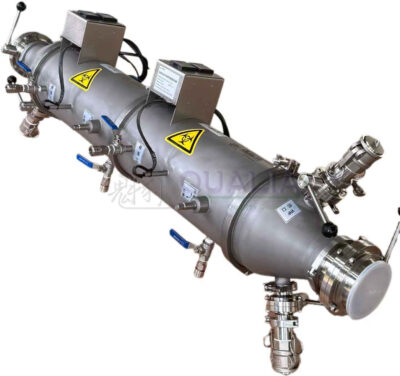
A: No—a portable generator is a different piece of equipment, and cycle parameters qualified on one platform are not automatically transferable to another. When you move to a device like a portable VHP generator, you introduce new vapor delivery dynamics and possibly different aeration behavior, meaning the combination of that generator and the changed load must be requalified together. You cannot shortcut the process simply because the generator is portable; the load-specific and equipment-specific nature of the validation still holds.