
Choosing how material moves into an aseptic isolator is not a formality once the isolator itself is specified — it is a separate engineering decision with its own evidence requirements. An RTP interface, a transfer chamber, and an airlock solve different problems, and picking the wrong one creates a mismatch between how the load actually arrives and how the barrier was designed to be entered.
Material and Container Characteristics That Drive the Transfer Choice
| Project input | What it establishes for route selection |
|---|---|
| Load dimensions | The physical load envelope that each proposed route must accommodate. |
| Packaging | Whether the container is compatible with the selected closed interface. |
| Transfer frequency | The expected frequency against which each proposed operating sequence must be assessed. |
| Contamination state | Whether a staged bio-decontamination step or another suitable transfer control is applicable. |
| Entry and exit separation | The separation boundary that the proposed route and interlocks must maintain. |
Before comparing transfer routes, the project needs to fix what is actually moving through them. Load dimensions set the physical envelope that any candidate route has to accommodate; a route that works for small components may not work once the container geometry changes. Packaging determines whether a closed-interface approach is even feasible, because a closed docking interface only functions when the container carries a compatible mating feature — a standard drum or bag without that feature cannot use the same route as one built for it.
Transfer frequency changes the judgment in a different way. A route that performs acceptably for occasional transfers may impose a different operational burden when the same interface is cycled repeatedly, so the expected frequency has to be assessed against the operating sequence each route proposes, not just against the route’s theoretical capability.
Contamination state is the input that most directly separates the three options. Where incoming material is already in a state compatible with direct aseptic entry, the project is asking a docking question. Where the material carries a bioburden that must be reduced before it reaches the aseptic or containment boundary, the project is asking a staging question, and a bio-decontamination step becomes part of the route rather than an add-on to it. These are not interchangeable conditions — treating a staging requirement as if it were a simple docking requirement leaves a gap in the transfer logic that no amount of interlock design will close later.
Entry and exit separation is the last input to fix, and it is the one that ties the transfer route back to the isolator’s own protection objective. The separation boundary the project requires during entry and exit defines what the proposed route and its interlocks must maintain throughout the transfer, not only at the moment of docking or at the moment of opening. A route evaluated only at its point of connection, without reference to how separation is held across the full sequence, has not yet been evaluated against the condition that matters most to the isolator’s product protection function.
These five inputs do not by themselves select a route. They establish the conditions against which RTP, transfer chamber, and airlock candidates are each tested.
RTP Interfaces for Closed, Repeatable Docking
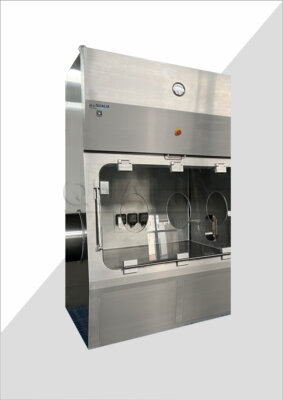
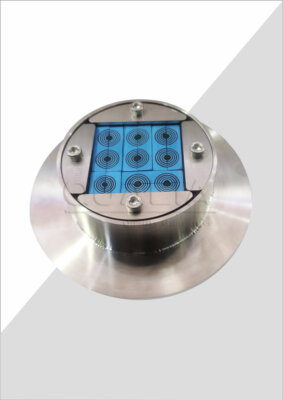
A rapid transfer port interface becomes a candidate when the incoming or outgoing container is built to dock through a closed connection — the isolator-side and container-side components mate and open together, so the barrier is never exposed to the surrounding environment during the transfer. This is the mechanism that makes an RTP attractive for repeatable docking: the separation boundary is maintained by the interface itself rather than by a separate staging step, and the operation can be repeated without reconstructing the barrier each time.
That mechanism depends entirely on compatibility. The container-side half of the interface has to match the isolator-side half, and that match is a project-specific confirmation, not a general property of RTP technology. A supplier proposing an RTP route needs to confirm which container types are compatible with the selected interface family and whether the project’s packaging already uses that interface or needs to be adapted to it.
Compatibility confirmed at the hardware level is not the same as a confirmed operating sequence. The order in which the container docks, the port opens, material transfers, and the port reseals has to be defined and checked against how the isolator is operated in practice — including what happens between transfers, how the mated components are inspected or cleaned, and how the sequence behaves under the load frequency the project expects. An RTP that is mechanically compatible but operated in a sequence that was not confirmed for the project leaves a gap between what the interface can do and what the process actually requires of it.
Where the loads are small, frequent, and packaged in containers built for closed docking, an RTP interface answers the transfer question directly. Where the packaging cannot be matched to a closed interface, or where the material arrives in a contamination state that a straight docking step cannot address, the RTP candidate does not fit and the project should look at a staged alternative instead of adapting the RTP to a condition it was not built for.
Transfer Chambers for Staged Bio-Decontamination or Hold Steps
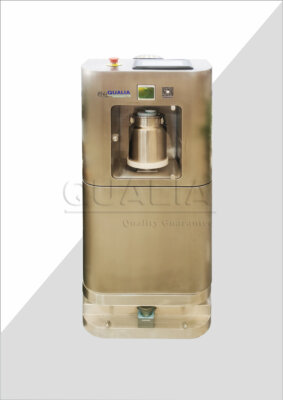
A transfer chamber serves a different function from an RTP: it provides a staging volume between the outside environment and the isolator interior, where material can be held for a defined step before it is released into the aseptic space. This matters precisely when the contamination state of the incoming load requires treatment rather than simple docking — the chamber gives the project a controlled space in which a bio-decontamination step, or another hold step the process requires, can run to completion before the boundary between chamber and isolator is opened.
The applicability condition is narrow and specific: a transfer chamber fits where the transfer needs a staged hold or bio-decontamination step, not wherever a closed interface happens to be unavailable. If the material does not require treatment before entry, introducing a chamber adds a staging step the process does not need. If it does require treatment, the chamber’s value is that the step happens in an enclosed, defined volume rather than being left to an open or ambiguous handling arrangement.
Confirming fit means confirming what the staged step actually consists of for this project — the decontamination agent or hold condition, how the chamber’s own interlocking prevents the outer and inner openings from being defeated out of sequence, and how the chamber interfaces physically with the isolator it serves. A chamber proposed without a defined decontamination step is only a sealed box; the step is what gives it a function.
Airlock Arrangements for Larger or Sequenced Loads
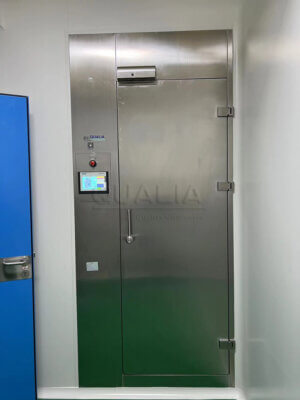
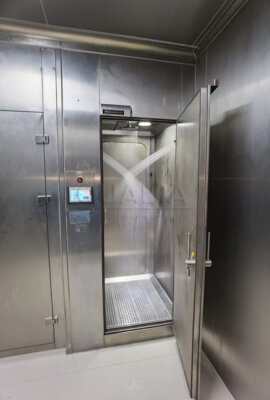
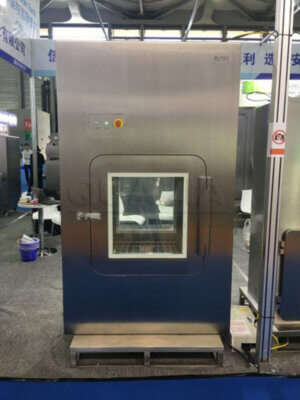
An airlock answers a load-geometry and load-sequence problem rather than a contamination-state problem. Where loads are larger than a closed interface can accommodate, or where the project needs to move a sequence of items rather than a single docked container, an airlock arrangement provides the space and the door sequencing to do that while still maintaining separation between the outside and the isolator interior.
The condition that routes a project toward an airlock is explicit: the loads cannot use the selected closed interface, whether because of size, shape, or the way multiple items need to move through in sequence. This is a different judgment from the contamination-state question that governs the chamber decision — an airlock does not by itself provide a bio-decontamination step, and a project that needs both staged treatment and larger-load handling has to confirm how those two requirements are combined rather than assuming one arrangement satisfies both.
Door interlocking is what gives an airlock its separation function, so the sequencing of inner and outer doors has to be defined against the same separation requirement established earlier in the project, and against the load sequence the airlock is actually expected to handle.
Interlocks, Cleaning, and Recovery Evidence Before Approval
| Approval issue | Evidence to check | Decision boundary |
|---|---|---|
| Transfer disinfection or bio-decontamination | The validated transfer disinfection step or suitable transfer system used where applicable. | EU GMP Annex 1 does not prescribe one transfer route or a universal VHP cycle. |
| Door interlocks | The interlocks defined for the selected transfer arrangement. | Interlock evidence supports separation control but does not select the route by itself. |
| Cleaning access | How the selected configuration provides access for cleaning. | Cleaning access must be confirmed for the project configuration. |
| Failed-transfer recovery | The recovery scenario and response defined for the selected route. | Approval should account for recovery as well as the normal operating sequence. |
| Acceptance tests | The project-specific tests and acceptance basis applied before approval. | The cited standards provide frameworks; application-specific transfer requirements still need project confirmation. |
Selecting a route candidate is not the same as approving it. Several distinct issues have to be checked once a candidate is identified, and each has its own evidence rather than a single combined sign-off.
Transfer disinfection or bio-decontamination evidence confirms what validated step, if any, the selected route relies on. EU GMP Annex 1 addresses transfer controls, validated transfer disinfection or suitable transfer systems, and airlock separation in sterile Grade A/B contexts, but it does not prescribe one transfer route or a universal cycle — so the project has to confirm its own validated step rather than assume a generic cycle satisfies the requirement.
Door interlock evidence is a separate check: the interlocks defined for the selected arrangement support separation control, but interlock evidence alone does not select the route — it confirms that whichever route was chosen maintains separation as intended.
Cleaning access has to be confirmed for the specific configuration, because a route that is mechanically sound but difficult to access for cleaning creates a maintainability problem the interlock and disinfection evidence will not reveal.
Failed-transfer recovery deserves its own confirmation, separate from the normal operating sequence. A route approved only against its intended sequence has not been evaluated against what happens when a transfer does not complete as planned, and recovery scenarios should be defined for the selected route before approval rather than after an incident.
Acceptance testing ties these points together. ISO 14644-7 provides a design, installation, testing, and approval framework for separative devices, and ISO 13408-6 covers aseptic-isolator specification, selection, qualification, operation, and control — both give the project a framework, but application-specific transfer processes and requirements fall outside what either standard prescribes, which means the project-specific acceptance basis still has to be defined and confirmed rather than assumed from the standard alone.
Selection Record for the URS and Bid Comparison
| Route option | Supported fit | Evidence to compare in the bid |
|---|---|---|
| RTP | Compatible containers can dock through a closed interface. | Interface compatibility and the proposed operating sequence. |
| Transfer chamber | The transfer needs a staged hold or bio-decontamination step. | The chamber arrangement and the project-specific decontamination step. |
| Airlock | Loads are larger or sequenced and cannot use the selected closed interface. | Load sequence, required separation, and proposed door interlocking. |
Once the project inputs are fixed and the approval evidence is identified, the remaining task is recording the selection in a form a URS and a bid comparison can use. Each route candidate carries a supported fit — an RTP where compatible containers can dock through a closed interface, a transfer chamber where the transfer needs a staged hold or bio-decontamination step, an airlock where loads are larger or sequenced and cannot use the selected closed interface — and each requires its own evidence to compare across bids rather than a single generic checklist.
Where a project’s packaging, frequency, and contamination state point clearly to one condition, the route follows directly; where the inputs mix conditions — for example, a load that is both large and carries a contamination state requiring treatment — the project needs to confirm how a supplier proposes to address both rather than assuming a single arrangement covers both roles. This is the point at which the project information the reader has gathered — load dimensions, packaging, frequency, contamination state, and separation requirements — becomes the basis a supplier such as QUALIA would use in a configuration or quotation review for an aseptic isolator transfer interface, since the interface has to be specified against the same isolator and project conditions rather than selected independently of them.
The bid comparison itself should keep interface compatibility and operating sequence as the evidence to check for an RTP proposal, the chamber arrangement and its project-specific decontamination step as the evidence for a transfer chamber proposal, and load sequence, required separation, and door interlocking as the evidence for an airlock proposal. Keeping these evidence sets distinct in the bid record prevents a supplier’s general capability claim from substituting for the project-specific confirmation each route actually requires.
Frequently Asked Questions
Q: Should every load entering or leaving the isolator use the same transfer route?
A: Not necessarily. Group loads by dimensions, packaging, transfer frequency, contamination state, and required entry and exit separation, then evaluate a suitable route for each group rather than forcing unlike loads through one arrangement.
Q: What must be confirmed before selecting an RTP for routine transfers?
A: Confirm that the intended containers are compatible with the selected closed interface and that the proposed docking and operating sequence meets the project’s separation needs. The bid should identify both the interface compatibility and the sequence to be assessed.
Q: How can a buyer distinguish a transfer chamber from an airlock for a particular load?
A: Start with the task the route must perform. A transfer chamber is a candidate when the load needs a staged hold or bio-decontamination step, while an airlock may fit larger or sequenced loads that cannot use the selected closed interface; compare the proposed arrangement against the actual load envelope and sequence.
Q: What should a failed-transfer recovery plan define before route approval?
A: It should define the recovery scenario and response for the selected route, including the interrupted load state, applicable interlocks, cleaning access, and the project-specific evidence needed before the transfer process returns to use. Review this alongside the normal operating sequence rather than as an afterthought.
Q: Do the cited standards determine which transfer route or bio-decontamination cycle to use?
A: No. They provide frameworks for transfer controls and isolator design, selection, qualification, operation, and approval, but the route, application-specific transfer requirements, and any bio-decontamination step still need project-specific confirmation and acceptance criteria.