
For pharmaceutical and biotech facility managers, the HVAC system is the single most critical—and complex—component of a cGMP cleanroom. A design flaw here doesn’t just risk compliance; it jeopardizes product sterility, validation timelines, and millions in capital investment. The challenge is moving beyond viewing HVAC as a collection of parts to seeing it as an integrated, performance-guaranteed system.
This integration is now a strategic imperative. Regulatory scrutiny, especially under the updated EU GMP Annex 1, demands demonstrable control and data integrity. Simultaneously, the pressure to accelerate time-to-market for advanced therapies makes traditional, sequential design-bid-build models untenable. The prefabricated cleanroom model, with its pre-engineered HVAC core, directly addresses these dual pressures of compliance and speed.
Core Components of a Prefabricated Cleanroom HVAC System
The Engineered Core, Not an Add-On
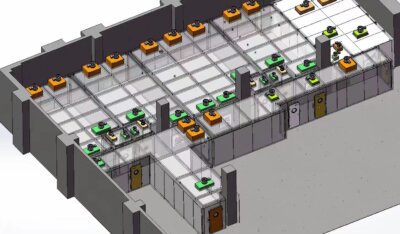
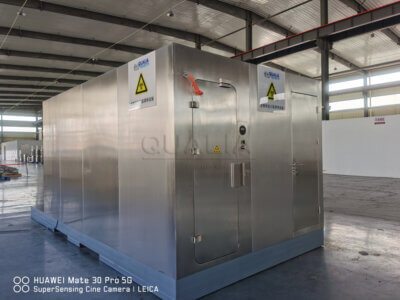
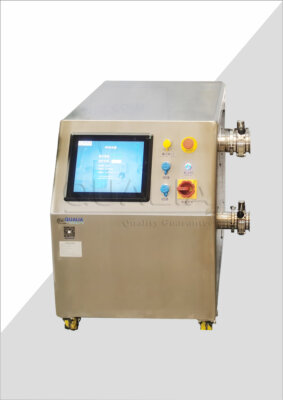
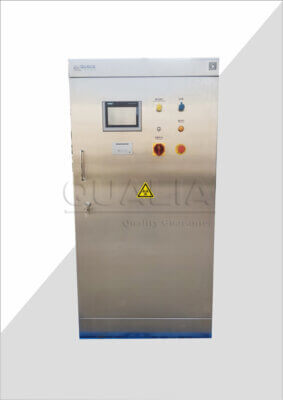
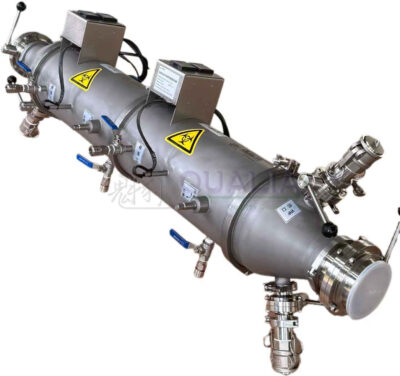
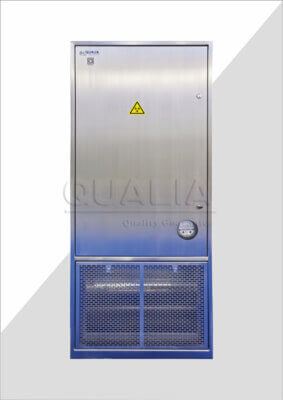
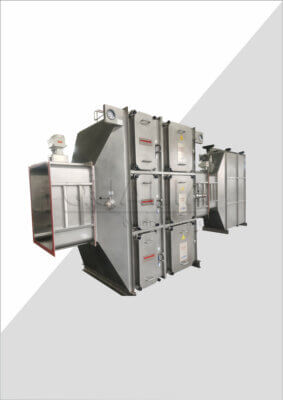
The HVAC in a prefabricated cleanroom is not installed into a finished space; it is the engineered core around which the modular structure is built. Key components—Air Handling Units (AHUs), ductwork, Fan Filter Units (FFUs), and control sensors—are pre-integrated into wall panels and ceiling cassettes. This fundamental shift from field assembly to factory integration creates unified accountability. One team owns the system from concept through commissioning, eliminating the finger-pointing and costly change orders endemic to fragmented delivery models.
Inverting Construction Risk
The prefabricated approach strategically transfers the highest-risk assembly and initial testing phases from an uncontrolled construction site to a controlled factory environment. This mitigates variables like adverse weather, skilled labor shortages, and site contamination. The result is a dramatic compression of project timelines, from years to months. For professionals managing capital projects for cell or gene therapies, this de-risking is non-negotiable. In my experience, this model resolves 80% of typical interface and performance issues before the module ever leaves the factory floor, transforming on-site work from debugging to verification.
Air Handling Design: Balancing Temperature, Humidity & Airflow
Defining the Environmental Baseline
Air handling design establishes the stable, conditioned environment mandated for cGMP processes. The primary AHU must precisely regulate supply air to maintain temperature (typically 20-25°C) and humidity (30-60% RH) within tight tolerances. The system then delivers this conditioned air via one of two primary methods: a central ducted system with terminal HEPA filters or a distributed grid of recirculating FFUs. This choice is foundational and locks in approximately 80% of the total project cost and timeline.
Airflow Patterns and Process Impact
The selected air delivery method dictates the airflow pattern within the cleanroom. Laminar or unidirectional flow (typically 0.45 m/s ±20%) is required for ISO 5 (Grade A) critical zones like filling lines. Turbulent or non-unidirectional flow is used for background areas (ISO 7/8). The pattern must be designed to protect the product from personnel and particulate generation. Investing in comprehensive User Requirement Specifications (URS) during this conceptual phase is the most cost-effective project activity, as missteps here necessitate expensive redesigns that pre-engineered modular templates are designed to avoid.
Key Performance Parameters
The table below outlines the critical environmental parameters that the air handling system must control and the tight tolerances required for cGMP compliance.
Air Handling Design: Balancing Temperature, Humidity & Airflow
| Parameter | Typical Specification Range | Control Tolerance |
|---|---|---|
| Temperature | 20-25°C | ±1°C |
| Humidity | 30-60% RH | ±5% |
| Laminar Airflow Velocity | 0.45 m/s | ±20% |
Source: IEST-RP-CC012.3: Considerations in Cleanroom Design. This recommended practice provides detailed guidance on achieving and maintaining the critical environmental parameters of temperature, humidity, and airflow, which are foundational to cleanroom performance and compliance.
Filtration Specifications: From Pre-Filters to HEPA/ULPA Standards
The Multi-Stage Cascade
Achieving stringent ISO particulate counts requires a mandatory multi-stage filtration cascade. Pre-filters (G4/F8) within the AHU remove bulk particles, protecting downstream coils and extending the service life of more expensive final filters. Intermediate bag filters (F8-F9) capture finer contaminants. This hierarchy is engineered with regulatory standards as inherent design parameters, transforming compliance from a post-build retrofit into a built-in feature that reduces inspection risk.
The Final Barrier: HEPA and ULPA
The final barrier consists of HEPA filters (99.97% efficient at 0.3 µm) for ISO 5-7 rooms or ULPA filters (99.999% efficient at 0.1-0.2 µm) for ultra-critical applications. In prefabricated ceilings, these filters are integrated into validated, leak-tested housings with sealed gasketed frames. This embedded compliance significantly accelerates speed-to-market by eliminating “bolted-on” validation efforts. Industry experts consistently note that filter integrity testing (DOP/PAO testing) during Factory Acceptance Testing is the single most effective way to prevent costly on-site failures.
Filtration Efficiency Standards
The progression of filter efficiency is standardized, as shown in the table below, which is directly informed by regulatory requirements for sterile manufacturing.
Filtration Specifications: From Pre-Filters to HEPA/ULPA Standards
| Filter Stage | Typical Efficiency Rating | Particle Size Efficiency |
|---|---|---|
| Pre-Filter | G4 / F8 | Bulk particles |
| Intermediate Filter | F8 – F9 | Finer contaminants |
| Final Filter (HEPA) | 99.97% | at 0.3 µm |
| Final Filter (ULPA) | 99.999% | at 0.1-0.2 µm |
Source: EU GMP Annex 1: Manufacture of Sterile Medicinal Products (2022). Annex 1 mandates the use of HEPA or ULPA filtration for Grade A/B zones, establishing the required filtration efficiency and air quality standards for sterile manufacturing.
Pressure Control Strategies for cGMP Contamination Containment
The Cascade Principle
Maintaining defined pressure differentials is a fundamental cGMP containment strategy. Cleaner zones are kept at a higher pressure (typically +10 to +15 Pa) than adjacent less-clean areas, ensuring airflow direction from critical to non-critical spaces. This cascade prevents the ingress of contaminants. Airlocks with interlocked doors are critical components of this strategy, requiring specific HVAC design to manage their pressure sequencing during entry and exit.
Control and Balancing
This pressure cascade is managed by precisely balancing supply and exhaust air volumes. A Building Management System (BMS) modulates motorized dampers and variable frequency drives (VFDs) on fans to maintain setpoints despite disturbances like door openings. The precision of this control is validated early in the prefabricated process. During rigorous Factory Acceptance Testing (FAT), the entire module’s air balance is calculated and set. FAT acts as a critical timeline compression tool, resolving performance issues off-site to eliminate the majority of on-site debugging, a major bottleneck in traditional construction.
Elements of Pressure Control
The following table summarizes the key elements and methods for maintaining contamination containment through pressure control.
Pressure Control Strategies for cGMP Contamination Containment
| Control Element | Typical Specification | Purpose |
|---|---|---|
| Clean Zone Pressure | +10 to +15 Pa | Containment cascade |
| Airflow Direction | Critical to non-critical | Prevents backflow |
| Control Method | BMS-modulated dampers/fans | Precise volume balancing |
| Validation Phase | Factory Acceptance Testing (FAT) | Resolves issues off-site |
Source: ISO 14644-4:2022 Cleanrooms — Part 4: Design, construction and start-up. This standard specifies requirements for establishing and maintaining pressure differentials as a primary contamination control strategy, directly informing the design and validation of HVAC control systems.
Integrating Control Systems & Meeting cGMP Compliance
Continuous Monitoring and Data Integrity
Continuous performance verification is achieved through integrated control systems. A centralized Building Management System (BMS) or dedicated Environmental Monitoring System (EMS) monitors temperature, humidity, differential pressure, and filter status. These systems provide real-time data logging, alarm annunciation, and reporting features that must be compliant with FDA 21 CFR Part 11 for electronic records and signatures. This digital integration is now a primary vendor differentiator.
Strategic Data Flow and Cleanability
The strategic value extends beyond basic control to seamless data flow between the cleanroom EMS, enterprise Quality Management Systems (QMS), and Manufacturing Execution Systems (MES). This enables real-time oversight and supports continuous process verification. Furthermore, all exposed HVAC surfaces—ductwork, plenums, FFU housings—must be designed for cleanability with non-shedding, smooth materials compatible with aggressive cleaning agents and vaporized hydrogen peroxide (VHP) bio-decontamination. This completes a design philosophy where compliance is a foundational feature, not an afterthought.
Factory vs. On-Site: Advantages of Prefabricated HVAC Assembly
The Controlled Environment Advantage
Prefabricated assembly in a controlled factory environment offers distinct, quantifiable advantages over traditional on-site stick-building. It enables rigorous pre-shipment validation (FAT), ensures precise component integration with laser-aligned tolerances, and drastically reduces on-site installation time from months to weeks. This methodology directly supports business agility by compressing the critical path to operational readiness.
Enabling Strategic Scalability
Perhaps the most significant strategic advantage is inherent scalability. Modular design explicitly decouples facility expansion from traditional construction cycles. This enables plug-and-play capacity scaling or process re-layout in weeks without halting adjacent GMP operations. For CDMOs and biotechs needing to pivot for new therapies or scale production without massive new capital outlays, this architectural strategy is critical. It effectively democratizes access to high-compliance manufacturing for smaller, agile organizations.
Key Design Specifications & Performance Validation (IQ/OQ/PQ)
Defining Performance Specifications
System performance is contractually defined by key design specifications. These include Air Change Rates (ACRs ranging from 10-600+ per hour based on ISO class), tight temperature/humidity tolerances, maintained pressure differentials, and validated filter efficiency. These specs form the basis of the User Requirement Specification (URS) and subsequent validation protocols.
The Structured Validation Pathway
Confirmation occurs through a structured qualification protocol. For prefabricated systems, this begins with Factory Acceptance Testing (FAT), a comprehensive off-site shake-down. On-site, Installation Qualification (IQ) verifies correct setup per design documents. Operational Qualification (OQ) proves the system operates within all specified ranges (e.g., airflow, recovery time). Finally, Performance Qualification (PQ) demonstrates the cleanroom maintains its classification under operational “worst-case” load. This streamlined, predictable pathway, rooted in early factory testing, transforms regulatory approval from a project culmination hurdle into a reliable, scheduled outcome.
Specifications and Validation Phases
The table below maps key design specifications to their corresponding validation phases, illustrating the traceability required for compliance.
Key Design Specifications & Performance Validation (IQ/OQ/PQ)
| Specification | Example Range | Validation Phase |
|---|---|---|
| Air Change Rate (ACR) | 10 – 600+ per hour | OQ / PQ |
| Temperature/Humidity | See Table 1 | OQ |
| Pressure Differential | See Table 3 | OQ |
| Filter Efficiency | See Table 2 | FAT / IQ |
Source: Technical documentation and industry specifications. The structured validation protocol (FAT, IQ, OQ, PQ) is an industry-standard framework derived from regulatory guidelines like EU GMP Annex 1 and ISO 14644, ensuring systems perform as designed.
Selecting a Prefabricated HVAC System: A Decision Framework
Evaluating Beyond Mechanical Specs
Selection requires a framework that evaluates beyond basic mechanical specifications. The primary assessment must focus on the vendor’s design-build accountability, the rigor and transparency of their FAT protocol, and their digital integration capabilities for BMS/EMS. The vendor should act as a single point of performance responsibility for the integrated system.
Strategic and Future-State Considerations
Procurement must also strategically consider future-state needs. Sustainability metrics are evolving from a cost concern to a compliance and ESG imperative. Evaluating a system’s lifecycle energy profile, including technologies like energy recovery ventilators (ERVs) or high-efficiency EC fans, is becoming critical. Furthermore, the inherent portability of prefabricated units enables a strategic shift toward distributed, mobile production networks, mitigating centralized supply chain risks. Solutions like mobile high-containment laboratory facilities exemplify this trend, offering deployable, validated capacity. The chosen system should ultimately support not just immediate GMP needs but also long-term strategic goals in agility, sustainability, and digital transformation.
The decision pivots on three priorities: verifying integrated system performance through rigorous factory testing, ensuring the design accommodates future process changes or expansion, and selecting a partner whose control and data architecture aligns with your digital plant roadmap. A prefabricated HVAC system is a capital asset with a 15-20 year lifecycle; its selection must be driven by total cost of ownership and strategic flexibility, not just first cost.
Need a cleanroom HVAC system engineered for guaranteed performance and compliance? The integrated design-build approach at QUALIA ensures accountability from concept through validation, compressing your timeline to operational readiness. Contact our technical team to discuss your project specifications and validation strategy.
Frequently Asked Questions
Q: How does a prefabricated cleanroom’s HVAC design impact overall project cost and timeline?
A: Decisions on cleanroom classification and airflow patterns, made during the initial User Requirement Specification (URS) phase, determine roughly 80% of the total project cost and schedule. Selecting between a central HEPA system or a Fan Filter Unit (FFU) grid defines the required air handling capacity and installation complexity. This means investing in a comprehensive URS is the most cost-effective project activity, as errors here lead to expensive redesigns that prefabricated modular systems are specifically engineered to prevent.
Q: What is the role of Factory Acceptance Testing (FAT) for a prefabricated HVAC system in a cGMP project?
A: FAT is a critical risk-mitigation step where the fully assembled system is performance-tested in the vendor’s controlled factory before shipment. This process validates key parameters like air balance and pressure differentials, resolving most performance issues off-site. For projects where speed-to-market is critical, a rigorous FAT protocol compresses the schedule by eliminating the majority of on-site debugging, which is a major bottleneck in traditional construction.
Q: How do you select the final filtration stage between HEPA and ULPA for a critical zone?
A: The choice is dictated by the required ISO classification and particle size control. Use HEPA filters, which are 99.97% efficient at 0.3 µm, for ISO 5 to ISO 7 cleanrooms. For ultra-critical applications requiring control of smaller particles, specify ULPA filters with 99.999% efficiency at 0.1-0.2 µm. This means facilities manufacturing advanced therapies or high-potency products should plan for the higher initial cost and validation rigor of ULPA to meet stricter contamination control targets, as outlined in standards like ISO 14644-4:2022.
Q: What are the key strategic advantages of a prefabricated HVAC system beyond basic compliance?
A: Beyond meeting cGMP standards, the modular design enables inherent scalability and business agility. It allows for plug-and-play capacity expansion or process reconfiguration in weeks without halting adjacent operations. This means CDMOs and biotechs needing to pivot for new therapies or scale production rapidly should evaluate prefabricated systems as a strategic asset that decouples growth from traditional, lengthy construction cycles.
Q: How should pressure differentials be managed for contamination containment in a multi-room suite?
A: A cascade strategy is used, maintaining cleaner zones at a higher pressure (typically 10-15 Pa) than adjacent less-clean areas. This airflow direction is managed by precisely balancing supply and exhaust air volumes via a Building Management System (BMS) that modulates dampers and fans. For facilities with material or personnel airlocks, plan for specific HVAC sequences for interlocked doors, a requirement emphasized in guidelines like EU GMP Annex 1.
Q: What does the qualification pathway look like for a prefabricated cleanroom HVAC system?
A: Validation follows a structured protocol starting with Factory Acceptance Testing (FAT). On-site, Installation Qualification (IQ) verifies correct setup, Operational Qualification (OQ) proves performance within all specified ranges (e.g., airflow, temperature recovery), and Performance Qualification (PQ) demonstrates the cleanroom maintains its classification under operational load. This means project teams can expect a more predictable and streamlined regulatory approval process, as the majority of performance risks are resolved during the early factory testing phase.
Q: What factors beyond mechanical specs are critical when selecting a prefabricated HVAC vendor?
A: You must assess the vendor’s single-point, design-build accountability, the rigor of their FAT protocol, and their system’s digital integration capabilities for data flow to EMS or MES. Strategically, also evaluate the system’s lifecycle energy profile and potential for future scalability. This means procurement should prioritize partners whose offerings support long-term goals in operational agility, sustainability, and digital transformation, not just immediate GMP compliance. Resources like IEST-RP-CC012.3 provide valuable design evaluation criteria.
Related Contents:
- Prefab BSL-3 Labs: Rapid Deployment Solutions
- The Complete Prefabricated Cleanroom Guide for Pharmaceutical & Biotech Facilities: Standards, Design & ROI Analysis
- How to Achieve ISO 5 (Class 100) Certification in Prefabricated Cleanrooms for Aseptic Fill-Finish Operations
- ISO 14644-1 Classification Requirements for Prefabricated Cleanrooms: ISO 4 to ISO 8 Design Standards & Particle Count Specifications
- Energy Efficiency ROI: Prefab vs Traditional Cleanroom Operating Costs Over 15-Year Lifecycle
- Prefabricated Cleanroom vs Traditional Stick-Built Construction: 12 Cost, Timeline & Performance Differences for Regulated Industries
- Which Construction Method Delivers Faster GMP Compliance: Modular vs Stick-Built Cleanrooms for Pharma Projects?
- Air Shower Filters: When and How to Replace
- Site Preparation Requirements for Modular BSL-3 Laboratory Installation: Foundation, Utilities, and Access Planning