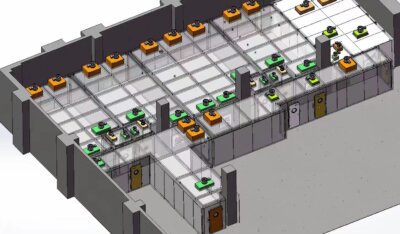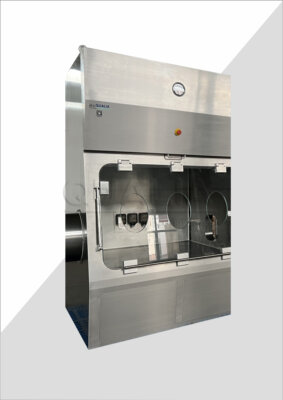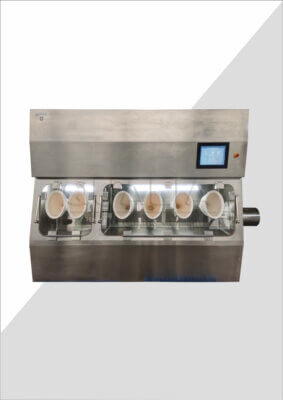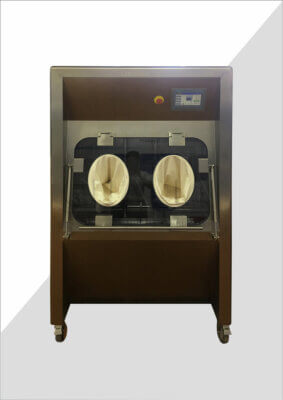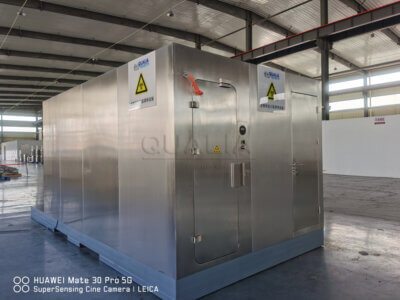

The feasibility of a modular BSL-4 laboratory presents a critical strategic decision for institutions facing emerging biological threats. The promise of accelerated deployment and reduced capital expenditure is compelling, but it introduces a distinct set of technical and regulatory challenges not found in traditional monolithic construction. Professionals must navigate a complex landscape where the benefits of prefabrication intersect with the non-negotiable demands of maximum biocontainment.
This evaluation is urgent. The global need for high-containment capacity is growing, driven by pandemic preparedness and advanced biological research. Traditional builds, with their multi-year timelines and prohibitive costs, are often untenable. Modular solutions offer a pathway, but success depends on a clear-eyed assessment of their inherent limitations against the absolute requirement for fail-safe containment.
Modular vs. Traditional BSL-4 Labs: Core Differences
Defining the Construction Paradigm
The core distinction is foundational. Traditional BSL-4 facilities are engineered as permanent, site-built structures. This allows for complete architectural freedom to tailor the layout to specific research workflows and spatial requirements. Modular laboratories, conversely, are systems-based. They comprise prefabricated units constructed in a controlled factory environment, transported, and assembled on-site. This shift from a construction project to a manufacturing and integration process is fundamental.
Impact on Timeline and Economics
The operational impact of this paradigm is dramatic. Factory parallelization of tasks compresses schedules, enabling deployment up to 70% faster than traditional methods. Capital cost can see reductions up to 90%, transforming a BSL-4 from a decades-long capital asset into a more accessible, rapidly deployable resource. This efficiency fundamentally alters asset management, offering potential for future relocation or reconfiguration—a concept foreign to traditional poured-concrete containment.
The Flexibility Trade-off
This efficiency requires a strategic concession. The modular approach prioritizes standardized, optimized designs. While internal layouts can be customized within a module, the overall architectural uniqueness and ability to create highly bespoke, complex adjacencies are inherently limited. The decision hinges on priority: Is the goal a perfectly tailored, permanent facility or a high-performance, compliant lab delivered with unprecedented speed and cost certainty? The data clarifies this trade-off.
| Feature | Traditional BSL-4 | Modular BSL-4 |
|---|---|---|
| Construction Paradigm | On-site, monolithic build | Factory-prefabricated units |
| Deployment Timeline | Multi-year (e.g., 3-5 years) | Up to 70% faster |
| Capital Cost | Significant, high CapEx | Up to 90% reduction possible |
| Design Flexibility | Fully bespoke, custom layouts | Standardized, limited uniqueness |
| Asset Management | Fixed, permanent capital expense | Flexible, potentially relocatable |
Source: Technical documentation and industry specifications.
Key Containment Challenges in Modular BSL-4 Design
The Integrity of Interfaces
The paramount technical hurdle is achieving absolute airtight integrity at every module junction. The negative pressure cascade, critical for containment, is only as strong as its weakest seam. Each connection point represents a potential leak path. This demands over-engineering with advanced gasket systems, welded seals, and rigorous post-assembly validation. Industry experts recommend treating every interface with the same scrutiny as a primary containment barrier, not merely a construction joint.
The Scalability Paradox
Modularity’s advantage of scalability encounters a containment paradox. Expanding an operational BSL-4 by attaching new modules creates an unavoidable period of breach risk. “Hot” connections are likely infeasible. Therefore, true scalability must be designed into the initial facility footprint, often through pre-planned, sealed-off ports or the use of separate, isolated units. This limitation forces a long-term capacity strategy from day one, contrasting with the more flexible expansion potential of traditional builds.
Material and Dynamic Stress Considerations
Materials must withstand not only aggressive, repeated decontamination cycles but also the dynamic stresses of transportation. This can necessitate structural reinforcement that reduces usable interior space. Furthermore, the selection of wall and finish materials is constrained by what is feasible for factory production and transport. In our analysis of system specifications, we found that the need for transport durability can sometimes lead to compromises in ideal interior material properties for cleanability or chemical resistance.
Integrating Critical MEP Systems in Modular Facilities
The Interconnection Imperative
The seamless integration of Mechanical, Electrical, and Plumbing (MEP) systems across module boundaries is a defining challenge. Life-safety systems—especially the HVAC for directional airflow, redundant HEPA filtration, and effluent decontamination loops—are pre-installed in segments. The critical task is creating leak-proof, fail-safe connections for ductwork, piping, and electrical conduits at these interfaces. A failure here compromises the entire containment envelope.
The Factory Advantage
This challenge is mitigated by the factory environment itself. Controlled conditions allow for the complete assembly and pre-testing of entire MEP subsystems before shipment. This includes pressure testing ductwork, validating sensor arrays, and cycling control systems. The result is a higher degree of quality control and consistency, with the potential for integrated systems to be 20% more efficient due to optimized fabrication. This pre-validation is a core component of the modular value proposition for regulatory approval.
Validating Redundancy and Failover
Redundancy is meaningless if it cannot fail over seamlessly across module lines. Commissioning must rigorously test backup systems—from generators to secondary HEPA filters—under simulated fault conditions, ensuring that a failure in one module’s system does not breach containment or compromise safety. The integrated design-build approach of modular construction is particularly suited to this holistic validation, as the same team responsible for design is often responsible for factory integration and site assembly.
| System | Key Challenge | Modular Advantage |
|---|---|---|
| HVAC & Airflow | Leak-proof connection at interfaces | Factory pre-testing of assemblies |
| HEPA Filtration | Redundant system integration | Controlled environment quality control |
| Effluent Decontamination | Plumbing segment connections | 20% higher system efficiency potential |
| Life-Safety Redundancy | Seamless failover across modules | Integrated design-build validation |
Source: Technical documentation and industry specifications.
Validating Decontamination in a Modular Laboratory
Beyond Room-Level Efficacy
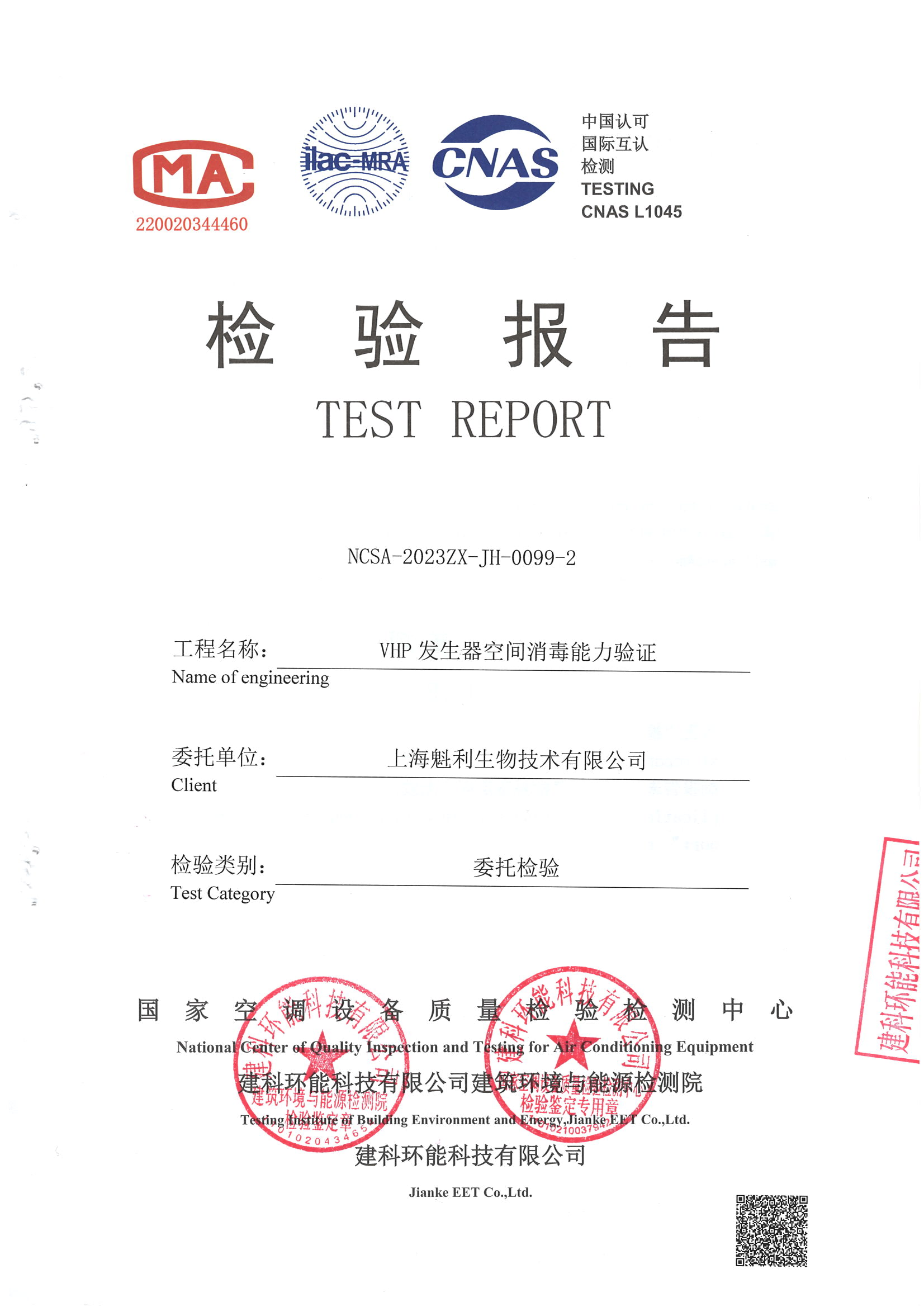
Whole-room decontamination using vaporized hydrogen peroxide (VHP) or similar agents is a non-negotiable BSL-4 requirement. In a modular lab, validation must prove uniform biocidal concentration not only within the primary lab rooms but throughout the entire interconnected assembly. This includes the interstitial voids between modules, utility chases, and the complex geometries of structural joints. Pathogens could be shielded in these spaces if the design does not explicitly ensure agent penetration.
Joint and Chase Vulnerabilities
Module joints and integrated utility runs present specific vulnerabilities. Standard validation protocols designed for monolithic structures may overlook these potential shielding points. The design must incorporate access or design features that guarantee decontaminant flow. According to the foundational principles in the WHO Laboratory Biosafety Manual, Fourth Edition, the risk assessment must be expanded to address these novel construction features, proving every void space is addressable.
A Non-Negotiable Standard
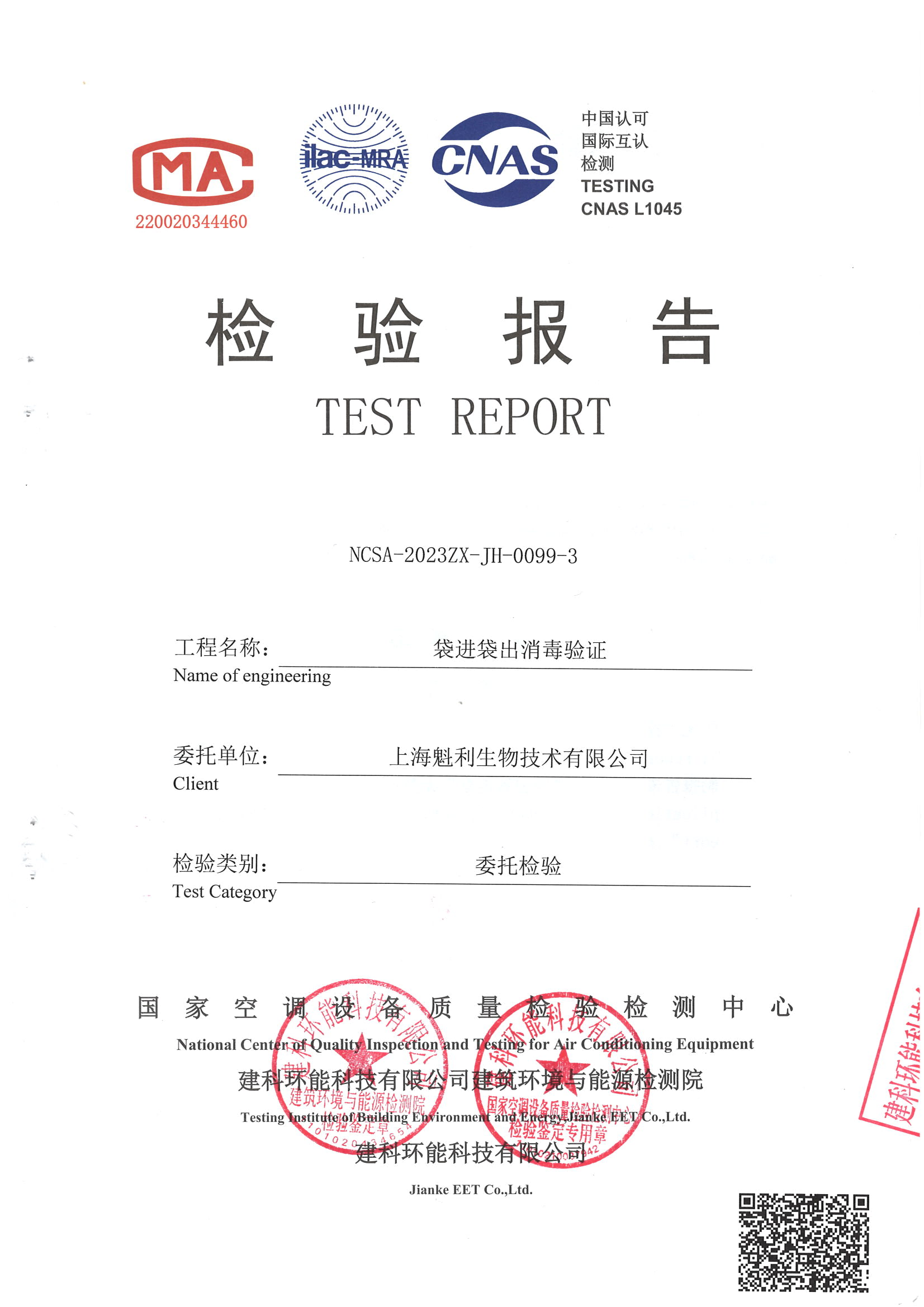
The benchmark is absolute: decontamination efficacy in a modular BSL-4 must meet the same standard as a traditional concrete cell. This validation hurdle underscores that modular methods cannot shortcut procedural rigor. It requires extensive biological indicator placement at all critical interfaces during certification cycles. Success here is a key determinant of regulatory approval, demonstrating that the construction method does not introduce unacceptable risk.
| Validation Focus Area | Specific Challenge | Critical Requirement |
|---|---|---|
| Decontaminant Distribution | Uniform concentration in interstitial spaces | Proven efficacy at all module joints |
| Pathogen Shielding Risk | Complex utility chases between modules | No shielded voids; full access |
| Procedural Rigor | Standard vs. modular construction comparison | Equal standard to traditional concrete cell |
| Cycle Certification | Whole-room efficacy across interconnected units | Non-negotiable BSL-4 requirement |
Source: WHO Laboratory Biosafety Manual, Fourth Edition. This manual establishes the core principles and risk-based requirements for validating decontamination procedures in high-containment laboratories, which are directly applicable to proving the efficacy of cycles in a modular design.
Modular BSL-4: Spatial and Material Design Limitations
Physical Constraints of Transport
The maximum dimensions of a shippable module impose the first major constraint. This can limit the size of individual laboratory rooms or animal holding areas (ABSL-4), potentially affecting research protocols. While modules can be combined to create larger spaces, the structural supports required at junctions may introduce columns into containment zones, impacting workflow and equipment placement. These are fixed parameters that must be accepted early in the planning process.
The Adaptive-Containment Strategy
A strategic response to these limitations is the “adaptive-containment” design. Facilities can be initially constructed and certified to BSL-3 standards using modular mobile high-containment laboratories, with all critical MEP and structural systems pre-engineered for future upgrade to BSL-4. This approach provides immediate, lower-containment capacity with a defined, faster pathway to maximum containment when needed, effectively turning a spatial limitation into a strategic planning advantage.
Lifecycle Maintenance Access
Long-term operability introduces another design challenge. Servicing MEP systems embedded within sealed module walls requires carefully engineered, fail-safe access panels. These panels must maintain containment integrity equal to the surrounding wall after hundreds of openings and closings across the facility’s lifespan. This reality is driving vendor models that include long-term maintenance contracts, as they possess the specific knowledge of the integrated system design necessary for safe intervention.
Commissioning and Long-Term Maintenance Complexities
Integrated Systems Certification
Commissioning a modular BSL-4 is a holistic, systems-level endeavor. The performance of each prefabricated unit is less critical than the performance of the fully integrated whole. Certification protocols must intensively test all containment systems—air pressure differentials, HEPA filter integrity, effluent decontamination—with a specific focus on the performance across module interfaces under maximum operational load and failure scenarios.
The Maintenance Model Shift
Repair and maintenance complexities are leading to a shift toward Design-Build-Operate (DBO) or long-term service agreements. The original integrator, with proprietary knowledge of the system’s embedded components and access methodologies, is often best positioned to ensure ongoing integrity. This model provides the operator with guaranteed performance and shifts the risk of system degradation to the vendor, but it also creates a long-term dependency.
Lifecycle Cost Considerations
While capital expenditure (CapEx) is lower, the total cost of ownership requires scrutiny. Specialized maintenance, potential vendor lock-in, and the need for eventual seal or component replacement at module interfaces must be factored. A comprehensive feasibility study must compare the lifecycle cost profile of a modular facility against a traditional build, looking beyond the compelling initial CapEx savings.
Regulatory Approval for Modular High-Containment Labs
Navigating Novelty Scrutiny
Regulatory bodies operate with frameworks developed for permanent, traditional facilities. A modular BSL-4 is often viewed as a novel design, triggering heightened scrutiny. Authorities will demand extensive additional validation data to demonstrate equivalent performance, particularly for containment integrity at interfaces and decontamination efficacy. Early and deep engagement with regulators is not just beneficial—it is a critical path item for project success.
The Vendor Scarcity Barrier
Approval is inextricably linked to the qualifications of the integrator. The pool of vendors with proven experience in delivering fully certified, turnkey modular BSL-4 solutions is limited, potentially reducing options by 80%. Regulators will assess the vendor’s track record, quality management systems, and technical documentation rigor as part of the approval process. Selecting an unproven vendor can jeopardize the entire project timeline and certification.
Demonstrating Enhanced Assurance
The successful approval strategy pivots on demonstrating that factory-controlled construction enhances safety assurance. The argument centers on repeatable precision, comprehensive pre-testing, and reduced variability compared to on-site construction. Providing regulators with factory audit rights and real-time quality data can build confidence. The evolving landscape also means that each successful approval helps refine the pathway for future projects.
| Factor | Impact on Modular Approval | Quantitative/Comparative Effect |
|---|---|---|
| Regulatory Scrutiny | Heightened, novel design review | Extensive additional validation data required |
| Qualified Integrator Pool | Vendor scarcity creates barrier | Up to 80% reduction in qualified vendors |
| Approval Pathway | Frameworks for permanent structures | Early, deep regulator engagement critical |
| Safety Assurance Proof | Must demonstrate enhanced control | Factory construction as key evidence |
Source: Technical documentation and industry specifications.
A Decision Framework for BSL-4 Laboratory Feasibility
Prioritizing Core Objectives
The first step is a clear prioritization of needs. If the primary drivers are rapid deployment, cost compression, and future flexibility, modular solutions are compelling. If the requirement is for a permanent, fully customized facility with unique architectural and workflow demands, traditional construction may be the only viable path. This decision must be made before any design work begins.
Assessing Adaptability and Risk
Evaluate the need for future change. Does the research mission require a static configuration or the ability to adapt? Modular designs can accommodate pre-planned scalability or the adaptive-containment model (BSL-3 to BSL-4). Concurrently, conduct a thorough risk assessment that explicitly addresses the unique challenges of modularity—interface integrity, decontamination validation, and long-term maintenance—against the standard BSL-4 risk profile.
The Validation-First Mindset
Feasibility is ultimately proven by a validation-first approach. Every design decision, from seal selection to utility routing, must be evaluated against its ability to be validated and certified. Treat modularity as an exacting construction technique that demands more rigorous proof, not a shortcut. The framework must include budget and timeline for this enhanced validation phase, which is critical for both safety and regulatory approval.
The feasibility of a modular BSL-4 laboratory is not a simple yes-or-no question but a strategic alignment of priorities, constraints, and rigorous validation. Decision-makers must weigh the transformative benefits of speed and cost against the inherent limitations in design flexibility and the intensified need for interface-level assurance. Success hinges on selecting an experienced integrator, engaging regulators from the outset, and maintaining an unwavering focus on proving containment integrity at every seam.
Need a professional assessment for your high-containment project? The experts at QUALIA specialize in navigating the complexities of modular biocontainment design, integration, and validation. For a detailed consultation on your specific requirements, you can also Contact Us.
Frequently Asked Questions
Q: How do you achieve airtight containment at the seams between prefabricated modules in a BSL-4 lab?
A: You must over-engineer the connections between modules using advanced, durable gasket systems or welded joints. These seals must be validated to endure repeated decontamination cycles and long-term structural stress without compromising the critical negative pressure cascade. This means facilities prioritizing modular construction must allocate significant design and testing resources specifically to interface integrity, treating each seam as a primary containment barrier.
Q: What are the main challenges for validating whole-room decontamination in a modular BSL-4 facility?
A: The primary challenge is ensuring uniform decontaminant distribution and concentration throughout the complex interstitial spaces and utility chases created by module assembly, not just within main rooms. Every void and joint must be proven decontaminable to the same rigorous standard as a traditional lab. For projects using modular methods, plan for extensive, three-dimensional validation mapping during commissioning, as procedural rigor cannot be compromised by the construction technique. The WHO Laboratory Biosafety Manual provides the foundational risk-based framework for such validations.
Q: Can you expand a live modular BSL-4 lab by attaching new modules?
A: True “hot” expansion by attaching modules to an operational facility creates an unacceptable breach risk and is likely infeasible. Scalability must therefore be planned from the initial build phase or achieved through separate, isolated units. This means your long-term capacity planning is critical; if future expansion is a possibility, you must design the initial site layout and utility infrastructure to support additional, standalone modules from the start.
Q: How does factory construction affect the integration of critical MEP systems in a modular BSL-4?
A: Factory settings allow for complete pre-installation and rigorous testing of entire Mechanical, Electrical, and Plumbing (MEP) assemblies in a controlled environment before shipment. This leads to superior quality control and can result in systems that are significantly more efficient than variable on-site builds. The key implication is that vendor selection should heavily weigh their factory testing protocols, as this controlled integration is a major factor in achieving reliable performance and regulatory certification.
Q: What are the key spatial limitations imposed by a modular BSL-4 design?
A: Transportation dimensions restrict individual module size, which can limit room footprints for labs or animal spaces. Furthermore, structural supports needed at module junctions may introduce columns into containment zones, impacting equipment layout and workflow. If your research requires large, open floor plans or highly customized layouts, you should carefully evaluate whether these physical constraints outweigh the time and cost benefits of modular construction.
Q: Why does a modular BSL-4 design face heightened regulatory scrutiny?
A: Regulatory frameworks are often designed for permanent, traditional structures, so authorities require extensive additional validation data to prove equivalent containment performance from a novel, assembled system. This, combined with a limited pool of qualified integrators, forms a major implementation barrier. Your project’s critical path must include early and deep engagement with regulators to demonstrate that factory-controlled construction enhances, rather than diminishes, safety assurance. Guidance like the WHO Laboratory Biosafety Manual is essential for framing these discussions around core risk management principles.
Q: When does a modular approach make the most sense for a high-containment laboratory project?
A: Modular solutions excel when core objectives are rapid deployment, lower capital cost, and operational flexibility over a fully customized, permanent facility. They are also strategic for creating “adaptive-containment” labs designed to operate at BSL-3 with pre-engineered capacity for future upgrade. This means if your priority is speed-to-operation or budgetary constraints are tight, a modular framework warrants serious feasibility analysis, provided you commit to validating every interface against absolute containment benchmarks.
Related Contents:
- Modular BSL-4 Labs: Cutting Costs Without Compromising
- Modular BSL-3 Labs: Rapid Construction Solutions
- Modular BSL-3 Lab Costs: Comprehensive Analysis
- Customizable BSL-3 Labs: Tailored Modular Designs
- Installing Modular BSL-3 Labs: Expert Guide
- Modular Biosafety Laboratory vs Traditional Brick-and-Mortar Construction: 8 Critical Differences in Cost, Timeline, and Flexibility
- Modular BSL-3/4 Labs: Rapid Deployment Solutions
- Modular Design: Revolutionizing Mobile BSL-3/BSL-4 Laboratories
- Modular Biosafety Laboratory Construction Timeline: From Design Approval to Commissioning Completion