
Compatibility assessments for biosafety dunk tank transfers routinely focus on the primary container wall — HDPE, polypropylene, glass — while the components that fail first receive little formal evaluation before operations begin. A gasket that bleeds dye into the disinfectant bath, an adhesive that holds under splash but separates under sustained immersion, or a label that becomes unreadable after a single cycle each carry their own failure consequences: contaminated bath fluid, compromised load traceability, and containers that cannot be confirmed as intact at the receiving side of the transfer. These failures tend to surface at validation or audit rather than during initial specification, because one-time exposure testing does not predict what repeated transfer cycles do to marginal materials. After reading this, you will be better positioned to define which container components require compatibility evaluation before dunk tank use, and where your reject criteria need to reach beyond the primary packaging material.
Container Seal Label and Closure Compatibility
Compatibility evaluation for dunk tank use needs to treat a container as an assembly, not a single substrate. The primary wall material — whether HDPE, polycarbonate, or glass — is typically the most chemically robust element in the system. What fails sooner, and with less predictable warning, are the secondary components: gaskets, closure liners, label adhesives, tamper-evident seals, and any secondary overwrap applied for sterility or branding purposes.
Gasket behavior under disinfectant immersion presents a specific quality-control problem. An ethanol-compatible gasket rating describes bulk dissolution resistance, not all chemical interaction effects. Dye migration from a gasket into the surrounding fluid can occur even when the gasket itself remains dimensionally stable, and that migration is a quality signal — it indicates a variation in the gasket formulation or supplier batch that warrants re-evaluation of the incoming material, not simply a one-time discard. In operational terms, dye entering the disinfectant bath can obscure container labels and complicate the visual confirmation that the load is intact and properly identified before it enters the controlled side.
Label adhesives introduce a related failure mode. Labels that are applied with water-activated or pressure-sensitive adhesives not rated for solvent or oxidizer immersion can separate from the container surface during the dunk, leaving either a floating label in the bath or a blank container surface on exit. Either outcome breaks the traceability chain. Where containers carry GMP batch or lot information, an unreadable label after transfer is not merely an inconvenience — it creates a documentation gap that affects product disposition decisions downstream. Specifying label materials and adhesives by their immersion behavior, not their general chemical compatibility, is the practical corrective step.
Closures with integrated liners or multi-component caps present a separate inspection point. The liner material may differ substantially from the cap body, and the two may respond differently to the same disinfectant exposure. A cap body that shows no visible degradation can conceal a liner that has swollen, softened, or partially detached, creating a leak path that is only revealed when the container is inverted or pressurized during handling.
Leak Swelling and Delamination After Immersion
The failure patterns that appear after full immersion differ qualitatively from those associated with splash or surface contact, and material specifications that do not distinguish between these exposure conditions can create false confidence in container selection.
Clear plastic sight plugs illustrate the immersion-specific degradation problem. Formulations that are dimensionally stable under ambient storage or brief surface contact can become cloudy, rubbery, and structurally brittle after short ethanol immersion. The clouding eliminates visual inspection capability, which is relevant for containers where the fill level or internal condition needs to be confirmed after transfer. The brittleness creates a fragmentation risk during handling, and a sight plug that breaks after transfer introduces a particle and potential leak concern on the clean side that is difficult to remediate without compromising the containment intent of the transfer itself. This should be treated as a likely degradation pattern for susceptible plastic formulations, not a guaranteed outcome for all materials — but without immersion-specific compatibility data, the risk cannot be ruled out by datasheet review alone.
Adhesives used in container construction present a submerged-versus-non-submerged design boundary that is frequently overlooked at the specification stage. Epoxy systems that perform acceptably under incidental solvent contact may degrade progressively under sustained full immersion in alcohol. The JB Weld formulation commonly used in equipment sealing is one practitioner-level example of this boundary: functional in non-submerged configurations, not intended for long-term submersion. The practical implication for container selection is that any adhesive used in the container assembly — whether bonding a label panel, a secondary closure component, or an inspection window — needs to be evaluated specifically for the immersion duration and disinfectant type encountered in your dunk tank protocol. Extrapolating from splash resistance data to full immersion performance is not a defensible design assumption.
Delamination under immersion also affects multilayer packaging configurations. Co-extruded films, laminated foil pouches, and composite overwraps may show interlaminar separation that is not visible from the outer surface immediately after transfer. Dimensional distortion, edge lifting, or a subtle softening of the film structure may be the only early indicators, and by the time visible bubbling or separation appears, the barrier function of the inner layer may already be compromised.
Single Exposure Versus Repeated Transfer Effects
The single-exposure problem is that it establishes a baseline, not an operational limit. A container that exits the dunk tank intact after one cycle may show no obvious degradation, but that result does not characterize what happens to the same container type under the repeated immersion cycles that repeated transfer operations impose over weeks or months of facility use.
The failure patterns documented for single exposures — dye migration from gaskets, adhesive softening, label separation, sight plug clouding — provide a reasonable basis for anticipating what repeated exposure amplifies. A gasket that migrates a trace amount of dye in one cycle may show progressive chemical change in the bulk material that reduces sealing force over successive cycles. An adhesive that holds after initial immersion may reach a delamination threshold after a number of transfers that no single-cycle test would predict. The direct research support for repeated-cycle quantification is limited in the inputs available here; what can be said with confidence is that any degradation mechanism identified in single-exposure evaluation should be treated as a cumulative risk factor, not a contained event.
The operational consequence that emerges from this is a program design question: compatibility evaluation conducted once at initial container qualification may not adequately protect operations that run the same container type through dozens of dunk tank cycles. Where a container system carries labeled product, critical reagents, or materials with traceability requirements, periodic re-inspection of containers that have accumulated transfer cycles deserves consideration as part of the compatibility management approach, rather than assuming that one-time qualification data remains valid indefinitely.
Reject Rules for Damaged or Unreadable Loads
A reject rule that waits for obvious physical failure will miss several of the failure modes most relevant to dunk tank operations. The more difficult management problem is that some failures are internal, deferred, or retrospective — meaning the evidence of a containment problem appears after the fact rather than as a preventable warning.
Corrosion on uncoated aluminum components is the clearest example of a retrospective indicator. Aluminum corrodes when air and moisture reach the metal surface through a leak path; in a properly sealed container, the disinfectant fluid does not reach uncoated aluminum directly. When corrosion deposits appear, they are evidence that a prior leak allowed moisture intrusion — the containment breach has already occurred, and the corrosion is the audit trail, not the warning sign. This makes corrosion a load reject trigger, but it also means the reject occurs after the fact rather than preventing the exposure. The implication for inspection protocol design is that aluminum-component containers should be examined for corrosion at each incoming inspection, not only at the post-transfer check.
Internal filter cartridge failure presents a different inspection challenge. A filter cartridge using non-ethanol-compatible glue in its construction may retain intact external geometry while the internal bonding progressively disintegrates. External appearance does not clear a filter from continued use after chemical exposure. Inspection protocols for filter-containing assemblies need to include criteria for internal condition — which in practice may mean destructive sampling of representative units rather than visual pass/fail on external surfaces alone.
| Reject Sign | Underlying Issue | Inspection Requirement |
|---|---|---|
| Corrosion on uncoated aluminum components | Air and moisture intrusion through a prior leak | Reject load; corrosion indicates containment was breached |
| Internal disintegration of paper filter cartridges | Non-ethanol-compatible glue degrading over time | Inspect internal seals after chemical exposure even if externals look intact |
The reject criteria in the table function as observable indicators, but the inspection logic behind them matters as much as the criteria themselves. Rejecting a load based on visible corrosion without understanding what the corrosion means — prior leak, not ongoing leak — creates a documentation gap unless the reject record captures why the reject criterion was triggered and what the implied containment history of that load is.
Compatibility Records by Material and Disinfectant
Compatibility records that document only the primary container material against a disinfectant name provide limited protection when the actual failure risk sits in a gasket, a label adhesive, or a composite closure. Useful records connect the container component, the specific disinfectant formulation including concentration, the immersion duration of the protocol, and the observed condition of each component after exposure.
The ethanol-water interaction is a specific case where record granularity matters. Ethanol absorbs water above roughly two percent by volume — a figure from a specific technical context, not a universal regulatory threshold — and once absorbed at that level, the solution can form mild organic acids that attack soft metals including aluminum, zinc, brass, and copper. The resulting corrosion produces a white powdery residue that is visible on affected surfaces. A compatibility record that documents disinfectant type as “ethanol” without capturing the water content of the working concentration, or the metal components present in the container assembly, cannot predict this corrosion risk accurately. Process conditions such as storage humidity, container fill state, and the time between disinfectant preparation and use all affect the water content that the fluid actually carries into the tank.
Supporting a structured compatibility program is consistent with the biorisk management principles described in ISO 35001:2019, which frames documentation of material handling and decontamination procedures as part of ongoing biorisk control — and with the decontamination management guidance in the WHO Laboratory Biosafety Manual, 4th Edition, which emphasizes that disinfectant selection and application conditions require evaluation against the specific materials and organisms involved. Neither authority governs the specific corrosion threshold discussed here, but both support the principle that compatibility evaluation should be documented at the process level, not assumed from general chemical resistance tables.
The practical record format should allow the compatibility status of a specific container type to be retrieved by disinfectant concentration and exposure duration, not reconstructed from general datasheets at the time of a question. Where a container is used with more than one disinfectant across different protocols, a separate compatibility entry for each combination is the more defensible structure.
Packaging Decisions Before Dunk Tank Use
Decisions that affect dunk tank compatibility are made earlier in the supply chain than the transfer operation itself. Container moisture exposure before disinfectant immersion is a preparation variable that affects what the disinfectant bath actually contacts — and for ethanol-based protocols, moisture pre-loading in a container can accelerate the acid formation pathway before the container enters the tank.
The logic of pre-transfer moisture management is straightforward: a container stored open, partially empty, or in a humid environment may carry absorbed moisture into the dunk tank. That moisture contributes to the water content of the ethanol bath and to the internal conditions that promote organic acid formation on metal components. Preventing moisture uptake before disinfectant exposure is not an ancillary housekeeping step — it is a material condition that affects the chemical environment that gaskets, adhesives, and metal components will encounter during transfer.
| Preparation Step | Why It Matters | When to Apply |
|---|---|---|
| Seal drums, remove pumps, install plugs, store containers full | Prevents moisture absorption and acid formation that can attack packaging materials before disinfectant exposure | Standard practice before any dunk tank use |
| Specify methanol-compatible pumps, seals, and filters as a proxy for ethanol compatibility | Methanol is a harder standard; avoids deploying incompatible components when ethanol data is missing | Use when exact ethanol compatibility data is unavailable for a component |
The methanol-proxy equivalence rule addresses a procurement-stage problem: ethanol-specific compatibility data is not always available for every component in a container assembly, and waiting for it can create procurement delays that push material selection decisions into the operational phase, where they are harder to resolve. Using methanol compatibility as a conservative proxy — because methanol is a more aggressive standard for most elastomers and metals — provides a defensible shortcut when exact ethanol data is absent. This is an engineering trade-off and a procurement heuristic, not a formal equivalence standard. It does not replace ethanol-specific testing where that data is obtainable, and it does not protect against failure modes that are unique to ethanol rather than common across alcohol disinfectants.
Neither the preparation steps in the table nor the methanol-proxy rule address containers that arrive at the dunk tank with pre-existing moisture exposure or marginal seal quality from the supply chain. A preparation protocol that begins at the point of transfer cannot retroactively correct incompatible material selection or inadequate incoming inspection. The decision about which containers to qualify for dunk tank use, and under what incoming inspection criteria, determines the exposure risk that the transfer protocol is actually managing.
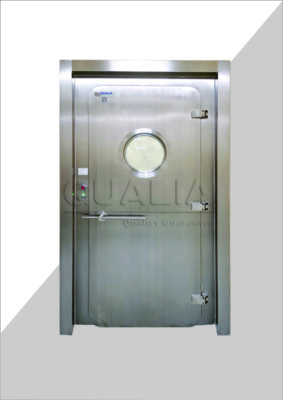
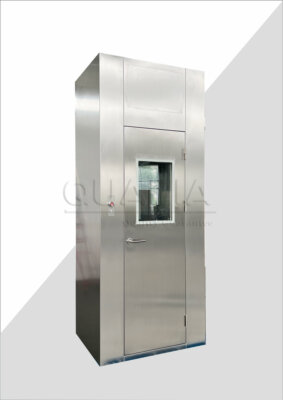
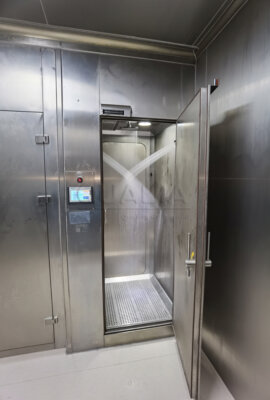
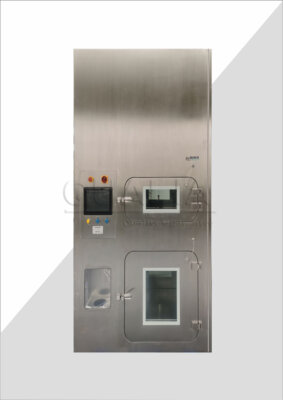
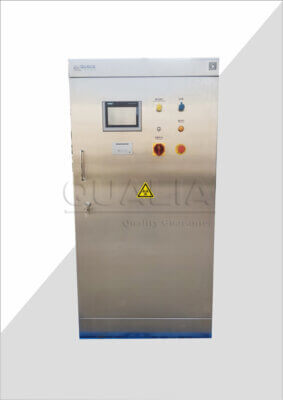
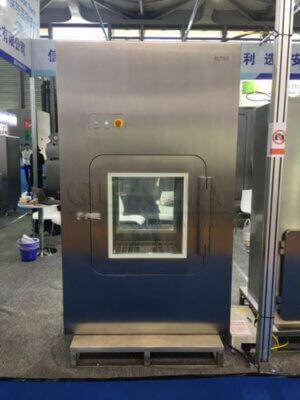
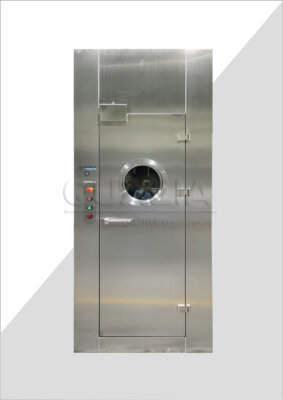
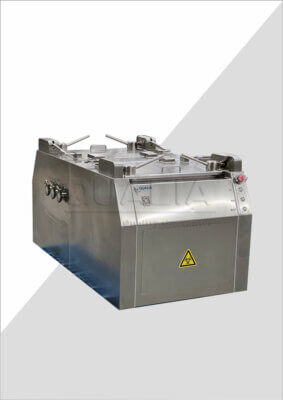
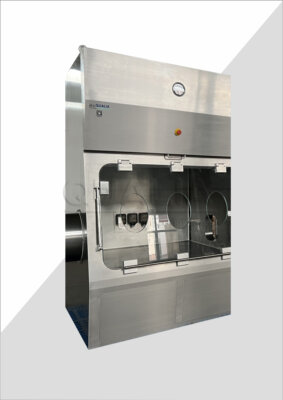
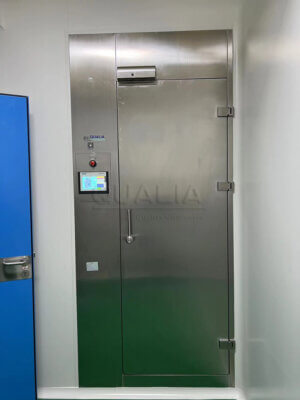
For applications where dunk tank transfer is the primary material entry route into a BSL-3 or high-containment zone, the Qualia Bio Biosafety Dunk Tank is designed with the containment and operational integrity requirements of those environments in mind. Where VHP-based transfer is an alternative or complementary pathway, the VHP Pass Box offers a gas-phase decontamination option with different material compatibility considerations — covered in more detail in the discussion of VHP compatible materials for room decontamination.
The central judgment this article supports is that dunk tank material compatibility is a systems question answered at the component level. The failure modes that create downstream problems — leaking containers on the clean side, unreadable labels breaking traceability, hidden internal degradation in filter assemblies — are rarely caused by the primary container wall material. They originate in gaskets, adhesives, closures, and labels that were never evaluated for full immersion under the specific disinfectant concentration and exposure duration in use.
Before qualifying a container type for repeated dunk tank transfer, confirm that your compatibility records capture each component separately, that your reject criteria include both visible and internal inspection requirements, and that your preparation protocol addresses moisture exposure before transfer — not only the transfer cycle itself. If ethanol compatibility data is incomplete for a component, the methanol-proxy approach offers a risk-reduction path, but it is not a substitute for a reject rule that screens for containers that have already been compromised before they reach the tank.
Frequently Asked Questions
Q: What happens if ethanol-specific immersion data isn’t available for a component in our container assembly before we need to proceed with procurement?
A: Use methanol compatibility as a conservative proxy. Methanol is a more aggressive standard for most elastomers and metals, so a component confirmed compatible with methanol provides a defensible risk-reduction basis when ethanol-specific data is absent. This is a procurement heuristic, not a formal equivalence standard — it does not replace ethanol-specific testing where that data can be obtained, and it does not cover failure modes unique to ethanol rather than shared across alcohol disinfectants.
Q: At what point does a single-cycle compatibility qualification become insufficient for ongoing dunk tank operations?
A: Single-cycle qualification becomes insufficient as soon as the same container type is being run through repeated transfer cycles over weeks or months. Any degradation mechanism identified in one-cycle testing — dye migration, adhesive softening, label separation — should be treated as a cumulative risk factor. For containers carrying labeled product, critical reagents, or materials with traceability requirements, periodic re-inspection of containers that have accumulated transfer cycles is a more defensible approach than treating initial qualification data as permanently valid.
Q: How should a compatibility record be structured if the same container is used with more than one disinfectant across different protocols?
A: Create a separate compatibility entry for each disinfectant-concentration-duration combination rather than a single record per container type. The ethanol-water interaction illustrates why this matters: a record that logs disinfectant type as “ethanol” without capturing working concentration or water content cannot predict corrosion risk on soft metal components such as aluminum, zinc, or brass. Each entry should connect the specific container component, the disinfectant formulation and concentration, immersion duration, and observed post-exposure condition for every component in the assembly.
Q: Is a dunk tank still the right transfer method when containers arrive with uncertain moisture exposure or marginal seal quality from the supply chain?
A: Not without resolving incoming inspection criteria first. A preparation protocol that begins at the point of transfer cannot retroactively correct incompatible material selection or moisture pre-loading that occurred earlier in the supply chain. For applications where dunk tank transfer is the primary material entry route into a high-containment zone, a VHP pass box offers a gas-phase decontamination alternative with a different material exposure profile — which may be preferable for container assemblies with components whose immersion compatibility cannot be confirmed before transfer.
Q: If visible corrosion appears on an aluminum-component container after transfer, does that mean the current transfer created the leak, or that a prior one did?
A: Corrosion on uncoated aluminum is a retrospective indicator, not a real-time warning. Aluminum corrodes only when air and moisture reach the metal through a leak path; in a properly sealed container, disinfectant fluid does not contact uncoated aluminum directly. When corrosion deposits appear, they confirm a prior breach has already occurred. This means the reject record for a corroded container should document what the corrosion implies about the container’s containment history, not only that the visual reject criterion was met — and incoming inspection for aluminum-component containers should include a corrosion check at each receipt, not only at the post-transfer stage.