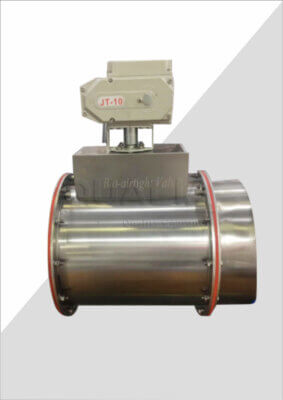


Comparing isolation damper bids on price alone invites trouble, because two proposals that look equivalent on a one-line spec sheet can carry very different evidence, exclusions, and lifecycle obligations. The real comparison question is whether each supplier has disclosed enough about the offered unit, its testing basis, and its scope boundaries to let a buyer rank bids on substance rather than assumption.
Bid inputs needed for a comparable damper proposal
| Bid input | Entry required from each supplier | Comparison decision supported |
|---|---|---|
| Offered configuration | Model and dimensions | Confirms which physical offer is being compared |
| Construction | Materials and seals | Exposes construction differences between offers |
| Actuation and control | Actuator and control details | Aligns the operating and control scope across bids |
| Position and alarm information | Position feedback and alarms | Shows whether monitoring scope is included on the same basis |
| URS alignment | All deviations from the URS | Separates a compliant offer scope from disclosed exceptions |
A damper RFQ response is only comparable to another if both suppliers are describing the same thing at the same level of detail. This sounds obvious, yet the most common failure in bid evaluation is not dishonesty but omission: a supplier answers the question it was asked and says nothing about the dimensions, intended service, or control philosophy that would let a buyer confirm the two offers are addressing the same application.
The baseline requirement is that each supplier identify the offered model and its dimensions, so the buyer knows which physical product is being priced rather than a generic family name. From there, materials and seals matter because they determine how the damper will behave under the process conditions it will actually see — a material or seal choice that works in one installation context may not suit another, and a bid that omits this detail forces the buyer to assume compatibility rather than confirm it.
Actuator and control details belong in the same bundle, because the actuation method and its control interface determine how the damper integrates with the facility’s control system and how it will be operated and monitored once installed. Where a project specifies a particular control architecture or redundancy expectation, the bid needs to state plainly whether the offered actuator and controls meet that expectation or depart from it.
This is where URS alignment becomes the pivot point for comparison. A supplier may offer a fully compliant configuration, or it may offer something that departs from the request in a way that is immaterial, or in a way that changes suitability entirely. The only way to tell the difference is if every deviation from the URS is stated explicitly rather than left for the buyer to infer from a data sheet. A bid that lists no deviations is not necessarily more compliant than one that lists several — it may simply be less forthcoming. Buyers evaluating isolation damper RFQ responses should treat an absence of stated deviations as a question to ask, not a point of comfort, particularly where the offered model is described only by family name rather than by the specific configuration priced.
Drawings, materials, calculations, and component data
| Evidence class | Material to identify in the bid | Use in bid evaluation |
|---|---|---|
| Standard product data | Offered model, materials, seals, actuator, controls, and applicable component data | Describes the supplier’s standard offering basis |
| Project-specific submission | Drawings and calculations identified for the offered project configuration | Supports review of the configured offer rather than the general product alone |
| Supplied-unit evidence | Tests identified for repetition on the supplied unit | Distinguishes future unit-specific evidence from product data and project calculations |
Not all evidence in a damper bid belongs to the same category, and conflating them is one of the more common ways a bid comparison goes wrong. Three distinct classes of information need to be separated before any evaluation begins: what the supplier already knows about its standard product, what has been engineered specifically for this project, and what will still need to be demonstrated once a physical unit exists.
Standard product data covers the offered model, materials, seals, actuator, controls, and the component data that applies generally to that product line. This information exists independent of any particular project and describes the supplier’s baseline offering. It is useful for understanding what the product is, but it does not by itself confirm that the product has been engineered correctly for the specific installation being proposed.
Project-specific submissions are a different matter. Drawings and calculations prepared for the offered configuration show how the standard product has been adapted — or not adapted — to the project’s actual interface, loading, or performance requirements. Where a project has particular ducting geometry, differential pressure requirements, or seismic or structural constraints, the project-specific drawings and calculations are the only evidence that addresses those conditions. Standard product literature cannot substitute for this, because it was not prepared against the project’s requirements in the first place.
The third category is evidence that has not yet been generated: tests identified for repetition on the supplied unit once it exists. This matters because a buyer comparing bids needs to know which performance claims are being made on the basis of product-family data and which will only be confirmed once the specific unit ordered has been built and tested. A bid that blurs this distinction — presenting general product performance as if it were a guarantee for the specific unit — leaves the buyer unable to plan verification activity correctly. Separating these three evidence classes early means the buyer knows, bid by bid, what is already proven, what has been calculated for this project, and what remains to be demonstrated after order placement.
Leakage, actuation, and fail-state test evidence
| Evidence area | Comparison fields | Decision boundary |
|---|---|---|
| Leakage | Leakage method and test condition | Leakage evidence is comparable only when its method and condition are visible |
| Actuation | Actuation evidence, position feedback, and alarms | Confirms what operating and monitoring evidence the bid includes; acceptance values remain project-specific |
| Fail state | Fail-state demonstration | Confirms whether the offered fail state is demonstrated; the required state and acceptance criteria remain project-specific |
Test evidence is where bid comparisons most often break down, not because the numbers differ but because the conditions behind the numbers are never made visible. A leakage figure without its test method and test condition is not comparable to another leakage figure measured under different conditions, even if both numbers look similar on paper. The method determines what is actually being measured, and the condition determines under what pressure, temperature, or configuration state that measurement was taken. Buyers requesting an isolation damper RFQ should treat the method and condition as inseparable from the figure itself — a bid that states a result without stating how and under what condition it was obtained has not actually supplied comparable evidence yet.
Actuation evidence works similarly, though it introduces an additional layer: position feedback and alarm capability. A damper’s actuation evidence shows that it moves and responds as intended, but the buyer also needs to know whether position feedback is included as part of the offer, and whether alarm functions are part of the base scope or a configurable addition. Where a project depends on remote confirmation of damper position for its control or monitoring philosophy, the absence of stated position feedback in a bid is a direct scope gap, not a minor omission. This is distinct from the actual acceptance values a project might require — those remain project-specific and are not something a general bid comparison can resolve on its own.
Fail-state demonstration completes this group, and it carries its own separate logic. A bid should state what fail state the offered damper demonstrates and how that demonstration was conducted. What it should not be expected to state, at the bid stage, is whether that fail state meets the project’s required acceptance criteria — that determination depends on project-specific requirements that sit outside general product evidence. The distinction matters because a supplier can truthfully demonstrate a fail state without that state necessarily being the one the project needs; confirming the match between demonstrated fail state and required fail state is a project-level review step, not something inferable from the test evidence alone.
Exceptions, exclusions, and supplier responsibility matrix
| Scope area | Supplier disclosure | Decision supported before ranking |
|---|---|---|
| URS exceptions | Every deviation from the URS | Identifies where the offer differs from the requested scope |
| Installation interfaces | Included interfaces and boundary assumptions | Identifies the installation scope carried by the offer |
| Documents | Document ownership | Assigns responsibility for the required document set |
| Spares and maintenance | Spares and maintenance-access scope | Exposes lifecycle-support differences between bids |
| Retest support | Included retest support | Shows whether repeat-test support is within the offer |
| Exclusions and site service | All exclusions and site-service assumptions | Prevents hidden scope assumptions from distorting commercial ranking |
Technical comparison only answers part of the bid evaluation question. The other part is responsibility: who owns which deliverable, who carries which installation interface, and what happens if something needs to be retested or serviced after delivery. This is where unstated assumptions cause the most damage, because a commercially attractive bid can conceal gaps that only surface during installation or after the unit is in service.
Every deviation from the URS deserves explicit disclosure, not just the technical ones discussed earlier but any deviation that touches scope, documentation, or responsibility. A bid that is silent on exceptions has either no exceptions or undisclosed ones, and the buyer has no way to distinguish between these two possibilities without asking directly.
Installation interfaces are a frequent source of scope ambiguity. A damper does not exist in isolation — it connects to ducting, structural supports, and control wiring that someone must install and someone must specify. If a bid does not state which interfaces are included in the offer and which are assumed to be provided by others, the buyer cannot know whether the commercial comparison between two bids is even measuring the same scope of supply.
Document ownership deserves the same scrutiny. Qualification and operational documentation does not appear automatically; someone is responsible for producing it, and that responsibility needs to be assigned before the commercial comparison, not negotiated afterward. The same logic applies to spares and maintenance access — a damper that is difficult to service after installation carries a different lifecycle cost than one designed with accessible maintenance points, regardless of what the initial purchase price suggests.
Retest support is particularly easy to overlook at bid stage because it only becomes relevant later, when a unit requires requalification or a deviation needs investigation. A bid that is silent on retest support leaves the buyer exposed to that gap precisely when it matters most. Exclusions and site-service assumptions close out this category: every bid carries implicit assumptions about what is and is not included, and surfacing those assumptions before commercial ranking is the only way to keep the ranking honest. This structured comparison approach — looking across documents, interfaces, and responsibilities rather than price alone — is consistent with the broader logic laid out in high-containment equipment RFQ evaluation practice, where documents, tests, utilities, and supplier responsibilities are treated as a single evaluation set rather than separate conversations.
Acceptance documents to lock before award
| Acceptance document | Point to lock before award | Evidence boundary |
|---|---|---|
| URS | The URS used as the life-cycle reference | The URS defines the project reference; exact equipment acceptance criteria remain project-specific |
| FAT and SAT scope | Which justified FAT evidence applies and what SAT will supplement | FAT may be supplemented by SAT; the exact stages depend on the project |
| Protocols | Predefined acceptance criteria | Criteria must be defined for the project rather than inferred from general cleanroom guidance |
| Deviation record | How protocol deviations will be documented | Records departures from the predefined criteria without itself establishing acceptance |
Once a bid has been technically and commercially evaluated, a separate decision remains: which documents will actually govern qualification and deviation handling after the purchase order is placed. This decision is distinct from bid comparison because it concerns the framework the project will operate under going forward, not which supplier offered the better configuration.
The URS itself functions as a life-cycle reference according to EudraLex Volume 4 Annex 15, meaning it does not stop mattering once the purchase decision is made — it continues to serve as the reference point through qualification and beyond. Locking which version of the URS applies, and confirming that the awarded supplier’s documented deviations are reconciled against it, prevents later disputes about what was actually agreed.
FAT and SAT scope is the next point to fix. Annex 15 describes justified FAT evidence as something that may be supplemented by SAT, which means the buyer and supplier need to agree, before award, on which FAT evidence will be accepted as justified and what SAT activity will supplement it. Leaving this undefined until after the unit is built invites disagreement precisely when schedule pressure is highest.
Protocols require predefined acceptance criteria, again per Annex 15’s framework, and this is a point worth separating clearly from general cleanroom guidance. ISO 14644-4:2022 covers cleanroom design, construction, start-up, and verification considerations across the life cycle, but it does not supply damper-specific design or acceptance criteria. A buyer cannot borrow acceptance thresholds from cleanroom-level standards and apply them to a specific damper’s protocol; the criteria have to be defined for the project itself, with the supplier’s input where the configuration is project-specific.
Finally, how protocol deviations will be documented needs to be settled before award, not improvised during execution. A deviation record does not itself establish acceptance — it exists to document departures from the predefined criteria so the project retains a clear history of what happened and how it was resolved. Where a project’s engineering or procurement team is assembling this acceptance framework, the configuration and test information supplied to Qualia during quotation review becomes part of how that framework gets built, since the documents and criteria locked at this stage depend directly on the configuration confirmed earlier in the bid process. Buyers working through this sequence may find it useful to revisit how URS and RFQ scope interact for high-containment equipment more broadly, since the same separation between requirement, supplier evidence, and validation boundary applies here.
Frequently Asked Questions
Q: Can two isolation damper bids be ranked commercially if their test evidence uses different methods or conditions?
A: Only after those differences are made visible. Record the leakage method, test condition, actuation evidence, fail-state demonstration, feedback, and alarms for each offer, and treat any unmatched basis as a scope exception rather than assuming the results are equivalent.
Q: Should standard product data be accepted as evidence for the configured damper and supplied unit?
A: Do not treat these evidence classes as interchangeable. Label what describes the standard product, what consists of project-specific drawings or calculations, and what testing will be repeated on the supplied unit so each bid makes the evidence boundary clear.
Q: What should the RFQ require when the fail state or an acceptance criterion is still project-dependent?
A: Keep the requirement open and explicit rather than inferring it from general product information. Each supplier should state its offered assumption, the proposed demonstration, and any resulting deviation, while the project defines the required state and predefined acceptance criterion before the applicable test is approved.
Q: How should FAT and SAT responsibilities be divided before award?
A: Identify which justified factory acceptance test evidence will be used, what site acceptance testing will supplement it, who owns each protocol and record, and how deviations will be documented. The exact split should follow the project configuration and acceptance plan rather than a generic cleanroom checklist.
Q: Which scope gaps should be closed before comparing the final commercial offers?
A: Resolve installation interfaces, document ownership, spares, maintenance access, retest support, exclusions, and site-service assumptions. Any unresolved item should remain a visible bid qualification so a lower price is not mistaken for equal scope.