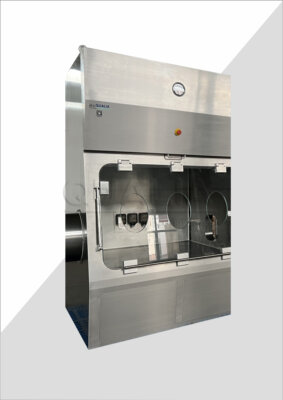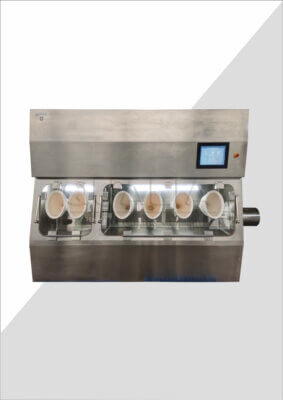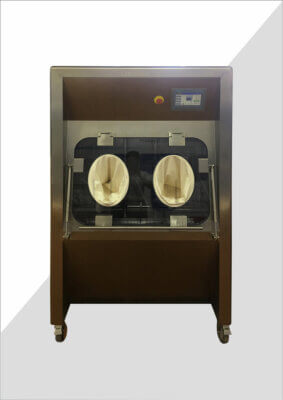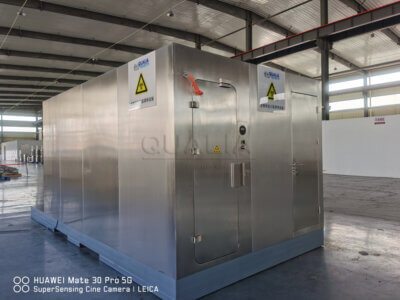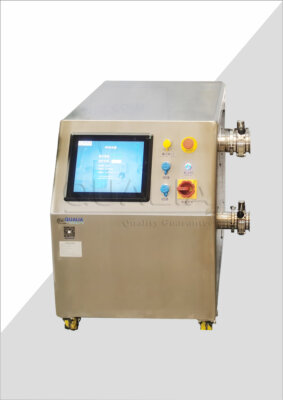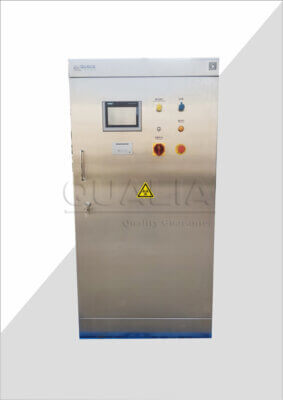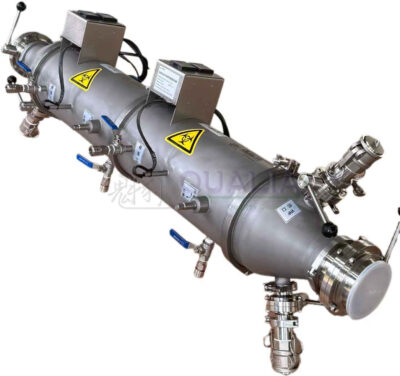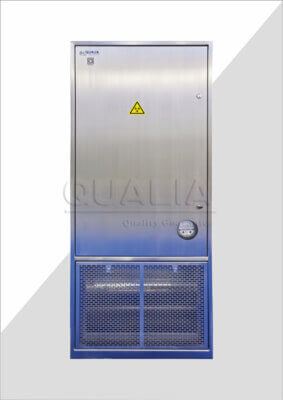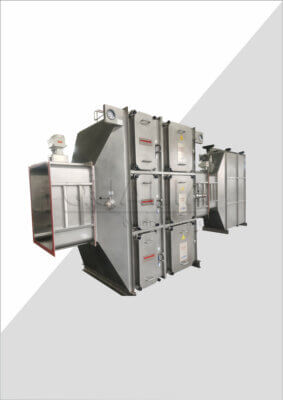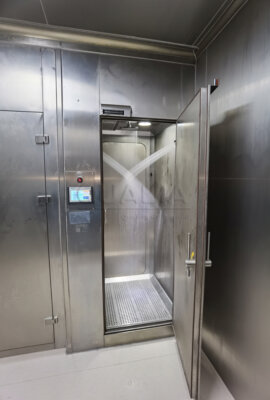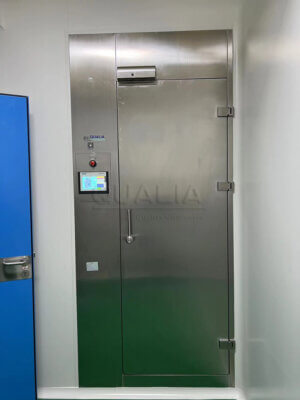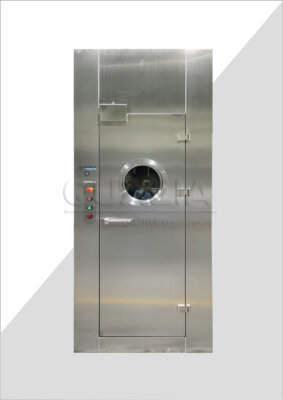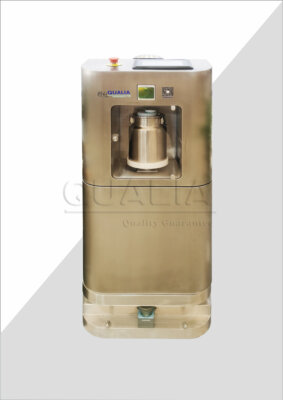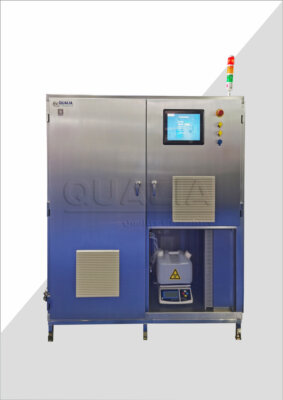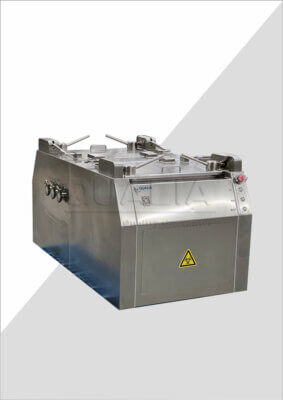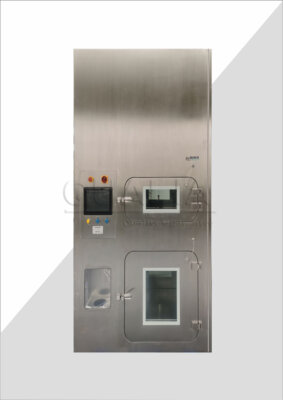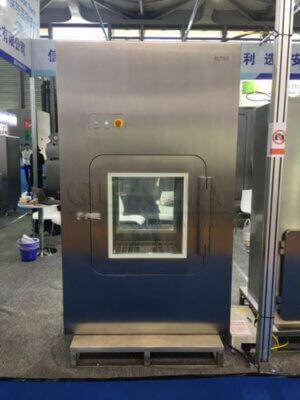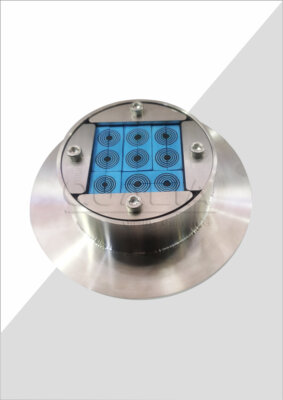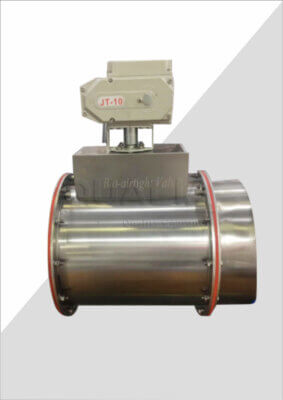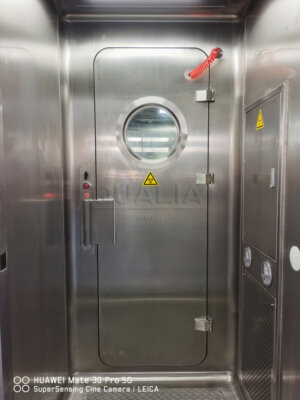

Integrating a double-door autoclave pass-through system with a Class III biosafety cabinet is a critical engineering challenge. It defines the operational workflow and safety envelope for high-containment research. The primary risk is a breach in the containment boundary during material transfer, which can compromise the entire facility’s biosafety integrity. Professionals must navigate complex standards, validate system performance, and design workflows that align with their specific research materials and protocols.
The demand for advanced biocontainment is accelerating, driven by pandemic preparedness and high-consequence pathogen research. This integration is no longer a niche specification but a core requirement for modern BSL-3+ and BSL-4 facilities. Selecting and validating the right connection method has long-term implications for research flexibility, throughput, and regulatory compliance.
Core Principles of Class III BSC and Pass-Through Integration
The Engineered Vacuum: Foundation of Containment
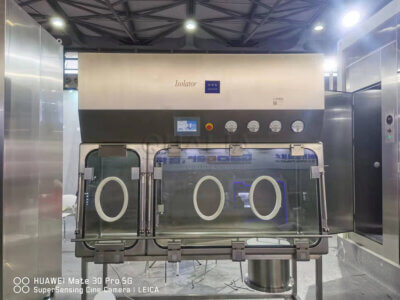
A Class III BSC operates on the principle of constant negative pressure, maintained at approximately 0.5″ water gauge. This engineered vacuum, powered by an independent exhaust system, ensures inward airflow through any potential breach, including glove ports and pass-through connections. All supply and exhaust air is HEPA-filtered, with exhaust often passing through two filters in series. The cabinet is a gas-tight, sealed enclosure, making it a “laboratory within a laboratory.” Its integrity is absolute, and any penetration for a pass-through system must maintain this sealed environment without compromise.
The Pass-Through as a Critical Barrier
Integrating a double-door autoclave or dunk tank directly into the cabinet wall transforms a standalone workbench into a self-contained experimental suite. This connection creates a physical and procedural barrier where materials can only enter or exit after validated decontamination. The pass-through is not merely an accessory; it is an extension of the cabinet’s primary containment boundary. Its design, interlocking mechanisms, and validation protocols must be as rigorous as those for the BSC itself to prevent pathogen release. Industry experts recommend treating the integrated system as a single biocontainment module during the design and validation phases.
Strategic Implications for Facility Design
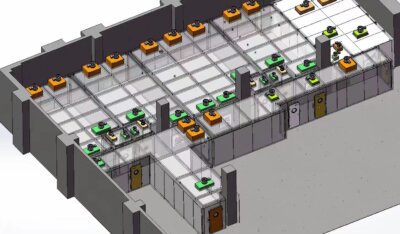
This integration dictates broader facility architecture. The laboratory must feature a sealed internal shell, dedicated non-recirculating ventilation, and treated effluent systems. All penetrations for utilities and the pass-throughs must be permanently sealed. The negative pressure cascade is paramount; a loss of this vacuum represents an immediate containment failure. In our experience, the trend is toward procuring an integrated biocontainment module from a vendor with strong in-house engineering capabilities, rather than attempting to piece together components from different suppliers.
Primary Connection Method: The Double-Door Pass-Through Autoclave
Operational Workflow and Batch Processing
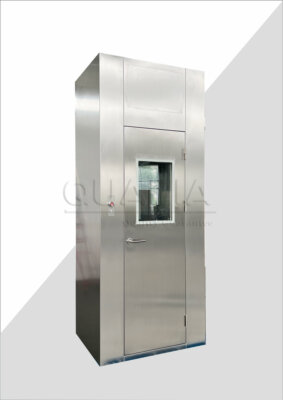
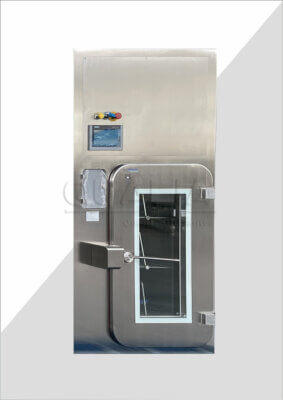
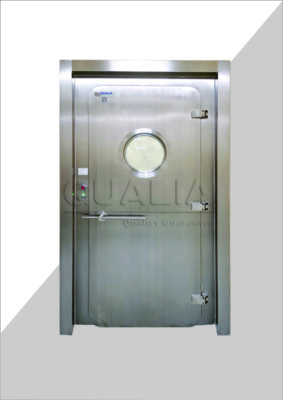
The double-door pass-through autoclave is the principal method for material transfer, fundamentally shaping laboratory workflow through sequential, batch-based operations. Contaminated items are placed inside from the cabinet interior, the interior door is sealed, and a validated sterilization cycle runs. Only upon cycle completion does the control system unlock the exterior door for safe removal. This method dictates that all transfers are planned in batches, impacting experimental timing and requiring meticulous procedural discipline. Vapors generated during the cycle must be HEPA-filtered before release to prevent environmental contamination.
Critical Design Safeguards and Material Constraints
The system’s safety hinges on engineered safeguards. Door interlocks prevent both doors from opening simultaneously, ensuring the containment boundary is never broken. The autoclave is sealed directly into the cabinet wall with an airtight gasket (bioseal), the integrity of which is validated against standards like ISO 10648-2 Containment enclosures. This standard provides the classification and test methods for leak tightness, directly relevant to validating this critical seal. A key, often overlooked detail is material compatibility; this method is only suitable for heat- and moisture-tolerant items, limiting experimental planning flexibility.
The following table outlines the key parameters and operational impacts of this primary connection method.
| Feature | Key Parameter / Safeguard | Operational Impact |
|---|---|---|
| Door Interlock | Prevents simultaneous opening | Maintains containment boundary |
| Sterilization Cycle | 121°C for validated duration | Batch-based material transfer |
| Vapor Management | HEPA-filtered exhaust | Prevents environmental release |
| Material Compatibility | Heat- and moisture-tolerant only | Limits experimental planning flexibility |
Source: ISO 10648-2 Containment enclosures — Part 2: Classification according to leak tightness and associated checking methods. This standard provides the classification and test methods for leak tightness, directly relevant to validating the airtight bioseal and gasket integrity of the pass-through autoclave connection to the Class III BSC.
Secondary Connection Method: The Chemical Dunk Tank
Enabling Transfer of Sensitive Materials
For materials incompatible with steam sterilization—such as sensitive electronics, certain plastics, or heat-labile reagents—a chemical dunk tank provides an essential alternative decontamination barrier. This stainless-steel tank, mounted through the cabinet wall and filled with a liquid disinfectant, creates a permanent liquid seal. It enables more fluid, on-demand transfers compared to the batch-process nature of the autoclave. However, this operational flexibility comes with its own set of stringent management requirements and relies entirely on chemical efficacy.
Management Requirements and Procedural Reliance
The dunk tank’s effectiveness is not automated. Disinfectant concentration must be routinely verified and maintained through rigorous titration or test strip protocols. Items must be fully immersed for a validated contact time, which requires manual handling and timing. This method underscores that pass-through design is a strategic workflow decision. The choice of a secondary method directly determines what materials can be safely utilized within the high-containment environment and imposes specific procedural overhead on laboratory staff.
The specifications for a chemical dunk tank highlight its critical requirements and inherent constraints.
| Component | Critical Requirement | Constraint / Consideration |
|---|---|---|
| Disinfectant Concentration | Routinely verified and maintained | Relies on chemical efficacy |
| Contact Time | Validated immersion period | Manual handling required |
| Material Compatibility | Sensitive electronics, heat-labile items | Enables on-demand transfers |
| Physical Seal | Permanent liquid barrier | Stainless-steel tank construction |
Source: Technical documentation and industry specifications.
Note: Unlike the autoclave, this method allows fluid transfers but imposes chemical management constraints.
Safety, Validation, and Compliance for Pass-Through Systems
Rigorous Validation and Certification Regimens
The integrity of pass-through systems is governed by non-negotiable validation and compliance protocols. Prior to operational use, the entire integrated system must undergo rigorous physical and biological validation to prove decontamination efficacy. Annual re-certification by qualified personnel is mandated by standards such as NSF/ANSI 49 Biosafety Cabinetry. This includes HEPA filter leak testing, autoclave biological indicator (BI) challenges, and dunk tank disinfectant verification. This standard establishes the fundamental requirements for the field certification of all biosafety cabinets, making it the cornerstone of operational compliance.
Managing Critical Risks and Operational Downtime
A persistent operational risk is glove integrity. Protocols for emergency glove replacement while the cabinet is contaminated are essential and require extensive, hands-on training. Furthermore, any internal maintenance necessitates a full gaseous decontamination (e.g., with paraformaldehyde) of the entire BSC and its connected pass-throughs. This lengthy process, validated with biological indicators, defines maintenance cycles and creates significant downtime. Scheduling this decontamination is a major project management concern that directly impacts research timelines and requires careful resource planning.
The following framework outlines the key activities and their consequences for system safety and continuity.
| Activity | Frequency / Standard | Consequence / Downtime |
|---|---|---|
| Full System Validation | Prior to operational use | Proves decontamination efficacy |
| Annual Re-certification | Mandatory by qualified personnel | Includes HEPA leak testing |
| Gaseous Decontamination | Before internal maintenance | Lengthy process; significant downtime |
| Glove Integrity Check | Continuous operational risk | Requires emergency replacement protocols |
Source: NSF/ANSI 49 Biosafety Cabinetry: Design, Construction, Performance, and Field Certification. This is the governing standard for biosafety cabinet performance and field certification, mandating the annual re-certification, HEPA filter testing, and validation protocols essential for safe pass-through system operation.
Key Design and Engineering Considerations for Secure Integration
Facility-Wide Architectural Demands
Secure integration extends far beyond the cabinet itself to the entire facility architecture. The laboratory housing a Class III BSC must be a sealed envelope. This requires dedicated, non-recirculating ventilation with redundant exhaust fans, treated effluent systems for waste decontamination, and a structural shell that can maintain pressure differentials. All penetrations for utilities, electrical conduits, and the pass-throughs themselves must be permanently sealed with epoxy or welded fittings. The performance of the integrated ventilation can be conceptually evaluated using methodologies akin to ANSI/ASHRAE 110 Method of Testing Performance of Laboratory Fume Hoods, which provides quantitative test methods for containment verification.
The Shift to Integrated Biocontainment Modules
The trend toward integrating custom equipment—like bioreactors or microscopes—directly into cabinet supply lines favors manufacturers with strong in-house engineering and fabrication capabilities. This shift means procurement is less about buying a standalone cabinet and more about designing an integrated biocontainment module. It requires close collaboration between the facility planners, researchers, and the vendor from the earliest design stages. This approach demands significant capital planning but results in a more reliable and validated turnkey system.
The integration of a Class III BSC imposes specific design principles that must be mirrored in the facility’s infrastructure.
| System Element | Design Principle | Facility Integration Requirement |
|---|---|---|
| Cabinet Pressure | Constant negative pressure (~0.5″ w.g.) | Redundant, fail-safe exhaust systems |
| Laboratory Shell | Sealed internal construction | Dedicated non-recirculating ventilation |
| All Penetrations | Permanently sealed | Treated effluent systems required |
| Custom Equipment Integration | Favors in-house engineering | Transforms procurement to module design |
Source: ANSI/ASHRAE 110 Method of Testing Performance of Laboratory Fume Hoods. While for fume hoods, this standard’s quantitative methodologies for testing containment and airflow are conceptually critical for verifying the engineered negative pressure cascade and containment integrity of the integrated BSC and facility.
Operational Workflows and Material Transfer Protocols
Protocol-Driven Material Handling
Operational workflows are rigidly defined by the chosen pass-through methods. For autoclave transfer, the process is a locked sequence: load, seal, sterilize, verify, unlock. For dunk tank transfers, the protocol mandates verified concentration, timed immersion, and careful retrieval. All activities require strict material tracking via logbooks that record item details, entry/exit times, and cycle validation data. These procedures are not guidelines but mandatory steps to maintain the validated state of the containment system. Any deviation introduces unquantified risk.
Managing Specialized Research and Emergencies
Conducting specialized research, such as aerobiology studies involving aerosol generation within the cabinet, imposes substantial procedural overhead. This includes pre-characterizing particle generation, implementing real-time environmental monitoring inside the cabinet, and performing complex dose calculations. We have observed that this ancillary work can effectively double experimental timeframes and requires adjusted resource planning from the outset. Furthermore, emergency systems—including backup power for exhaust fans, pressure alarm systems, and spill containment protocols—are critical to support these workflows during unforeseen events.
Maintenance, Certification, and Contingency Planning
Proactive Regimens and Redundancy Planning
Proactive maintenance and contingency planning are vital for sustained, safe operation. The annual certification regimen is a fixed operational cost and timeline. Contingency plans must address immediate threats like glove breaches with clear, practiced protocols for safe replacement using sealed glove port assemblies. More significantly, planning must account for the extensive downtime required for major interventions, such as HEPA filter changes or internal repairs. The lengthy gaseous decontamination process needed before any internal access directly impacts research continuity.
The Impact of Digital Integration
The evolution toward digitally integrated systems with programmable logic controller (PLC) and human-machine interface (HMI) controls introduces new layers of consideration. For applications in advanced therapeutic manufacturing, these systems may need to meet data integrity standards like 21 CFR Part 11. This shift makes cybersecurity, audit trails, and electronic signature protocols critical concerns alongside physical containment. It also affects maintenance, requiring software validation and IT support as part of the certification scope.
A disciplined approach to maintenance and contingency is essential to mitigate operational risks.
| Task | Key Consideration | Impact on Research |
|---|---|---|
| Annual Certification | Non-negotiable regimen | Sustains safe operation |
| Glove Breach Response | Practiced emergency protocols | Immediate threat mitigation |
| Major Maintenance | Requires gaseous decontamination | Directly impacts continuity |
| Redundant Capacity Planning | Avoids total operational stoppage | Mitigates lengthy downtime |
Source: Technical documentation and industry specifications.
Selecting and Validating the Right System for Your Facility
Vendor Selection as a Strategic Partnership
Selecting a pass-through system is a long-term strategic decision. The evaluation must extend beyond cabinet specifications to assess the vendor’s capability as a system integrator. The ideal partner can provide a seamless, validated turnkey solution, offering in-house engineering for custom penetrations, utility interfaces, and control system integration. The choice between an autoclave, dunk tank, or a combination must be driven by a clear analysis of the research portfolio’s material needs and throughput requirements. For facilities handling diverse material types, a robust double-door pass-through autoclave system often forms the non-negotiable core of the transfer strategy.
The Validation Lifecycle and Future Trends
Validation is a two-phase commitment: initial installation qualification (IQ), operational qualification (OQ), and performance qualification (PQ) of the installed system, followed by ongoing annual re-validation. Looking forward, increasing global investment in high-containment research is driving demand for standardized, pre-fabricated modular BSL-4 units to reduce complex, lengthy construction timelines. For collaborative multi-site research, compatibility in transfer methods—such as standardized Rapid Transfer Port (RTP) designs—will become crucial. This suggests that future-proofing a facility requires considering not just current standards but emerging international norms for pass-through technology.
The core decision points are the integrity of the containment boundary, the alignment of transfer methods with research materials, and the vendor’s integration competency. Validation is not a one-time event but a recurring lifecycle cost. Need professional guidance on designing and validating a secure high-containment integration for your facility? The engineering team at QUALIA specializes in turnkey biocontainment solutions tailored to complex research and manufacturing protocols. For specific project inquiries, you can also Contact Us.
Frequently Asked Questions
Q: What are the critical engineering safeguards for a double-door pass-through autoclave connected to a Class III BSC?
A: The primary safeguards are a permanent, airtight bioseal at the cabinet wall and a door interlock system that physically prevents both doors from opening at the same time. The autoclave’s control logic must only release the exterior door after a validated steam sterilization cycle is complete, and exhaust vapors require HEPA filtration. This means your facility must treat the autoclave as an integral part of the containment boundary, not just a sterilizer, and validate its control logic and seals to standards like ISO 10648-2.
Q: How do you choose between an autoclave and a dunk tank for material transfer into a Class III BSC?
A: The choice is a strategic workflow decision dictated by your research materials. The autoclave is for batch transfer of heat- and moisture-tolerant items, while the dunk tank is essential for on-demand transfer of sensitive electronics or other steam-incompatible gear. This means facilities with a diverse research portfolio requiring both types of materials should plan for and validate both systems, as the secondary method directly determines your experimental capabilities within the containment zone.
Q: What validation and compliance protocols are mandatory for an integrated pass-through system before use?
A: Before operational use, the entire integrated system must undergo rigorous physical and biological validation to prove decontamination efficacy. Annual re-certification is mandatory and includes HEPA filter leak testing, autoclave biological indicator challenges, and verification of dunk tank disinfectant concentration. This defines a non-negotiable maintenance cycle, so you must schedule and budget for this annual downtime, which will directly impact research continuity and project timelines.
Q: What facility infrastructure is required to safely support a Class III BSC with integrated pass-throughs?
A: The laboratory must be a sealed internal shell with dedicated, non-recirculating ventilation featuring redundant exhaust fans and treated effluent systems. All utility penetrations and the pass-through seals must be permanently airtight to maintain the critical negative pressure cascade. This means your procurement shifts from buying a cabinet to designing an integrated biocontainment module, requiring close collaboration with vendors who have strong in-house engineering capabilities and significant upfront capital planning.
Q: How does integrating a pass-through autoclave fundamentally change laboratory workflow?
A: It imposes a sequential, batch-based operational model. Workflow requires placing items inside, sealing the interior door, running a full validated sterilization cycle, and only then unlocking the exterior door for removal. This dictates that experimental planning must account for this sterilization lag time, mandating rigorous procedural discipline and material tracking via logbooks to maintain both safety and experimental integrity.
Q: What are the key contingency plans needed for maintaining a Class III BSC with pass-throughs?
A: You must have clear, practiced protocols for immediate threats like glove breaches, including safe replacement procedures while the cabinet is contaminated. More extensive planning must account for the lengthy gaseous decontamination (e.g., with paraformaldehyde) required before any internal maintenance, which creates significant downtime. This often necessitates investing in redundant cabinet capacity to avoid a total stoppage of research operations during these mandatory interventions.
Q: What should we prioritize when selecting a vendor for a Class III BSC and pass-through system?
A: Evaluate the vendor’s capability as a system integrator to provide a seamless, validated turnkey solution, not just their cabinet specifications. The choice between autoclave and dunk tank must align with your research portfolio’s material needs. This means your selection process should heavily weigh the vendor’s in-house engineering support for secure integration and their proven track record in executing the two-phase validation process: initial qualification and ongoing re-validation.
Related Contents:
- Biosafety Cabinet Sizes: Finding the Perfect Fit
- Biosafety Cabinet Installation: What You Need to Know
- Class III Biosafety Cabinet vs Class II BSC: 12 Critical Differences for BSL-3 and BSL-4 Containment Selection
- When to Upgrade from Class II to Class III Biosafety Cabinet: BSL-4 Risk Assessment Criteria
- Biosafety Cabinet Cleaning: Step-by-Step Guide
- Biosafety Cabinet Operation: Essential Training Guide
- Class III Biosafety Isolators: Ultimate Protection
- BSL-4 Suit vs Cabinet Labs: Design Comparison
- Biological Safety Cabinet Selection for BSL 2/3/4 Labs: Class I, II, III Comparison & NSF/ANSI 49 Compliance Requirements