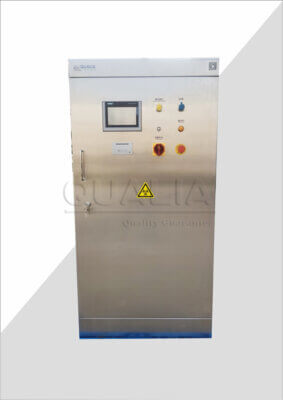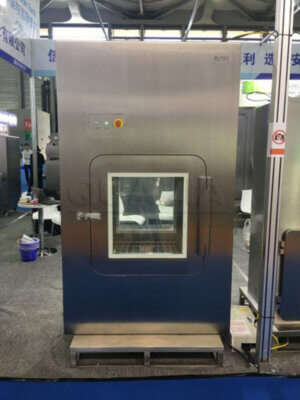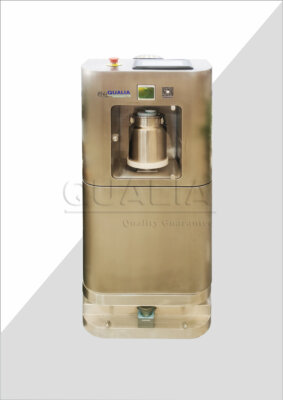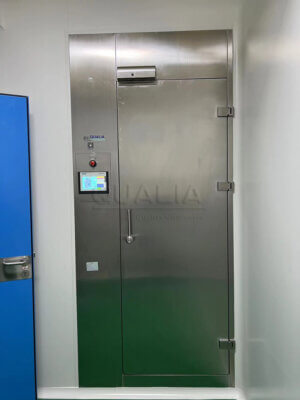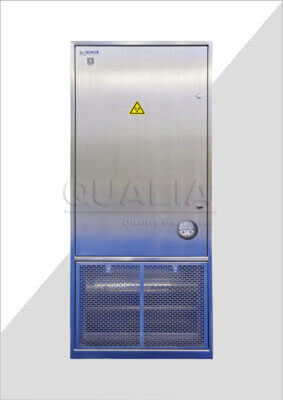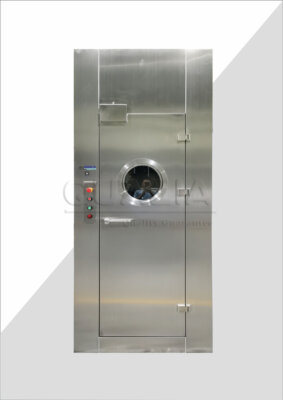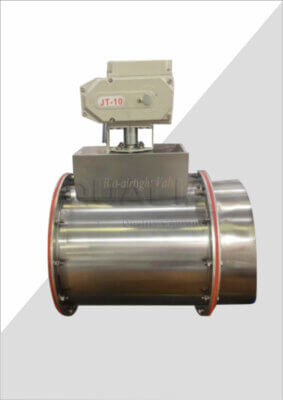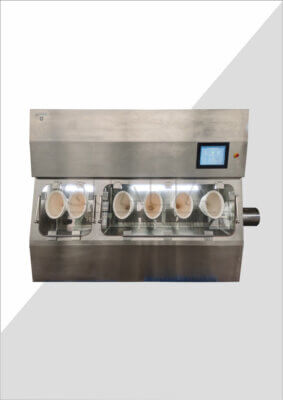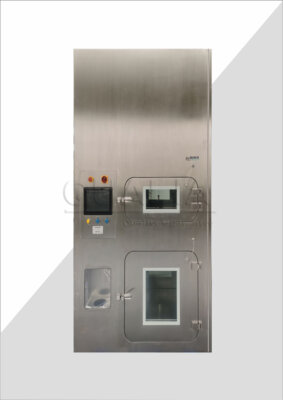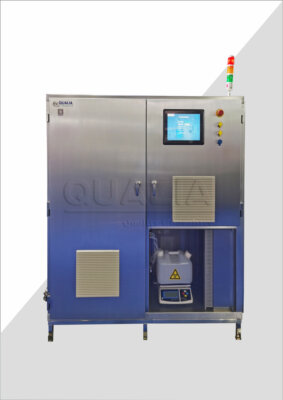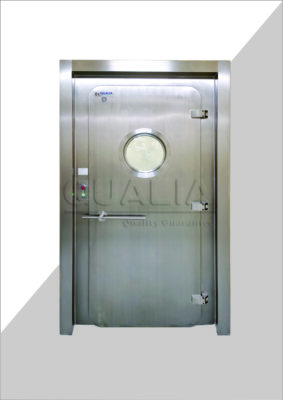


Every vision panel edge, hinge barrel, latch body, handle mount, and wall-penetration fastener is part of the sealing boundary of a pass box, not a separate design question. When those components are sourced or drawn separately from the door assembly that carries them, the combined boundary can be unowned in the contract—and the gap only appears at installation or during qualification. The practical rule is straightforward: before approving any pass box configuration, request a single assembly drawing that shows each component in its installed relationship and a component schedule that lists every item by the configuration actually being purchased.
Define the Complete Door Assembly
The door assembly is the smallest unit that makes a testable claim about the sealing boundary. A door panel, a vision panel, the frame that holds the glass, the hinges that carry the door, the latch and handle that compress the seal, and any fasteners or mounting plates that penetrate the door skin or the adjacent wall are all part of that unit. Each one touches either the pressure boundary, the cleaning environment, or both.
A common mistake in procurement is treating the vision panel and the hardware as catalogue additions that can be substituted freely once a pass box model is selected. In practice, the glass-to-frame joint, the frame-to-door joint, and the method used to set compression at the latch point are all load-bearing design decisions. The supplier’s performance claim—whether expressed as a leak rate, a pressure-hold result, or a cleanroom classification—applies to a specific arrangement of those elements, not to the door panel alone.
Related Products
- Biosafety Pass Box — Use the relevant assembly listing to start a configuration-specific RFQ; seal type, hardware, utilities, spares and service scope require an itemized response.
The assembly drawing defines scope; the component schedule defines what was actually purchased. Both are needed before the boundary claim means anything.
When a quotation lists a vision panel under a separate catalogue reference from the door, ask for the complete offered assembly drawing before accepting the offer. The drawing should show how the panel, its frame, and its sealing interfaces connect to the door structure. If that drawing does not exist in the offer, the assembly has not been fully defined, and the boundary claim cannot be evaluated.
Identify Vision-Panel and Hardware Interfaces
Each component that sits at the boundary introduces an interface that must be identified, described, and covered by evidence.
Vision panels introduce at least two critical interfaces: the joint between the glass or polycarbonate pane and the frame that retains it, and the joint between that frame and the door panel itself. Projects increasingly ask for a formal identification of both interfaces in the supplier drawing request, because the assembly claim should cover the scope the buyer is relying on—not a simplified representation of the door. The request should name the panel, the frame, and each associated sealing element explicitly.
Identify Vision-Panel and Hardware Interfaces: Buyer Review Matrix
| Assembly element | Document question | Configuration issue exposed |
|---|---|---|
| Vision panel | Which panel, frame and sealing interfaces are included? | Scope of the assembly claim |
| Hinges and latches | Which revision is in the offered assembly? | Changes from the represented configuration |
| Contacted hardware | Which materials enter the compatibility response? | Components beyond the main seal |
| Optional item | Is the selected option in the final schedule? | Catalogue illustration versus purchased option |
Hinges and latches interact with the boundary differently from the panel, but they are no less important. A hinge barrel that flexes the door skin with every cycle loads the perimeter seal at the pivot corners. A latch that is under-specified for the door weight will not deliver the compression the seal needs. When hinges or latches change during the quotation process—because a supplier substitutes a component, responds to a weight change, or proposes an alternative finish—the original evidence on file may describe a different arrangement. At that point, ask for the revised assembly reference and an explicit statement from the supplier on whether the previous evidence remains applicable to the new configuration, or whether new evidence is needed.
Hardware that contacts the cleaning environment is a material question, not only a mechanical one. Handles, latch bodies, hinge pins, and fastener heads exposed to VHP cycles or liquid disinfectants must be compatible with those agents over the cleaning frequency expected in service. Consider a project where a stainless-steel door assembly is paired with a latch mechanism that includes a zinc alloy component the buyer assumed was covered by the general material specification. If that component is not listed in the material evidence request, its compatibility is unverified. The request should include every component that will be wetted, gassed, or wiped, not only the main seal material.
The wall transition—where the pass box housing meets the room partition—is a boundary element that is sometimes overlooked because it falls between the pass box scope and the construction scope. The joint at that transition affects the pressure integrity of the room, and the method of sealing it must appear in someone’s drawing. That point connects directly to the question of drawing ownership, addressed in the next section.
Request Assembly-Matched Evidence
Evidence is only useful when it matches what is being purchased, and the most common gap is a test report that describes a configuration the buyer never confirmed was the offered one.
When requesting evidence, start from the assembly drawing. Each item of evidence—whether it is a material compatibility statement, a pressure-hold or leak-test result, or a cleaning-agent resistance assessment—should be traceable to the specific assembly identified in that drawing. If the supplier submits a report from a previous project or a type-tested arrangement, ask whether the door geometry, panel size, hinge count, latch type, and hardware finish in that report match the offered configuration. A mismatch does not automatically invalidate the evidence, but it must be assessed and documented rather than assumed away.
Evidence that cannot be tied back to the offered assembly is a placeholder, not a qualification record.
Optional hardware items require particular care. When a supplier proposes an optional item—an integrated indicator light, a solenoid interlock, a secondary handle—that item should be identified in the final configuration schedule so the buyer can distinguish the purchased assembly from an illustrative catalogue arrangement. An optional item that appears in a photograph but not in the drawing or schedule creates ambiguity about what the evidence covers.
The evidence package for a pass box sealing boundary typically needs to cover at minimum: the door seal material and its compatibility with cleaning agents, the vision panel retention and its sealing interfaces, the hinge and latch performance at the design load, and any fastener or penetration sealed into the wall transition. Projects that require qualification documentation—IQ, OQ, or factory acceptance testing—benefit from assembling this evidence request during the design review stage, before manufacturing begins, so that any gap can be resolved without a schedule impact.
Related Reading
- URS for High-Containment Equipment: What QA, Engineering and Procurement Should Define Before RFQ — Prepare the complete assembly requirement before comparing component lists.
- How to Compare High-Containment Equipment Suppliers by URS Response Quality and Evidence Scope — Compare configuration identity and applicability statements across offers.
- Installation Qualification for Containment Equipment: Drawings, Utilities, Calibration and As-Built Checks — Retain the selected assembly schedule in the installation-document discussion.
Coordinate Substitutions and Drawing Ownership
Drawing ownership is a contract question that should be settled before procurement, not discovered during installation. When a pass box is supplied by one company and the vision panel is sourced from a second supplier, or when the door hardware is a specified-in item from a third catalogue, the complete assembly as installed may not be represented in any single document. Each supplier can accurately say that their component is documented, while the combined boundary is owned by no one.
The allocation rule is simple: one party in the contract must own the combined drawing and the document package that covers the installed assembly. That party is usually the pass box supplier, because the pass box frame, door, and wall-transition design are within their scope. When a different arrangement is commercially necessary, the contract must name the responsible party explicitly and define what the deliverable looks like.
Substitutions during manufacturing are the moment when drawing ownership matters most in practice. When a hinge is changed because a preferred source is unavailable, or when a latch is upgraded to meet a buyer-specified finish, the assembly reference must be updated. A substitution that is not reflected in a revised drawing means the installed equipment differs from the documented configuration, which creates a problem at commissioning and a larger problem at any subsequent audit. The buyer’s project team should require that any substitution trigger a revised assembly reference and, where the change affects evidence applicability, a statement from the supplier on what that revision means for the existing evidence package.
This applies equally to wall-transition seals and penetration details. If the construction contractor fills the gap between the pass box housing and the partition using a method not shown in the pass box supplier’s drawing, the pressure boundary at that joint is defined by site practice rather than design. Projects that require a documented pressure boundary—biosafety containment installations and GMP cleanroom separations both qualify—should include the wall-transition detail in the scope of the pass box supplier’s drawing, even if the physical installation is performed by a different trade.
Coordinate these questions before design freeze. The drawing package you need to approve the pass box boundary is the same package you will need to close out qualification: an assembly drawing that shows all components in their installed relationship, a component schedule that identifies each item by the configuration purchased, and evidence that is traceable to that configuration. Having that package defined as a contractual deliverable, rather than assembled after the fact, is what separates a smooth commissioning from a delayed one.
References
- EU GMP Annex 1 – Manufacture of Sterile Medicinal Products (2022) — Use the sterile-manufacturing contamination-control context to identify equipment and site interfaces for review; it supplies no project-specific pass box or cRABS acceptance values.
- EudraLex Volume 4 Annex 15 – Qualification and Validation — Distinguish supplier documentation from project qualification and acceptance decisions; reported conditions and deviations remain specific to the represented system.
- ISO 14644-7:2004 Separative Devices — Frame separative-device requirements and customer–supplier questions within the standard’s verified summary scope; detailed clauses and equipment limits are outside this summary.
- WHO Laboratory Biosafety Manual 4th Edition (Core Document) — Put the laboratory use and risk-assessment basis ahead of a generic equipment label; this summary is not a door specification or a facility approval.
Frequently Asked Questions
Q: How should procurement handle several hardware options in one quotation?
A: Require a base assembly and separately identified options with their own price and document references. This prevents the buyer from comparing a fully equipped offer with a base price that excludes the chosen items.
Q: What if the building layout is still provisional when door hardware is selected?
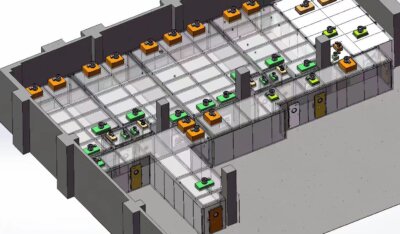
A: Identify which surrounding dimensions remain provisional and which hardware decision depends on them. Keep the dependent option conditional rather than treating an illustrative layout as a confirmed project input.
Q: Can cosmetic option names be used as the final ordering description?
A: Keep the supplier’s traceable option or component reference alongside any descriptive name. A readable name helps discussion, while the controlled reference lets the purchasing record distinguish the ordered item from another catalogue option.