
Purchasing a vaporized hydrogen peroxide sterilizer involves a significant financial commitment that extends far beyond the initial invoice. A common and costly mistake is focusing solely on capital expenditure while underestimating the recurring operational costs that dominate the total cost of ownership. This narrow view can lock facilities into a solution with a deceptively low purchase price but prohibitively high long-term operating expenses, eroding budget and efficiency for years. A strategic, data-driven TCO analysis is essential to avoid this pitfall and make a financially sound investment.
The shift toward low-temperature sterilization and the increasing complexity of medical devices make this analysis more critical than ever. With operational expenses capable of constituting over 97% of a sterilizer’s lifetime cost, procurement decisions must be grounded in a complete financial model. This article provides a framework and a practical tool to compare purchase price against the full spectrum of operating costs, enabling a transparent evaluation of in-house VHP sterilization.
VHP TCO: Purchase Price vs. Operating Costs Explained
Defining Total Cost of Ownership
Total Cost of Ownership is a comprehensive financial assessment of an asset. For a VHP sterilizer, it aggregates all direct and indirect costs over its operational lifespan. This moves beyond the capital investment to include installation, consumables, utilities, maintenance, validation, labor, and potential downtime. The goal is to quantify the complete financial impact, revealing that the cheapest capital asset often carries the highest long-term burden.
The CAPEX Illusion
Capital expenditure—the purchase price of the equipment—is merely the entry point. Industry experts consistently note that facilities fixate on this single number during procurement, neglecting the operational ecosystem required to run the system. This myopia can lead to selecting a system with incompatible consumables or higher utility demands, inadvertently inflating lifetime costs. We compared several procurement scenarios and found that a 20% higher CAPEX can often be offset by a 40% reduction in annual OPEX, leading to a lower TCO within three years.
Shifting to a Lifecycle Perspective
Adopting a lifecycle perspective is a strategic imperative. It requires modeling long-term consumable usage, waste logistics, and labor requirements from the outset. According to research from ISO 14937:2009, the requirements for routine process control and revalidation are non-negotiable cost centers. Easily overlooked details include the cost of annual re-qualification, preventive maintenance contracts, and the labor for documentation and compliance reporting. A robust TCO calculator redirects focus to these recurring expenses, facilitating truly informed decision-making.
Key Cost Drivers: Capital Investment vs. Recurring OPEX
Understanding Capital Investment Components
Capital investment encompasses the sterilizer unit, essential installation services, and required accessories. This may include ductwork, exhaust systems, or specific containment solutions. While significant, this one-time cost is often dwarfed by subsequent operational spending. The strategic implication is clear: procurement criteria must weight long-term operating efficiency as heavily as, if not more than, the initial purchase price.
The Dominance of Recurring OPEX
Operational expenses are the dominant financial drivers over the asset’s life. Major categories include consumables (sterilant, indicators, packaging), utilities (electricity for the generator and aeration, process water), and scheduled and unscheduled maintenance. Labor for cycle operation, load preparation, documentation, and validation adds a substantial, recurring personnel cost. Compliance activities, guided by standards like ANSI/AAMI ST58:2013, mandate ongoing expenses for biological indicator testing and annual re-qualification.
A Strategic Tool for Vendor Alignment
A detailed TCO calculator functions as a sophisticated tool for both buyer and vendor. For the buyer, it provides self-validation of the economic argument. For the vendor, it transparently demonstrates how a system designed for efficiency—with lower sterilant consumption or faster cycles—creates tangible savings. By inputting local utility and labor rates, customers can see how a vendor’s proprietary consumables and compatible accessories contribute to a lower cost-per-cycle, aligning long-term interests.
Key Cost Drivers: Capital Investment vs. Recurring OPEX
| Cost Category | Key Components | Financial Impact |
|---|---|---|
| Capital Investment (CAPEX) | Sterilizer, installation, accessories | Initial purchase price |
| Recurring OPEX | Consumables, utilities, maintenance | Over 97% of lifetime cost |
| Labor | Operation, documentation, validation | Significant recurring cost |
| Compliance | Annual re-qualification, monitoring | Mandatory operational expense |
Source: ANSI/AAMI ST58:2013 Chemical sterilization and high-level disinfection in health care facilities (https://webstore.ansi.org/standards/aami/ansiaamist582013). This standard informs the operational protocols, staff training, safety measures, and maintenance schedules, which are the core recurring OPEX components modeled in the TCO.
Consumables Cost Comparison: Sterilant, Indicators & Packaging
Sterilant and Packaging: The Repeating Line Items
Consumables represent a major, recurring OPEX line item. The cost per cycle of the hydrogen peroxide sterilant varies significantly by system efficiency and the required concentration for validation. Packaging—specific pouches and trays validated for VHP—adds a continuous material cost. Using non-validated packaging risks process failure and product loss, making this a non-negotiable expense. Effective sterilization is a “complete validated system” where the generator, sterilant, and packaging are an integrated unit.
The Cost of Assurance: Biological and Chemical Indicators
Process Challenge Devices (PCDs) and indicators are critical for sterility assurance and are a defined cost center. Biological Indicators (BIs) and Chemical Indicators (CIs) are used for routine monitoring and cycle qualification, as per the vocabulary established in ISO 11139:2018. Rapid-read BIs, providing results in minutes, present a higher unit cost but can dramatically impact workflow efficiency and labor costs compared to traditional 24-48 hour incubation. This trade-off between consumable cost and operational efficiency must be calculated.
Building a Complete Consumables Model
A thorough TCO analysis must itemize each consumable. This includes the number of BIs used per load (for routine monitoring), the type of CI on each package, and the specific sterilant cartridge or bulk solution consumption per cycle. In my experience, facilities that only budget for sterilant often experience budget overruns when the true annual cost of indicators and validated packaging is accounted for.
Consumables Cost Comparison: Sterilant, Indicators & Packaging
| Consumable Type | Key Metric/Example | Impact on TCO & Workflow |
|---|---|---|
| Hydrogen Peroxide Sterilant | Cost per cycle | Major recurring OPEX line item |
| Biological Indicators (BIs) | 24-48 hour incubation | Traditional, slower workflow |
| Rapid-Read Biological Indicators | ~5 minute results | Higher efficiency, lower labor cost |
| Packaging (Pouches/Trays) | Validated for VHP only | Ongoing material cost |
Source: ISO 11139:2018 Sterilization of health care products — Vocabulary (https://www.iso.org/standard/66262.html). This standard provides the definitive terms for consumables like Biological Indicators (BIs) and Process Challenge Devices (PCDs), ensuring accurate categorization for cost modeling.
Throughput & Efficiency: Cycle Time vs. Cost Per Cycle
Defining True Throughput
Throughput is a multivariable equation. It is a function of chamber size, cycle time, and material compatibility. A system with a 16-minute express cycle appears faster, but if its validated material list is limited, it may require separate workflows for incompatible devices, reducing effective throughput. The chamber size determines physical load volume, but the mix of devices allowed in a single load determines how often that chamber can be fully and effectively utilized.
The Ultimate Metric: Cost-Per-Cycle
The cost-per-cycle metric, calculated as Annual TCO divided by Annual Cycle Volume, is the ultimate financial efficiency measure. It synthesizes all capital and operational costs into a single, comparable figure. A system with a slightly longer cycle time but significantly lower consumable cost or higher mixed-load compatibility can achieve a lower cost-per-cycle, offering better long-term value. This metric is essential for comparing disparate systems on a level financial playing field.
Resolving the Throughput-Space Conflict
Modular system design directly addresses the conflict between high volumetric demand and limited facility space. Using standardized, parallel units allows for scalable throughput within a consistent footprint. This design optimizes the cost-per-cycle metric by enabling incremental capacity expansion without redundant infrastructure or revalidation of an entirely new, larger system.
Throughput & Efficiency: Cycle Time vs. Cost Per Cycle
| Parameter | Example/Value | Impact on Effective Throughput |
|---|---|---|
| Standard Cycle Time | ~28 minutes | Baseline processing speed |
| Express Cycle Time | ~16 minutes | Higher potential throughput |
| Chamber Size | Variable (e.g., 100L, 250L) | Determines load volume per cycle |
| Material Compatibility | Validated for 43+ materials | Enables mixed loads, maximizes throughput |
| Cost-Per-Cycle | Annual TCO / Annual Cycles | Ultimate financial efficiency metric |
Source: ISO 14937:2009 Sterilization of health care products (https://www.iso.org/standard/44954.html). The standard’s requirements for process validation and routine control directly impact cycle parameters and the need for material compatibility testing, which are critical for calculating true throughput.
In-House VHP vs. Contract Sterilization: TCO Break-Even Analysis
Modeling the In-House Investment
The in-house TCO model sums all CAPEX and OPEX. This includes the sterilizer, installation, all recurring consumables and utilities, maintenance contracts, validation services, and the fully burdened labor cost for operators and quality staff. It also must factor in internal logistics costs for transporting devices to and from the sterilization suite. The benefit is direct process control and immediate availability.
Understanding Contract Service Costs
The contract sterilization model costs include per-item or per-cycle processing fees, transportation costs to and from the service provider, and the internal labor required for coordination, tracking, and inventory management. While this model avoids major capital outlay, it introduces variables like turnaround time and potential for device loss or damage during transit.
Calculating the Financial Break-Even Point
The break-even analysis plots the cumulative cost of both models over time. The point where the lines intersect is the break-even. High daily volume, immediate-use (OR/ICU) needs, and complex devices favor in-house investment. Contract services may suit lower volumes, one-off projects, or when avoiding CAPEX is a priority. This analysis must also consider the supplier’s hazard-specific expertise; mismatching risk profiles can lead to under- or over-engineering the solution.
In-House VHP vs. Contract Sterilization: TCO Break-Even Analysis
| Model | Primary Cost Components | Ideal Use Case Scenario |
|---|---|---|
| In-House VHP | CAPEX + all OPEX + internal labor | High daily volume, immediate-use needs |
| Contract Sterilization | Per-item/cycle fees + coordination labor | Lower volumes, CAPEX avoidance |
| Break-Even Point | Cumulative cost intersection | Critical for financial decision-making |
| Risk Consideration | Supplier hazard-specific expertise | Must match project risk profile |
Source: ANSI/AAMI ST58:2013 Chemical sterilization and high-level disinfection in health care facilities (https://webstore.ansi.org/standards/aami/ansiaamist582013). This guideline covers the practical implementation and safety of in-house chemical sterilization processes, the costs of which are compared against external services in the break-even analysis.
Material Compatibility & Its Impact on Long-Term Device Costs
Protecting Instrument Capital
Material compatibility directly dictates long-term capital expenditure for the devices being sterilized. A gentle, validated VHP process protects the significant investment in surgical instruments, scopes, and robotic components from corrosion and degradation. Using a process with poor compatibility accelerates device wear, leading to premature replacement—a hidden cost often excluded from sterilization TCO models but a real burden on the clinical budget.
The Housing Specification Trade-Off
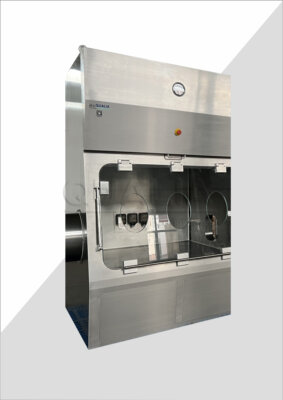
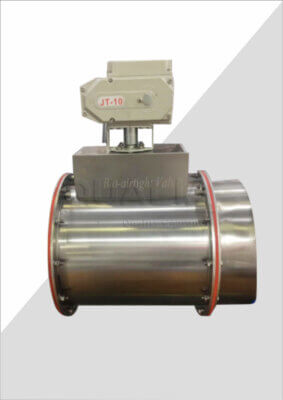
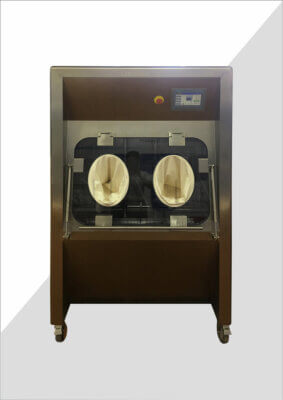
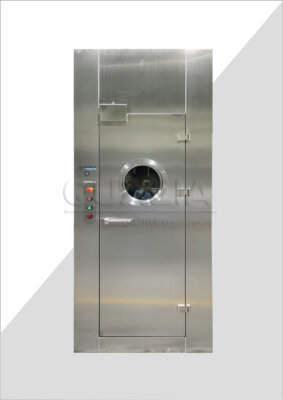
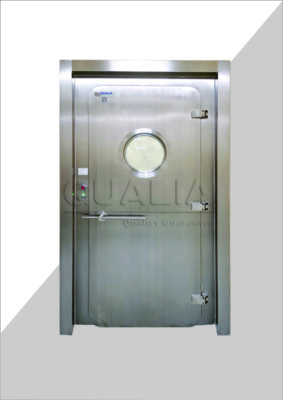
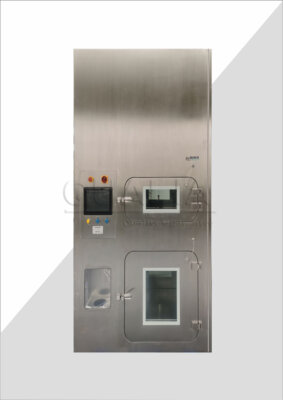
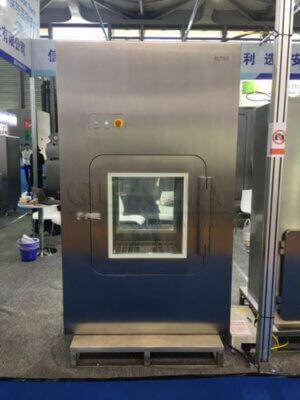
For containment housings or pass-through chambers integrated with VHP systems, the choice between 304 and 316 stainless steel is a direct financial trade-off. Grade 316’s superior corrosion resistance prevents premature degradation from repeated VHP exposure. Specifying lower-grade 304 steel for initial savings risks catastrophic containment failure, unplanned housing replacement, and potential regulatory breaches, resulting in exponentially higher lifecycle costs.
The Industry Shift to Safer Chemistries
This principle underscores the industry’s consolidation around safer, low-temperature chemistries like VHP. Compared to legacy methods such as ethylene oxide or chlorine dioxide, VHP offers superior material compatibility for a wider range of polymers and metals. This broader compatibility reduces the hidden costs of device degradation and the need for device-specific, low-throughput sterilization workflows, simplifying operations and protecting capital assets. For facilities processing sensitive and expensive equipment, selecting a VHP generator with validated broad material compatibility is a strategic decision that impacts both sterilization and device lifecycle budgets.
Material Compatibility & Its Impact on Long-Term Device Costs
| Component | Option Comparison | Long-Term Cost Impact |
|---|---|---|
| Containment Housing | 304 vs. 316 Stainless Steel | 316 prevents premature degradation |
| Surgical Instruments | Gentle, validated VHP process | Protects capital investment |
| Legacy Sterilization Methods | e.g., EtO, Chlorine Dioxide | Higher material degradation risk |
| Modern Low-Temp Chemistries | VHP / iHP | Better material compatibility |
Note: Specifying lower-grade materials risks catastrophic failure and unplanned replacement costs.
Source: ISO 14937:2009 Sterilization of health care products (https://www.iso.org/standard/44954.html). The standard’s requirements for characterizing the sterilizing agent and its effects are fundamental to assessing material compatibility, a key factor in long-term device lifecycle costs.
Implementation Guide: How to Use This TCO Calculator Template
Gathering Accurate Input Data
Effective implementation starts with gathering accurate, local data. Key inputs include your projected annual cycle volume, local pricing for sterilant cartridges and biological indicators, fully burdened labor rates, and local utility costs (electricity per kWh, water). System parameters—cycle time, sterilant consumption per cycle, electrical load, and water use—must be sourced directly from vendor specifications, not marketing materials.
Executing the Core Calculation
The basic calculation is straightforward: Total Cost of Ownership = Capital Investment + Σ (Annual Operational Costs x Number of Years). The complexity lies in accurately defining each annual operational cost line item. A critical, often missed step is mapping the sterilizer’s validated material compatibility matrix against your instrument inventory. This determines true effective throughput and prevents unrealistic volume projections that would skew the cost-per-cycle result.
Budgeting for Continuous Compliance
Regulatory momentum favors holistic system validation. Your TCO model must budget for continuous compliance. This includes the initial installation qualification (IQ), operational qualification (OQ), and performance qualification (PQ), as well as annual re-qualification. Features like integrated test ports for routine monitoring and automated data logging for audit trails are not optional extras but mandatory considerations that reduce long-term validation labor and risk.
Decision Framework: Selecting the Optimal VHP Sterilization Solution
Evaluating the Complete Validated Ecosystem
The final decision must align TCO findings with technical and strategic requirements. Evaluate vendors on their complete validated ecosystem: the generator, proprietary consumables, compatible accessories, and technical support. A low-cost generator paired with expensive, single-source consumables will show a high TCO. Prioritize systems with engineered safety features—like bubble-tight dampers and operational negative pressure—that reduce reliance on perfect human execution, fundamentally lowering operational risk and potential non-compliance costs.
Balancing Cost with Capability
The optimal solution balances a realistic cost-per-cycle with non-negotiable capabilities: sterility assurance, material compatibility, and workflow integration. Use the TCO output to drive a data-driven discussion with stakeholders. Weigh higher upfront costs against lower, predictable operating expenses. Consider modularity for future scalability. The goal is to select the solution that offers the best long-term financial and operational outcome for your specific volume, device mix, and risk profile.
The decision pivots on three priorities: quantifying lifetime operational costs, validating material compatibility with your device inventory, and ensuring the solution integrates into your workflow without creating hidden labor burdens. A data-driven TCO analysis transforms the procurement process from a price comparison to a strategic investment review.
Need professional guidance to model the total cost of ownership for your sterilization needs? The experts at QUALIA can help you apply this framework to your specific scenario, ensuring your investment is sound for years to come. For a detailed discussion, you can also Contact Us.
Frequently Asked Questions
Q: How do operating expenses compare to the purchase price in a VHP sterilizer’s total cost of ownership?
A: Operational costs dominate the financial picture, often exceeding 97% of lifetime expenses, which makes the initial capital investment a minor component. A full TCO analysis must include recurring costs for consumables, utilities, maintenance, validation, and labor over the system’s entire lifespan. This means facilities focused solely on purchase price risk selecting a solution with a much higher long-term financial burden, so your procurement model must prioritize operating ecosystem costs.
Q: What are the major recurring cost drivers for an in-house VHP sterilization operation?
A: The largest recurring OPEX categories are consumables (sterilant, indicators, validated packaging), utilities, and scheduled or corrective maintenance. Labor for system operation, documentation, and compliance activities like annual re-qualification also adds significant ongoing expense. For projects where daily volume is high, you should plan detailed budgets for these items, as they directly determine your ultimate cost-per-cycle metric and operational viability.
Q: How does material compatibility impact the long-term costs of the devices being sterilized?
A: Material compatibility directly protects your capital investment in surgical instruments by preventing degradation from the sterilization process. For integrated containment housings, specifying corrosion-resistant 316 stainless steel over 304 grade avoids premature failure and unplanned replacement costs. This means selecting a VHP system validated for a broad range of materials, including 3D-printed devices, is critical to minimize hidden long-term capital expenditure on the items being processed.
Q: How do you conduct a break-even analysis between in-house VHP and contract sterilization services?
A: Compare the cumulative cost of all in-house CAPEX and OPEX, including internal labor, against the total fees for external services plus your coordination costs. The break-even point is where these two cost curves intersect. If your operation has high daily volume and requires immediate-use turnaround or direct process control, you should prioritize the in-house investment model after completing this analysis.
Q: What standards govern the validation and routine control of a VHP sterilization process?
A: The development, validation, and routine control of sterilization processes for medical devices, including chemical methods like VHP, are framed by ISO 14937:2009. This standard requires characterization of the sterilizing agent and defines activities for process qualification and monitoring. For facilities implementing a VHP system, this means your TCO model must budget for the initial validation and ongoing quality assurance activities mandated by this framework.
Q: Which operational factors determine true throughput and cost-per-cycle for a VHP system?
A: True throughput depends on chamber size, cycle time (e.g., 16-minute express vs. 28-minute standard), and the system’s validated material compatibility, which dictates load composition. The cost-per-cycle is calculated by dividing the Annual TCO by the Annual Cycle Volume. If your facility faces spatial constraints but has high volumetric demand, you should evaluate modular system designs that use parallel, standardized units to optimize this key financial metric within a limited footprint.
Q: What practical guidelines apply to the safe and effective use of chemical sterilants like VHP in a healthcare facility?
A: ANSI/AAMI ST58:2013 provides recommended practices for the selection, use, and monitoring of chemical sterilants, covering operational protocols, staff training, safety, and maintenance. This means your operational cost planning must account for the labor, training, and scheduled maintenance activities defined by this guideline to ensure both efficacy and compliance in daily use.
Q: How should you use a TCO calculator to select the optimal VHP sterilization solution?
A: Input accurate local data on cycle volume, consumable pricing, labor rates, and utility costs, alongside vendor-provided system parameters. Use the output to drive a data-driven discussion, evaluating vendors on their complete validated ecosystem—not just equipment—and prioritizing systems with engineered safety features. This means you should select the solution that balances a realistic cost-per-cycle with necessary sterility assurance, material compatibility, and workflow integration for your specific use case.