
When a multiproduct isolator moves from one compound to the next, what evidence actually proves the chamber is ready — and what only makes the changeover easier to perform? These are different questions, and a project team that conflates them risks treating a smooth changeover as proof of a validated one. Getting this distinction right shapes how the cleaning process is designed, documented, and defended at inspection, independent of how efficiently the campaign schedule runs.
Product and Campaign Data That Define the Changeover Risk
| Planning input | Decision value | Evidence boundary |
|---|---|---|
| Residue hazard | Frames the significance of residue carryover between products | Product-specific hazard evidence is required; the cited standards do not supply it |
| Solubility | Informs the product matrix used to plan cleaning between products | Solubility data do not by themselves establish an acceptable cleaning process |
| Material compatibility | Tests whether the planned cleaning approach is compatible with isolator contact materials and components | Compatibility must be assessed for the project-specific materials and cleaning agents |
| Site-defined carryover or cross-contamination limits | Sets the site-specific boundary against which residue control is considered | The cited standards do not provide product-specific carryover limits |
| Campaign sequence | May reduce difficult changeovers when products are ordered deliberately | Sequencing does not replace a justified cleaning process or verification evidence |
The starting point for any multiproduct isolator program is not the cleaning method itself but the product data that determines how aggressively that method must perform. Residue hazard sets the stakes: a compound with a narrow margin between acceptable and unacceptable carryover demands a cleaning process that can be defended with evidence, while a less hazardous residue may tolerate more variability in execution without threatening the next batch. Solubility works alongside hazard rather than instead of it — a highly soluble residue may still pose a hazard concern even though it is easy to remove, and an insoluble residue at low hazard may still require a validated mechanical or chemical approach because simple rinsing cannot be assumed to clear it.
Material compatibility changes the picture again. A cleaning agent selected purely for its residue-removal performance may degrade gaskets, glove material, or surface coatings over repeated cycles, so the product matrix has to be built with the isolator’s actual contact materials in view, not a generic surface assumption. Where a project introduces a new product into an existing isolator train, the compatibility question has to be asked again for that specific combination of agent and material, because a cleaning agent validated against one surface does not carry its justification to a different one.
Site-defined carryover or cross-contamination limits are what convert all of this into a decision boundary. These limits are not supplied by general isolator standards; they come from the site’s own toxicological and quality assessment of the specific products sharing the equipment. This means two sites running structurally identical isolators can reach different conclusions about what cleaning process is adequate, because the acceptance boundary is project-specific even where the hardware is not.
Campaign sequence is the one variable in this set that does not define risk so much as manage exposure to it. Ordering campaigns so that a difficult changeover follows a similar or lower-hazard product can reduce how often the hardest cleaning scenario has to be executed. But sequencing is a scheduling lever, not a substitute for having a justified cleaning process behind every changeover it defers. A project team that relies on sequencing to avoid validating the worst-case changeover will eventually face that changeover anyway, under schedule pressure rather than as a planned qualification exercise.
Contact Surfaces, Hard-to-Reach Areas, and Residue Pathways
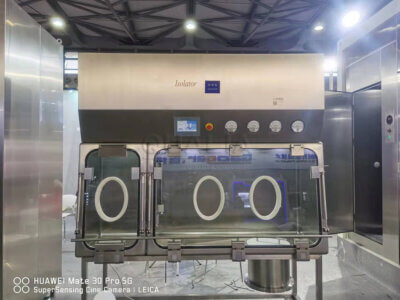
Cleaning access review is a single exercise, and its value comes from treating the isolator as one continuous residue pathway rather than a set of independently assessed parts. Work surfaces are the obvious target, but transfer interfaces, glove and sleeve assemblies, seals, tools left in the chamber between campaigns, and any removable fixtures all sit on the same pathway a residue can travel across if the cleaning method does not reach them with the same rigor applied to open floor and wall surfaces.
The reason this matters beyond a general cleanliness principle is that isolators are built with features that create contamination control — glove ports, transfer hatches, mechanical seals — and those same features generate geometry that resists uniform cleaning access. A flat surface can be wiped or sprayed with confidence that coverage was achieved; a glove’s interior surface, a seal’s compressed interface, or the underside of a removable fixture cannot be inspected or cleaned with the same certainty unless the cleaning method was specifically designed around that geometry.
This is where the gap between “cleaned” and “verified clean” tends to open. A cleaning procedure can be executed thoroughly on accessible surfaces while leaving hard-to-reach zones under-addressed, and if the verification sampling plan does not deliberately include those zones, the evidence package will show a clean result without ever having tested the location most likely to retain residue. The access review therefore has to drive both the cleaning method design and the sampling or inspection plan that follows it — treating them as separate exercises designed from separate assumptions is how residue pathways get missed.
Where an isolator’s configuration changes — a new tool introduced, a transfer interface modified, a glove material substituted — the access review has to be repeated for that specific change. A cleaning access assessment performed against one configuration does not transfer automatically to a modified one, because the new component may introduce a geometry or material the original review never considered.
Cleaning Method Compatibility With Isolator Materials and Components
A cleaning method is only as good as its compatibility with what it is being asked to clean, and this compatibility question has to be resolved before the method is adopted for routine use, not discovered afterward through component failure or unexpected residue behavior. The relationship runs in both directions: the cleaning agent and mechanical method must be capable of removing the residue the product matrix identifies as significant, and the isolator’s contact materials — polymer gloves, elastomeric seals, surface coatings, viewing panels — must be able to withstand repeated exposure to that agent and method without degrading.
Where a cleaning agent is effective against a difficult residue but aggressive toward a particular elastomer, the project has a genuine trade-off to resolve rather than a simple compatibility pass or fail. One path is to select a milder agent and accept a more demanding mechanical or multi-step cleaning process to compensate for reduced chemical action. Another is to retain the aggressive agent and schedule more frequent replacement of the affected component, treating compatibility as a maintenance and lifecycle cost rather than a design constraint. Which path suits a given project depends on how the isolator’s maintenance program is structured and how disruptive component replacement is to the campaign schedule — a decision that belongs to the project team, informed by the compatibility data, not dictated by the cleaning chemistry alone.
This compatibility relationship is also why a cleaning method cannot be assumed portable across isolator configurations even within the same facility. An isolator built with one glove material and seal type may tolerate an agent that a differently configured isolator cannot, even if both units are nominally performing the same aseptic function. Any change to contact materials, components, or the cleaning agent itself reopens this compatibility question, and the resolution has to be documented against the specific combination in use, not inferred from a prior assessment of a similar but not identical configuration.
Sequence, Hold, and Release Controls Between Products
| Control element | What it contributes | What it does not establish |
|---|---|---|
| Campaign sequence | May reduce difficult changeovers between products | A justified cleaning process or verification evidence |
| Justified cleaning process | Provides the defined cleaning basis for multiproduct operation | Verification that the cleaning basis has been met |
| Cleaning verification evidence | Provides evidence for evaluating the cleaning outcome against the site-defined boundary | Product-specific residue or carryover limits unless those limits have been established by the site |
Between one product campaign and the next, three distinct controls operate, and the project’s ability to defend a changeover depends on knowing which one is actually doing the work. Campaign sequence manages when the harder cleaning scenarios occur. A justified cleaning process defines what is done to the isolator between products — the agent, the method, the contact time, the mechanical steps — based on the product matrix and material compatibility already established. Cleaning verification evidence confirms that what was defined was actually achieved on that occasion.
These controls are not interchangeable, and a common planning error is to let a well-designed sequence substitute for one of the other two. A campaign order that defers the hardest changeover to the end of a run does not reduce how rigorously that changeover eventually needs to be cleaned and verified — it only changes the calendar position of that requirement. Similarly, a justified cleaning process that has never been checked against actual outcomes provides a documented basis for action but no evidence that the action achieved its intended result on real equipment handling real product residues.
The release decision — whether the isolator is fit to receive the next product — depends on the verification evidence being evaluated against the site-defined carryover or cross-contamination limit established for that specific product pairing. This is where general compliance language is least useful to the project team, because no external standard supplies the limit itself; it has to come from the site’s own assessment of the products involved. A hold step between cleaning and verification, where one is used, exists to prevent batch release decisions from being made before that evidence is available and evaluated, not to substitute for the evidence.
Where a project is evaluating whether its between-product controls are adequate, the useful question is not whether a sequence or a cleaning procedure exists, but whether verification evidence has actually been generated and compared against a defined limit for the specific product transition under review.
Evidence Package for Cleaning Verification and Requalification
| Evidence component | Decision role | Limit to retain |
|---|---|---|
| Justified cleaning process | Establishes the cleaning basis that campaign sequencing cannot replace | Does not replace cleaning verification evidence |
| Cleaning verification evidence | Supports evaluation of cleaning for multiproduct operation | Must be considered against site-defined carryover or cross-contamination limits |
| Documented requalification assessment | Evaluates changes to products, cleaning agents, contact materials, disassembly, or cycle parameters | The assessment must determine the project-specific response; no automatic outcome is supplied |
| ISO 13408-6:2021 | Provides scope for aseptic-isolator specification, validation, operation, and control | Its official abstract does not supply product-specific cleaning agents, residue limits, carryover limits, or sterility-test-isolator requirements |
| EU GMP Annex 1 (2022) | Provides sterile-manufacturing context for contamination-control strategy and controlled validated isolator bio-decontamination | Bio-decontamination does not by itself establish product-residue cleaning acceptance |
The evidence package a project assembles for cleaning verification has to answer a narrower question than general GMP contamination control: not whether the isolator is broadly clean, but whether the specific cleaning process justified for this product combination was executed and achieved the defined outcome against the site’s own limit. ISO 13408-6:2021 provides scope for aseptic-isolator specification, validation, operation, and control, but its contribution stops at that structural level — the standard’s official abstract does not supply product-specific cleaning agents, residue limits, carryover limits, or requirements specific to sterility-test isolators, so a project cannot cite the standard as the source of its acceptance criteria. EU GMP Annex 1 (2022) adds the broader contamination-control strategy context and addresses controlled, validated isolator bio-decontamination, but bio-decontamination — typically concerned with biological inactivation — does not by itself establish that product residue has been removed to an acceptable level. These are related but separate questions, and a project that treats bio-decontamination records as residue-cleaning evidence has not actually closed the cleaning verification question.
The documented requalification assessment is where ongoing changes get evaluated against this evidence package. A change to the products run through the isolator, the cleaning agents used, the contact materials present, the disassembly steps performed during cleaning, or the cycle parameters themselves — any of these is a trigger for revisiting whether the existing cleaning justification and verification evidence still apply. The assessment does not carry a predetermined outcome; it exists to determine, case by case, whether the change invalidates prior evidence or can be absorbed without new verification work. This is also where glove replacement, transfer interface changes, or other configuration-level interventions intersect with the broader requalification picture, since they alter the isolator’s contact surfaces or access geometry in ways that feed back into the cleaning access review.
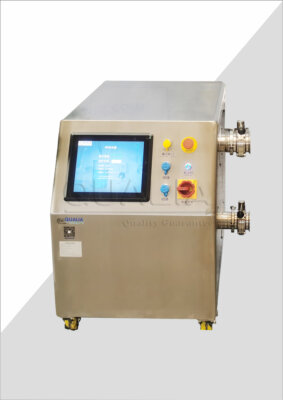
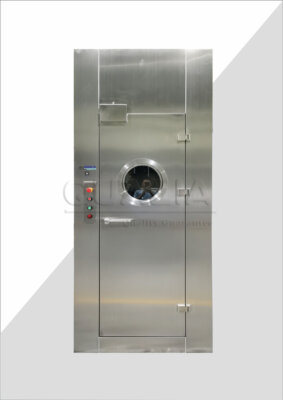
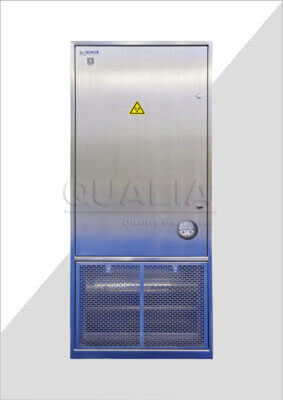
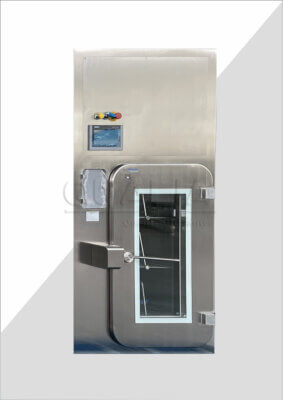
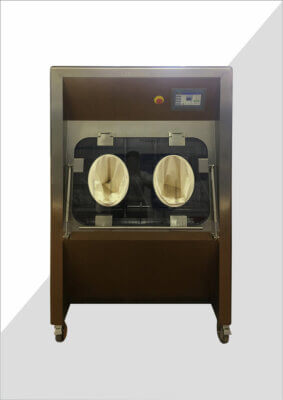
For isolators sourced from Qualia, the project-specific residue hazard data, material compatibility findings, and site-defined carryover limits a customer brings to a configuration or quotation review inform how the unit’s contact materials, transfer interfaces, and accessible geometry are specified for that project — recognizing that the cleaning validation and verification evidence remain the site’s responsibility to generate and defend.
Frequently Asked Questions
Q: How should products be sequenced to reduce difficult isolator changeovers?
A: Build the sequence from the product matrix, considering residue hazard, solubility, material compatibility, and the site’s carryover or cross-contamination limits. A deliberate sequence may reduce difficult changeovers, but it does not replace a justified cleaning process or verification evidence.
Q: Which isolator areas should be included in the cleaning-access review?
A: Include work surfaces, transfer interfaces, gloves, seals, tools, removable parts, and hard-to-reach areas. Before accepting multiproduct operation, confirm that the planned cleaning and any required disassembly can address each identified residue pathway.
Q: Can validated isolator bio-decontamination serve as product-residue cleaning acceptance?
A: No. Bio-decontamination supports contamination control in sterile manufacturing, but product-residue cleaning still needs a justified process and verification against the site’s defined acceptance boundary.
Q: Which changes should prompt a requalification assessment?
A: Changes to products, cleaning agents, contact materials, disassembly, or cycle parameters should be assessed and documented. The assessment should determine the project-specific response rather than assume that every change has the same requalification outcome.
Q: What information should be assembled before multiproduct isolator operation is accepted?
A: Prepare the product matrix, contact-material and cleaning-agent compatibility information, cleaning-access scope, campaign sequence, site-defined carryover or cross-contamination limits, the justified cleaning process, and its verification evidence. Also identify which changes will trigger a documented requalification assessment.