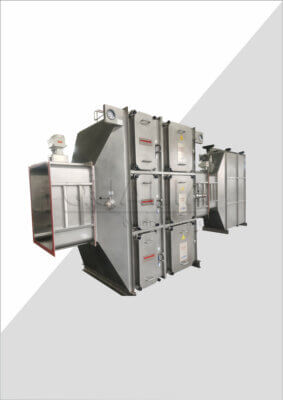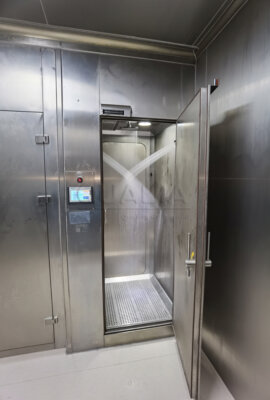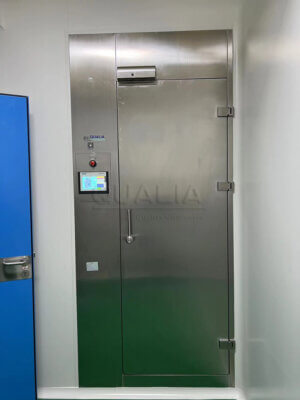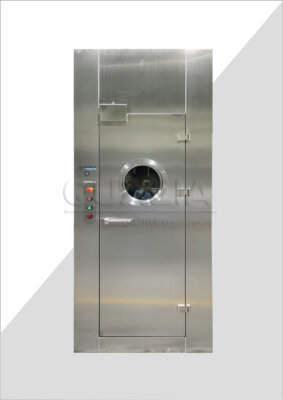

Designing a BSL-4 facility hinges on a single, non-negotiable principle: absolute containment. The engineering challenge is not just about building strong barriers, but about creating an intelligent, inward-directed airflow system that actively prevents pathogen escape. A failure in this pressure hierarchy can compromise the entire facility’s safety envelope.
This focus on pressure integrity is critical now. The increasing complexity of pathogen research and heightened regulatory scrutiny demand that containment moves from a static architectural feature to a dynamic, monitored system. The integration of primary containment devices like Class III biosafety cabinets with the room’s environmental controls defines modern high-containment safety.
Fundamental Principles of BSL-4 Negative Pressure Cascades
Defining the Cascade Hierarchy
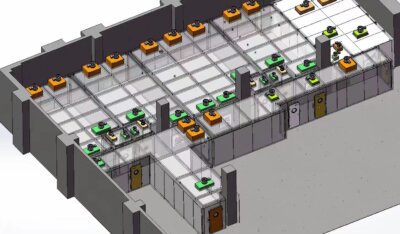
A negative pressure cascade is a graduated system of air pressure differentials. It establishes a clear airflow path from the least hazardous area (building corridors) to the most hazardous (the interior of a Class III cabinet). Each successive space is maintained at a lower pressure than the one before it. This engineered gradient ensures that any airborne contaminant is drawn inward, toward the highest level of filtration and treatment, never outward toward personnel or the environment.
Engineering the Airflow Direction
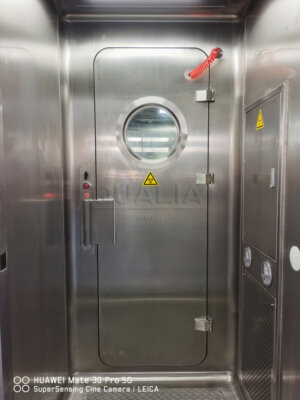
The cascade’s effectiveness relies on precise, maintained differentials. Air must flow from the access corridor into the suit room or laboratory, from there into the cabinet ante-room, and finally into the sealed cabinet itself. This design guarantees containment even during routine access through airlocks. The system’s assurance is now shifting from periodic manual checks to continuous, data-driven monitoring via integrated building networks, providing a live model of containment integrity.
Validating the Complete Barrier
The principle extends beyond air. A true cascade addresses all material exit pathways, including liquid waste and solid effluent. This holistic view transforms secondary containment from a simple room shell into a seamless engineered barrier encompassing every potential route of egress. The design must validate that pressure relationships hold under all operational dynamics, including door openings and equipment cycles.
Core Pressure Requirements for Class III Biosafety Cabinets
The Primary Containment Vessel
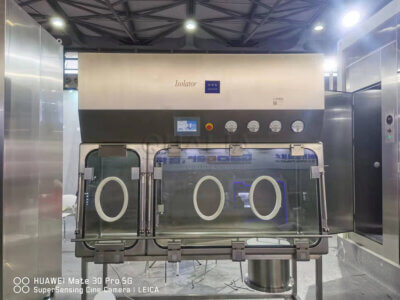
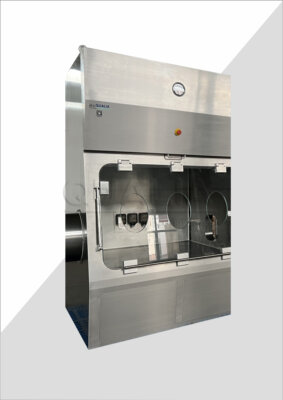
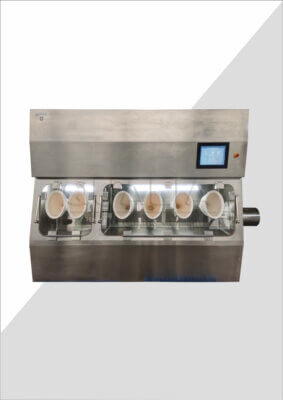
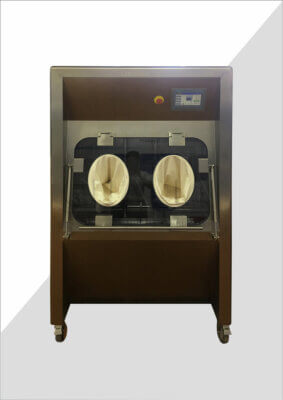
The Class III biosafety cabinet is a gas-tight, sealed enclosure where work is performed via attached gloves. Its mechanical ventilation system must maintain a minimum negative pressure of 0.5 inches of water gauge (≈125 Pa) relative to the room. This is a critical performance parameter that ensures constant inward leakage through any minute openings, preventing aerosol escape.
Dual-Hazard Mitigation Function
This inward airflow serves two vital safety functions. First, it purges hazardous vapors generated during procedures. Second, and often overlooked, it dilutes any flammable agents or vapors present to maintain concentrations safely below 20% of the Lower Explosive Limit (LEL). In this way, continuous pressure monitoring acts as a real-time control for both biological and combustion risks.
Integration with Treatment Systems
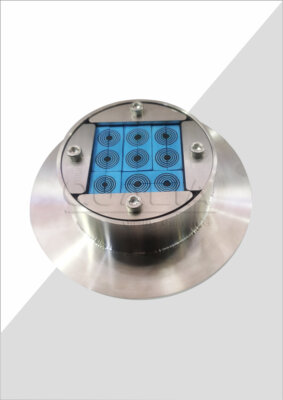
All air entering the cabinet passes through a supply HEPA filter. Exhaust air is treated by two HEPA filters in series or a HEPA filter followed by incineration, with absolutely no air recirculation back into the laboratory. This 100% once-through design is fundamental. The cabinet’s operation is entirely dependent on a properly balanced and dedicated exhaust system, highlighting the need for integrated design from the start.
The following table outlines the key operational parameters for a Class III cabinet within this system:
| Parameter | Minimum Requirement | Primary Function |
|---|---|---|
| Cabinet Negative Pressure | 0.5 in. w.g. (≈125 Pa) | Maintains inward airflow |
| Flammable Agent Dilution | Below 20% of LEL | Prevents combustion hazard |
| Exhaust Air Treatment | Two HEPA in series | Ensures pathogen containment |
| Air Recirculation | 0% (Once-through only) | Eliminates cross-contamination risk |
Source: NSF/ANSI 49-2022. This standard establishes the foundational performance and construction requirements for biosafety cabinets, including critical parameters like pressure integrity and airflow, which are essential for the safe operation of Class III cabinets within a room.
Integrating Cabinet and Room Pressure for Total Containment
The Multi-Layered Defense
The cabinet cannot function as an island. The containment laboratory housing it must be at a negative pressure relative to the access corridor, creating the next essential layer in the cascade. This integration ensures that any potential aerosol release during cabinet maintenance, filter changes, or glove port breaches is immediately drawn into the room’s own HEPA-filtered exhaust system, not into the building.
HVAC Design for Unified Control
The facility’s HVAC design must account for the combined airflow demands of all containment devices plus the general room exhaust. It must provide 100% once-through, non-recirculated air for the entire containment zone. Balancing these systems requires careful calculation to ensure that the exhaust capacity always exceeds supply, maintaining the negative differential even when cabinet dampers adjust or other equipment cycles.
This table illustrates the pressure relationships across a typical containment suite:
| Containment Layer | Pressure Relationship | Airflow Direction |
|---|---|---|
| Class III Cabinet Interior | Most negative | Inward via gloves |
| Containment Laboratory | Negative to corridor | Into lab exhaust |
| Access Airlock | Negative to corridor | Into lab |
| Building Perimeter | Reference point | From clean to hazardous |
Source: WHO Laboratory Biosafety Manual, Fourth Edition. The manual provides the risk-based framework for creating directional airflow cascades, defining the principle of maintaining pressure differentials from clean areas to potentially contaminated zones, which is the core of integrating cabinet and room containment.
Technical Verification: Leak Testing and HEPA Certification
The Certification Schedule Mandate
System integrity is proven, not assumed. Class III cabinets require annual certification, but BSL-4 operations typically mandate semiannual checks. Treating annual testing as a regulatory minimum is a common oversight; optimal safety protocols often exceed code, especially in high-containment environments. Each certification event must include a pressure decay test of the cabinet’s gas-tight shell and quantitative testing of the exhaust HEPA filter bank.
The “Zero-Failure” Filter Standard
HEPA filter testing employs a thermally generated aerosol challenge of 0.3-micrometer particles. The scan must detect penetrations exceeding 0.005%, with any result over 0.03% constituting a failure. This ultra-sensitive threshold defines near-perfect filtration as the only acceptable standard. Meeting it requires highly precise photometer equipment and technician expertise. In my experience, the calibration and maintenance logs for this test equipment are as critical as the test results themselves.
Rigorous verification schedules and failure thresholds are non-negotiable, as detailed below:
| Test Type | Frequency (BSL-4) | Failure Threshold |
|---|---|---|
| Cabinet Certification | Semiannual | N/A (Performance-based) |
| Pressure Integrity Test | Per certification | Any measurable leak |
| Exhaust HEPA Test | Per certification | >0.03% penetration |
| Particle Detection Size | 0.3 micrometers | N/A |
| Acceptable Penetration | ≤0.005% | “Zero-failure” standard |
Source: Technical documentation and industry specifications.
Operational Protocols for Maintaining Pressure Integrity
Decontamination Before Breach
Engineering controls are only as good as the protocols that support them. Decontamination of the entire cabinet interior via validated fumigation (e.g., vaporized hydrogen peroxide) is required before any maintenance that breaches containment. The validation burden rests on documented adherence to the manufacturer’s prescribed cycle parameters, not on in-house experimentation. This shifts the focus from developing a process to proving its consistent execution.
Secured Material Transfer
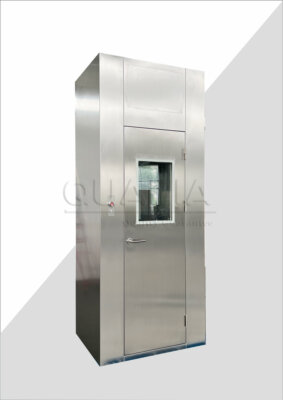
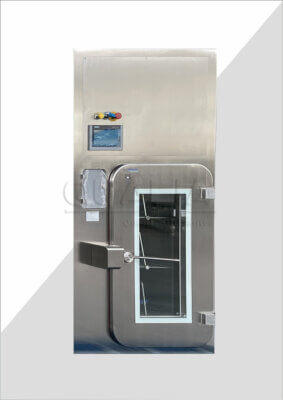
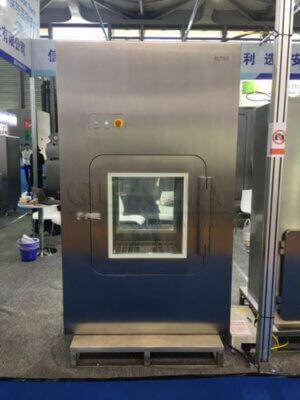
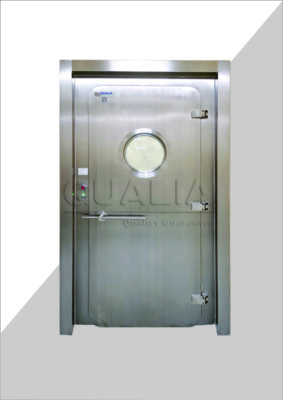
All material entry and exit must occur through a secured pass-through autoclave or chemical dunk tank, each integrated into the room’s pressure cascade. These devices must have interlocked doors and their own decontamination cycles validated for the specific biological agents in use.
Converging Safety Disciplines
Modern protocols explicitly integrate chemical exposure limits alongside biological risk assessments. This convergence of biosafety and industrial hygiene is essential for comprehensive risk governance, especially when working with pathogens in solvents or other hazardous chemicals. It mandates a unified review of all standard operating procedures.
Pressure Monitoring Systems and Alarm Strategies
Continuous Differential Monitoring
Visual manometers or magnhelic gauges at each pressure boundary provide local readouts, but electronic sensors linked to a central Building Automation System (BAS) are essential for continuous monitoring and data logging. This trend toward smart facility infrastructure with centralized dashboards is becoming a competitive necessity for proactive risk management, offering real-time visibility into system health.
Tiered Alarm Response
An effective alarm strategy must differentiate between a minor deviation and a critical containment loss. A warning alert might indicate a slight pressure drift requiring investigation, while an immediate audible/visual alert signals a loss of cabinet integrity or room differential, potentially triggering evacuation procedures. The alarm must be distinct and its response protocol drilled into all personnel.
Monitoring systems require clear technology and response plans:
| System Component | Typical Technology | Alarm Response Tier |
|---|---|---|
| Pressure Sensor | Magnhelic gauge / Electronic | Visual/audible alert |
| Data Integration | Building Automation System | Centralized dashboard |
| Minor Deviation | Warning alert | Investigative response |
| Critical Containment Loss | Immediate alert | Evacuation / Protocol activation |
Source: CWA 16335:2011. This competency framework defines the required knowledge for biosafety professionals to design and manage containment systems, including the implementation of adequate monitoring and alarm strategies to ensure continuous safety.
Designing Redundancy into Critical Exhaust Systems
Blower and Power Redundancy
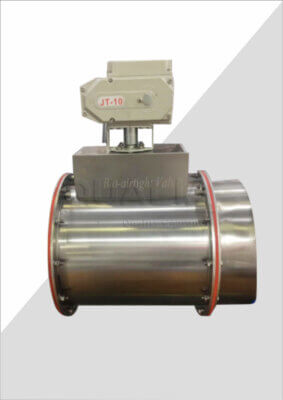
System reliability is engineered through redundancy. The critical exhaust path for both the cabinet and the laboratory must include redundant blower systems (one active, one standby) with automatic failover upon detection of flow loss. Uninterruptible power supplies (UPS) and backup generators are required to maintain exhaust function during power outages. The cabinet should be electrically interlocked with its dedicated exhaust, with a local alarm indicating loss of flow.
Specialized Supply Chain Partnerships
The stringent specifications for HEPA/ULPA filters, gas-tight construction, and alarmed control systems create a niche market. Relying on generic HVAC suppliers is a significant risk. Forming strategic partnerships with certified containment specialists for both supply and maintenance mitigates long-term operational and supply chain vulnerabilities. These partners understand the “zero-failure” mindset required for BSL-4 components.
Selecting and Validating a Cascade Design for Your Facility
Risk-Based Design Selection
The final cascade design must stem from a facility-specific risk assessment that matches engineering controls to the agent risk profile and planned protocols. There is no one-size-fits-all solution. The design must prove that all required pressure differentials are achievable and maintainable under real-world, dynamic conditions, not just in an empty, static state.
Comprehensive Pathway Analysis
Adopt a process-flow approach that maps every potential exit pathway for material and air—from the work zone inside the cabinet, through liquid waste lines, solid waste autoclaves, and finally to treated effluent discharge. The cascade must be seamless across all these pathways. Validation through rigorous performance testing, including simulated failure scenarios, is what transforms a theoretical design into a reliable operational safeguard. This often involves selecting specialized pass-through treatment systems for effluent to ensure no point in the process chain breaks the containment hierarchy.
The decision to implement a BSL-4 negative pressure cascade centers on three priorities: validating the complete air and material pathway, investing in continuous digital monitoring over periodic checks, and building redundancy into every critical system, especially exhaust. This approach moves containment from a passive concept to an actively managed engineering control.
Need professional guidance to design or validate your high-containment pressure cascade? The engineers at QUALIA specialize in integrating primary and secondary containment systems for the most demanding biosafety environments. For a detailed consultation on your facility’s requirements, you can also Contact Us.
Frequently Asked Questions
Q: What is the minimum negative pressure required for a Class III biosafety cabinet, and why is it more than just a seal check?
A: The cabinet must maintain a minimum negative pressure of 0.5 inches of water gauge (≈125 Pa). This constant inward airflow actively purges hazardous vapors and dilutes flammable agents to keep them safely below explosive limits. This means pressure monitoring serves as a real-time control for both biological and chemical safety, not just a passive integrity check, which is a foundational principle outlined in the NSF/ANSI 49-2022 standard.
Q: How often must a Class III cabinet in a BSL-4 lab be certified, and what does the HEPA filter test entail?
A: For BSL-4 operations, certification is required at least semiannually, establishing annual testing as an absolute minimum. The exhaust HEPA filter test is a quantitative aerosol challenge that must detect particle penetrations exceeding 0.005%, with any result over 0.03% constituting a failure. This “zero-failure” threshold demands highly precise equipment and expertise, so facilities must budget for more frequent, specialized testing than for lower-containment levels.
Q: What is the critical relationship between a Class III cabinet’s pressure and the room it’s housed in?
A: The cabinet must operate within a laboratory maintained at a negative pressure relative to adjacent corridors, creating a layered containment cascade. This integration ensures any accidental release during cabinet servicing is captured by the room’s dedicated exhaust system. For your design, you must size the HVAC to handle 100% once-through air for both the room and all containment devices, treating the entire space as a unified engineered barrier.
Q: What are the key elements of a redundancy strategy for the exhaust system supporting a Class III cabinet?
A: Redundancy requires an exhaust blower system with an active unit and a standby unit capable of automatic failover. The cabinet must be interlocked with this exhaust, triggering an alarm on flow loss. This design philosophy extends to the supply chain; you should form strategic partnerships with certified specialists for critical components like HEPA filters to mitigate maintenance and procurement risks in this niche market.
Q: How do operational protocols for decontamination and material transfer support pressure integrity?
A: Strict protocols mandate fumigation of the cabinet interior before any maintenance, relying on validated manufacturer methods rather than in-house experimentation. All material transfer must occur through secured pass-through autoclaves or dunk tanks. This operational rigor, which converges biosafety and industrial hygiene disciplines, is essential for maintaining the engineered pressure cascade during dynamic lab activities.
Q: What should guide the selection and validation of a negative pressure cascade design for a specific facility?
A: Selection requires a facility-specific risk assessment that matches engineering controls to the agent and procedural risks. Validation must prove all pressure differentials are achievable under real conditions, like door openings, ensuring a seamless cascade from the work zone to final effluent discharge. This means your design team must adopt a process-flow approach from the start, not treat room pressure as an isolated specification. The WHO Laboratory Biosafety Manual provides a foundational risk-based framework for this approach.
Q: What is the acceptable failure threshold for a Class III cabinet’s exhaust HEPA filter during certification?
A: The quantitative aerosol test for exhaust HEPA filters has an ultra-sensitive failure threshold. Any measured penetration of 0.3-micrometer particles that exceeds 0.03% of the challenge concentration constitutes a certification failure. This standard defines near-perfect filtration as the mandatory baseline, so your certification provider must use highly precise aerosol photometers and proven challenge protocols to obtain valid results.
Related Contents:
- Class III Biosafety Isolators: Ultimate Protection
- Class III Biosafety Cabinet vs Class II BSC: 12 Critical Differences for BSL-3 and BSL-4 Containment Selection
- Class II Type B2 Biosafety Cabinets: Total Exhaust
- Class I Biosafety Cabinets: Features & Uses
- Class III Biosafety Cabinets for Maximum Protection
- Class III vs Class II Biosafety Cabinet Airflow Performance: CFM and Containment Data Comparison
- Biosafety Cabinet Installation: What You Need to Know
- Biosafety Cabinet Exhaust Systems Explained
- Biosafety Cabinet Sizes: Finding the Perfect Fit