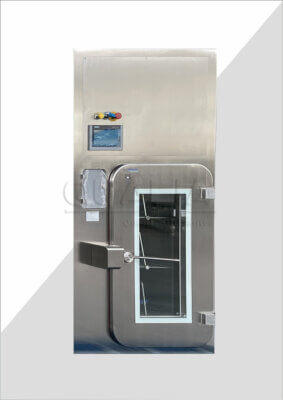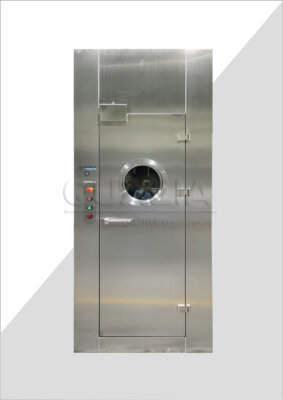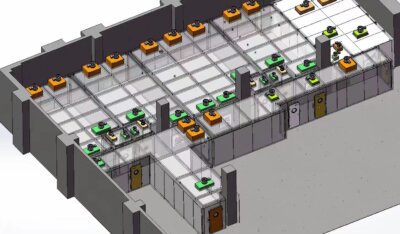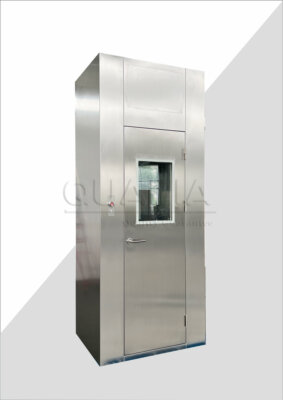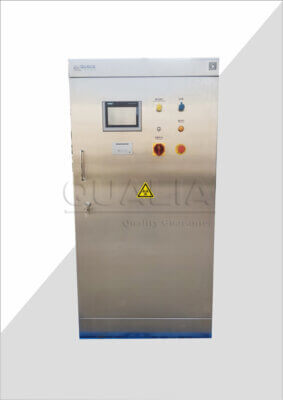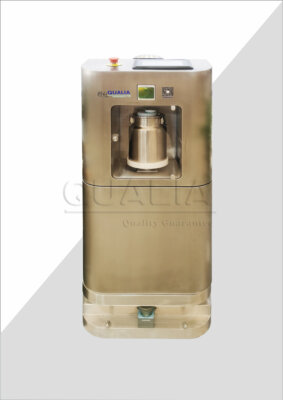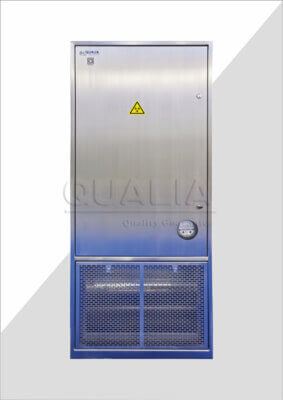
Specifying the wrong shower type for a high-containment personnel exit is rarely caught at concept stage. It surfaces during biosafety review or airlock redesign — exactly when rework costs the most and schedule compression is already a problem. A chemical shower specified without drainage and effluent decontamination capacity resolved, or a mist system accepted without protocol evidence of decontamination efficacy, can require a full airlock replanning cycle before the facility can proceed to validation. The decision that prevents this is not a product comparison — it is a structured mapping of the exit sequence, PPE state, pathogen risk group, and decontamination objective before any shower type is named. What follows will help you identify which constraints govern selection at each stage, and where the gaps most commonly appear.
Selection Starts With Exit Risk, Not Shower Hardware
The exit route defines the shower requirement — not the other way around. Before any shower type can be evaluated, the design team needs a clear picture of what is happening at the containment boundary: which PPE is being worn, whether it stays on during exit or is doffed inside, what the pathogen risk group requires in terms of suit-surface decontamination, and how the airlock sequence is staged. Teams that open with product comparisons typically lock in a system architecture before these upstream questions are answered, which means they are optimizing for the wrong variable from the start.
Proximity matters here as a layout input, not as an afterthought. Planning guidelines commonly reference a 10-second reach — approximately 55 feet — as the outer limit for emergency shower access from a hazard zone. This figure informs airlock sequencing and the spatial relationship between the exit corridor and the shower enclosure. When exit routes are longer than this or poorly staged, the consequence is increased exposure time during transit, which undermines the decontamination objective regardless of how well the shower itself performs. Biosafety audits frequently flag proximity failures, and correcting them after construction is expensive.
The more consequential planning error is treating the shower as a terminal feature of the exit route rather than as one element in a decontamination sequence. The shower type that is appropriate depends on what the exit sequence is designed to accomplish — whether it is an emergency response to a suit breach, a routine protocol-driven exit in full pressure suit, or a staged wash-down before doffing. Each scenario creates a different control problem, and each control problem maps to a different kind of hardware with different drainage, interlock, and protocol implications. Starting with the exit sequence forces those distinctions to be resolved early, before they become redesign problems.
Chemical, Water And Mist Systems Solve Different Control Problems
Chemical, water, and mist showers are not three versions of the same function at different price points. They are solutions to different control problems, and using the wrong one — even a well-specified, well-installed version of the wrong one — can fail the decontamination objective it was procured to meet.
A chemical shower is designed for suit-surface decontamination. Its logic is chemical contact across the full external surface of the PPE ensemble before the outer suit is removed or before the wearer crosses a containment boundary. The disinfectant must wet the suit thoroughly, dwell at sufficient concentration, and cover the full body. This requires a high-volume delivery system — and that volume has direct consequences for drainage capacity, effluent decontamination system sizing, and chemical waste handling. A facility that specifies a chemical shower without resolving those downstream systems is not finished specifying the shower.
A water shower addresses a different need: personal hygiene during or after doffing, or emergency dilution and removal of chemical or biological contamination from skin. Water showers in exit sequences are typically downstream of outer-suit removal. Their flow rates are lower, their regulatory burden is different, and they do not carry the same suit-surface decontamination logic as chemical systems. The practical risk of confusing the two is that a water shower positioned upstream in the exit sequence — before the outer PPE is removed — does not deliver the chemical contact needed for suit decontamination, even if it is fully functional by every operational measure.
A mist shower reduces total liquid volume and wetting burden relative to a chemical shower. For facilities where drainage capacity is constrained or effluent handling is difficult, this appears to offer a practical path. The complication is that reduced volume also means reduced chemical contact assurance, and the protocol evidence required to validate a mist system’s decontamination efficacy is heavier — not lighter — than for a chemical shower. The engineering convenience of lower drainage demand can shift risk onto the validation phase, and biosafety reviewers will require that evidence before approving the system for use. Teams that select mist systems primarily to ease drainage constraints often discover they have traded a civil engineering problem for a harder protocol justification problem.
The specification differences between emergency decontamination showers and routine hygiene showers are substantial, and the compliance burden is not symmetrical.
| Parameter | Emergency Decontamination Shower | Routine Hygiene Shower |
|---|---|---|
| Primary Purpose | Full-body decontamination after hazardous exposure | Personal washing during exit sequence |
| Flow Rate | 76 L/min minimum | 8–15 L/min (no strict compliance target) |
| Activation Time | ≤ 1 second | No fixed compliance requirement |
| Spray Pattern (at 152.4 cm height) | 50.8 cm diameter minimum | Not specified |
| Temperature Range | 16–38°C (tepid) | Not specified |
| Regulatory Standard | ANSI Z358.1‑2014 / EN 15154 | None |
The hygiene shower flow range in that comparison carries no fixed regulatory standard — it reflects a typical operational range without compliance obligation. The emergency decontamination thresholds, by contrast, are specification inputs drawn from ANSI Z358.1-2014 and EN 15154 and carry direct implications for system sizing, commissioning testing, and biosafety review acceptance.
BSL-3 And BSL-4 Exit Routes Change Evidence Needs
The biosafety level of the laboratory changes the evidence burden for shower selection, not just the hardware specification. This distinction matters because teams sometimes treat BSL-3 and BSL-4 exits as a continuous scale — more containment requires more equipment — when the difference is more accurately described as a shift in exit sequence architecture and the validation expectations that come with it.
At BSL-3, exit protocols typically involve staged doffing, hand washing, and personal shower requirements that vary by agent, institutional policy, and regulatory context. The CDC BMBL, 6th Edition describes personnel shower-out as a recommended practice for BSL-3 work with certain agents, framed as a risk management decision rather than a universal mandate. The evidence requirement for shower selection at this level focuses on whether the selected system is consistent with the exit sequence in the approved biosafety protocol — meaning the shower type, its position in the airlock, and its decontamination logic must be explicitly justified and accepted by the institutional biosafety committee before the facility is commissioned.
At BSL-4, the exit sequence is more tightly prescribed. The WHO Laboratory Biosafety Manual, 4th Edition addresses personnel protective equipment and decontamination as components of an integrated containment strategy, where the exit route — including chemical shower decontamination of the suit exterior before pressure suit removal — is part of the biocontainment barrier design, not an add-on. This means the shower system at BSL-4 must be defensible not just as functional equipment but as a validated element of the containment architecture. The evidence burden includes decontamination efficacy data for the specific disinfectant at the applied concentration and contact time, spray coverage confirmation across the full suit surface, and integration with the airlock interlock logic.
The practical implication is that a shower system that passes muster at BSL-3 may not meet the evidence standard required at BSL-4, even if the hardware is identical. The difference is not the shower — it is the validation package and the exit sequence it must support. For more on how these distinctions play out across containment levels, see Navigating Biocontainment: The Critical Differences Between BSL-3 and BSL-4 Labs.
Drainage, Interlocks And Waste Handling Decide Feasibility
Drainage, interlock design, and effluent handling are not implementation details that follow shower selection — they are feasibility gates that can eliminate a shower type from consideration before hardware is ever specified. A facility that selects a high-volume chemical shower without confirming that the effluent decontamination system can receive and process that volume at the required flow rate has not completed the selection. It has deferred a problem that will surface at construction or commissioning.
The drainage constraint is most acute for chemical showers. The 76 L/min delivery rate required for emergency decontamination translates directly into drain sizing, sump capacity, and EDS processing time. If the facility’s waste handling path is designed for lower volumes — or if the effluent decontamination system was sized for a water-only exit — a chemical shower retrofit requires civil rework that typically cannot be absorbed within the original construction timeline. This is one of the most common late-stage redesign triggers in high-containment facility projects, and it is almost always traceable to a shower type decision made before drainage and EDS constraints were reviewed together.
Interlock logic adds another layer. Chemical showers in BSL-4 exit sequences operate within an airlock interlock system: doors cannot open until the shower cycle is complete, and the cycle cannot start until the inner door is sealed. This logic must be engineered into the facility control system from early design. If the shower type changes after interlock architecture is set — for example, switching from a chemical shower to a mist system to reduce drainage demand — the interlock sequence, cycle timing, and safety PLC logic may all require revision. That is not a swap; it is a redesign.
Water quality is a less visible constraint but operationally significant. ANSI Z358.1-2014 requires potable water for safety showers. For self-contained units or systems where water is held in a reservoir, additives are required to maintain sterility and prevent bacterial growth between activations. This has direct implications for maintenance scheduling, water testing protocols, and EDS compatibility — chlorine-based additives interact differently with effluent decontamination systems than plain water, and those interactions must be mapped before system selection is finalized.
Approved Shower Choice Requires Protocol And Validation Alignment
A shower system is not approved when it is installed and functional — it is approved when the exit sequence, the disinfectant or water routing, the waste handling path, and the validation evidence are reviewed and accepted together. Procurement timelines that treat these as sequential steps — hardware first, protocol later — consistently produce delays at the biosafety review stage, because the review assesses all of them simultaneously.
The validation requirements for emergency decontamination showers under ANSI Z358.1-2014 and EN 15154 are specific and testable. Flow rate, activation time, spray pattern geometry, and water temperature are all commissioning verification points with defined thresholds. These are not soft targets — a shower that cannot demonstrate 76 L/min at the required spray pattern during commissioning testing has not met the standard, and the exit protocol built around it cannot be approved on that basis.
What the standards do not prescribe is the disinfectant efficacy component of a chemical shower. That evidence must come from the facility’s biosafety protocol and the testing data supporting it — typically kill-log data for the specific disinfectant at the applied concentration and contact time against the target organism or a validated surrogate. For mist systems, this evidence requirement is harder to satisfy because the contact time and surface coverage assumptions differ from high-volume chemical showers. The protocol evidence burden for mist systems is an area where teams frequently underestimate the review depth required; for a fuller treatment of what that looks like in practice, see Mist Shower Systems: A Technical Reference for BSL-3 and BSL-4 Personnel Decontamination.
Ongoing validation matters as much as commissioning. Weekly activation checks are a maintenance protocol requirement — not optional operational diligence. Their purpose is functional confirmation and line flushing to prevent stagnation and bacterial growth in the supply lines. A safety shower that has not been activated in weeks may not perform to specification when it matters, and a line-flush record gap during a regulatory inspection creates audit risk that is difficult to explain after the fact.
| Validation Requirement | Standard / Detail | Verification Activity |
|---|---|---|
| Flow Rate | Minimum 76 L/min (ANSI Z358.1‑2014 / EN 15154) | Commissioning test; periodic flow verification |
| Activation Time | ≤ 1 second | Installation check; weekly activation test |
| Spray Pattern | 50.8 cm diameter at 152.4 cm height | Pattern test during commissioning |
| Temperature | 16–38°C (tepid) | Continuous monitoring; documentation |
| Water Quality | Potable water; self-contained units require additives to maintain sterility | Routine water testing; additive maintenance log |
| Weekly Activation Check | Weekly flush to confirm function and clear lines | Activation log; line-flush record |
The validation table carries the formal structure of these requirements. The practical consequence worth holding onto is that each line in that table represents a point where a gap — in documentation, in commissioning testing, or in maintenance records — can reopen the approval question at any future audit or facility review.
The selection decision that matters is not which shower type performs best in isolation — it is which shower type can be fully justified across the exit sequence, drainage and waste handling design, interlock architecture, and validation evidence simultaneously. A mist shower that reduces drainage burden but cannot be supported by adequate decontamination efficacy data is not a simpler solution; it is a different risk profile. A chemical shower that is correctly specified but installed into an airlock whose EDS was sized for water-only volumes will fail at commissioning.
Before any shower type is confirmed, the questions to resolve are: What is the decontamination objective at the containment boundary? What does the exit sequence require, and where does the shower sit within it? Has drainage, effluent handling, and interlock logic been reviewed against the chosen system’s operating parameters? And is the validation evidence package — including disinfectant efficacy data or water quality documentation — sufficient for the biosafety review level the facility is subject to? Answering those questions in sequence, before procurement, is what separates a defensible selection from a costly one.
Frequently Asked Questions
Q: What happens if the institutional biosafety committee rejects the exit protocol after the shower system is already installed?
A: Rejection at that stage typically forces a full airlock replanning cycle, not just a hardware swap. Because the shower type, its position in the exit sequence, interlock logic, and drainage routing are all reviewed together, a protocol rejection usually means the integrated system design is challenged — not just the unit itself. The cost of revision at post-installation stage is substantially higher than resolving these alignment gaps before procurement. Submitting the exit sequence, disinfectant routing, waste handling path, and validation evidence as a complete package before construction begins is the only reliable way to avoid this outcome.
Q: Can the same shower system be used at both BSL-3 and BSL-4 exits if the hardware meets ANSI Z358.1-2014 specifications?
A: Hardware compliance alone is not sufficient to qualify a shower for BSL-4 use. A system that satisfies ANSI Z358.1-2014 flow rate, activation time, and spray pattern requirements may still fail BSL-4 biosafety review because the validation package required at that containment level is categorically different. At BSL-4, the shower must be defensible as a validated element of the biocontainment barrier — including decontamination efficacy data for the specific disinfectant at applied concentration and contact time, full suit-surface spray coverage confirmation, and integration evidence with the airlock interlock logic. Those requirements are not derived from ANSI Z358.1-2014; they come from the containment architecture itself and must be satisfied independently of equipment compliance.
Q: Is a mist shower ever the stronger selection over a chemical shower, or does the validation burden always outweigh the drainage advantage?
A: A mist shower can be the appropriate selection, but only when the facility has already committed to building the heavier protocol evidence required to support it. The drainage advantage is real — lower liquid volume eases EDS sizing and civil design — but that engineering benefit is transferred directly into a harder validation problem. Biosafety reviewers require decontamination efficacy data calibrated to the specific contact time and surface coverage conditions of a mist system, which differ materially from high-volume chemical shower assumptions. If that evidence cannot be assembled and approved, the drainage savings are irrelevant. The mist shower is the stronger choice only when the validation pathway is confirmed viable before the system is selected, not as a default response to drainage constraints.
Q: Once the shower type is confirmed and installed, what is the first operational requirement the facility must meet before the exit protocol can be used?
A: The first requirement is commissioning verification against the applicable performance thresholds — flow rate, activation time, spray pattern geometry, and water temperature — followed by formal acceptance of the validation evidence package by the biosafety committee. A shower that is installed and functional has not cleared these gates. Only after commissioning testing confirms the system meets specification, and the biosafety review accepts the complete protocol and evidence package, can the exit route be approved for operational use. Separately, a weekly activation and line-flush schedule must be established from the point of commissioning, since a gap in that record creates audit risk even if the original approval was obtained cleanly.
Q: If the facility’s effluent decontamination system was originally sized for a water-only exit and the design shifts to a chemical shower, what does the correction actually involve?
A: Correcting this after EDS sizing is fixed typically requires civil rework — drain resizing, sump capacity adjustment, and EDS processing rate recalculation — none of which can usually be absorbed within the original construction schedule. The 76 L/min delivery rate of an emergency decontamination shower is not a soft figure; it drives concrete drainage design parameters that cannot be accommodated by upsizing a pipe at the end of a project. The interlock logic may also need revision if cycle timing and safety PLC sequences were written around a lower-volume system. This scenario is one of the most common late-stage redesign triggers in high-containment projects, and it is almost always traceable to shower type selection occurring before drainage and EDS constraints were reviewed together in the same design session.