Establishing a Biosafety Level 3 (BSL-3) laboratory is a critical, high-stakes decision for any institution handling dangerous pathogens. The choice between a traditional, stick-built facility and a modern modular approach involves far more than construction preference; it is a strategic decision impacting compliance, operational agility, and long-term financial commitment. Misconceptions persist, often framing modular labs as temporary or less capable, when in reality they must meet the same stringent regulatory standards as their permanent counterparts.
The urgency for clear, authoritative guidance has intensified. The evolving threat landscape, including pathogens like highly pathogenic avian influenza (HPAI) H5N1, demands rapid response capabilities. Simultaneously, funding cycles and research mandates require faster deployment timelines than traditional construction can typically provide. Understanding the nuanced compliance requirements, total cost implications, and strategic flexibility of modular BSL-3 solutions is essential for making an informed, future-proof investment.
Key Design Differences: Modular vs. Traditional BSL-3 Labs
Defining the Compliance Baseline
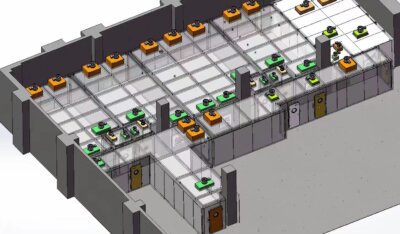
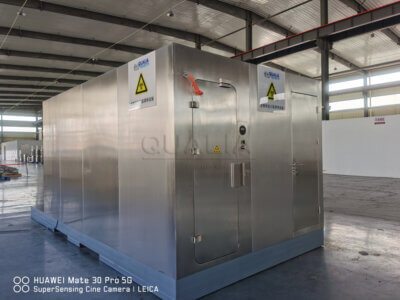
Both modular and traditional BSL-3 laboratories are governed by the same non-negotiable facility requirements outlined in the Biosafety in Microbiological and Biomedical Laboratories (BMBL) 6th Edition. These include sealed, cleanable surfaces, directional negative airflow, HEPA-filtered exhaust, and controlled access via an anteroom. The fundamental difference lies not in the performance standard, but in the methodology of achieving it. Modular units are engineered and prefabricated in controlled factory environments, allowing for precision assembly of critical containment elements—seals, wall penetrations, ductwork—under optimal conditions. This contrasts sharply with traditional construction, where these sensitive systems are assembled on-site amidst variable weather, dust, and coordination challenges.
The Critical Tier: Standard vs. Enhanced
A pivotal strategic distinction is the required containment tier. Industry analysis indicates that “BSL-3 Enhanced” is becoming a new operational baseline for work with specific agents like HPAI H5N1, mandating provisions such as effluent decontamination systems (EDS). This decision must be made at the project’s inception. Specifying a modular lab for enhanced containment from the start is feasible; retrofitting an EDS into a completed module is highly challenging and costly. Furthermore, compliance is a multi-document mandate. The design must simultaneously satisfy BMBL, USDA, and NIH Guidelines, necessitating a vendor capable of conducting early cross-regulatory gap analysis to avoid costly redesigns.
The Quality and Control Advantage
The factory-built approach offers a distinct advantage in quality assurance. Critical performance testing, such as pressure decay tests for room integrity, can be conducted in the factory before shipment. This front-loads the validation process, identifying and rectifying issues in a controlled setting rather than on a congested construction site. In my experience reviewing project timelines, this controlled environment significantly reduces the risk of delays caused by failed field tests, which in traditional builds can set a project back by months during the crucial commissioning phase.
| Feature | Modular BSL-3 | Traditional BSL-3 |
|---|---|---|
| Construction Method | Factory prefabrication | On-site assembly |
| Quality Control Environment | Controlled factory setting | Variable site conditions |
| Retrofit Difficulty for EDS | Highly challenging | Complex but possible |
| Core Compliance Basis | BMBL, USDA, NIH Guidelines | BMBL, USDA, NIH Guidelines |
Source: Biosafety in Microbiological and Biomedical Laboratories (BMBL) 6th Edition. The BMBL establishes the non-negotiable facility requirements—sealed surfaces, directional airflow, HEPA filtration, and controlled access—that both modular and traditional BSL-3 labs must meet for compliance.
Cost Analysis: Modular BSL-3 Lab Capital & Operational Expenses
Understanding Capital Expenditure Dynamics
The financial narrative for modular BSL-3 labs centers on capital allocation flexibility, not necessarily a lower sticker price. Upfront capital expenses for a fully equipped, turnkey modular facility are often comparable to traditional construction on a per-square-foot basis. The primary economic advantage is the ability to align expenditure with proven need. Modular construction enables phased investment and de-risking. An organization can deploy a single module for an immediate, grant-funded project, then scale with additional units as program demand is validated, avoiding the massive sunk cost of an oversized permanent facility built on speculative growth.
Operational Expense Drivers
Operational expenses reveal a mix of potential savings and unique, mandatory costs. Factory-built precision typically yields more energy-efficient building envelopes and optimized HVAC systems, reducing long-term utility spend. However, operational costs are heavily dictated by the containment level. An enhanced BSL-3 lab incurs significantly higher costs for EDS operation (chemicals or thermal energy), validated decontamination cycle maintenance, and specialized hazardous waste handling. These are intrinsic to the work, not the construction method.
The Non-Negotiable Program Costs
A substantial and often underestimated portion of the operational budget is dedicated to personnel safety programs. These costs are independent of the facility’s construction but are essential for compliance. Mandatory medical surveillance, specific vaccinations (e.g., for HPAI H5N1), baseline serum sample collection and storage, and a formal respiratory protection program with fit-testing represent recurring annual expenses. Failure to fully fund these programs jeopardizes operational licensing, regardless of how advanced the laboratory facility may be.
| Cost Category | Key Consideration | Financial Impact Driver |
|---|---|---|
| Capital Expenditure (CapEx) | Phased investment possible | Aligns with proven demand |
| Upfront Cost per sq. ft. | Comparable to traditional build | Construction method neutral |
| Operational Expenditure (OpEx) | Energy-efficient envelope | Reduced long-term utilities |
| Enhanced BSL-3 OpEx | Effluent Decontamination System (EDS) | Higher chemical/thermal costs |
| Mandatory Program Costs | Occupational health & surveillance | Independent of construction |
Source: Technical documentation and industry specifications.
Which BSL-3 Solution Offers Faster Deployment and Flexibility?
The Timeline Imperative
Speed of deployment is the definitive advantage of the modular approach. A traditional BSL-3 facility can require 3-5 years from initial design through site work, construction, and final validation. In contrast, a prefabricated modular lab can be deployed, installed, and validated in 12-24 months. This compressed timeline is invaluable for responding to emergent public health threats, securing and executing time-sensitive grant-funded research, or replacing aging capacity without catastrophic program disruption.
Strategic Flexibility and Mission Design
This inherent flexibility extends beyond timeline. Modular units can serve as permanent, relocatable assets or as “swing space” during renovations of core facilities. The market is segmenting into application-specific mobile platforms. A unit designed for high-throughput diagnostic sample processing will have a different layout and utility profile than one optimized for animal challenge studies or recombinant work. Selecting the correct, mission-optimized platform avoids costly over-engineering. Furthermore, sustainability features like all-electric power systems are becoming key flexibility differentiators, enabling deployment in urban areas with strict zero-emission mandates where diesel generators are prohibited.
| Metric | Modular BSL-3 | Traditional BSL-3 |
|---|---|---|
| Timeline to Validation | 12-24 months | 3-5 years |
| Primary Advantage | Rapid deployment | Permanent, fixed asset |
| Strategic Use Case | Emergent threat response | Long-term, stable programs |
| Scalability Model | Add incremental modules | Major renovation required |
| Sustainability Feature | All-electric power systems | Dependent on site infrastructure |
Source: Technical documentation and industry specifications.
Operational Standards: PPE, Health Programs, and Security
The Daily Regimen of Containment
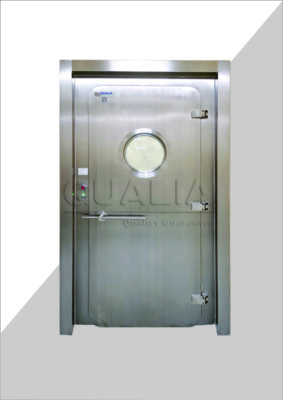
Operational compliance is where strategic planning meets daily practice. BMBL-based guidelines mandate a rigorous, non-negotiable PPE regime for BSL-3 work: typically, a solid-front or wrap-around protective suit, head and shoe covers, double gloves, and a powered air-purifying respirator (PAPR) or fit-tested N95 respirator. These protocols are constants for both modular and traditional labs. The facility design must meticulously support this regimen through logical anteroom layouts, ample bench space for donning and doffing, and secure pass-through autoclaves or dunk tanks.
Establishing the Health Program Foundation
The operational burden and start-up timeline are often defined by the occupational health program. Before the first experiment, institutions must establish a formal, documented respiratory protection program in accordance with OSHA standards, administer required vaccinations, collect and store baseline serum samples, and enroll all personnel in medical surveillance. For zoonotic agents like HPAI, a personnel quarantine policy restricting contact with susceptible animals is also required. We often see these programmatic requirements become the critical path to operational readiness, not the facility itself.
Integrating Physical and Biosecurity
Security protocols—controlling and logging access to both the facility and the infectious agents within—must be integrated into the modular facility’s design from the outset. This includes electronic access control systems, personnel screening procedures, and agent accountability logs. The design should facilitate these protocols, with clear entry/exit pathways and designated areas for security screening that do not compromise the containment envelope or PPE procedures.
| Requirement | Key Components | Program Timing |
|---|---|---|
| Personal Protective Equipment (PPE) | Full suit, PAPR, double gloves | Before entry, every use |
| Occupational Health Program | Vaccinations, serum samples, surveillance | Established before first experiment |
| Respiratory Protection | Fit-testing, formal program | Mandatory for all personnel |
| Security & Access Control | Personnel screening, agent accountability | Integrated into facility design |
Source: Biosafety in Microbiological and Biomedical Laboratories (BMBL) 6th Edition. The BMBL mandates rigorous PPE regimes, medical surveillance, and security protocols to protect personnel and the environment, which are operational constants regardless of laboratory construction type.
Validation and Commissioning for Modular BSL-3 Compliance
The Two-Phase Validation Process
Commissioning and qualification (CQV) is the critical process that proves a modular lab is compliant and safe for use. This rigorous validation is non-negotiable and follows a structured two-phase approach for modular units. Factory Acceptance Testing (FAT) occurs before shipment, verifying system integrity—airflow, pressure differentials, HEPA filter scans, alarm functions—in a controlled setting. Site Acceptance Testing (SAT) occurs after installation, confirming performance post-integration with site utilities and that the facility meets all specified requirements in its final location.
Documentation as a Deliverable
The validation process generates the essential documentation suite for regulatory audit readiness: Installation Qualification (IQ), Operational Qualification (OQ), and Performance Qualification (PQ) protocols and reports. This documentation proves that the facility was built as designed (IQ), operates as intended across all modes (OQ), and consistently performs under loaded conditions (PQ). A vendor’s expertise in generating and executing these detailed protocols is a key differentiator. Their methodology must align with standards like ISO 14644-1 for quantifying particulate cleanliness, which is foundational to proving containment efficacy.
The Dual-Compliance Imperative
For labs with dual missions—such as those requiring both BSL-3 containment and cGMP-grade air quality for therapeutic product development—the integrator’s experience is paramount. Reconciling these standards requires deep expertise in both biosafety and formal pharmaceutical validation protocols. An integrator without this dual focus may deliver a biologically safe lab that fails to meet the stringent documentation and environmental monitoring requirements of drug regulatory authorities, creating significant project risk.
| Validation Phase | Primary Focus | Critical Output |
|---|---|---|
| Factory Acceptance (FAT) | System integrity pre-shipment | Initial performance verification |
| Site Acceptance (SAT) | Post-installation integration | Final compliance certification |
| Key Test Parameters | Airflow, pressure, HEPA integrity | Proof of containment safety |
| Documentation Suite | IQ, OQ, PQ protocols | Regulatory audit readiness |
Source: ISO 14644-1 Cleanrooms and associated controlled environments. This standard provides the framework for quantifying and verifying particulate cleanliness, which is foundational to the performance testing and validation of a BSL-3 laboratory’s controlled environment.
Integration Challenges: Site Planning and Utility Connections
The Site as a System
A modular laboratory is not a standalone appliance; its successful operation depends on seamless integration with the site. This requires meticulous planning for utility connections: high-voltage electrical feed, potable water, dedicated sewer lines for waste decontamination, and pathways for exhaust stacks that meet height and dispersion requirements. The integration of an Effluent Decontamination System (EDS) demands careful planning for chemical containment, neutralization tank placement, or thermal treatment tie-ins, which have significant spatial and utility implications.
Permanent Geographic Constraints
Site selection carries irreversible strategic implications, especially for agriculture (BSL-3-Ag) pathogens. Facilities working with avian influenza, for example, are subject to a 0.5-mile buffer zone from commercial poultry operations as per USDA guidelines. This is a permanent land-use constraint. Choosing a site without confirming this buffer can render a multi-million dollar investment non-compliant before it is even installed, affecting all future expansion plans on that property.
The Trend Toward Point-of-Use Systems
Emerging trends are influencing utility planning. There is a move toward point-of-use decontamination equipment, such as mobile autoclaves and effluent treatment systems integrated directly into modular units. This can reduce dependency on centralized, facility-wide systems and offer greater flexibility. However, it places a premium on the vendor’s ability to design self-contained utility loops within the module and provide clear connection points for site power and water, simplifying the integration challenge while maintaining compliance.
Selecting a Modular BSL-3 Vendor: Key Evaluation Criteria
Proven Experience as the Baseline
Vendor selection is a high-stakes decision determining long-term compliance. The primary criterion is a demonstrable track record in delivering BMBL-compliant, validated high-containment facilities, not just generic cleanrooms or BSL-2 labs. Request detailed case studies, project narratives, and references for installations of similar scope and agent risk level. Scrutinize their experience with the specific containment tier (Standard or Enhanced) your work requires.
The Systems Integrator Mandate
Evaluate the vendor’s core capability as a true systems integrator. Can they manage the entire lifecycle from conceptual design and regulatory gap analysis through factory build, site integration, validation, and personnel training? A vendor that only manufactures enclosures and subcontracts containment systems integration introduces coordination risk. Single-point accountability from a firm with in-house engineering, manufacturing, and validation expertise is critical for managing complexity.
Validation and Global Support
Scrutinize the vendor’s validation methodology and documentation practices. Their FAT/SAT protocols should be comprehensive and transparent. Furthermore, given that the Asia-Pacific region is a key growth area for modular high-containment, vendors with a global support network and experience navigating international guidelines (e.g., WHO, local ministries of health) offer a strategic advantage for organizations with worldwide operations or collaborative research networks.
| Evaluation Criterion | What to Look For | Strategic Importance |
|---|---|---|
| Proven Experience | BMBL-compliant project case studies | Reduces compliance risk |
| Systems Integrator Capability | Manages design, build, validation | Ensures single-point accountability |
| Validation Methodology | Detailed FAT/SAT, IQ/OQ/PQ docs | Critical for regulatory approval |
| Global Support Network | International guideline experience | Enables worldwide operations |
Source: NSF/ANSI 49 Biosafety Cabinetry: Design, Construction, Performance, and Field Certification. A vendor’s expertise in integrating NSF/ANSI 49-certified biosafety cabinets is a key indicator of their understanding of critical containment components and overall systems integration capability.
Making the Final Decision: A Framework for Your Organization
A Structured Decision Matrix
The final choice requires a structured framework evaluating strategic, financial, and operational drivers. First, conduct an agent-specific risk assessment to definitively establish the required containment tier (Standard vs. Enhanced BSL-3). This dictates fundamental design and cost parameters. Second, analyze the project timeline imperative; if rapid deployment (under 24 months) is critical for grant compliance or outbreak response, modular construction is the only viable path.
Financial and Strategic Modeling
Financially, apply a total cost of ownership model over a 10-15 year horizon. Incorporate not only capital costs but also utilities, maintenance, and the significant, recurring operational costs of mandatory occupational health programs. Strategically, assess the need for future flexibility, scalability, or potential relocation. Does your long-term research strategy benefit from a deployable asset? Finally, weigh emerging factors like sustainability requirements and advanced, integrated decontamination technology, which may offer long-term operational advantages.
The optimal decision aligns technical compliance with your organization’s long-term research strategy and risk tolerance. It balances the need for absolute biological security with the practical realities of budget, timeline, and future adaptability. There is no universally correct answer, only the most strategically sound solution for your specific mission.
Need a partner to navigate the complexities of BMBL-compliant, high-containment laboratory deployment? The experts at QUALIA specialize in engineering and integrating mission-critical modular facilities, from design through validation, ensuring your project meets the highest standards of safety and performance. For a detailed consultation on your specific requirements, you can also Contact Us.
Frequently Asked Questions
Q: How do we determine if our modular BSL-3 lab requires an enhanced containment tier?
A: You must conduct an agent-specific risk assessment. Work with high-consequence pathogens like HPAI H5N1 mandates enhanced BSL-3 provisions, including an effluent decontamination system (EDS) and specific architectural details. This classification is a foundational design decision, as retrofitting liquid waste treatment later is exceptionally difficult. This means facilities planning work on select agents should specify “enhanced” BSL-3 from the initial vendor consultation to avoid non-compliant and costly redesigns.
Q: What are the key operational cost drivers for a modular BSL-3 facility beyond construction?
A: Operational budgets are dominated by the required occupational health program and containment-level utilities. Mandatory costs include medical surveillance, vaccinations, baseline serum storage, and a formal respiratory protection program. Enhanced BSL-3 operations add significant expense for EDS energy/chemicals, validated decontamination cycles, and specialized waste handling. For projects where agent risk dictates enhanced containment, plan for operational expenses that are largely independent of the modular build method but essential for BMBL compliance.
Q: How does the validation process for a modular BSL-3 lab differ from a traditional build?
A: Validation occurs in two distinct phases: Factory Acceptance Testing (FAT) of critical systems like seals and HEPA filters in a controlled environment, followed by Site Acceptance Testing (SAT) after installation and utility hookup. This split process de-risks quality control. When selecting a vendor, prioritize those with expertise in generating formal FAT/SAT protocols and supporting IQ/OQ/PQ documentation, as this integrator capability is critical for proving BMBL compliance and safe operation.
Q: What is the most critical factor in selecting a site for a modular BSL-3-Ag laboratory?
A: For agriculture pathogens like avian influenza, permanent geographic restrictions are the paramount concern. BSL-3-Ag facilities require a mandated 0.5-mile buffer zone from commercial poultry operations. This land-use constraint is irreversible and will dictate all future expansion possibilities on that site. This means your initial site selection for zoonotic disease research carries long-term strategic implications, making early consultation with regulatory and planning authorities non-negotiable.
Q: Can a modular BSL-3 facility also meet cGMP air quality standards for product development?
A: Yes, but it requires a vendor with specific dual-compliance integration expertise. The lab must satisfy both biosafety containment requirements and the stringent particulate controls of ISO 14644-1 for cleanroom classification. The vendor’s validation methodology must reconcile these standards in detailed protocols. If your operation requires both high containment and aseptic processing, plan to evaluate vendors based on proven case studies in this niche, not just general BSL-3 experience.
Q: What are the primary financial advantages of a modular approach over traditional BSL-3 construction?
A: The core advantage is capital allocation flexibility and risk mitigation, not necessarily lower upfront cost per square foot. Modular labs enable phased investment, allowing you to deploy a single validated unit for immediate needs and scale with additional modules as demand is proven. This avoids the massive sunk cost of an oversized permanent facility. For organizations with evolving research portfolios or grant-funded timelines, this scalability directly translates to better capital preservation and agility.
Q: How should we evaluate a modular vendor’s capability beyond basic manufacturing?
A: Assess their role as a full systems integrator. A competent vendor manages the entire lifecycle from design and factory build to site integration, commissioning, and staff training. Scrutinize their validation documentation practices and request references for projects with similar agent risk levels. Given global demand, vendors with international support networks and experience navigating guidelines like WHO’s offer a strategic advantage for organizations with worldwide collaborations.
Related Contents:
- Modular BSL-4 Labs: Cutting Costs Without Compromising
- Modular Biosafety Laboratory vs Traditional Brick-and-Mortar Construction: 8 Critical Differences in Cost, Timeline, and Flexibility
- Modular BSL-3 Labs: Rapid Construction Solutions
- Customizable BSL-3 Labs: Tailored Modular Designs
- Installing Modular BSL-3 Labs: Expert Guide
- Comparing Biosafety Isolator Vendors: Top Tips
- Modular BSL-3 Lab Costs: Comprehensive Analysis
- Modular BSL-3/4 Labs: Rapid Deployment Solutions
- Modular BSL-4 Laboratory Feasibility: Containment Challenges and Design Limitations for Maximum Biocontainment