Establishing an Animal Biosafety Level 3 (ABSL-3) laboratory for veterinary pathogen testing is a monumental undertaking, driven by the critical need to study high-consequence zoonotic diseases transmitted via aerosols. The core challenge lies not just in constructing a secure facility, but in designing an integrated, operationally flexible system that protects personnel, the environment, and research integrity against catastrophic biocontainment failure. Professionals must navigate a maze of engineering, regulatory, and human factors, where a single oversight can compromise safety and invalidate years of research.
The urgency for such specialized infrastructure has never been greater. The convergence of emerging zoonotic threats, advanced aerobiology research, and stringent regulatory demands makes a properly validated ABSL-3 facility a strategic asset. This case study moves beyond theoretical design to examine the concrete technical specifications, validation methodologies, and operational realities of a successful installation, providing a decision framework for institutions considering this significant investment.
Project Scope and Critical Design Objectives
Defining the Operational Mandate
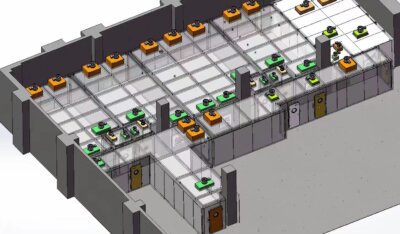
The project scope extends beyond a secure room. It requires creating a multi-layered containment environment where primary containment caging operates within a secondary barrier room. The mandate is to enable controlled in vivo studies on aerosolized select agents and zoonotic pathogens. A critical, often underestimated, objective is achieving operational flexibility. The facility must support multiple distinct infectious studies within a single containment space without cross-contamination risk. This demands a design philosophy that prioritizes integrated, validated engineering controls over procedural safeguards alone.
Navigating the Regulatory Landscape
The regulatory stack is a significant hidden cost driver. Compliance spans multiple agencies including the CDC, USDA, AAALAC, and institutional IACUC committees. Each layer adds management overhead and requires specialized expertise. A common mistake is underestimating the personnel and time required for ongoing compliance documentation and audits. Industry experts recommend engaging a dedicated biosafety officer with specific ABSL-3 experience early in the design phase to navigate this complex framework effectively, as outlined in standards like ISO 35001:2019.
Technical Specifications and Redundancy Systems
Engineered Barriers as the Foundation
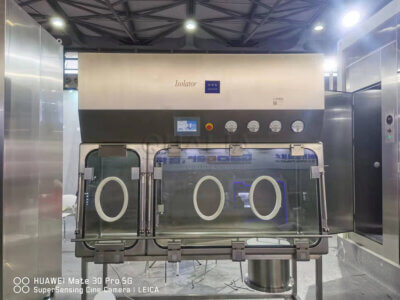
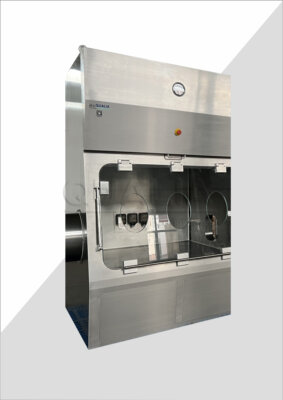
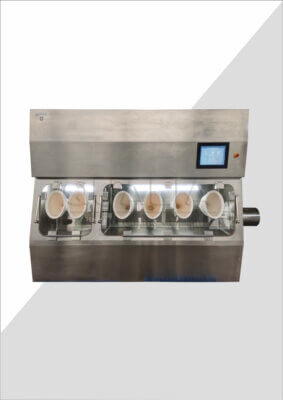
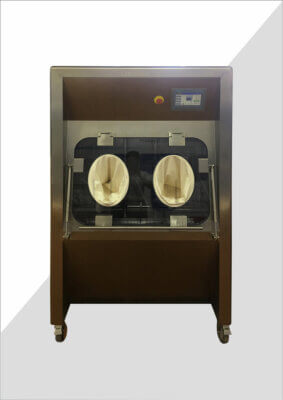
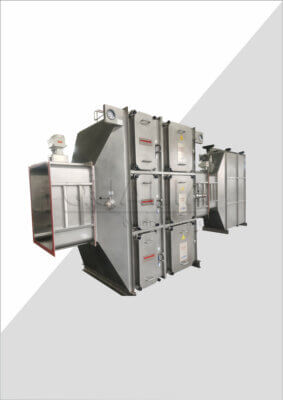
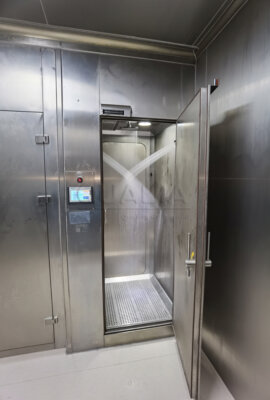
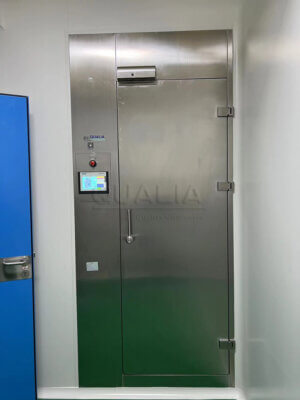
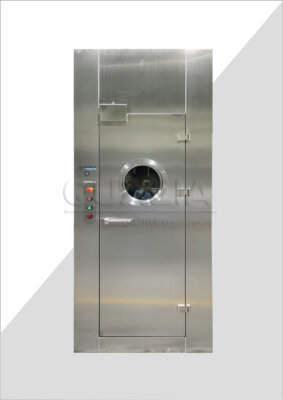
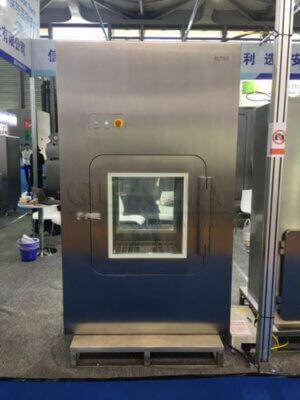
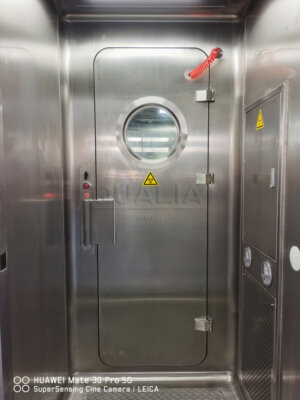
The technical heart of an ABSL-3 facility is its engineered barriers. The secondary barrier is the room itself, featuring directional airflow, maintained negative pressure, sealed penetrations, and HEPA-filtered exhaust. Within this space, primary containment is achieved through specialized caging. In the documented case, modified semi-rigid isolators were selected. These “keep-in” isolators, with a transparent plastic membrane on an aluminum frame, allow standard animal cages to house mid-sized species. This strategic choice provides a flexible, cost-effective alternative to dedicated, hard-plumbed cage rack systems, avoiding substantial capital expense.
The Imperative of System Redundancy
Redundancy is non-negotiable for critical life safety systems. The isolator specifications include intake air passing through a pre-filter and HEPA filter, with exhaust pulled through two in-line HEPAs. The exhaust system itself uses two blower motors in a lead/lag configuration with automatic failover. Power redundancy is also layered: each isolator connects to facility emergency power plus a dedicated battery backup unit. We compared single-point and multi-point failure designs and found that only a deeply redundant architecture meets the reliability requirements for long-term pathogen studies.
Core System Specifications
The table below summarizes the key technical specifications and redundancy features for the primary containment and support systems.
| System Component | Key Specification | Redundancy Feature |
|---|---|---|
| Primary Containment | Modified semi-rigid isolators | Dual in-line HEPA filters |
| Exhaust System | Two blower motors | Lead/lag automatic failover |
| Power Supply | Facility emergency power | Dedicated battery backup |
| Air Intake | Pre-filter and HEPA filter | N/A (single path) |
Source: Biosafety in Microbiological and Biomedical Laboratories (BMBL) 6th Edition. The BMBL provides foundational requirements for primary and secondary containment, including the need for HEPA filtration and controlled directional airflow, which underpin the technical specifications in this table.
Containment Validation with CFD Failure Analysis
Moving Beyond Checklist Certification
Engineering controls require evidence-based validation before operational use. Computational Fluid Dynamics (CFD) modeling has become a critical tool, subdividing the air space to simulate aerosolized particle behavior under various failure scenarios. This predictive approach is shifting regulatory biocontainment approval from qualitative checklists to quantitative risk assessments. While it increases upfront design costs, it de-risks long-term operational compliance and provides definitive data on system performance limits.
Simulating Real-World Failure Modes
In the documented case, CFD assessed breaches like seam separations or open ports under both normal and failed exhaust airflow conditions. The modeling provided clear, visualizable data on containment efficacy. Results demonstrated that with a functional exhaust system, no simulated particles escaped the isolator, even with a significant breach. This quantitative validation gives operators and safety committees confidence in the primary containment’s integrity during standard operating procedures and minor incident scenarios.
Validation Outcomes from Simulated Breaches
The CFD analysis produced definitive outcomes for specific failure modes, which are summarized below.
| Failure Scenario | Exhaust Status | Containment Outcome |
|---|---|---|
| Seam separation / Open port | Functional | No particle escape |
| Major breach | Functional | No particle escape |
| Major breach | Complete failure | Containment compromised |
Note: Containment breach only occurred in a highly improbable double-failure scenario.
Source: Technical documentation and industry specifications.
Operational Protocols and Incident Management
The High-Risk Reality of Veterinary Diagnostics
Robust protocols must manage the inherent risks of handling dangerous pathogens with often-unknown presentation. A real case involving a cat suspected of rabies—later found infected with Francisella tularensis—illustrates the critical challenge. Initial handling in a BSL-2 lab created an exposure risk, highlighting that veterinary diagnostics are high-risk zoonotic exposure vectors where personnel frequently lack prior warning. This underscores the need for fortified communication and universal BSL-2+ precautions in diagnostic pipelines receiving animal samples.
Activating the Incident Response Framework
When the tularemia risk was identified, protocol activation was immediate: work ceased, the sample was treated as contaminated, and biosafety experts were consulted. The decision was made not to proceed with BSL-2 rabies testing due to aerosol risk; samples were instead sent to a BSL-3 reference lab. Exposed staff underwent risk-tiered medical evaluation and prophylaxis. This incident reinforces that protocols must be clear, actionable, and drilled regularly. The easily overlooked detail is the need for pre-established relationships with BSL-3 reference labs for emergency sample transfer.
Integration with In Vitro Diagnostic Workflows
Supporting the Complete Research Chain
A functional ABSL-3 facility is a node in a larger research and diagnostic ecosystem. The integrated workflow begins with animals infected via controlled aerosol challenge within a Class III Biological Safety Cabinet. They are then housed in primary containment isolators, with samples collected for supporting in vitro assays like virological titrations and molecular diagnostics (e.g., RT-PCR). These assays are conducted in adjoining BSL-3 or BSL-2 labs, following strict sample inactivation protocols. This seamless flow from in vivo to in vitro analysis is essential for comprehensive pathogen study.
The Strategic Shift Toward Integrated Platforms
This need for integration underscores a broader inefficiency: the danger and operational lag of siloed diagnostic labs. Repeated dual-diagnosis challenges create significant pressure for regional “One Health” diagnostic platforms. The future lies in integrated facilities capable of multi-pathogen testing under appropriate, flexible containment levels. This represents a major infrastructure investment opportunity, moving away from single-pathogen focused labs to agile, multi-use high-containment testing platforms.
Personnel Training and Safety Culture Requirements
The Specialized Talent Bottleneck
Engineering controls are only as effective as the personnel operating them. Running an ABSL-3 facility demands a team with a rare blend of skills: microbiologists, veterinary pathologists, animal technicians, and biosafety officers all trained in high-containment operations. This need points to an intensifying talent bottleneck. As high-containment work expands, biosafety labor specialization will increasingly dictate project timelines and geographic clustering of research. Organizations must develop intensive in-house training pipelines and retention strategies to compete for a small, specialized talent pool.
Building a Culture of Rigorous Discipline
Training encompasses BSL-3 practices, animal handling in containment, PPE use (including powered air-purifying respirators), and emergency procedures. However, training alone is insufficient. A true safety culture requires constant reinforcement, peer accountability, and leadership that prioritizes safety over schedule. From my experience, the most secure facilities are those where every team member feels empowered to stop any process that appears unsafe, without fear of reprisal. This cultural element is as critical as any physical barrier.
Total Cost of Ownership and ROI Considerations
Analyzing the Full Cost Spectrum
The Total Cost of Ownership (TCO) extends far beyond construction. Capital expenses cover the secondary barrier room and primary containment systems. Operational costs are substantial and ongoing: stringent maintenance of HEPA filters and redundant mechanical systems, continuous environmental monitoring, and decontamination supplies. A frequently overlooked cost is the complex regulatory compliance overhead, which necessitates dedicated personnel, adding significant management expense to the operating budget.
Quantifying Strategic Return on Investment
Return on Investment is realized through enabling critical in vivo studies on aerosolized zoonotic pathogens, which are essential for vaccine and therapeutic development. The facility also provides high-containment diagnostic capacity, mitigating the risk and delay of sending samples externally. The strategic value includes direct risk mitigation against laboratory-acquired infections and an enhanced institutional reputation that attracts top-tier research partnerships and funding.
Breaking Down Cost Categories and Value
The following table categorizes the key cost components and aligns them with the strategic value they deliver.
| Cost Category | Examples | Strategic Value / ROI |
|---|---|---|
| Capital Expense (CapEx) | Secondary barrier room, Semi-rigid isolators | Flexible, mid-cost alternative |
| Operational Expense (OpEx) | HEPA maintenance, Environmental monitoring | Continuous compliance assurance |
| Management Overhead | Dedicated compliance personnel | Navigating complex regulatory stack |
| Return on Investment | Enables in vivo aerosol studies | Vaccine/therapeutic development support |
Source: ISO 35001:2019 Biorisk management for laboratories and other related organisations. This standard’s framework for biorisk management aligns with the TCO analysis, emphasizing that effective risk control (a key ROI component) requires investment in both facilities and ongoing operational systems.
Implementation Timeline and Vendor Selection Criteria
Planning for a Multi-Year Journey
A realistic implementation timeline spans years. The design phase must incorporate advanced tools like CFD modeling, which extends initial timelines but is crucial for validation. The construction and fit-out of the secondary barrier require specialized contractors familiar with biocontainment sealing and ventilation standards. Commissioning and operational validation form the final, critical phase before any infectious agent is introduced. Underestimating any of these stages is a primary cause of project delays and budget overruns.
Evaluating Primary Containment Vendors
Vendor selection for primary containment is a decisive factor. Key criteria include proven mechanical redundancy (dual blowers, battery backup), compatibility with standard animal caging to maintain flexibility, and the availability of comprehensive validation data from failure-mode testing. Vendors should provide evidence of their system’s performance under simulated breach conditions, not just compliance certificates.
Phases and Future-Proof Considerations
The implementation process and forward-looking vendor criteria are outlined below.
| Phase | Key Activity | Strategic Consideration |
|---|---|---|
| Design | Regulatory approval, CFD modeling | Extends timeline, ensures validation |
| Construction | Specialized contractor fit-out | Secondary barrier implementation |
| Vendor Selection | Primary containment redundancy | Dual blowers, battery backup |
| Future Trend | Modular, mobile platforms | Agile deployment and surge capacity |
Source: Technical documentation and industry specifications.
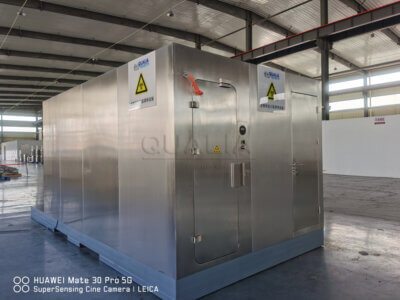
The strategic implication is a clear shift toward modular, mobile containment platforms. Success with flexible isolators and field-based diagnostic needs suggests growing demand for validated, scalable solutions like container-based labs. Vendors offering such adaptable, pre-validated systems align with future trends requiring agile deployment and surge capacity for outbreak response.
Prioritize validated engineering controls over procedural promises, and invest in CFD analysis to de-risk long-term compliance. Secure specialized biosafety talent early, as this human element will define operational success as much as the physical infrastructure. Finally, evaluate costs through a total ownership lens, where operational and compliance overhead often surpass capital expenditure.
Need professional guidance on designing or validating a high-containment laboratory for complex pathogen research? The experts at QUALIA specialize in integrating engineering controls, operational workflows, and regulatory strategy to deliver functional, compliant facilities. Contact Us to discuss your specific project requirements and implementation framework.
Frequently Asked Questions
Q: What are the key design objectives for a flexible ABSL-3 lab handling multiple infectious studies?
A: The primary objective is to establish a multi-layered containment environment where primary containment caging operates inside a secondary barrier room. This design must enable multiple distinct infectious studies within a single space without cross-contamination risk. For projects where research agility is critical, you should prioritize integrated, validated engineering controls over procedural safeguards alone to mitigate biocontainment failure, as emphasized in foundational guidance like the Biosafety in Microbiological and Biomedical Laboratories (BMBL) 6th Edition.
Q: How do semi-rigid isolators provide a cost-effective primary containment solution for ABSL-3 animal work?
A: Modified semi-rigid isolators serve as a flexible “keep-in” primary barrier, constructed with a transparent plastic membrane on an aluminum frame. They allow the use of standard animal cages for mid-sized species, avoiding the capital expense of dedicated, hard-plumbed caging systems. This means facilities with variable research needs or budget constraints should evaluate these isolators for their balance of containment assurance and capital cost savings.
Q: Why is CFD modeling now critical for ABSL-3 containment validation and regulatory approval?
A: Computational Fluid Dynamics modeling simulates aerosolized particle behavior under various failure scenarios, such as isolator breaches or exhaust failures, providing quantitative risk data. This evidence-based approach is shifting regulatory certification from simple checklists to performance-based assessments. If your project aims for long-term compliance certainty, expect to incorporate CFD analysis during the design phase, which increases upfront costs but significantly de-risks operational validation.
Q: What operational challenge does a suspect rabies case highlight for veterinary diagnostic labs?
A: Such a case underscores that veterinary diagnostics are high-risk zoonotic exposure vectors where personnel often lack prior warning of the pathogen. Initial handling of a sample later found to contain Francisella tularensis in a BSL-2 lab created an exposure risk, forcing work stoppage and medical evaluation. This means labs should implement fortified communication protocols and universal BSL-2+ precautions in their diagnostic pipelines to manage unexpected high-consequence agents.
Q: What are the major hidden costs in the total ownership of an ABSL-3 facility?
A: Beyond construction and equipment, significant operational costs arise from stringent maintenance of HEPA filters and redundant mechanical systems, continuous environmental monitoring, and decontamination supplies. Furthermore, navigating the complex regulatory stack from the CDC, USDA, and AAALAC requires dedicated compliance personnel, adding substantial management overhead. For accurate budgeting, you must plan for these recurring operational and personnel expenses, not just the initial capital investment.
Q: What personnel bottleneck affects ABSL-3 implementation and how can it be managed?
A: Operating an ABSL-3 lab demands a rare blend of scientific expertise and operational discipline among microbiologists, veterinary pathologists, and biosafety officers. This talent shortage dictates project timelines and can cluster research capabilities. Organizations must therefore develop intensive in-house training pipelines and retention strategies, aligning with frameworks for building competent teams like those in ISO 35001:2019 Biorisk management.
Q: What criteria should guide vendor selection for primary containment isolators?
A: Key selection criteria include proven system redundancy with dual blower motors in a lead/lag configuration and automatic failover, compatibility with your standard animal caging, and the availability of comprehensive validation data from failure-mode testing. You should also verify that each isolator connects to both facility emergency power and a dedicated battery backup. This means prioritizing vendors who provide transparent, test-backed performance data over those offering only basic specifications.
Q: How does the integration of in vitro diagnostics change the strategic value of an ABSL-3 lab?
A: An integrated ABSL-3 facility supports a complete research chain, from animal challenge and housing to sample collection and subsequent virological or molecular assays in adjoining labs. This workflow highlights the inefficiency and risk of siloed diagnostic operations. For institutions planning long-term infrastructure, this creates an opportunity to develop integrated regional “One Health” diagnostic platforms capable of multi-pathogen testing under appropriate containment levels.
Related Contents:
- Animal BSL-3 Laboratories for Veterinary and Infectious Disease Research in the Pharmaceutical Industry
- BSL-4 Animal Research: Ensuring Handler Safety
- How Animal BSL-3 Standards Differ in Veterinary vs. Pharmaceutical Environments
- BSL-3 Animal Housing: Safe Containment Systems
- BSL-3 Animal Research: Facility Design Guide
- Animal BSL-3 Laboratory Technical Design Principles for Handling Aerosol-Transmissible Agents
- The Complete Animal BSL-3 Laboratory Guide for Research Facility Directors: 2025 Edition
- Biosafety Isolators in Animal Research Facilities
- Biosafety Cabinets in Animal Research: Safety First