
When a BSL-3/4 maintenance request reaches the shop floor, the technician’s first question is rarely about the repair itself — it is whether reaching the component means opening a containment boundary that was never planned for routine access. That question belongs earlier, at layout approval, not at the service call. Once walls, ducting, and equipment positions are fixed, every awkward access becomes a recurring operational cost paid in isolation time, decontamination cycles, and schedule risk for the lab.
Service Tasks That Must Be Mapped Before Layout Approval
Maintenance planning for a BSL-3/4 facility has to start from the inventory of interventions the room will require over its working life, not from the architectural layout that happens to be convenient. Each filter housing, damper, door, transfer device, and waste-treatment component carries its own service profile: how often it is approached does not matter here, but how it is approached does. The review has to be done from the maintainer’s side of the task — the physical reach needed to open a housing, the path a removed part or spent filter will travel, and the route a contaminated item takes once it leaves the containment envelope.
This reframing matters because layout drawings are usually produced from a process or biosafety perspective first, with access treated as a secondary constraint fitted in afterward. Where a service task is mapped only after the room geometry is fixed, the project is left choosing between compromising the maintenance path or reopening a boundary that was already treated as closed. Where the service task is mapped before layout approval, the containment boundary, the equipment position, and the access path can be set together, so the finished room does not force a maintainer to work through a gap that was never designed for that purpose.
The inventory needs to include every component with a maintenance life shorter than the building itself: filter housings and their upstream and downstream ductwork, dampers and their actuators, door seals and interlocks, bag-in-bag-out and other transfer devices, and waste-treatment or effluent-handling components. For each one, the project team should be able to answer what the intervention consists of, which side of the containment boundary the maintainer stands on, and what leaves the component once the work is done. Where that third answer is not available — where no one has yet defined what a removed filter, a replaced seal, or a decommissioned sensor actually does on its way out of the room — the layout cannot yet be called complete, regardless of how finished the drawings look.
Isolation and Decontamination Boundaries for Each Intervention
| Intervention context | Boundary or preparation to define | Evidence boundary |
|---|---|---|
| Boundary-opening maintenance | Define how the service zone will be isolated and decontaminated before technicians approach the task. | The intervention method follows the project risk assessment. |
| HEPA exhaust testing or replacement | Include maintenance-event decontamination provisions and planned access for the intervention. | The cited HEPA guidance is limited to its primary-barrier context and does not establish general equipment approval. |
| Containment-affecting change or repair | Plan inspection and testing of affected penetration seals and retain documented verification. | Applicability is activity-specific; no universal pressure-decay scope, test value, or product approval is established. |
Not every maintenance task touches the containment boundary in the same way, and the isolation and decontamination approach has to match the specific intervention rather than apply a single blanket procedure to the whole room. Some tasks stay entirely on the clean or unaffected side of a barrier; others require the service zone itself to be isolated and decontaminated before a technician approaches the point where the boundary will be opened. The distinction is not cosmetic — it changes what equipment, what sequencing, and what verification the task requires before work can begin.
Where a task opens the containment boundary, the project’s own risk assessment has to define how that service zone is isolated and decontaminated beforehand; there is no universal procedure that substitutes for that assessment. This is the condition that separates a boundary-opening intervention from one that does not require the same preparation: if the task involves breaching a barrier that normally maintains pressure or biological separation, the isolation and decontamination sequence precedes the physical access step, not the other way around. If the task stays on one side of an intact barrier, the preparation burden is different, though the component still has to be reachable and its contaminated-item route still has to be defined.
HEPA exhaust testing or replacement illustrates how a specific intervention type carries its own guidance. The BMBL 6th Edition addresses maintenance-event decontamination provisions and, in its primary-barrier context, HEPA exhaust testing and replacement — but this is advisory best practice tied to a particular context, not a general approval for HEPA work across all configurations. A project cannot treat that guidance as covering every filter intervention in the facility; it has to confirm which of its own tasks fall inside that primary-barrier scope and which do not.
Penetration seals raise a related but separate case. The Canadian Biosafety Standard, Third Edition calls for inspection and testing of penetration seals and documented verification after containment-affecting changes or repairs. That requirement is activity-specific and does not establish a universal pressure-decay value or product approval; it tells the project that a seal disturbed by a repair needs inspection and documented verification, not what numeric result that verification must produce. The project’s own acceptance criteria have to fill that gap, and the layout has to leave room for whatever inspection method those criteria require.
Access Space, Removal Routes, and Temporary Handling Controls
| Planning check | Applies to | Layout decision to close |
|---|---|---|
| Maintainer-side reach | Filter housings, dampers, doors, transfer devices, and waste-treatment components | Confirm that the intervention can be reached from the planned service side. |
| Removal path | Each maintained component | Reserve a path that allows the component or service item to be removed without blocked access. |
| Contaminated-item route | Items leaving a serviced containment component | Define the route before build so contaminated-item movement is part of the layout. |
| Lifting space | Components or service items that require lifting | Reserve the lifting space together with the removal path. |
| Dependence on temporary penetrations | Test injection, downstream sampling, sensor calibration, seal replacement, and lifting access | Reserve the required access in the permanent layout rather than relying on temporary penetrations through containment. |
Access space is not a single dimension to check off — it is a set of related but distinct reservations that each fail independently if left out of the layout. Maintainer-side reach is the first: can the person doing the work physically get to the filter housing, damper, door, transfer device, or waste-treatment component from the side the project intends them to work from? A component can be visible on a drawing and still be unreachable once ductwork, structural elements, or adjacent equipment are placed around it.
Reach alone does not finish the job. A removal path has to exist for whatever comes out of the component — a filter, a seal, a sensor, or the device itself — without that path being blocked by the same equipment that made the component reachable in the first place. Where the removal path and the reach path are the same narrow corridor, a routine replacement can become a task that requires temporarily displacing other equipment, which is a different and larger undertaking than the maintenance task itself.
The contaminated-item route is a separate decision again. An item leaving a serviced containment component has a biosafety status that a clean replacement part does not share, and the layout has to define where that item goes before the room is built, not improvise a route once the maintenance event occurs. If the facility treats this as an afterthought, the technician is left deciding in the moment how to move a contaminated item through a space that was not designed for that movement, which undermines the isolation and decontamination boundary already established for the intervention.
Lifting space follows the same logic for any component or service item heavy or awkward enough to require mechanical assistance. Reserving the lifting space together with the removal path, rather than as an isolated allowance, keeps the two compatible — a lifting point that conflicts with the only available removal path defeats its own purpose.
The temptation that undermines all of this is relying on temporary penetrations through containment to solve an access problem that the permanent layout failed to address. Test injection, downstream sampling, sensor calibration, seal replacement, and lifting access all have legitimate, recurring需要 in a working facility, and each one should be reserved in the permanent layout rather than solved later with an improvised opening. A temporary penetration treated as a routine solution becomes a repeated containment event, and each repetition is itself a boundary-opening intervention subject to the isolation and decontamination logic described above.
Test Ports, Sensors, Utilities, and Lockout Interfaces
Coordinating access to test ports, sensors, utilities, and lockout interfaces is a distinct layout task from reserving physical space for component removal, because these interfaces are often small, numerous, and easy to treat as incidental when the larger equipment footprint is being planned. A test port exists to let a technician verify system performance — pressure, flow, or containment integrity — without opening the containment boundary itself. If that port is not accessible without first displacing other equipment or entering a restricted zone, its purpose is defeated before it is ever used.
Sensors and their calibration access follow a similar logic. A sensor that reports pressure, airflow, or alarm status needs periodic calibration or verification, and the frequency or method of that verification is a project-specific decision, but the physical access to reach the sensor without disturbing the system it monitors is a layout decision that has to be made in advance. Where a sensor is embedded in a position that requires partial disassembly of adjacent equipment just to reach its calibration point, every calibration event becomes its own miniature maintenance intervention, with its own isolation and documentation burden.
Utility interfaces — power, compressed air, controls wiring — carry a related but different concern: lockout. Before a technician works on an interlocked door, damper, or transfer device, the relevant utility or control signal has to be isolated in a way that is both verifiable and physically accessible. If the lockout point is located inside the same restricted zone that the maintenance task is trying to avoid entering, the lockout procedure cannot be completed without first creating the exposure it is meant to prevent.
The coordinating principle across all of these interfaces is that each one has to be reachable from a position consistent with the isolation state the maintenance task requires. A test port reachable only from inside an area that should remain isolated during the test is not functionally accessible, regardless of its physical presence on the drawing. The project team benefits from walking through each interface type — test ports, sensors, utility connections, and lockout points — against the isolation boundary defined for its associated intervention, confirming that reaching the interface does not itself require crossing the boundary the intervention is meant to respect.
Restoration Tests After Filters, Seals, or Controls Are Disturbed
| Disturbance | Restoration check or evidence | Decision boundary |
|---|---|---|
| Filter or filter-housing work | Complete the applicable restoration testing and document system release; where the cited primary-barrier HEPA context applies, account for exhaust testing and replacement provisions. | The cited BMBL guidance is advisory, and the method follows the project risk assessment. |
| Penetration-seal change or repair | Inspect and test the affected penetration seal and document verification after containment-affecting work. | No universal pressure-decay scope, test value, or product approval is established. |
| Control, sensor, or other component-level repair | Verify the adjacent pressure, alarm, and interlock relationships that the repair may have altered, then document system release. | Use project-defined acceptance criteria; this table does not establish numeric values. |
A maintenance event does not end when the physical repair is finished; it ends when the system is verified to have returned to its required condition and that verification is documented. This distinction matters because a component-level repair can alter relationships elsewhere in the system that are not obvious from the repair itself — an adjacent pressure relationship, an alarm threshold, or an interlock sequence can shift when one part of the system is disturbed, even if the repaired component itself now functions correctly in isolation.
Filter and filter-housing work carries its own restoration logic. The applicable restoration testing has to be completed and the system release documented before the component is considered returned to service. Where the cited primary-barrier HEPA context applies, the BMBL’s exhaust testing and replacement provisions become relevant, but that guidance is advisory and the actual method has to follow the project’s own risk assessment rather than being treated as a fixed universal procedure.
Penetration-seal work follows the Canadian Biosafety Standard’s requirement to inspect and test the affected seal and document verification after any containment-affecting change or repair. No universal pressure-decay value or product approval is established by that requirement — the project has to define its own acceptance criteria and confirm that the restoration test actually exercises the seal condition that matters for its specific containment design.
Control, sensor, or other component-level repairs raise the broadest version of this issue, because the thing that needs verifying is not the repaired component itself but its relationship to the rest of the system. If a damper actuator is replaced, the pressure cascade it participates in has to be re-verified, not just the actuator’s own movement. If an alarm sensor is recalibrated, the interlock sequence it triggers has to be confirmed to still behave as designed. This is the condition that separates a restoration test from a simple functional check: a functional check confirms the repaired part works; a restoration test confirms the system around it still works the way the design intended.
Where the project has not yet defined acceptance criteria for these adjacent relationships, the restoration test cannot be specified in advance, and the maintenance event risks ending with a repaired component but an undocumented system state — which is a different and less defensible position than a documented release.
Build Release Requires Closed Access and Recovery Evidence
Releasing a BSL-3/4 build for operation means confirming two things together, not separately: that the access provisions planned earlier in the project are physically closed out in the finished facility, and that the restoration evidence for any maintenance-relevant disturbance during construction or commissioning has been documented. Neither one substitutes for the other. A facility can have excellent access space and removal routes while lacking the documented verification that a disturbed seal or recalibrated sensor was properly restored; a facility can equally have thorough test documentation while still leaving a technician without a workable path to reach the component the documentation describes.
Closed access means the reach, removal path, contaminated-item route, and lifting space identified during layout planning are verified as built, not merely as drawn. A drawing that showed adequate clearance can still result in a built condition where conduit, structural bracing, or adjacent equipment narrows that clearance below what the maintenance task requires. Build release should include a walk-through of these access points against their original planning intent, not just against general biosafety containment checks that the structure already has to satisfy.
Recovery evidence refers to the documented restoration testing tied to whatever was disturbed during build and commissioning — filter housings seated and tested, penetration seals inspected per the Canadian Biosafety Standard’s documented-verification requirement, and control or interlock relationships confirmed where repairs or adjustments touched them. Where this evidence is incomplete, the facility may be physically finished without being verifiably ready to return components to service after the first real maintenance event, which is a different standard than simple construction completion.
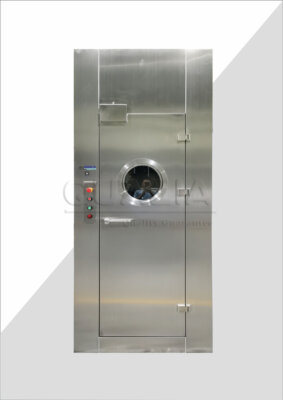
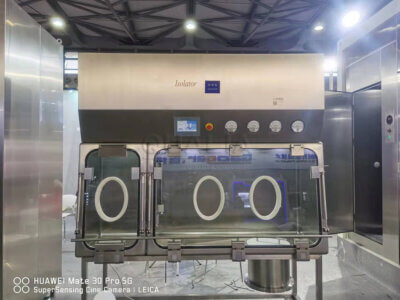
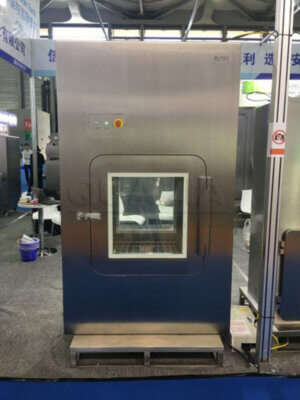
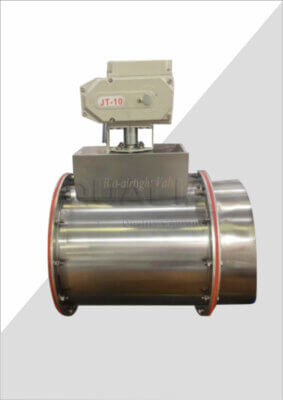
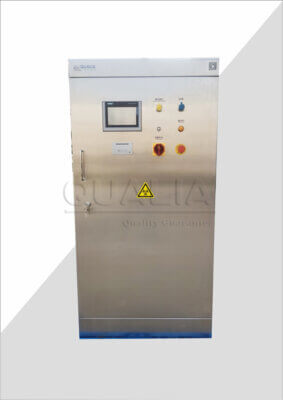
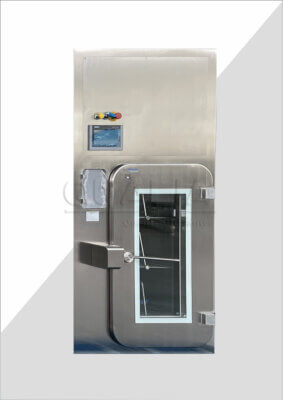
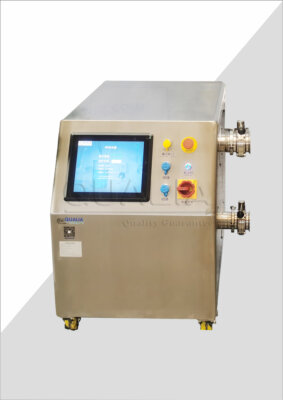
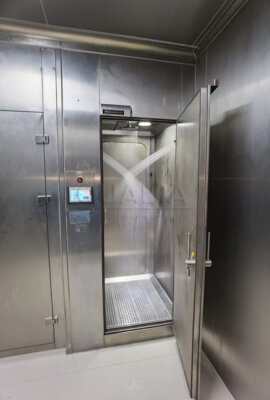
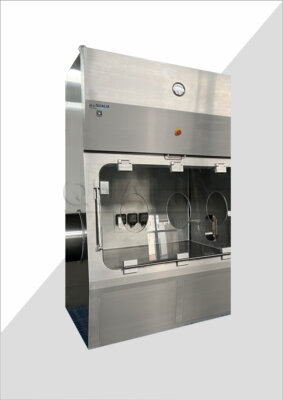
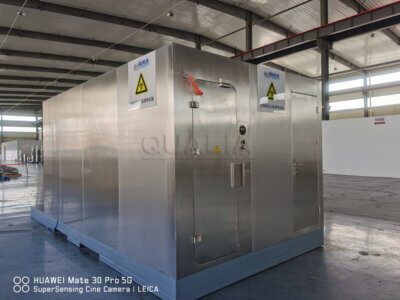
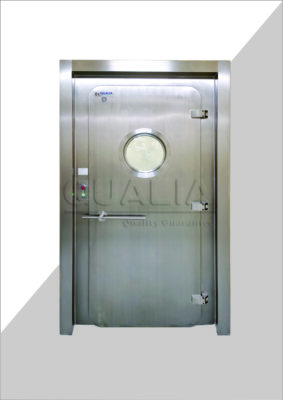
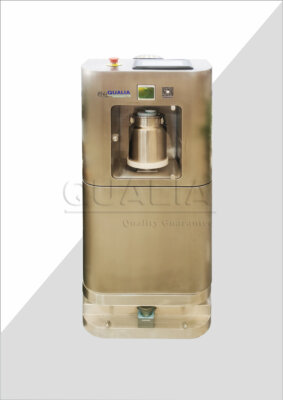
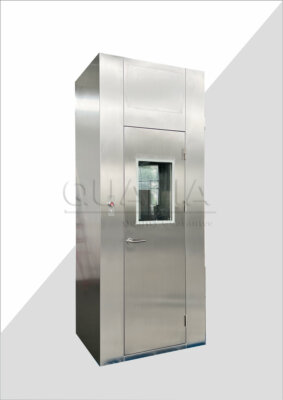
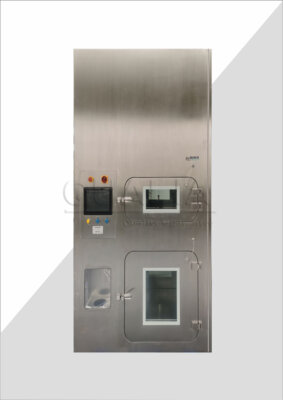
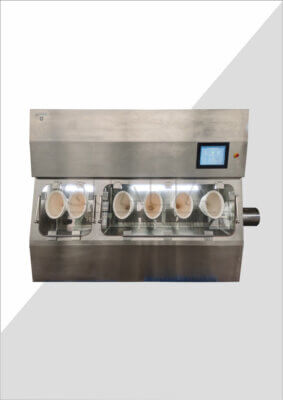
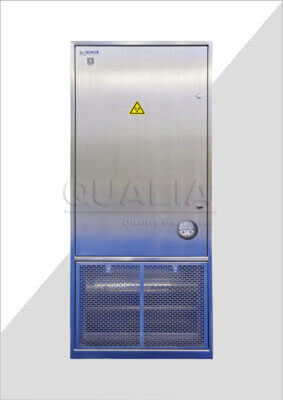
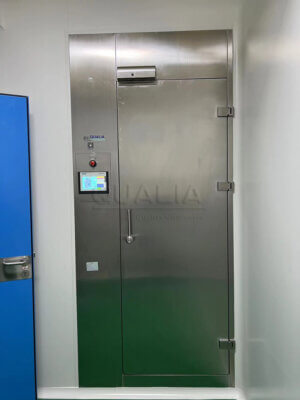
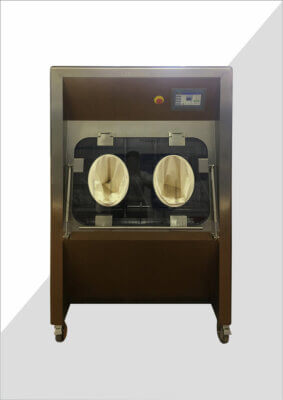
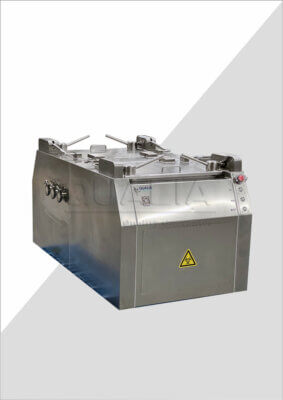
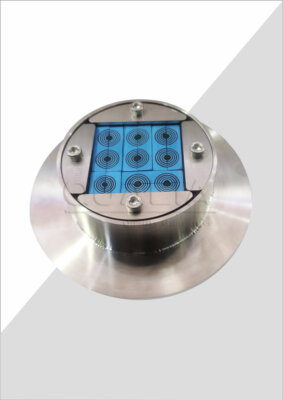
The condition that determines which gap matters more for a given project is the maturity of the access planning done earlier. Where the project mapped service tasks, isolation boundaries, and access routes systematically from the start, build release becomes primarily a verification exercise — confirming that what was planned was built. Where that mapping was incomplete or deferred, build release surfaces the access conflicts for the first time, late, when correcting them is harder than when they were first identifiable as layout decisions. Project teams working with QUALIA on BIBO systems, APR doors, or effluent decontamination equipment can use this same closed-access and recovery-evidence framework when preparing their own facility for handover, matching each supplied component’s maintenance interface to the documentation their build release requires.
Frequently Asked Questions
Q: When should maintenance access decisions be finalized for a BSL-3/4 project?
A: Finalize them before layout approval and build release. For each maintained component, close the maintainer-side reach, removal path, contaminated-item route, lifting space, required service interfaces, and the evidence needed to restore and release the system.
Q: Is a service corridor enough to demonstrate that equipment can be maintained safely?
A: No. The layout must be checked against the actual intervention, including reach to the component, space to remove it, any lifting need, the route for contaminated items, and permanent access for testing, sampling, calibration, or seal replacement.
Q: How should the isolation and decontamination boundary be selected for maintenance work?
A: Select it for the specific intervention through the project risk assessment. Define the service zone, isolation method, decontamination preparation, and required verification separately for boundary-opening work, applicable HEPA exhaust work, and containment-affecting changes or repairs.
Q: What project information should be coordinated with equipment and system interfaces before construction?
A: Provide the planned service side, intervention and removal space, lifting needs, contaminated-item route, test-injection and downstream-sampling access, sensor-calibration access, seal-replacement access, utilities, lockout interfaces, and project-defined restoration criteria. This allows interface conflicts to be resolved in the permanent layout.
Q: Can a system return to service as soon as the repaired component passes its own check?
A: Not by component evidence alone. Confirm any affected penetration seals and applicable filter or housing checks, then verify adjacent pressure, alarm, and interlock relationships against project-defined acceptance criteria before documenting system release.
Q: What should the team do if maintenance depends on creating a temporary containment penetration?
A: Treat that dependency as an unresolved layout decision before build. Reserve permanent access for the required testing, sampling, calibration, seal replacement, or lifting task, and define the associated isolation, handling, and recovery evidence.