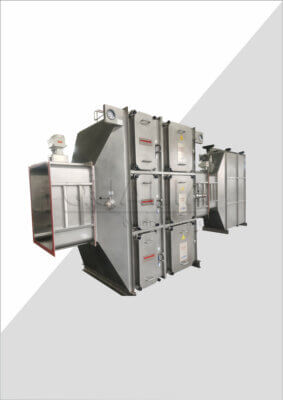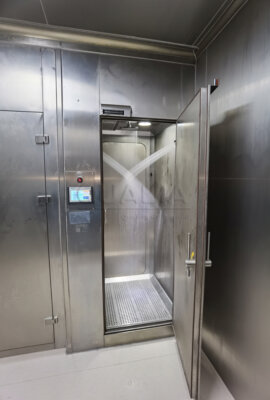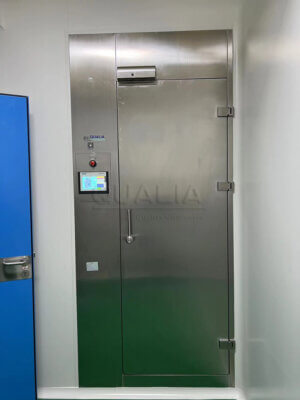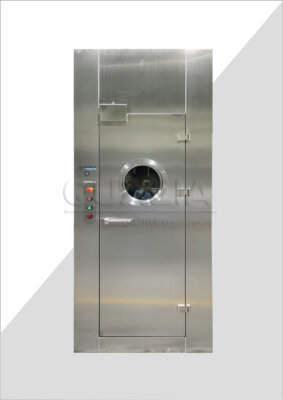

Many GMP facilities install BIBO housings, pass an initial commissioning inspection, and then discover at the first regulatory audit or deviation investigation that the documentation infrastructure behind the hardware never existed in a defensible form. The physical containment works as intended, but the inability to demonstrate that every filter replacement followed a classified, pre-approved intervention pathway — with impact assessment, defined release criteria, and traceable records — is enough to stall a batch release or trigger a major observation. The gap is not mechanical; it is procedural and qualification-based, and retrofitting it after installation means rebuilding both the quality system rationale and the validation package simultaneously, under operational pressure. What separates a BIBO installation that holds up under audit from one that does not is whether the validation discipline was integrated before the first filter was changed, not after.
How BIBO supports a contamination-control strategy in GMP facilities
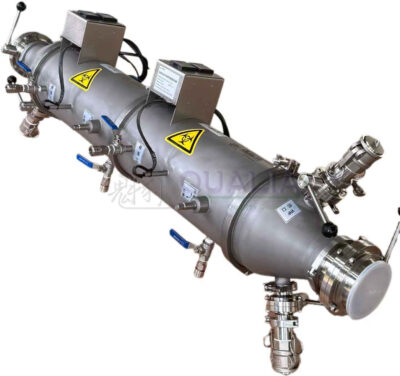
A BIBO system earns its role in a contamination-control strategy through one specific operational mechanism: the closed-loop bagging principle that physically encloses the spent filter before it is detached from the housing. Without that sealed transition, filter change-out is the highest-risk intervention in the air-path lifecycle — the point where accumulated particulate, biological load, or potent compound residue has the greatest opportunity to escape into the surrounding environment. The bag seals that risk inside before the housing boundary opens.
That mechanism only functions as intended, however, when it is specified against the actual risk profile of the application. A BIBO housing serving a Grade B HVAC exhaust in a standard aseptic suite operates in a materially different risk context from one positioned downstream of an OEB4 or OEB5 potent compound synthesis area. For highly active, cytotoxic, or otherwise potent compounds, the design intent of the system — bag material compatibility, seam construction, secondary containment provision — needs to reflect that classification from the earliest specification stage, not as an afterthought added after the housing is already on order. When that planning criterion is deferred, projects often discover that the physical hardware cannot be upgraded to match the actual risk class without replacing major components or renegotiating scope.
The broader contamination-control strategy requires that the BIBO function be linked — at the design stage — to the cleaning protocol, integrity testing sequence, and documentation trigger that follows each change-out. A BIBO system that performs mechanically but whose maintenance interventions are not connected to a managed lifecycle in the quality system provides mechanical containment without the procedural control layer that regulators and auditors actually evaluate.
| Aspect Type | What to Confirm | Why It Matters / Risk if Unclear |
|---|---|---|
| Process Detail | Does the BIBO system use a closed-loop principle, sealing the used filter in a bag before removal? | This is the core operational step that physically prevents contamination escape during the highest-risk intervention of filter change-out. |
| Planning Criterion | Is the BIBO system specified for handling highly active, toxic, or potent compounds? | It confirms the system’s design intent for the highest-risk GMP applications where containment failure has the most severe consequences. |
The decision implication here is straightforward but frequently underestimated: selecting a BIBO housing and specifying it for GMP use are not the same activity. The former is a procurement action; the latter requires a risk classification decision that shapes every downstream qualification, SOP, and change control entry connected to that housing for the life of the system.
Annex 1 expectations for interventions around air-path boundaries
EU GMP Annex 1 (2022) frames contamination control as a system-level commitment that extends through every intervention touching a classified air environment — including maintenance activities at HVAC boundaries. The expectation is not limited to what happens inside a cleanroom during production; it encompasses how the facility manages any event that could compromise the integrity of the air path serving that environment. A filter replacement that opens the HVAC boundary without controlled conditions is treated under that logic as a potential contamination source, not a routine maintenance task.
Two controls define the minimum evidence base for interventions at air-path boundaries in most practical interpretations of Annex 1. The first is procedural: HVAC and exhaust airflow should be stopped and the system brought to a defined state before the boundary is opened, removing the risk that pressure differentials or residual airflow could carry contamination into or out of the disturbed section. The second is verificatory: once the used filter has been bagged and the new filter installed, hermetic sealing of the containment bag should be confirmed through integrity testing — commonly by DOP or PAO aerosol challenge — before the housing is returned to service. It is worth being precise here: Annex 1 does not mandate DOP or PAO testing by name as the required method, but it does expect objective evidence that air-path boundary integrity was maintained. DOP/PAO challenge testing is the established means by which that evidence is typically generated, and auditors will look for it.
The downstream consequence of skipping either control is not just a documentation gap — it is an inability to reconstruct what happened at that boundary if a contamination event is later investigated. Without a recorded airflow shutdown step and a post-installation integrity test result, the investigation cannot confirm that the boundary was properly managed, and the deviation extends backward to question every batch produced since the last confirmed-clean filter installation.
| Control Type | What the SOP Should Specify | Why It Matters / Evidence Required |
|---|---|---|
| Process Control | Stopping HVAC/exhaust airflow before opening the air-path boundary. | Prevents pressure fluctuations that could compromise containment integrity during the intervention. |
| Verification Check | Hermetic sealing of the containment bag verified by DOP/PAO integrity testing. | Provides objective, documented evidence that the critical air-path boundary was maintained, aligning with validation practices. |
The practical friction is that production teams sometimes treat airflow shutdown as an excessive disruption to scheduling, particularly where BIBO housings serve exhaust paths that are not in direct contact with the classified fill environment. QA’s position — that any opened air-path boundary requires the same procedural discipline regardless of perceived proximity to the product zone — is the defensible one under Annex 1’s contamination-control system logic, but the tension is real and needs to be resolved in the SOP before the first maintenance event, not during it.
Qualification logic after filter replacement and maintenance access
Every filter replacement or unplanned maintenance access event that opens an air-path boundary should be treated as a partial boundary breach requiring documented reinstatement before the system returns to use. The question qualification teams need to answer in advance — not during a batch release discussion — is: what tests confirm that the system is safe and operational after this specific type of intervention?
A defensible post-maintenance requalification approach for BIBO-integrated systems typically includes three categories of checks. Filter integrity testing confirms that the newly installed HEPA or ULPA filter has no pinholes, frame seal defects, or installation leaks — this is the primary safety confirmation after a filter change-out. Pressure drop measurement across the filter confirms that the replacement filter is within its rated resistance range and that airflow through the housing is within the validated operating band; a significant deviation from baseline can indicate incorrect filter selection, improper seating, or housing damage. Particle counting downstream of the filter, conducted under defined conditions, confirms that the clean-side air quality is consistent with the grade classification the housing serves. These three checks are not a regulatory list issued by a single authority, but they represent the practical threshold below which it is difficult to defend that a BIBO housing has been properly reinstated after a boundary-opening event. EudraLex Annex 15 provides the broader process-reference framework for thinking about requalification scope and acceptance criteria in this context — particularly its guidance on the relationship between changed system conditions and the need for defined re-verification activities.
The common planning failure is to acknowledge that requalification is needed in principle but to leave the specific test sequence, acceptance criteria, and responsible party undefined until after installation. That deferral typically means the first filter change-out either happens without requalification — because no one has defined what it requires — or triggers an emergency procedural drafting exercise that introduces untested steps into a live production environment. Neither outcome is acceptable under a managed validation lifecycle.
Where the maintenance event involves unplanned access — a housing inspection triggered by an alarm, a bag tear response, or an unexpected pressure reading — the requalification scope may need to extend beyond filter integrity to include a broader assessment of whether adjacent components were disturbed. That assessment should be pre-classified in the change control and deviation management system, not improvised at the time of the event.
Change control and deviation handling for BIBO-related interventions
Planned filter replacements and unplanned maintenance accesses represent two distinct categories of intervention, and treating them under the same change control entry is a mistake that creates audit vulnerability. A planned change — a scheduled filter swap at the end of service life — should have a pre-approved change control record that defines the intervention scope, the responsible personnel, the requalification requirements, and the release criteria before the work begins. An unplanned event, such as a failed integrity test result or a bag integrity failure during change-out, enters a different pathway: deviation investigation, root cause analysis, and corrective action before the system returns to service.
The emergency scenario that is most commonly left undefined is a bag tear or containment failure during the change-out procedure itself. If the spent filter’s containment bag fails before the housing is closed, the facility is simultaneously managing a potential contamination exposure, a compromised maintenance procedure, and the beginning of a deviation investigation. Without a pre-written emergency response procedure — stop work, isolate the area, decontaminate according to the specific compound classification, initiate incident reporting — operators are improvising during a high-stress event involving potential hazardous exposure, and the improvised response is unlikely to generate the kind of documented evidence that a subsequent investigation can use. This is a documented operational vulnerability, not an inevitable outcome, but facilities that have not pre-classified this scenario will consistently find that their deviation records cannot adequately account for what happened at the moment of failure.
Traceability across all BIBO-related interventions — planned and unplanned — requires that each event is recorded with operator identity, timestamp, filter identity (lot number, manufacturer, rated efficiency), bag integrity confirmation status, and the outcome of any post-maintenance testing. This is not a BIBO-specific regulatory requirement; it is standard quality-system practice applied to this context, and it only works if the recording mechanism is built into the maintenance workflow from the start rather than reconstructed from memory afterward.
| Focus Area | What to Clarify or Confirm | Consequence if Unclear / Why It Matters |
|---|---|---|
| Emergency Preparedness | Are emergency procedures defined for a bag tear or spill during change-out? | Without a predefined response (halt work, isolate area, decontaminate), immediate risk management is compromised and deviation investigation is hindered. |
| Traceability | Is every filter change, inspection, and repair recorded with operator ID, timestamp, and filter details? | Lack of traceability undermines audit trails, regulatory compliance, and the ability to identify patterns during investigations. |
The trade-off worth naming explicitly: pre-classifying every BIBO maintenance intervention type and building traceability into the workflow takes time and discipline during the project build phase. Skipping it is faster. But the downstream cost — deviations that cannot be investigated because the records do not exist, batch release holds, and the procedural rework that follows a regulatory observation — consistently exceeds the upfront investment. This is the core friction point between production’s expectation of maintenance flexibility and QA’s requirement for controlled, traceable processes, and neither side resolves it by ignoring it.
Records and SOPs auditors expect for a validation-ready system
An auditor reviewing a BIBO installation is not primarily evaluating the hardware. The hardware is visible and can be assessed quickly. What takes longer to evaluate — and what typically generates observations — is whether the procedural infrastructure behind the hardware reflects genuine operational control or was assembled to satisfy a checklist.
The primary procedural document auditors look for is a sequence-specific filter-swap SOP: a procedure that defines the exact steps in the exact order required to execute a safe, contamination-controlled filter change-out, including pre-work preparation, airflow shutdown, bag attachment and sealing, filter removal sequence, post-installation integrity testing, and return-to-service confirmation. A generic maintenance procedure that describes the BIBO system’s purpose without specifying the operative sequence does not provide evidence of procedural control — it provides evidence that someone knew a procedure was required. The distinction matters because the SOP is the primary mechanism by which human error risk is managed during a high-risk intervention, and auditors treat a vague or non-sequential SOP as equivalent to no SOP for practical purposes.
Beyond the SOP itself, the review and update cycle is the signal auditors use to distinguish a living quality system from a nominally compliant one. A BIBO filter-swap SOP that has not been reviewed since initial qualification — and whose review history shows no engagement with post-installation experience, deviation outcomes, or personnel feedback — suggests a static quality system. When deviations have occurred but the SOP has not been updated to reflect what was learned, the disconnect is often visible in the deviation records themselves, and that creates a coherent narrative of systemic weakness rather than isolated events.
| Documentation Aspect | What Auditors Expect to See | Why It Matters / Risk of Omission |
|---|---|---|
| Procedure Definition | A documented SOP specifying the precise sequence for a secure filter swap. | Without a controlled, repeatable procedure, human error risk increases, and evidence of control is missing. |
| System Vitality | SOPs and checklists subject to a regular review and update cycle. | Static documents indicate a nominally compliant, not a living quality system, risking outdated and ineffective procedures. |
For facilities building BIBO qualification packages from the ground up, the practical implication is that SOP development and the qualification testing program should run in parallel, not sequentially. If the SOP is written after the qualification tests are complete, it is describing a process that has already been executed without a controlled, approved procedure — which creates a retroactive justification problem that is difficult to defend.
A broader consideration on documentation architecture: the records connected to a BIBO system do not exist in isolation. Filter change records, integrity test results, deviation reports, and SOP revision histories are all potentially relevant to a batch record investigation or a regulatory inspection. If these records live in disconnected systems with no cross-reference logic, reconstructing the maintenance history of a specific housing at a specific point in time becomes unnecessarily difficult — and that difficulty itself becomes an audit finding. For facilities building out cleanroom HVAC and filtration documentation infrastructure, the relationship between BIBO maintenance records and the broader prefabricated cleanroom HVAC documentation system should be defined early, before records accumulate in ways that are hard to rationalize later.
When a BIBO installation is truly GMP-ready rather than nominally compliant
The most common version of nominal compliance in BIBO installations is a system where the housing is stainless steel, the vendor provided a material certificate and a factory test report, and the installation was signed off against a commissioning checklist — but where the intervention classification, requalification logic, and change control scope were never formally defined. This configuration passes a basic documentation review and may satisfy an initial qualification sign-off if reviewers do not probe the maintenance lifecycle. It typically does not hold up when a regulatory inspector asks to see the last three filter change records alongside the associated integrity test results, deviation log, and the SOP version that was in force at the time of each event.
The qualification basis that distinguishes real readiness is hermetic sealing verification and post-replacement revalidation, not material specification. A stainless housing is a necessary design feature, not a performance guarantee. Performance is demonstrated through test results — filter integrity test data confirming the installed filter is leak-free, pressure drop measurements confirming the housing is operating within its validated range, particle counts confirming downstream air quality — combined with the documented evidence that the process used to install and verify the filter was controlled and repeatable. Material selection enables the test; it does not replace it. Facilities that conflate the two tend to discover the distinction at the worst possible moment: when a contamination investigation requires them to demonstrate retroactively that a boundary they opened and closed was properly managed, and the test data does not exist. For a deeper look at how this qualification logic applies in the context of validated filter housing specification, the GMP compliant BIBO systems overview addresses the hardware-to-qualification relationship in more practical detail.
The operational outcome that signals genuine integration is a filter changeover that is fast, contamination-controlled, and generates complete records without exceptional effort — because the procedure, the testing sequence, and the documentation workflow were designed together. When the changeover takes longer than expected or generates incomplete records, it usually means the procedure and the testing sequence were designed separately, or the documentation workflow was added as an afterthought. That outcome is a practical readiness indicator worth using during commissioning: if executing the SOP-defined filter change-out under observed conditions does not produce complete, coherent records within the expected timeframe, the system is not yet operationally ready regardless of what the qualification test reports say.
| Evaluation Criterion | What to Verify | Outcome of True Readiness vs. Nominal Compliance |
|---|---|---|
| Qualification Basis | Does the system’s qualification rely on hermetic sealing verification and post-replacement revalidation, not just stainless steel construction? | True readiness is defined by validated performance and controlled interventions, not material selection alone—a common point of failure. |
| Operational Result | Does the validated BIBO process enable quick, contamination-free filter changeover with minimal downtime? | Signals an integrated, efficient system where contamination control and production practicality are both achieved. |
The threshold worth stating plainly: a BIBO installation that meets the operational readiness criteria above — pre-classified interventions, hermetic sealing verified by integrity testing, post-replacement requalification with defined acceptance criteria, traceable records, and a living SOP — is genuinely difficult to challenge under audit. One that relies on hardware quality and vendor documentation without the procedural and qualification infrastructure behind it will generate findings, and the rework is expensive precisely because it must happen after the system is already in production service.
A useful way to assess a BIBO installation before it enters routine operation is to work backward from a hypothetical audit request: if an inspector asked to see the complete maintenance history for a specific housing, including the SOP version in force at each filter change, the integrity test result, the operator record, and any associated deviations, could that package be assembled accurately within a reasonable timeframe? If the answer is unclear — because records exist in different systems, some change-outs were not fully documented, or the SOP has not been reviewed since initial qualification — the gap is in the quality system, not the hardware.
The practical next step for facilities either specifying a new installation or reviewing an existing one is to define the intervention classification matrix first: which events constitute planned changes requiring pre-approved change control, which constitute unplanned events requiring deviation investigation, and what the requalification scope is for each. That matrix, translated into SOPs with defined acceptance criteria, is the structural difference between a BIBO system that performs containment and one that can demonstrate it.
Frequently Asked Questions
Q: Our facility uses a third-party maintenance contractor for filter changes — does the BIBO qualification and change control logic still apply, or does that responsibility shift to the contractor?
A: The qualification and change control responsibility remains with the facility, not the contractor. Annex 1’s contamination-control system logic applies to the outcome of the intervention and the records it generates, regardless of who physically performs the work. In practice, this means the contractor must execute against your facility’s approved SOP, use your recording templates, and produce records that integrate into your quality system — operator ID, timestamp, filter identity, and integrity test results attributed to your change control entry. If the contractor’s own documentation does not meet those requirements, the gap is yours at audit.
Q: At what point does a BIBO-related deviation stop being a filter issue and require a broader investigation that may affect batch release?
A: The threshold is whether the boundary breach can be bounded in time and scope with objective evidence. If an integrity test failure, bag tear, or procedural deviation occurred and you cannot confirm — through test data and records — exactly when the last verified-clean state existed, the investigation cannot be bounded to the specific event. In that situation, the scope typically expands to all batches produced since the last documented, confirmed-clean filter installation. Pre-classified intervention categories and complete traceability records are the practical tools that limit how far that window extends.
Q: Is BIBO the right containment approach for potent compound areas, or does it need to be combined with isolator technology to meet OEB4/OEB5 requirements?
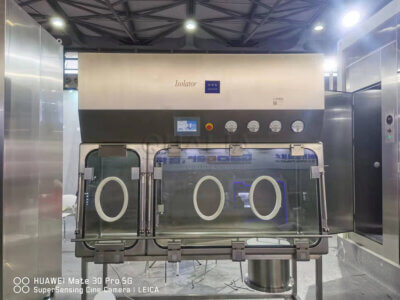
A: For OEB4 and OEB5 applications, BIBO alone is generally not sufficient as the primary containment solution — it addresses the filter change-out boundary but does not provide the closed-process environment required at those occupational exposure bands. Isolator technology typically forms the primary containment layer for those classifications, with BIBO systems serving the HVAC exhaust path as a secondary boundary control. The two technologies address different intervention points in the same contamination-control strategy rather than being direct alternatives. The correct combination depends on your compound classification, process design, and the risk assessment supporting your Contamination Control Strategy under Annex 1.
Q: If our BIBO SOPs were written at initial qualification but have never been revised, how serious a finding is that likely to be if the procedures themselves are still technically accurate?
A: A static SOP with no revision history will typically generate an observation even if the procedure content remains technically sound. Auditors interpret an unrevised SOP as evidence that the quality system is not engaging with operational experience — particularly if deviations have occurred in the intervening period. The absence of revisions implies either that no learning from deviations was incorporated, or that the SOP review process is not functioning. Either inference is a finding. The minimum defensible position is a documented periodic review that confirms the procedure was assessed and found current, with a reviewer signature and date, even when no content changes are made.
Q: How much additional validation effort should a facility budget for when adding BIBO to an existing classified facility versus specifying it in a new build?
A: Retrofitting BIBO into an existing classified facility consistently requires more validation effort than integrating it during initial design, because the impact assessment must account for how the new housing interacts with the existing qualified HVAC system, pressure differential relationships, and any adjacent process areas. In a new build, the qualification scope, requalification logic, and SOP structure can be designed in parallel with the installation — reducing rework. In a retrofit, the existing qualification baseline needs to be re-evaluated for any parameters the new housing affects, which typically adds at least one additional qualification cycle and may require requalification of the broader air-handling system if airflow patterns change. The more constrained the existing documentation baseline, the higher the retrofit effort.
Related Contents:
- Essential BIBO System Maintenance Checklist
- Safe Hazardous Material Handling with BIBO
- Emerging Trends: The Future of BIBO Technology
- BIBO Integrity Testing Requirements: DOP, Leak Checks, and Documentation Expectations
- Pharmaceutical BIBO Applications | Cleanroom Filter Management
- BIBO System Design Principles | Filter Housing Engineering
- Ensuring Compliance: BIBO and Industry Standards
- Bag In Bag Out Systems for BSL-3 Labs: How to Specify Safe Containment Changeout
- HEPA Filter BIBO Systems | Containment Housing Solutions