
Ventilation design in high-containment laboratories presents a critical engineering challenge. The selection of Air Changes Per Hour (ACH) is often misunderstood as a simple code compliance issue, leading to designs that are either insufficiently protective or wastefully inefficient. Professionals must navigate a complex landscape of minimum standards, operational best practices, and conflicting pressures between safety and sustainability. Misapplying ACH rates can compromise containment integrity or result in unsustainable operational costs.
This topic demands immediate attention due to evolving global biosafety standards and the rapid expansion of high-containment research infrastructure. A nuanced, evidence-based approach to ACH selection is no longer optional; it is a fundamental requirement for responsible facility design, risk management, and long-term operational viability. The decision impacts everything from certification to carbon footprint.
BSL-2 vs. BSL-3 vs. BSL-4: Core ACH Requirements Compared
Defining the Containment Spectrum
The progression from BSL-2 to BSL-4 represents a fundamental shift in risk profile and corresponding engineering controls. For BSL-2 labs handling moderate-risk agents, ventilation primarily serves general dilution and odor control. The primary containment responsibility lies unequivocally with the Class II Biosafety Cabinet (BSC). Room ACH, while important, is a secondary support system. In contrast, BSL-3 and BSL-4 facilities are engineered to contain serious or potentially lethal airborne pathogens, where the room itself becomes a primary containment device.
The Strategic Role of ACH
At higher containment levels, ACH supports two key functions: maintaining a stable negative pressure cascade and diluting any airborne contaminants that escape primary containment. However, a critical strategic insight is that ACH standards are a regulatory minimum, not an optimization target. Arbitrarily exceeding these baselines, especially beyond 10-12 ACH, yields rapidly diminishing returns for contaminant purge while drastically escalating capital and energy costs. Design must be driven by a specific risk-benefit analysis, not code maximization.
Comparative Requirements at a Glance
The following table summarizes the core ventilation requirements across the biosafety spectrum, highlighting the shift in containment philosophy.
| Containment Level | ACH Requirement (Typical Range) | Primary Containment Focus |
|---|---|---|
| BSL-2 | 6-12 ACH | Class II BSC |
| BSL-3 | 6-15 ACH (12 common) | Negative pressure cascade |
| BSL-4 | Exceeds BSL-3 standards | Supply & exhaust HEPA |
Source: Biosafety in Microbiological and Biomedical Laboratories (BMBL) 6th Edition. The BMBL establishes the foundational engineering controls for each biosafety level, including the minimum ventilation requirements for BSL-3 and the principle that BSL-4 systems must exceed BSL-3 controls.
Key Ventilation Principles for High-Containment Laboratories
Directional Airflow is Paramount
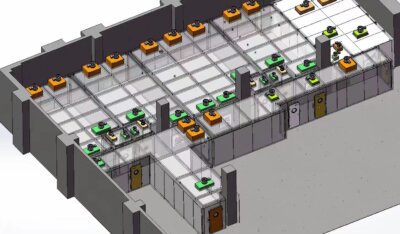
Effective containment relies on integrated principles beyond a simple ACH number. The most critical is directional airflow, maintained through a meticulously balanced negative pressure cascade. Air must flow from clean corridors into labs, then to anterooms, and finally to exhaust, with a standard differential of at least 0.05 inches of water gauge between zones. This cascade is supported by single-pass, once-through air systems and continuous operation with backup power. In my experience, achieving a stable cascade requires far more attention to airtight construction and precise air balancing than simply ramping up fan speed.
The Hierarchy of Controls
An evidence-based insight is that pressure cascade design is more critical than ACH rate. A facility with a perfectly managed 6 ACH cascade is inherently safer than one with 15 ACH but poor sealing or unstable pressures. The corridor acts as a critical buffer zone to absorb fluctuations. This redirects focus from a single metric to holistic system performance, where architectural integrity, control system responsiveness, and procedural discipline are equally vital. The ventilation system must be designed as an integrated component of the containment envelope, not an isolated utility.
BSL-3 ACH Standards: Minimums, Ranges, and Best Practices
Navigating Regulatory Baselines
The Biosafety in Microbiological and Biomedical Laboratories (BMBL) 6th Edition mandates a minimum of 6 ACH for BSL-3 labs, establishing a baseline for maintaining negative pressure and providing dilution ventilation. For animal spaces (ABSL-3), the minimum is 10 ACH. However, operational best practices and various international guidelines often specify higher rates. This variation highlights a significant challenge: regulatory fragmentation. Standards in some European countries, for instance, require ≥12 ACH for labs handling specific pathogens, creating design uncertainty for global organizations.
Clarifying Enhanced Features
A crucial and often misunderstood clarification is that HEPA filtration on supply air is not a standard requirement for BSL-3 per the BMBL; it is typically reserved for exhaust. Specifying supply-side HEPA is an enhanced, cleanroom-grade feature that adds significant cost, complexity, and maintenance burden. The strategic imperative is to engage local regulators early in the design process and clearly distinguish between baseline containment requirements and premium add-ons that may be driven by specific research protocols rather than biosafety code.
BSL-3 ACH Parameters in Detail
Understanding the range of acceptable and common design values is key to informed specification.
| Parameter | CDC/NIH Minimum | Common Design Target | International Variation |
|---|---|---|---|
| Lab ACH | 6 ACH | 12 ACH | Up to 15 ACH |
| Animal ACH (ABSL-3) | 10 ACH | 12+ ACH | ≥12 ACH (e.g., France) |
| Supply Air HEPA | Not standard | Enhanced feature | Adds cost & complexity |
Source: Biosafety in Microbiological and Biomedical Laboratories (BMBL) 6th Edition. The BMBL codifies the minimum 6 ACH for BSL-3 labs and 10 ACH for ABSL-3, while acknowledging that operational best practices and other guidelines may specify higher rates.
BSL-4 Ventilation: Exceeding BSL-3 with Advanced Controls
Integrating Highest-Level Protections
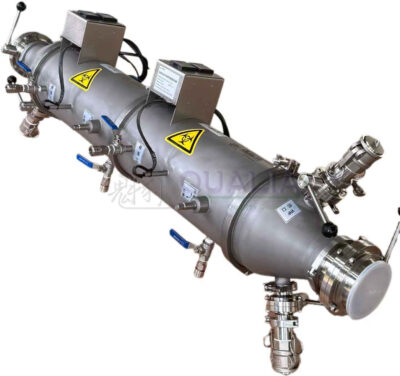
BSL-4 ventilation embodies the pinnacle of control, integrating and exceeding all BSL-3 principles. While specific ACH numbers are less prescribed, the systems are characterized by supply and double-HEPA-filtered exhaust, complex multi-stage pressure cascades (often involving suit ports or Class III BSC lines), and full mechanical redundancy (N+1 or greater). The entire system is designed for fault tolerance, with automated controls capable of maintaining critical pressure relationships under all foreseeable failure conditions.
The Systems Integrator Imperative
This level of integration signals the emergence of a new vendor archetype: the biosafety systems integrator. The complexity demands a partner who can guarantee the performance of the entire containment envelope—from HVAC and controls to decontamination systems and building management interfaces—rather than just supplying discrete equipment. This shift offers clients single-point accountability for achieving safety certification, a valuable model that is increasingly relevant for complex BSL-3 projects as well.
Calculating Purge Times and Air Change Effectiveness
The Theory of Air Exchange
The theoretical time to purge airborne contaminants is calculated using the formula t = -[ln(C2/C1) / (ACH/60)], where t is time in minutes and C2/C1 is the desired reduction ratio. This model assumes perfect, instantaneous mixing of air within the space—a condition seldom achieved in real-world laboratories with equipment, furniture, and complex airflow patterns.
The Reality of Diminishing Returns
Room geometry, diffuser and return grille placement, and thermal gradients significantly impact air change effectiveness. Studies consistently show that beyond approximately 10-12 ACH, the marginal gain in purge time diminishes sharply. This reinforces a vital principle: primary containment renders excessively high room ACH redundant. For labs where aerosol-generating procedures are strictly managed within BSCs, high room ACH provides negligible safety benefit during an accidental release; initial personnel exposure is unchanged, and the difference between a 10-minute and 15-minute purge becomes operationally minimal.
Purge Time Calculations
The following table illustrates the theoretical purge times, underscoring the point of diminishing returns.
| ACH Rate | Time for 99% Reduction (Theoretical) | Practical Effectiveness Limit |
|---|---|---|
| 6 ACH | ~46 minutes | Diminishing returns beyond |
| 10 ACH | ~28 minutes | 10-12 ACH |
| 12 ACH | ~23 minutes | Minimal safety gain post-release |
Note: Times calculated using purge formula t = -[ln(C2/C1) / (ACH/60)], assuming perfect mixing.
Source: Technical documentation and industry specifications.
Energy Efficiency vs. Safety in Lab Ventilation Design
Challenging the High-ACH Dogma
The tension between energy consumption and safety is a central design challenge. Traditional designs often equate higher ACH with greater safety, but evidence challenges this dogma. Research demonstrates that technologies like chilled beams or dedicated outdoor air systems (DOAS) can maintain thermal comfort and air quality at significantly lower ACH rates (4-6 ACH), offering over 20% energy savings compared to traditional all-air systems requiring 13+ ACH.
A Performance-Based Future
This represents a fundamental shift from prescriptive ACH to performance-based risk assessment. The future lies in decoupling thermal control from contaminant control, using targeted primary engineering controls (BSCs, gloveboxes) for safety and efficient, low-flow systems for comfort. This approach, supported by standards like ISO 14644-1:2015 for classifying air cleanliness, allows engineers to meet safety outcomes through integrated solutions, not just high airflow rates. It demands a more sophisticated analysis but yields superior sustainability and operational cost outcomes.
Energy Comparison of Design Strategies
The potential savings from innovative design approaches are substantial.
| Design Strategy | Typical ACH Range | Potential Energy Savings |
|---|---|---|
| Traditional all-air | 13+ ACH | Baseline (0%) |
| Chilled beams + BSCs | 4-6 ACH | >20% savings |
| Performance-based risk assessment | Variable | Optimizes TCO |
Source: Technical documentation and industry specifications.
Commissioning, Verification, and Ongoing Compliance
Proving Performance
System performance must be rigorously validated, not assumed. Initial commissioning and annual re-verification are mandatory, involving precise airflow measurement at diffusers, smoke tests for directional flow visualization, and DOP/PAO aerosol challenge testing of HEPA filter integrity and seal. This process ensures the designed ACH, pressure differentials, and filtration integrity are achieved and maintained in the as-built, occupied condition.
The Total Cost of Ownership Lens
Given the high operational costs of ventilation, a total cost of ownership (TCO) analysis will consistently favor advanced controls over raw ACH. Investments in sophisticated pressure monitoring networks, AI-driven airflow control that adapts to door positions, and predictive maintenance analytics offer a stronger lifecycle return on investment than simplistic, high-ACH designs. Proposals must justify design choices through detailed TCO models, making advanced control systems a key differentiator for responsible high-containment facility design.
Selecting the Right ACH for Your Facility’s Risk Profile
Moving Beyond Minimum Code
Selecting an appropriate ACH requires a nuanced, facility-specific risk assessment. Key factors include the specific agents and their transmission routes, the procedures performed (high vs. low aerosol potential), the reliability and maintenance culture around primary containment devices, and the facility’s layout and airtightness. The strategic implication is to base ACH targets on a cost-benefit analysis of specific operational risks, not a generic adherence to the upper limit of a published range.
The Impact of Modular Innovation
Furthermore, the rise of modular and mobile BSL-2/3 labs demands a rethinking of traditional ventilation assumptions. These units have strict power, weight, and space constraints, forcing innovation in compact, efficient systems. This trend is accelerating the adoption of lower-ACH, high-mix-efficiency designs and performance-based approaches. Ultimately, ACH is one component of a layered defense where pressure management, primary containment integrity, and rigorous procedural controls are equally vital.
The decision framework for ACH prioritizes pressure cascade stability over high air change rates, advocates for performance-based design to reconcile safety with efficiency, and requires a total cost of ownership analysis to justify capital investments. The goal is a facility that is certifiably safe, operationally resilient, and economically sustainable over its lifespan.
Need professional guidance to navigate these complex engineering and biosafety trade-offs for your project? QUALIA provides integrated design and consulting services to optimize your containment strategy from concept through commissioning. Our approach balances stringent safety requirements with operational and energy efficiency.
For a detailed discussion of your specific requirements, you can also Contact Us.
Frequently Asked Questions
Q: What are the minimum ACH requirements for BSL-3 laboratories according to U.S. standards?
A: The foundational U.S. standard mandates a minimum of 6 air changes per hour for BSL-3 laboratories, as detailed in the Biosafety in Microbiological and Biomedical Laboratories (BMBL) 6th Edition. For animal spaces (ABSL-3), the requirement increases to a minimum of 10 ACH. This means your facility design must meet these baselines for certification, but operational best practices often target 12 ACH for enhanced safety margins.
Q: How do you balance energy efficiency with safety when designing lab ventilation?
A: You can achieve safety without excessive energy use by decoupling contaminant control from thermal management. Technologies like chilled beams can maintain comfort at 4-6 ACH, offering over 20% energy savings compared to traditional all-air systems at 13 ACH. This shift to a performance-based approach prioritizes primary containment integrity. For projects where lifecycle operating costs are a major concern, you should evaluate integrated designs that use efficient systems for comfort and rely on BSCs for safety.
Q: Is HEPA filtration required on the supply air for a BSL-3 lab?
A: No, supply-side HEPA filtration is not a standard requirement for BSL-3 containment per U.S. guidelines; HEPA filtration is typically mandated only for exhaust air. Specifying supply HEPA is an enhanced, cleanroom-grade feature that adds significant cost and complexity to the HVAC system. If your risk assessment or specific international regulations demand ultra-clean supply air, plan for the associated capital expense and increased maintenance burden during the design phase.
Q: Why is pressure cascade design considered more critical than a high ACH rate?
A: A stable negative pressure cascade, ensuring air flows from clean to potentially contaminated areas, is the fundamental engine of containment. A well-sealed facility with a perfectly managed 6 ACH cascade provides more reliable protection than a lab with 15 ACH but poor sealing or unstable pressure differentials. This means your commissioning and verification efforts should prioritize rigorous smoke testing and pressure monitoring over simply maximizing the air change rate.
Q: What factors should we consider when selecting an ACH rate beyond the code minimum?
A: Move beyond minimum codes by conducting a cost-benefit analysis of specific operational risks, including the agents used, procedures performed, and reliability of your primary containment devices. The marginal safety gain from increasing ACH diminishes sharply beyond 10-12 ACH, while costs escalate. For facilities where aerosols are strictly managed within BSCs, investing in advanced pressure controls and airtight construction will yield a better return than arbitrarily raising the room ACH.
Q: How do you calculate the time required to purge airborne contaminants from a lab?
A: Use the formula t = -[ln(C2/C1) / (ACH/60)], where t is time in minutes and C2/C1 is the desired concentration reduction. At 6 ACH, achieving a 99% reduction takes approximately 46 minutes, assuming perfect air mixing. However, real-world air change effectiveness is lower due to room geometry. This means your emergency response plans should not rely solely on purge calculations; immediate safety depends on primary containment, PPE, and procedural controls.
Q: What is involved in the ongoing compliance verification for a high-containment lab’s ventilation?
A: Mandatory annual re-verification includes measuring actual airflow rates, conducting smoke tests for directional flow, and performing DOP/PAO aerosol challenge tests on all HEPA filters to certify integrity. This process, aligned with standards like ISO 14644-1:2015 for controlled environments, ensures designed ACH and pressure differentials are maintained. For long-term operational budgeting, you should factor in the recurring cost of this specialized testing and any necessary system re-balancing.