

Which transfer interfaces a cRABS project needs to define depends on three things: what is moving, which boundary it crosses, and who owns the equipment on each side of that crossing. Components, change parts, and waste each follow a different path and impose different interface requirements, so treating them as a single transfer category inside the project brief creates scope gaps that surface late, when hardware is already quoted or ordered. Defining the transfer interface means naming the item, the crossing point, the barrier condition during transfer, and the party responsible for each deliverable at that point.
Separate Components from Change Parts and Waste
Every transfer interface in a cRABS project serves a distinct process function, and mixing them under a shared heading in a purchase brief delays the moment when each function gets a resolved design.
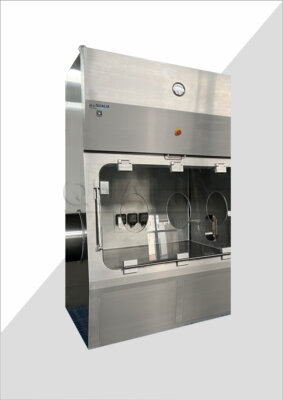
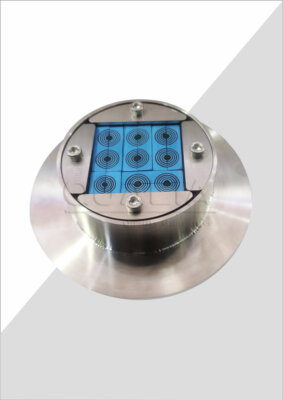
Components—vials, closures, trays, nests—enter the aseptic zone as process inputs and must arrive without compromising the internal environment. Their receiving location is typically a fixed port, a mouse-hole, or a rapid-transfer port on the barrier wall, and the choice among those depends on container format, throughput rate, and whether upstream equipment such as a vial washer or stopper bowl is already defined. Because these items arrive continuously or in batches that follow a production schedule, their interface is often the highest-throughput crossing the barrier handles.
Related Products
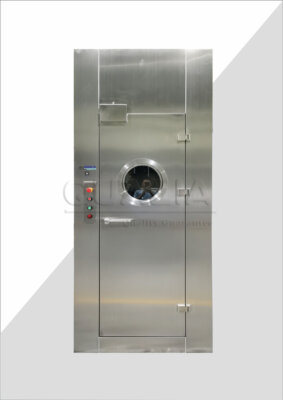
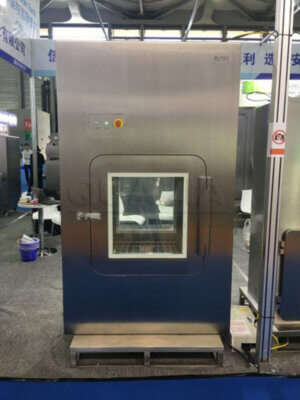
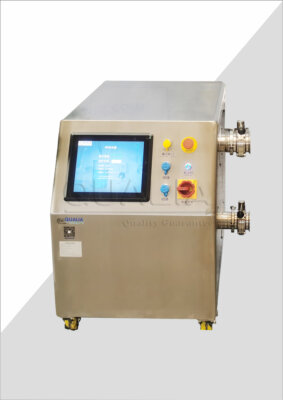
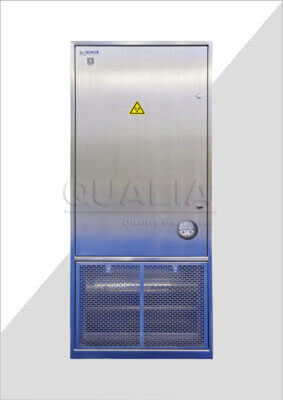
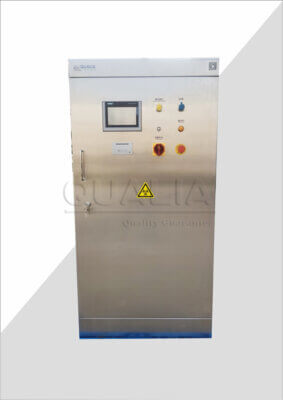
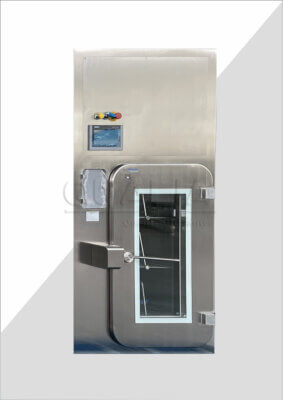
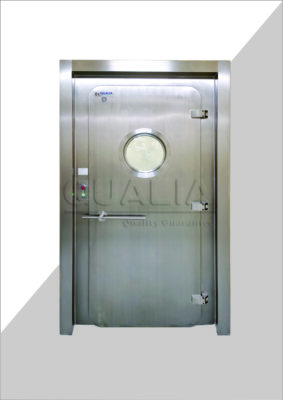
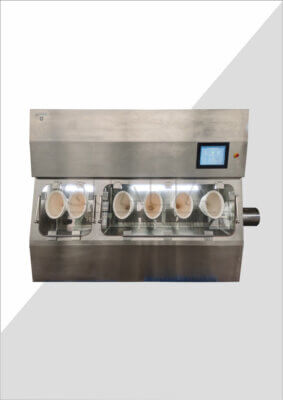
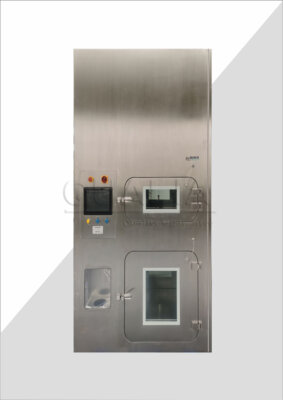
- Biosafety Pass Box — Define the separately supplied pass-through assembly boundary when one is part of the component or change-part interface discussion.
- VHP Pass Box — Compare the supply and documentation boundary of a VHP transfer-chamber offer where that alternative is being considered; no specific load suitability is implied.
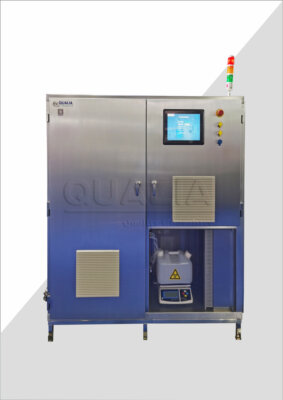
- Biosafety Dunk Tank — Open an alternative transfer-equipment scope discussion for a buyer-defined route; no waste-treatment function, material compatibility or selected operating route is promised.
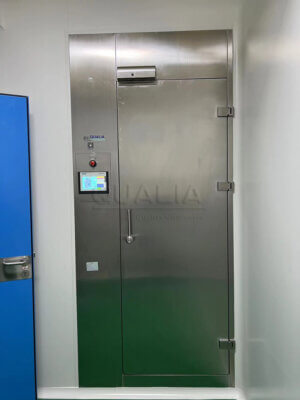
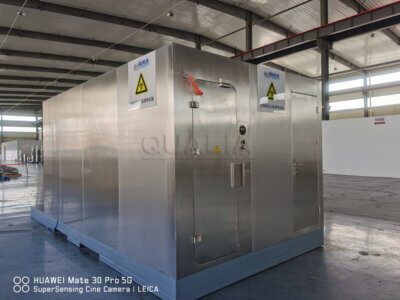
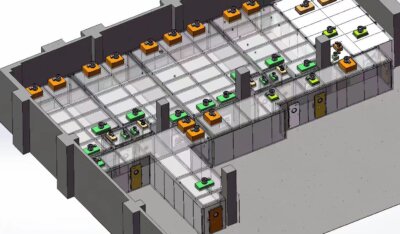
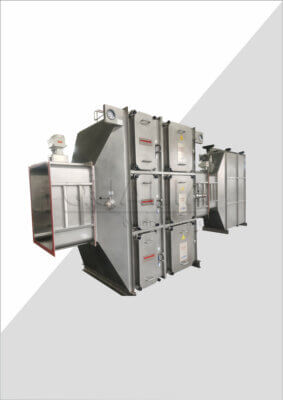
- Closed Restricted Access Barrier System – cRABS — Identify the receiving barrier-equipment boundary so connection ownership can be divided between the transfer assembly and cRABS suppliers; no bundled delivery or interface compatibility is assumed.
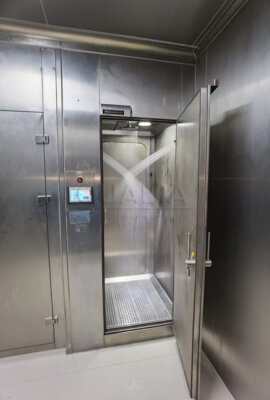
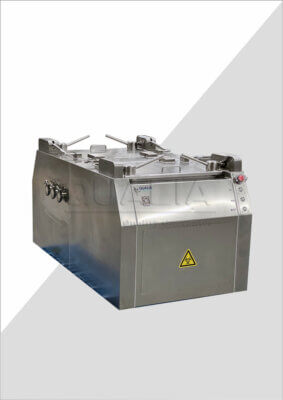
Change parts—format components, filling needles, guide rails, star wheels—enter the barrier far less frequently, but they arrive larger, often heavier, and sometimes after maintenance outside the aseptic zone. Their receiving location may be a different port on the same panel, a dedicated transfer chamber, or a larger door designed around the envelope of the biggest format set. That is a separate design question from where components enter, even when both happen in the same cleanroom.
Components and change parts may share a room but rarely share a transfer solution. Keeping them under one heading in a project brief obscures which interface needs what kind of hardware.
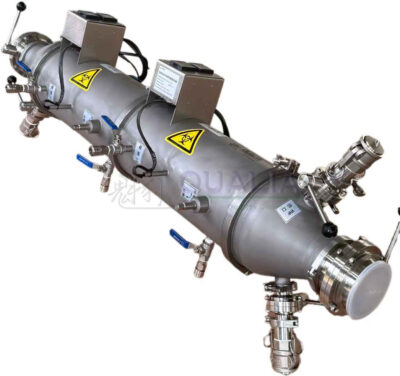
Waste—rejected units, used consumables, process liquids, spent filter bags—exits the barrier rather than entering it, and its collection boundary is defined differently from an entry port. The interface for waste is where the barrier hands off a contained item to a downstream route: a bag-removal station, a sealed container port, a drain connection, or a pass-through. What goes into the project brief is not the disposal method—which the site retains the authority to determine—but the identity of the outgoing item, its physical form, and the point at which the barrier’s responsibility ends and the facility’s collection route begins. Naming the item and the boundary is enough for a supplier to design the hardware; leaving the downstream route open is legitimate as long as the boundary itself is closed.
Describe Each Transfer Interface
Each interface in the project brief should answer four questions: what is the item, where does it cross, what is the barrier condition during the transfer, and what utility or connection does the crossing need.
For components, the item description should include the smallest and largest container form the barrier is expected to handle, the packaging layer it arrives in (tray, nest, bag, bulk), and whether deagglomeration or orientation happens before or after the crossing. If upstream equipment is already defined—a vial washer, an autoclave, a stopper bowl—include the connection drawing reference and the name of the party responsible for that equipment’s interface data. Without a source for that information, a supplier quoting the cRABS cannot commit to a connection detail, and integration assumptions accumulate as project risk.
Packaging variation is a common place where interface descriptions become ambiguous. If some component types arrive bagged and others on trays, list representative forms with a note on which information is confirmed and which is still being decided. A formally bounded load family—a single tray format used across all products—can be described together, but when container types genuinely vary, the description needs to call that out rather than collapse it into a single generic entry. Projects that discover packaging variation after hardware is built are the ones that retrofit port adapters or modify door dimensions at qualification.
For change parts, the envelope of the largest format set determines whether a standard transfer chamber is sufficient or whether a larger door or dedicated lock is needed. The description should also note whether change parts arrive sterile-bagged from an external sterilizer, or whether they will be decontaminated inside a transfer chamber as part of the exchange sequence. That choice—external sterilization versus in-barrier VHP decontamination—changes the equipment at the interface, the cycle verification requirement, and the time the barrier is partially interrupted.
Waste interfaces require a physical description of the outgoing item. A sealed double bag removed through a glove port is a different interface from a drain connection for liquid effluent, which is a different interface again from a contained rigid container removed through a pass-through. Each has different hardware, different sealing requirements, and potentially different qualification evidence. Identifying the item form at the boundary is the minimum a supplier needs to design the hardware; from there, the site can decide whether that container goes to autoclave, incineration, or chemical treatment without that decision affecting the barrier design.
Consider a project where two suppliers meet at a waste port: the cRABS supplier designs and delivers the port and the inner seal, while the facility contractor connects the downstream collection line. If those two scopes are described in separate purchase documents without a shared interface drawing, the connection hardware—the fitting type, the flexible connector, the outer seal—may fall between the two deliverable lists. Requesting a single interface description that shows what each party supplies and where one deliverable ends and the other begins closes that gap before it becomes a site coordination problem.
Allocate Equipment and Facility Deliverables
Once each interface is described, the project brief should state which deliverables belong to the cRABS supplier, which belong to the facility, and which belong to any line equipment supplier whose equipment connects to the barrier.
Allocate Equipment and Facility Deliverables: Buyer Review Matrix
| Scope meeting point | Buyer information | Supplier response requested |
|---|---|---|
| Existing line connection | Drawing reference and existing-information owner | Offered connection boundary |
| Split-supplier transfer point | Receiving locations and item form | Deliverables from both parties |
| Waste collection boundary | Outgoing item and collection purpose | Included equipment scope and exclusions |
The clearest way to allocate is by drawing reference. If a connection point has an existing facility drawing—a floor drain, a compressed air supply, an upstream filler—the brief should cite that drawing and name the party responsible for keeping it current. The cRABS supplier can then design to a known datum rather than to an assumption, and design changes driven by facility changes become traceable to a source document. When no facility drawing exists yet, the brief should say so explicitly, because a supplier who does not know that a drawing is missing will sometimes assume one exists.
A common allocation question is who supplies the rapid-transfer port (RTP) on the upstream side. An RTP involves a beta port fixed to the barrier and an alpha container delivered by a separate party. If the upstream autoclave or lyophilizer already has an alpha port of a specific standard, the cRABS beta port must match that standard. If the upstream equipment has not yet been selected, the port standard is an open decision that affects the cRABS design. Both situations are manageable, but they produce different scopes, and a brief that does not distinguish them invites a quotation built on an assumed standard that may need revision.
Where two suppliers meet at a transfer point, the safest practice is a single interface description showing both parties’ deliverables, not two separate lists that happen to meet at the same coordinate.
Utility connections—compressed air for door seals, electrical supply for interlocks, drain connections for pass-box sumps—are deliverables that frequently split between the cRABS supplier and the facility contractor. The supplier designs and installs the terminal fitting; the facility contractor runs the supply to a defined termination point. When the termination point is not specified in the brief, both parties may describe their own scope in ways that stop short of the actual connection. Naming the termination point, its location, and its connection standard is the detail that closes that gap.
For projects where a QUALIA isolator or barrier connects to customer-supplied line equipment, the standard project requirement is that the customer-supplied equipment’s interface data—flange dimensions, port standards, alignment datums—be provided before detailed design begins. Where that data is not yet available, the design can proceed to a hold point, but the brief should name that hold point explicitly rather than leaving it as an implicit dependency.
Related Reading
- URS for High-Containment Equipment: What QA, Engineering and Procurement Should Define Before RFQ — Prepare the buyer-side transfer requirement before issuing an RFQ.
- What Layout and Access Details Are Needed Before a cRABS Retrofit Design Review? — Relate the proposed connection points to the coordinated layout discussion.
- Validation and Handover Documentation for BSL and Containment Projects: URS, FAT, SAT, IQ/OQ/PQ and Final Acceptance — Follow interface ownership into the later document-handover discussion; no equipment-specific test method is implied.
Keep Open Transfer Decisions Traceable
Not every interface decision will be resolved when a project brief goes to suppliers, and an explicit open decision is more useful than an assumed final arrangement.
When a preferred interface remains provisional—say, the buyer has not decided whether change parts will arrive sterile-bagged or will be decontaminated in a VHP transfer chamber—the brief should name that decision as open, describe the two options under consideration, and note what each option changes in the supplier’s scope. A VHP chamber adds hardware, cycle verification requirements, and aeration confirmation to the barrier’s deliverable list. Sterile-bagging transfers that burden to the upstream sterilization process and may simplify the barrier design. Neither is inherently preferable; the choice depends on the site’s sterilization capability and the product’s cycle compatibility. What matters is that the brief acknowledges the choice is open rather than defaulting silently to one option.
The same applies to waste routes. If a site has not yet decided whether infectious liquid waste will be treated by heat or by chemical means, the cRABS drain interface can still be defined at the barrier boundary—a sealed drain port of a specified connection type—while the downstream treatment method remains a site decision. Naming the boundary closes the supplier’s scope; the open downstream decision does not need to be resolved to close that scope.
Traceability means that each open decision has a named owner and a point in the project schedule where it must be closed. A decision that affects the cRABS structure—port size, door configuration, chamber volume—needs to be closed before detailed design begins. A decision that affects only downstream connections or facility routing can often close later, at the point when facility design reaches that area.
Before approaching a supplier, have the following ready for each interface: the item or waste stream crossing the boundary, its physical form and any variation in that form with a note on whether the information is confirmed, the name of any existing equipment on the other side of the crossing with its drawing reference, and any currently open buyer decisions with their effect on scope. That set of information is what allows a supplier to quote with commitment rather than assumption.
References
- EU GMP Annex 1 – Manufacture of Sterile Medicinal Products (2022) — Use the sterile-manufacturing contamination-control context to identify equipment and site interfaces for review; it supplies no project-specific pass box or cRABS acceptance values.
- EudraLex Volume 4 Annex 15 – Qualification and Validation — Distinguish supplier documentation from project qualification and acceptance decisions; reported conditions and deviations remain specific to the represented system.
- ISO 14644-7:2004 Separative Devices — Frame separative-device requirements and customer–supplier questions within the standard’s verified summary scope; detailed clauses and equipment limits are outside this summary.
- FDA Guidance – Sterile Drug Products Produced by Aseptic Processing (cGMP) — Check whether the project is within sterile aseptic drug-manufacturing guidance before treating its evidence as applicable; the saved summary supplies no retrofit test program.
Frequently Asked Questions
Q: Can a supplier exclude an existing-line connection from its quotation?
A: Yes, if the exclusion is explicit and the buyer assigns the remaining scope. The important purchase question is whether the complete interface has an owner across both offers.
Q: Should unidentified future waste forms be treated as included?
A: Keep them as an open scope item. Describe the known collection boundary and request a conditional response rather than extending the offer to unspecified future items.
Q: How can procurement compare bids that use different interface names?
A: Match each named item to the same physical or information meeting point. Record the included deliverables beside that point so different terminology does not hide a gap or overlap.