
For vaccine manufacturers, achieving 100% visual quality control is a non-negotiable requirement, yet selecting the right automated visual inspection (AVI) system presents a complex technical and strategic puzzle. The choice is not merely about buying a camera; it’s about architecting a quality assurance process that is fast, accurate, and compliant across the entire production line. A common misconception is that a single technology can address all defect types, leading to costly gaps in inspection coverage and potential compliance risks.
The stakes for this decision have never been higher. Regulatory scrutiny is intensifying, with agencies like the FDA directly referencing standards like USP <1790> Visual Inspection of Injections in enforcement actions. Simultaneously, production pressures demand systems that can keep pace with high-speed fill-finish lines without becoming a bottleneck. Your selection must balance immediate performance with long-term operational resilience and data utility.
Area Scan vs. Line Scan: Core Technology Differences
Defining the Core Imaging Paradigms
The fundamental division in AVI technology is between area scan and line scan cameras, each engineered for distinct physical inspection challenges. Area scan systems function like a high-speed photographic array, typically using 16-20 cameras to capture simultaneous image sequences from all angles of a static or indexed vial. This makes them ideal for inspecting internal attributes. Line scan technology, in contrast, is designed for cylindrical surfaces. As a vial rotates, the camera captures successive lines of data, effectively “unrolling” the entire container wall into a flat image for surface analysis.
Application to Specific Vial Defects
The application of each technology is dictated by the defect’s nature and location. Area scan configurations excel at tasks requiring a volumetric view: detecting foreign particulates suspended in the liquid, verifying precise fill levels, and checking for proper stopper seating or cap placement. Line scan is the superior choice for cosmetic and structural flaws on the vial’s exterior, such as scratches, cracks, or surface inclusions. Industry experts recommend a task-specific sensor strategy; no single sensor solves all problems posed by transparent, reflective, and moving containers.
The Imperative for a Hybrid Approach
The impact of choosing a single-technology system is a critical inspection gap. For comprehensive 100% QC, a hybrid approach combining both area and line scan is often necessary. This integrated method ensures that both internal liquid/closure integrity and external container integrity are assessed with optimal sensitivity. In my analysis of system validations, the most effective deployments use synchronized multi-station setups where each technology is applied at the process stage where it delivers the highest accuracy and reliability.
Which System Is Better for Your Defect Catalog?
Mapping Technology to Defect Types
Selecting an optimal system begins with a rigorous mapping exercise. Your specific defect catalog—the defined list of critical, major, and minor flaws—must drive the technology selection. For a complete quality strategy, inspection is modular. You need to match each defect category with the sensor technology capable of detecting it with the required probability. This mapping prevents the costly error of specifying a system strong in particulate detection but blind to critical surface cracks.
The Rising Role of Software Intelligence
While hardware captures the image, software defines the inspection’s intelligence. The value of a modern AVI system is increasingly determined by its algorithmic capabilities. Advanced AI-driven classifiers can perform complex discrimination, such as distinguishing between acceptable, moving air bubbles and hazardous foreign particles or differentiating a harmless mold line from a critical crack. This moves quality control beyond simple detection to intelligent, contextual decision-making. According to research on AI validation, the most easily overlooked detail is the system’s ability to learn and adapt its classification models as new defect patterns emerge, reducing false rejects over time.
Building a Synchronized Inspection Sequence
Modern systems integrate these discrete inspection stages—from empty vial inspection to final crimp and coding—into a single, synchronized sequence. This holistic approach ensures no defect escapes between stations. The strategic implementation of 100% empty vial inspection before filling, as mandated by quality standards like ISO 15378:2017, prevents the contamination of high-value vaccine bulk, protecting your most significant input cost at the earliest possible stage.
Performance Comparison: Speed, Accuracy & Detection Limits
Throughput: The Pace of Production
Performance is a constant trade-off between speed and precision. To avoid becoming a bottleneck, modern AVI systems must operate at speeds between 400 and 600 vials per minute (VPM), matching the output of high-volume fill-finish lines. This throughput requirement sets the tempo for the entire production process. A system that cannot maintain this pace under continuous operation will compromise overall line capacity and efficiency.
Quantifying Detection Accuracy
Accuracy is quantified by detection limits and false rejection rates. High-performance systems are capable of identifying particulates or cosmetic flaws as small as 0.1 mm². Achieving this sensitivity consistently requires specialized lighting configurations—such as polarized or Tyndall illumination—to reveal defects on challenging, reflective glass surfaces. The false reject rate is a direct driver of operational cost; a high rate wastes valuable product, while a low rate risks patient safety.
The Critical Limits of Vision
A crucial, often underestimated caveat is that visual inspection alone is insufficient for total quality assurance. Microsconic cracks or micro-leaks in the container closure system are invisible to even the most advanced cameras. This limitation mandates the integration of complementary, non-destructive leak testing methods, such as vacuum decay, to ensure true Container Closure Integrity (CCI). We compared standalone AVI with AVI-plus-leak-test configurations and found the latter is non-negotiable for a complete sterility assurance strategy.
The following table summarizes the key performance metrics that define a system’s capability on the production line.
| Performance Metric | Typical Range | Critical Factor |
|---|---|---|
| Throughput speed | 400 – 600 VPM | Matches fill-finish lines |
| Particulate detection limit | ≤ 0.1 mm² | Defect sensitivity |
| Cosmetic flaw sensitivity | ≤ 0.1 mm² | Surface inspection accuracy |
| False reject rate | Minimal | Operational efficiency |
| Complementary test required | Leak testing (e.g., vacuum decay) | Container Closure Integrity (CCI) |
Source: USP <790> Visible Particulates in Injections. This standard sets the critical quality criteria for visible particulates, defining the detection limits and accuracy requirements that automated inspection system performance must meet to ensure patient safety and regulatory compliance.
Key Cost Factors: Capital, TCO, and Operational Efficiency
Looking Beyond the Purchase Price
The Total Cost of Ownership (TCO) framework reveals that the capital expenditure is just the entry point. Operational costs driven by system accuracy, speed, and reliability will dominate the financial analysis over the system’s lifespan. A machine with a lower upfront cost but a higher false-reject rate can quickly become the more expensive option due to continuous product waste. Efficiency is measured by the system’s ability to maintain high throughput with minimal intervention and downtime.
Strategic Levers for Cost Avoidance
Strategic TCO management involves implementing processes that prevent cost at the source. The most significant lever is 100% empty vial inspection. By detecting defects before the vial is filled, you prevent the loss of the high-value vaccine bulk, protecting your most expensive input material. Furthermore, the data archiving capability of modern systems transforms future recall management. The ability to retrieve images for every individual vial allows for precise, targeted recalls instead of destroying entire batches, dramatically reducing future liability and financial waste.
Quantifying the Value of Intelligence
Software intelligence directly impacts operational efficiency. Systems with advanced AI reduce false rejects by better understanding acceptable product variation, minimizing waste. They also shorten recipe development and changeover times for new vial formats or products. This intelligence moves the system from a simple detection tool to a process optimization asset, contributing to a faster return on investment.
The financial analysis must account for both direct and strategic cost factors, as outlined below.
| Cost Factor | Impact on TCO | Strategic Consideration |
|---|---|---|
| System accuracy | Reduces false rejects | Minimizes product waste |
| Empty vial inspection | Prevents bulk contamination | Protects high-value input |
| Data archiving capability | Enables precise recalls | Reduces future liability costs |
| Throughput speed | Avoids production bottlenecks | Maintains line capacity |
| Software intelligence | Enables complex defect classification | Moves beyond simple detection |
Source: ISO 15378:2017. This standard integrates GMP into quality management for primary packaging, establishing the foundational requirements that drive TCO considerations, such as preventing contamination and ensuring data integrity for recalls.
Integration & Compliance: MES, 21 CFR Part 11, and GAMP5
The Digital Ecosystem Mandate
Seamless integration into the existing digital infrastructure is non-negotiable. The AVI system must function as a data node, capable of network-based transmission of inspection results, statistical process control (SPC) data, and alarms directly to the Manufacturing Execution System (MES). This real-time data flow is essential for electronic batch records and dynamic process control. Systems that operate as isolated “islands of automation” create manual data transcription burdens and increase the risk of errors.
Built-In Regulatory Compliance
Regulatory compliance must be a built-in feature, not a retrofit. The system requires inherent support for 21 CFR Part 11, featuring validated electronic audit trails, secure user role management, and electronic signature capabilities. Its software development and lifecycle should align with GAMP5 categories for validated systems. The inspection record for each vial is evolving from a batch-level summary to a mandatory component of a comprehensive “digital batch record” at the unit level.
Managing the Full Data Lifecycle
Compliance strategy must encompass the entire data lifecycle—from creation and recording to storage, retrieval, and eventual archiving or destruction. The system must securely archive high-resolution images for every vial inspected, with metadata that allows precise tracing. This turns the compliance burden into a structured data advantage, enabling powerful trend analysis and root cause investigation. The requirements for this digital framework are comprehensive.
| Compliance Requirement | System Feature | Data Lifecycle Stage |
|---|---|---|
| 21 CFR Part 11 | Validated electronic audit trails | Data creation & recording |
| GAMP5 | Secure user management | System access & control |
| MES Integration | Network-based data transmission | Real-time batch documentation |
| Digital batch record | Individual vial image archiving | Storage & retrieval |
| Regulatory expectation | Mandatory unit-level data | Full lifecycle management |
Source: USP <1790> Visual Inspection of Injections. This guidance chapter underscores the need for validated processes and data integrity in inspection, directly relating to the electronic record-keeping and system validation features required for compliance.
Maintenance, Uptime, and Long-Term Support Considerations
Design for Reliability in Aseptic Environments
Maximizing uptime in a 24/7 production environment starts with hardware design. The system must be constructed with cleanroom-suitable materials, such as electropolished stainless steel, and feature a hygienic design with smooth, cleanable surfaces to prevent microbial harborage. Robust ingress protection for cameras and electronics is essential to withstand routine washdowns and the challenging environment of a fill-finish suite.
The New Supplier Risk Paradigm
The industry’s shift toward complex, AI-driven inspection systems creates a new form of strategic dependency. With a limited pool of vendors possessing the specialized expertise for these technologies, your competitive advantage becomes tied to securing and maintaining a strong partnership. Procurement must be treated as a long-term strategic alliance, not a transactional purchase. The vendor’s financial stability, commitment to the pharmaceutical sector, and roadmap for future innovation are critical evaluation points.
Securing Operational Continuity
Guaranteeing long-term operational continuity requires formalized support structures. Service Level Agreements (SLAs) for response times, remote diagnostics, and on-site support are as critical as the hardware specifications. Guaranteed access to spare parts, especially for proprietary components like specialized lenses or lighting, and a clear policy for software updates and cybersecurity patches are non-negotiable for ensuring the system’s viability over a 10-15 year lifespan.
The following considerations are essential for evaluating a vendor’s ability to support your operation long-term.
| Consideration | Requirement | Strategic Implication |
|---|---|---|
| Hygienic design | Cleanroom-suitable materials (e.g., stainless steel) | Reliability in aseptic environments |
| Uptime in 24/7 production | Robust maintenance protocols | Maximizes operational availability |
| Supplier risk management | Long-term strategic alliance | Secures specialized AI system support |
| Critical procurement factor | Service Level Agreements (SLAs) | Guarantees support & updates |
| Parts & software access | Guaranteed spare parts availability | Ensures long-term system viability |
Source: ISO 15378:2017. This standard’s emphasis on controlled processes and supplier quality management provides a framework for evaluating vendor partnerships and maintenance strategies to ensure consistent, reliable system performance.
Space Requirements and Line Layout Flexibility
Allocating the Physical Footprint
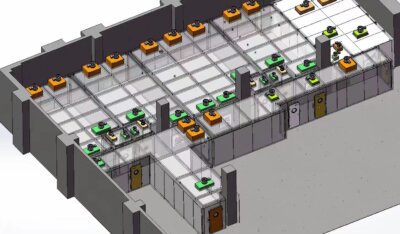
Integrating an AVI system requires careful physical planning. A comprehensive multi-station setup for empty vial, liquid, stopper, and crimp inspection demands a linear footprint that must be allocated within the often-constrained cleanroom space. The layout must account not only for the inspection machines themselves but also for sufficient clearance for operator access, maintenance activities, and vial conveyance pathways without creating traffic bottlenecks.
Enabling Agile Manufacturing
Flexibility for quick changeovers is paramount for facilities running multiple products. The system should allow for tool-less or minimal-tool changeovers between different vial formats (e.g., from 2R to 50R). This minimizes downtime during product switch-overs and enhances overall equipment effectiveness (OEE). The mechanical design should facilitate easy access to change parts, and the software should store and recall format-specific inspection recipes instantly.
Integrating Complementary Technologies
The layout must also pre-plan for the integration of complementary quality testing technologies. As visual inspection cannot assess container closure integrity, space must be allocated for in-line leak testers, such as vacuum decay systems, immediately following the visual inspection station. This integrated quality tunnel ensures each vial undergoes a complete battery of tests in a synchronized flow, which is a fundamental requirement for advanced automated visual inspection systems.
Decision Framework: Selecting Your Optimal AVI System
A Structured, Six-Step Evaluation
Moving beyond a feature checklist requires a structured decision framework. First, definitively map your defect catalog against the hybrid capabilities of area and line scan technologies, using your internal quality data as the primary guide. Second, validate that the system’s throughput (400-600 VPM) aligns with your current and projected line capacity without compromise. Third, demand proof of integration readiness for both data systems (MES) and complementary CCI testing hardware.
Assessing Intelligence and Partnership
Fourth, critically evaluate the software’s intelligence. Scrutinize its AI and deep learning capabilities for recipe development, its false-reject reduction algorithms, and its ability to provide actionable process insights. Fifth, assess the vendor as a strategic partner. Examine their support infrastructure, training programs, and their track record of long-term collaboration and innovation in the pharmaceutical space.
Calculating Long-Term Strategic Value
Finally, quantify the long-term data asset value. A system that archives per-vial data creates a powerful repository for trend analysis and provides a defensive tool for recall management, offering a tangible return on investment beyond basic inspection. This holistic approach ensures your selected system delivers assured quality, operational resilience, and strategic future-proofing.
The decision framework below consolidates these critical steps into an actionable checklist.
| Decision Step | Key Criterion | Quantitative/Qualitative Target |
|---|---|---|
| 1. Defect catalog mapping | Hybrid technology capability | Area scan + line scan combination |
| 2. Throughput alignment | Line capacity match | 400 – 600 VPM |
| 3. Integration readiness | MES & CCI testing compatibility | Seamless data & hardware link |
| 4. Software intelligence | AI for defect discrimination | Contextual classification ability |
| 5. Vendor assessment | Strategic partnership potential | Long-term support & innovation |
| 6. Data value | Future recall utility | Individual vial image archiving |
Source: Technical documentation and industry specifications.
The optimal selection balances immediate technical performance with long-term operational and strategic value. Prioritize systems that offer a validated hybrid inspection approach, guaranteed throughput matching your line speed, and seamless data integration to close the quality loop. Ensure your vendor partnership includes robust lifecycle support to protect your investment.
Need a professional partner to navigate the specification, validation, and integration of a 100% QC inspection solution? QUALIA provides expertise in deploying automated visual inspection systems that meet stringent regulatory and operational demands. Contact our team to discuss your specific defect catalog and line requirements. Contact Us
Frequently Asked Questions
Q: How do we choose between area scan and line scan camera technology for our vaccine vials?
A: The choice is dictated by the specific physical defects you need to detect. Area scan systems, using multiple cameras, are optimal for internal attributes like particulates and fill level. Line scan technology excels at inspecting the cylindrical vial wall for surface flaws like scratches. This means facilities with a comprehensive defect catalog should plan for a hybrid system that integrates both technologies to achieve complete 100% inspection coverage.
Q: What performance metrics should we prioritize when selecting an automated vial inspector?
A: Prioritize a system that matches your line’s throughput, typically requiring speeds of 400 to 600 vials per minute to avoid bottlenecks. Equally critical are detection limits, such as the ability to identify flaws as small as 0.1 mm², and a low false-reject rate to preserve product. For projects where container closure integrity is paramount, plan to integrate a complementary non-destructive leak test, as visual inspection alone cannot detect microscopic seal failures.
Q: How do regulatory standards like USP chapters impact our AVI system validation?
A: Standards like USP <1790> Visual Inspection of Injections provide critical guidance for validating automated inspection processes and personnel qualification. Furthermore, your system must ensure product meets the visible particulate limits defined in USP <790> Visible Particulates in Injections. This means your validation protocol and system software must be designed to document compliance with these enforceable quality chapters.
Q: What are the key factors in calculating the total cost of ownership for an AVI system?
A: Look beyond capital expense to operational drivers like false-reject rates, which waste high-value product, and system speed, which impacts overall line throughput. A strategic lever for TCO is implementing 100% empty vial inspection to prevent contaminating bulk vaccine. If your operation requires managing batch recalls, prioritize systems that archive per-vial images, as this capability allows targeted retrieval of defective units and dramatically reduces future liability costs.
Q: What should we look for in a vendor beyond technical specifications?
A: Treat procurement as a long-term strategic alliance. Evaluate the vendor’s service level agreements for support, spare parts availability, and software updates as critically as hardware specs. Your competitive advantage depends on securing a reliable partnership with these specialized suppliers. This means facilities operating 24/7 should prioritize vendors with proven uptime support and a clear roadmap for maintaining their complex, AI-driven systems.
Q: How does system integration impact our compliance with 21 CFR Part 11?
A: Your AVI system must have built-in features for electronic audit trails, secure user management, and validated data archiving to meet 21 CFR Part 11 and GAMP5. It must also enable direct data transmission to your Manufacturing Execution System for real-time batch records. This means your compliance strategy should plan for the full data lifecycle, treating each vial’s inspection record as part of a future mandatory digital batch record and turning compliance into a structured data asset.