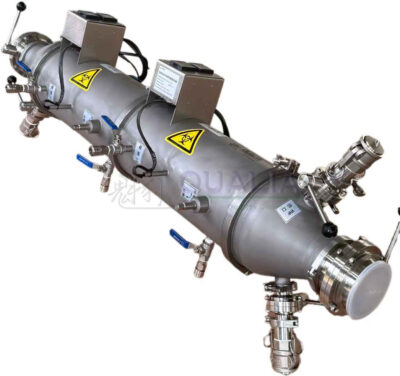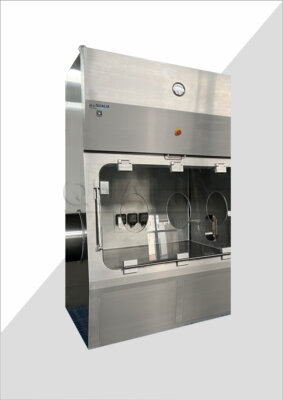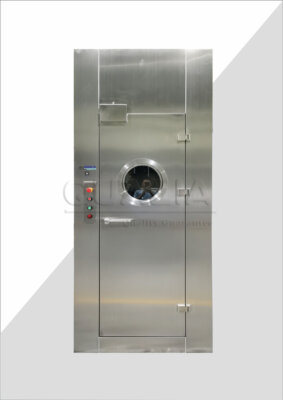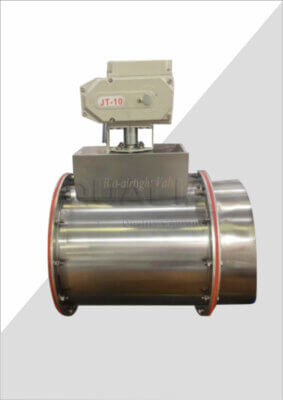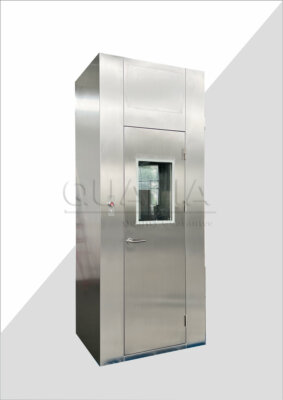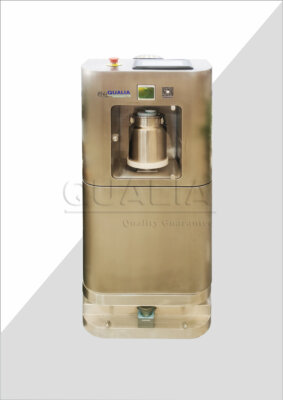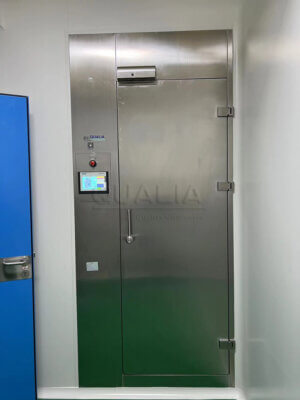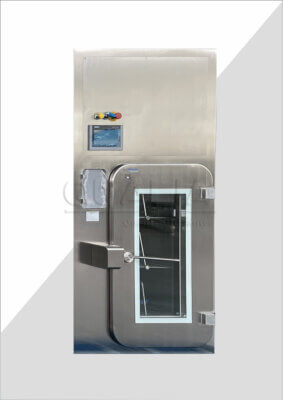
A biosafety pass box RFQ should ask enough about seals and spare parts to let you assess maintainability, supply continuity, and service scope before the purchase order is signed — not after the first seal fails. The questions that belong in that RFQ fall into four distinct areas: part identity and revision matching, kit content and future availability, service scope definition, and substitution accountability. Getting these wrong means comparing offers that look similar on price but differ significantly in long-term cost and downtime risk.
Identify the Supplied Seal and Assembly Revision
Every seal supplied with a pass box is a component in a defined assembly, and the revision of that assembly determines whether the seal fits.
When a quotation includes a spare seal — even a single one supplied as standard — the description needs enough detail to match the purchased equipment unambiguously. A label such as “door seal” or “included spare” is not sufficient for procurement, qualification records, or a future reorder. Ask the supplier to provide the part number, the assembly or drawing revision it belongs to, and confirmation that those identifiers correspond to the specific equipment configuration being quoted. Without that traceability, a spare can sit on a shelf for two years and then fail to match the equipment it was supposed to support — not because the supplier changed the design, but because the original purchase record never captured the revision.
Сопутствующие товары
- Бокс для пропусков биологической безопасности — Воспользуйтесь соответствующим перечнем узлов, чтобы оформить запрос предложений с учетом конкретной конфигурации; тип уплотнений, крепеж, инженерные коммуникации, запасные части и объем сервисного обслуживания должны быть указаны в подробном ответе.
This is particularly relevant for pass boxes with pneumatic door seals, where the seal geometry, inflation pressure range, and connection fitting may vary between assembly revisions even if the external appearance is unchanged. For mechanical-seal configurations, the contact profile and compression set tolerance can differ between material batches that carry the same part name. The revision field in your RFQ closes the gap between a seal that is nominally correct and one that is verified correct.
Separate Included Spares from Future Availability
Spares delivered with the equipment and spares available to reorder later are two different purchase obligations, and conflating them is a common mistake in RFQ evaluation.
When a supplier quotes a spare-parts kit, the kit name alone tells you nothing about its content. One supplier’s commissioning kit may contain a single door seal and a set of fasteners; another’s may include filter gaskets, interlock fuses, and a complete seal assembly. Ask for the itemized content — each part by identity, quantity, and function — alongside any stated exclusions. Exclusions matter as much as inclusions: a kit that covers door seals but not the pass-through aperture gasket leaves a gap that will only surface during the first scheduled maintenance.
Separate Included Spares from Future Availability: Buyer Review Matrix
| RFQ supply question | Supplier-response field | Distinction preserved |
|---|---|---|
| What arrives with the equipment? | Part identity, assembly revision and included quantity | Initial included spares |
| When would a later order be delivered? | Lead-time commitment and starting event | Future supply rather than initial stock |
| What must be ordered together? | Minimum order quantity and other ordering constraints | Commercial feasibility of a reorder |
| How long is the offered basis valid? | Quotation validity and applicable conditions | Current offer versus later pricing commitment |
| What if the part changes or ends? | Proposed obsolescence or change notice and governing agreement | Notice commitment versus assumed indefinite availability |
What is delivered with the equipment and what can be ordered later are separate commitments. Treat them as such in your RFQ.
The stronger risk sits in future availability. If supply continuity matters to the project — and for a pass box installed in a BSL-3 facility, it almost always does — the RFQ should request explicit commercial terms rather than a broad assurance that parts are “available.” Ask the supplier to respond with:
- Quoted lead-time commitment for each listed spare, and the event that starts the clock (receipt of order, receipt of payment, end of a minimum notice period)
- Minimum order quantity for each part, and any batch or packaging constraint that affects small reorders
- Ordering constraints, such as whether parts must be ordered through a regional distributor or require a service-contract relationship
- Quotation validity period for the stated lead-time and pricing
- Obsolescence or change-notice commitment, specifying how far in advance the buyer is notified if a part is discontinued or redesigned
Where a separately contracted stocking or service agreement governs these terms, the RFQ response should reference that agreement rather than restate its content — but the reference must be specific enough to let you verify what is actually covered.
One included spare deserves a separate flag: if any item in the delivered kit has no stated future-supply commitment, identify it now. A seal supplied at commissioning with no reorder path is a one-time provision, not a maintenance program.
Compare Replacement and Service Scope
Seal replacement on a biosafety pass box is rarely just the cost of the seal itself, and quoting only the part price produces a comparison that breaks down the first time a technician arrives on site.
When the supplier’s response describes a replacement seal, ask them to separate the scope into visible components: the part cost, который labor rate and estimated hours, any attendance conditions (minimum call-out charge, geographic zone, notice period, qualification of the attending technician), and the supporting documents included as part of the service. Supporting documents include the post-service test record, any updated validation data affected by the replacement, and confirmation that the replacement seal matches the current assembly revision.
Consider a project where a facility manages its own preventive maintenance schedule and plans to replace door seals at fixed intervals. If the RFQ captures only the part price, the project budget will not account for the technician visit, the required leak test, or the documentation update that the facility’s quality system demands. Each of those is a separate cost with its own lead-time, and separating them in the RFQ makes the total cost of ownership visible at the point of comparison — not after the contract is signed.
The replacement price only holds its meaning when the scope it covers is stated explicitly.
Where a supplier offers service contracts or on-site attendance programs, those should be priced and scoped in a parallel response field, not folded into the part quotation. A sealed-price service arrangement may be cost-effective for a high-use pass box, but it needs to be evaluated against the disaggregated alternative, not instead of it.
Рекомендуемые материалы
- URS для оборудования с высоким уровнем биологической защиты: что должны определить отделы контроля качества, инжиниринга и закупок до направления запроса предложений — Prepare the spare and service scope before tender comparison.
- Как сравнивать поставщиков оборудования высокой степени изоляции по качеству ответов на запросы URS и объему представленных доказательств — Compare itemized commitments rather than kit or warranty labels.
- Контрольный список по управлению изменениями для повторной аттестации изолирующего оборудования — Plan the review route for a future replacement-part substitution.
Define Handover and Substitution Questions
The last category of questions concerns what happens when the original part is no longer available exactly as specified — and who is accountable when a substitute is proposed.
Future substitution is not an edge case. Seal materials, gasket profiles, and interlock components change over product lifetimes, and a pass box installed today may be in service for ten or fifteen years. The RFQ should define the substitution process before it arises, not at the moment a technician arrives with a part that is “equivalent.”
Specifically, ask the supplier to state:
- Who produces the equivalence evidence when a substitute is proposed — whether that is the supplier’s engineering function, the original component manufacturer, or a third-party test body
- What form the evidence takes — dimensional comparison, material certification, performance test against the original specification, or documented review against the assembly drawing
- Who reviews and approves the change on the buyer’s side — typically the facility engineer, the validation team, or both — and what documentation is provided to support that review
The term interchangeable in a supplier’s response needs an accountable evidence route. Without it, an interchangeable label means only that someone at the supplier decided the part would fit. For a pass box protecting a BSL-3 boundary, that is not a sufficient basis for acceptance.
Storage conditions for supplied seals belong in this same documentation cluster. If the supplier provides storage instructions — temperature range, humidity limits, UV exclusion, maximum shelf life — those instructions should be attached to a traceable part reference, not issued as a general guidance sheet. The buyer should not have to infer shelf life from a material data sheet or extrapolate from a generic elastomer standard. Ask for the supplier’s own storage specification for the specific seal part number; if none exists, that absence is itself information worth recording before you accept the spare.
Where seal storage, spare-part stocking, and substitution approval all sit within a formal maintenance or service agreement, the RFQ should ask for that agreement’s scope to be summarized in terms that can be audited — not just referenced by title. A project team preparing for commissioning should have ready: the facility’s maintenance interval plan, the qualification evidence already required by the site’s quality system, the pressure boundary requirements for the pass box installation, and any regulatory or accreditation framework that governs how equipment changes are recorded and approved. Those inputs determine how specific the supplier’s RFQ responses need to be, and they are the same inputs that will govern every seal change the facility makes for the life of the equipment.
Список литературы
- Приложение 1 к GMP ЕС — Производство стерильных лекарственных средств (2022 г.) — Используйте контекст контроля загрязнения при производстве в стерильных условиях для определения оборудования и межсекционных соединений, подлежащих проверке; он не содержит значений приемки проходных камер или систем cRABS, специфичных для данного проекта.
- EudraLex, том 4, приложение 15 — Квалификация и валидация — Не следует путать документацию поставщика с решениями о квалификации и приемке проекта; указанные условия и отклонения относятся исключительно к рассматриваемой системе.
- ISO 14644-7:2004 Разделительные устройства — Требования к устройствам разделения рам и вопросы, касающиеся взаимоотношений между заказчиком и поставщиком, входят в проверенную краткую сферу применения стандарта; подробные положения и ограничения в отношении оборудования выходят за рамки данного краткого изложения.
- Руководство ВОЗ по биобезопасности в лабораториях, 4-е издание (основной документ) — Приоритет следует отдавать информации о лабораторном применении и оценке рисков, а не общей маркировке оборудования; данное резюме не является техническим заданием на установку или разрешением на эксплуатацию объекта.
Часто задаваемые вопросы
Q: What if the quoted minimum order is greater than the stock we intend to hold?
A: Compare the resulting purchase quantity and scope before accepting the offer. Ask for an alternative commercial arrangement if needed, keeping it separate from the original minimum-order response rather than assuming single-part orders will be accepted.
Q: Should the lowest spare-part unit price decide the supplier comparison?
A: Compare the actual order quantity, quoted delivery basis and included service scope alongside unit price. A lower unit price can require a different purchase commitment and therefore represent a different commercial choice.
Q: Can we rely on today’s spare quotation for a purchase several years later?
A: Only within the commitment actually offered. Preserve quotation validity and any agreed stocking or notice arrangement so a current price or availability response is not treated as an unlimited future obligation.