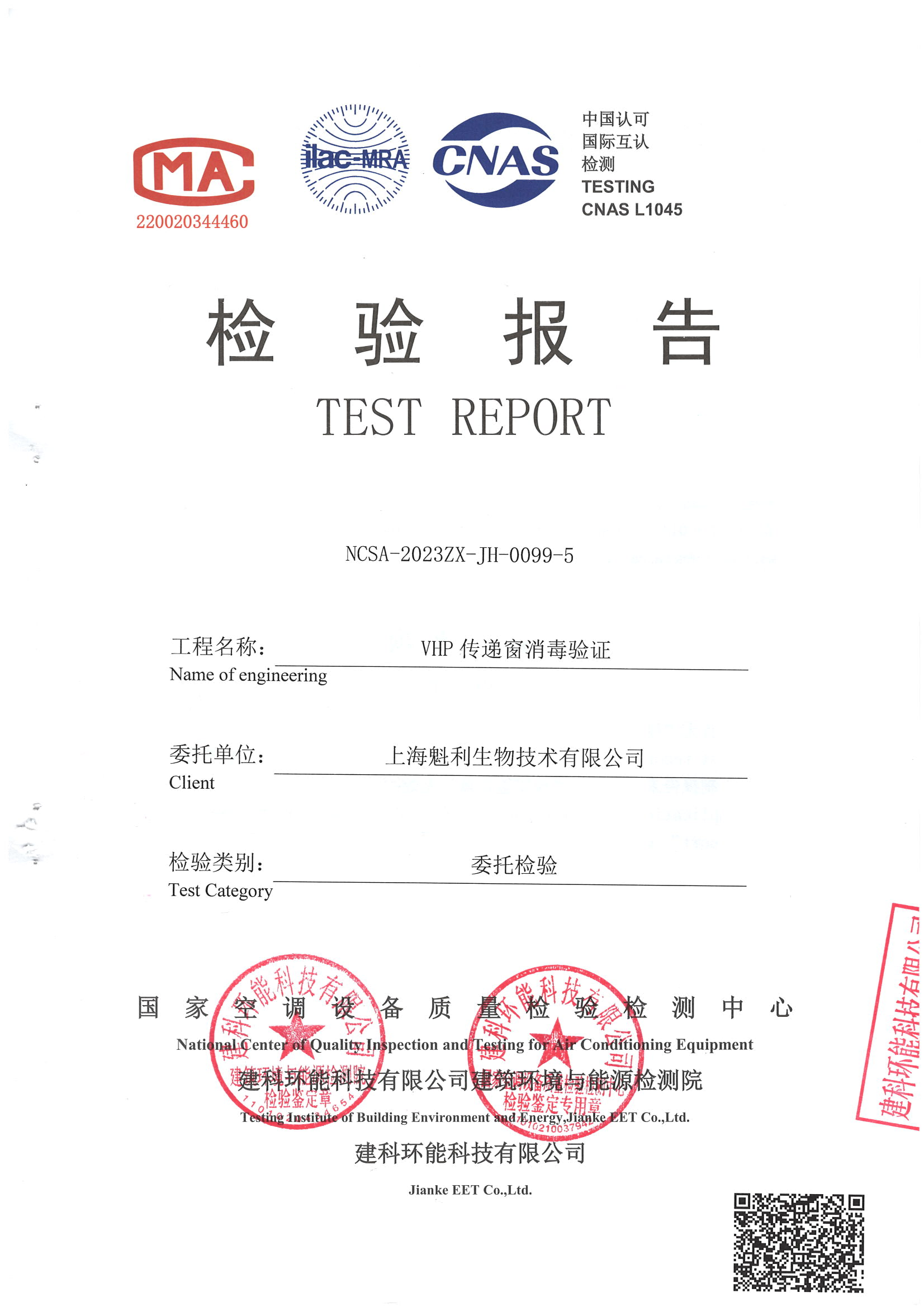
Before choosing a pass box door seal, review every cleaning and disinfecting agent that will contact it—by product name and formulation—alongside every surface those agents will reach, including the frame and hardware, not just the elastomer. The answer depends on what is actually used at your site, how it is applied, and what the supplier can demonstrate for that specific combination. Projects that specify only a broad chemical family or defer to “site compatibility” routinely discover material gaps once cleaning practice is defined.
List Cleaning Agents and Their Documented Use
The first task is a complete written list of every agent that will contact the pass box, referenced to an identifiable formulation document, not a generic chemical class.
When a tender document or design brief says only “compatible with site cleaning agents,” that statement cannot be evaluated. A supplier receiving it has no identifiable basis for its response, and you have no basis to review the evidence it returns. Before any compatibility request goes out, build a list that records each agent by its product name or controlled formulation identifier, the formulation-document reference and revision that describes what it contains, and the site-use instruction that governs how it is applied—concentration, dwell time, temperature, and frequency. The compatibility review refers to those site-approved conditions rather than inventing new ones.
Сопутствующие товары
- Бокс для пропусков биологической безопасности — Воспользуйтесь соответствующим перечнем узлов, чтобы оформить запрос предложений с учетом конкретной конфигурации; тип уплотнений, крепеж, инженерные коммуникации, запасные части и объем сервисного обслуживания должны быть указаны в подробном ответе.
Agents that commonly appear in cleanroom and controlled-environment pass boxes include alcohols, quaternary ammonium compounds, chlorine-based disinfectants, peracetic acid solutions, and—where VHP (vaporized hydrogen peroxide) transfer decontamination is in scope—hydrogen peroxide in both liquid-wipe and vapor forms. These are not interchangeable in their effect on elastomers and hardware. The same elastomer family can behave very differently under repeated chlorine exposure compared with alcohol, and vapor-phase hydrogen peroxide concentrations reached inside a VHP pass box are substantially higher than those in a surface wipe. Each distinct agent and each distinct application mode belongs on its own register entry.
Record each agent by its controlled formulation reference and site-use instruction revision before issuing a supplier compatibility request—a chemical class name is not a sufficient basis for review.
If formulation details are commercially confidential, the register can note an agreed controlled-disclosure reference rather than the full composition. What cannot be omitted is the agent identity and the use conditions: without both, no supplier response is verifiable.
Where the cleaning practice is still under internal review at the time of inquiry, ask for a conditional supplier response that identifies which use information is missing. A conditional comparison—”we can confirm compatibility if dwell time does not exceed X, concentration remains within Y range, and surface temperature is below Z”—is significantly more useful than a broad compatibility promise that was never tested against defined conditions. Projects that lock down equipment specifications before cleaning SOPs are finalized increasingly ask for this kind of conditional response, and suppliers who can produce one demonstrate that their evidence is traceable rather than generic.
Identify Seal and Contact-Surface Materials
The seal is one surface among several, and all contacted surfaces need to be identified before the compatibility review can be complete.
A broad material family name—”silicone,” “EPDM,” “fluoroelastomer”—covers a range of formulations with meaningfully different chemical resistance profiles. When a supplier describes a door seal only by family name, request the specific offered material identifier: the grade, compound designation, or controlled component specification that distinguishes the actual supplied part from other members of the same family. That identifier is what links the seal to any test or service data the supplier holds. A family label can hide differences between components that share a name but differ in plasticizer content, filler, or cure system—any of which affects solvent resistance or oxidative stability under repeated disinfection cycles.
The seal material is also not the only material in contact. When cleaning agents are applied by spray, wipe, or flood, they reach:
- the door frame, including any exposed metal, coated surface, or welded joint at the threshold;
- hinge and latch hardware, which may be a different grade of stainless steel or a plated component;
- any gasket or secondary seal at a viewing panel or instrument port;
- the interior liner surface, particularly at the floor and corners where pooling is possible.
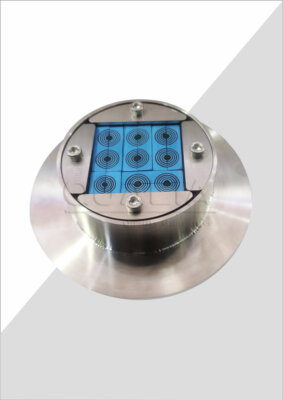
A seal-only compatibility statement leaves all of these surfaces outside the stated review. For pass boxes with pneumatic seals—where the inflation system adds tubing, fittings, and an inflation port assembly—the agent-contact inventory also includes those components and the materials from which they are made.
Consider a project where the team selects a fluoroelastomer door seal based on strong compatibility data for the peracetic acid disinfectant in use. The compatibility claim covers the seal elastomer. After installation, the cleaning team wipes the same agent across the door frame and latch assembly, which are carbon-steel components with a painted finish rather than the stainless specified in the original material schedule. The paint degrades within months. The seal was never the problem; the frame material was never reviewed. Including the full contact-surface inventory at the outset would have caught this before equipment was ordered.
Request Configuration-Specific Compatibility Evidence
Compatibility evidence is only useful when it can be linked, entry by entry, to a specific agent, a specific surface, and a specific offered material.
When a supplier provides compatibility data, ask for a response structured so that each row or entry identifies: the agent product name or formulation reference, the site-use instruction revision it was reviewed against, the contacted surface (door seal, frame, hardware), the offered material identifier for that surface, the supplier evidence reference, and the stated scope of that evidence. Without that structure, it is not possible to see which agent-to-surface combinations are confirmed and which remain unanswered. A document that says “materials are compatible with standard disinfectants” tells you nothing about peracetic acid at 2% concentration on a specific elastomer grade with a 10-minute dwell time.
Request Configuration-Specific Compatibility Evidence: Buyer Review Matrix
| Example register field | Illustrative entry only | Supplier response needed |
|---|---|---|
| Agent identity | Agent A; product or formulation record F-A; revision to confirm | Identify the formulation basis used in the response |
| Site use | Instruction CLEAN-A; revision to confirm | Reference the supplied approved use context |
| Contacted surface | Door seal; offered material identifier to confirm | Link the response to the actual offered material |
| Other contacted surface | Frame or hardware; material identifier to confirm | State whether this surface is covered or remains open |
| Evidence | Supplier evidence reference pending | Give its scope and any unanswered agent-to-surface combination |
A useful illustrative starting point for structuring the register might look like this: Agent A, formulation record F-A revision to confirm, site-use instruction CLEAN-A revision to confirm, door seal surface, offered material identifier to confirm, supplier evidence reference pending. That entry pattern exposes exactly where information is missing without committing to a specific agent or material before the project has defined them. Replace these illustrative labels with controlled project references before issuing the actual request.
The evidence request should return a filled matrix, not a general statement—each blank cell is an unanswered combination.
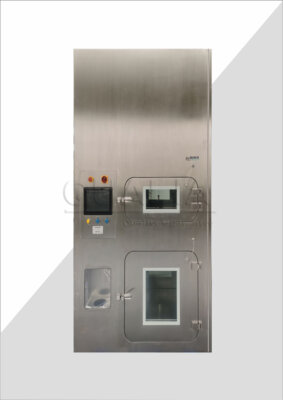
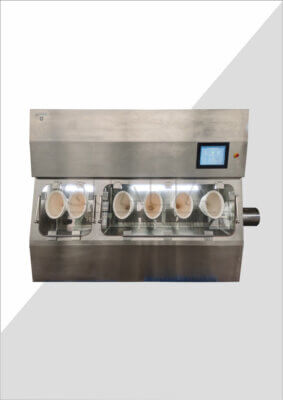
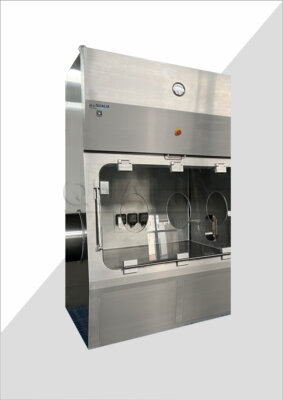
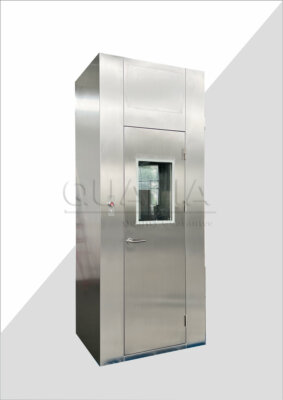
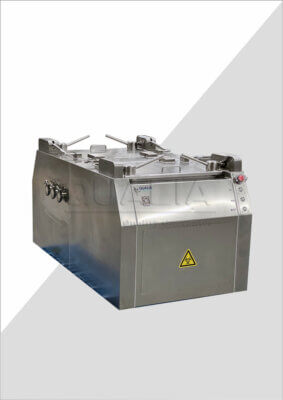
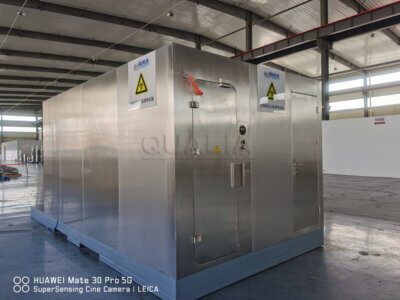
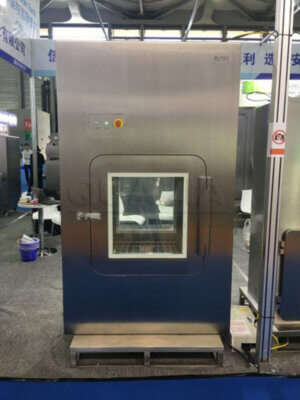
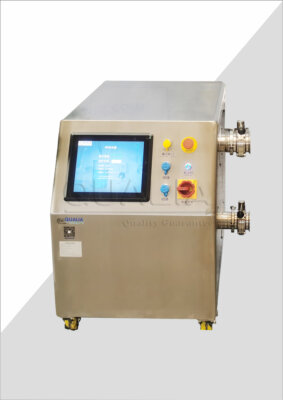
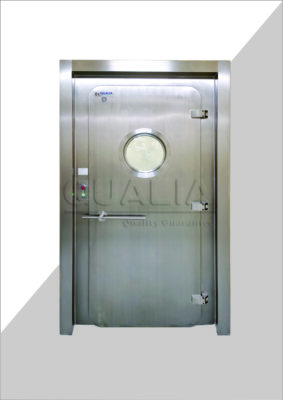
QUALIA passes boxes can be configured with pneumatic or mechanical door seals, and the contact-surface inventory differs between the two designs. For pneumatic seals, the inflation system adds components that may or may not be listed in a standard material schedule. For mechanical seals, the compression interface and the hardware that drives it are the primary concerns alongside the elastomer. The compatibility request should reflect whichever configuration is offered, and the supplier should identify the evidence scope in those terms.
Where the supplier cannot confirm a specific combination—because testing has not been conducted, because the agent falls outside a validated range, or because a component material is sourced from a subcontractor—that gap should appear explicitly in the response. A conditional response or an acknowledged unknown is a usable project output. An unconditional claim that cannot be traced to evidence is not.
Рекомендуемые материалы
- URS для оборудования с высоким уровнем биологической защиты: что должны определить отделы контроля качества, инжиниринга и закупок до направления запроса предложений — List intended cleaning use as buyer information before quotation.
- Материалы Vacu-Pass: необходимо запросить доказательства эффективности очистки и фумигации — Use the adjacent component example to frame material-evidence requests, not to infer pass box compatibility.
- Контрольный список по управлению изменениями для повторной аттестации изолирующего оборудования — Follow a later cleaning-agent or material change into the document review.
Coordinate Changes and Replacement Information
A compatibility review completed at procurement is only the starting record; what happens when the agent or the material changes determines whether that record remains useful.
Cleaning agents and disinfection protocols change over time. A site may switch from an alcohol-based disinfectant to a chlorine dioxide solution, adopt a new sporicidal agent after a contamination event, or move to VHP decontamination of the pass box interior as part of an isolator integration. Each of these changes may alter which seal and surface materials are acceptable. The original compatibility evidence, anchored to specific agent and material identifiers, is what allows a reviewer to determine what changed and whether a re-review is needed. Without it, the new agent is evaluated against an unknown baseline.
This means the handover record for the pass box—whether it sits in the design documentation package, the equipment file, or the site’s qualification record—should retain the original agent list, the formulation references, the use-instruction revisions, and the offered material identifiers against which the original compatibility response was provided. If a replacement material is later approved, the record should carry both the original evidence context and the new one, not substitute one for the other.
Replacement seal availability is a related practical question that belongs in the same conversation. The seal material identity established for compatibility purposes is also the specification needed to source a replacement. If the offered material is identified only by a family name or a part number without a material specification, a future replacement order may return a different compound from a different batch, and the compatibility basis established at procurement no longer applies. Requesting the controlled material identifier at the design stage protects the replacement supply chain as well as the original evidence.
Where cleaning practice is not finalized at the time of equipment selection, the most defensible approach is to freeze the equipment material specification against the most demanding likely agent and use case, document that assumption explicitly, and revisit the register when the cleaning SOP is approved. Projects that try to hold both decisions open—agent selection and material selection—simultaneously rarely close cleanly. Anchoring one while the other is resolved is a practical way to keep the evidence chain intact.
Before approaching a supplier for pass box door seal compatibility confirmation, have ready: the product name or formulation reference and revision for each intended cleaning and disinfecting agent, the site-use instruction identifier and revision governing each one, the full list of surfaces those agents will contact, and the configuration type—pneumatic or mechanical seal—of the pass box under consideration.
Список литературы
- Приложение 1 к GMP ЕС — Производство стерильных лекарственных средств (2022 г.) — Используйте контекст контроля загрязнения при производстве в стерильных условиях для определения оборудования и межсекционных соединений, подлежащих проверке; он не содержит значений приемки проходных камер или систем cRABS, специфичных для данного проекта.
- EudraLex, том 4, приложение 15 — Квалификация и валидация — Не следует путать документацию поставщика с решениями о квалификации и приемке проекта; указанные условия и отклонения относятся исключительно к рассматриваемой системе.
- ISO 14644-7:2004 Разделительные устройства — Требования к устройствам разделения рам и вопросы, касающиеся взаимоотношений между заказчиком и поставщиком, входят в проверенную краткую сферу применения стандарта; подробные положения и ограничения в отношении оборудования выходят за рамки данного краткого изложения.
- Руководство ВОЗ по биобезопасности в лабораториях, 4-е издание (основной документ) — Приоритет следует отдавать информации о лабораторном применении и оценке рисков, а не общей маркировке оборудования; данное резюме не является техническим заданием на установку или разрешением на эксплуатацию объекта.
Часто задаваемые вопросы
Q: How can procurement compare bidders that identify materials differently?
A: Ask each bidder to map its offered material identifier to the same contacted-surface entry in the request. Keep the original identifiers visible; comparison should not rename different offered materials as one assumed equivalent.
Q: What if the cleaning formulation cannot be sent with a public tender?
A: Use an agreed controlled reference and disclosure route, and mark the affected response as conditional until the supplier has the necessary identified information. Do not substitute an unnamed generic agent merely to complete the tender form.
Q: Should one unanswered surface hold the entire commercial comparison?
A: Keep the unanswered combination and the decision it affects visible. Unaffected priced scope may still be compared, but do not rank the unresolved compatibility requirement as satisfied or silently average it into a general response.