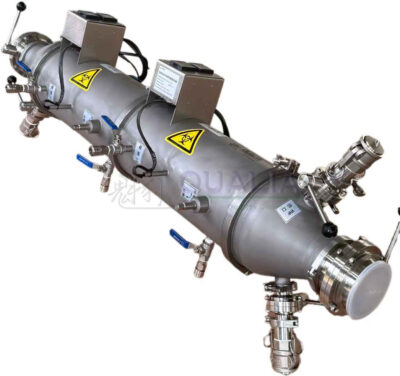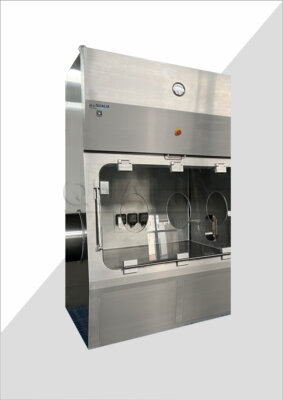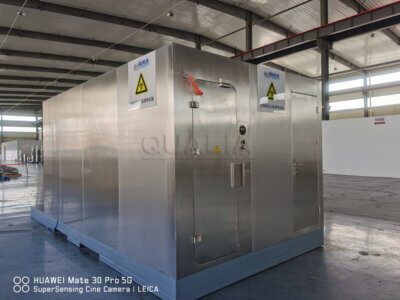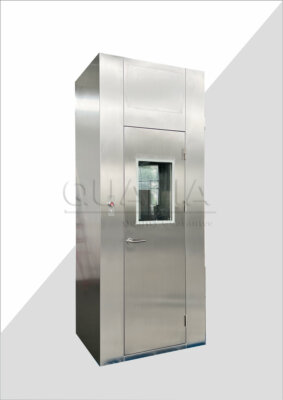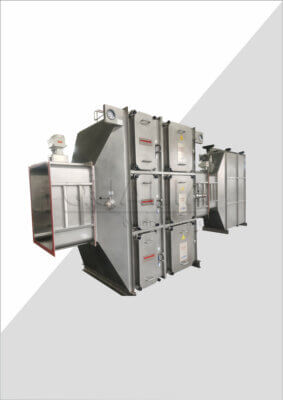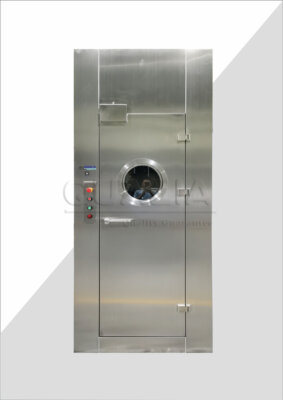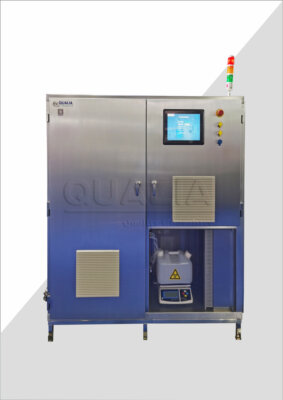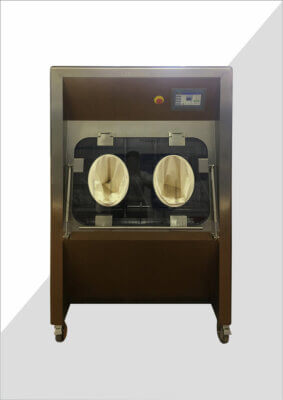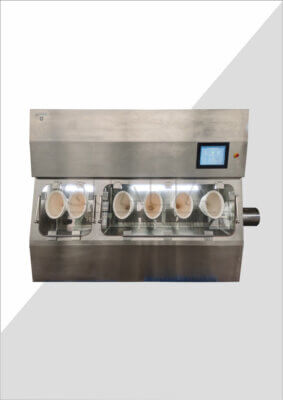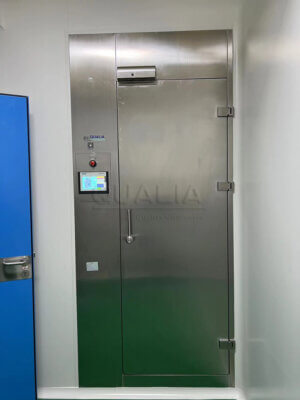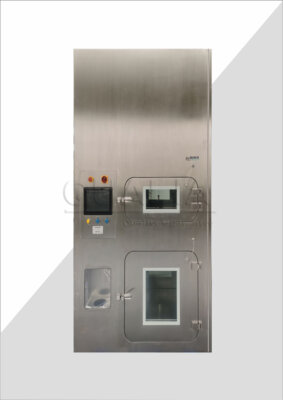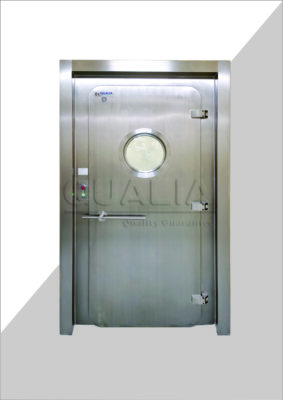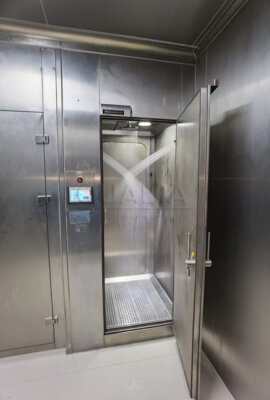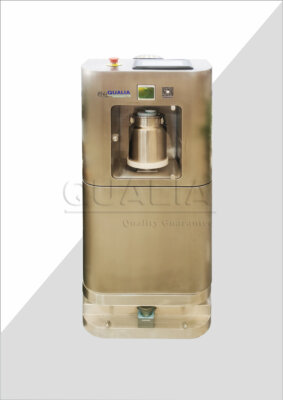

A material transfer RFQ that reaches suppliers without a defined load matrix or transfer route forces every bidder to guess at chamber size, interface type, and door configuration. That guess shows up later as a mismatch between what was quoted and what the room actually needs to move through its transfer point. Before pricing conversations start, the buyer has to settle what is being transferred, under what conditions, and in which direction, because these facts determine which configuration a supplier can responsibly propose.
Supply the load matrix and transfer route before requesting a price
| Configuration input | Details to provide | Configuration decision supported |
|---|---|---|
| Load families and peak mix | Load families and the expected peak mix | Size the proposal around actual use rather than a single nominal load |
| Physical load envelope | Dimensions and weights | Define the load envelope the proposed chamber must accommodate |
| Packaging and process tolerance | Packaging and decontamination tolerance | Check whether the proposed transfer and decontamination approach is compatible with the load |
| Transfer route | Route drawings and intended transfer direction | Configure openings and interfaces for the actual route and direction |
A transfer system is sized and configured around what actually passes through it, not around a single assumed load. Where a facility handles one consistent load type in predictable quantities, a supplier can propose a chamber sized close to that load with limited margin. Where load families vary across shifts, campaigns, or product lines, the chamber and interface need to accommodate the peak mix rather than the average case, and that changes both the physical envelope and the internal fixtures a supplier includes in the design.
Dimensions and weights define the floor for chamber geometry, but they are not sufficient on their own. A load that fits the chamber by volume may still fail to clear the door opening at the angle the transfer requires, or may exceed what the internal shelving or load-bearing surface can support repeatedly without degradation. Suppliers configuring a system need the physical envelope stated as a range or family, not as a best-case example, because a chamber configured for the easiest load in the mix will constrain every harder case that follows it into service.
Packaging and decontamination tolerance matter because the transfer step is not neutral to the material passing through it. Where a load’s outer packaging tolerates the decontamination approach without affecting its contents, the supplier has latitude in cycle design. Where packaging is sensitive to moisture, temperature, or chemical exposure, that tolerance constrains which decontamination method is even viable for the chamber, independent of how well the chamber is otherwise sized. A buyer who has not characterized this tolerance cannot tell whether a proposed cycle is compatible with the actual material or only with a generic reference load.
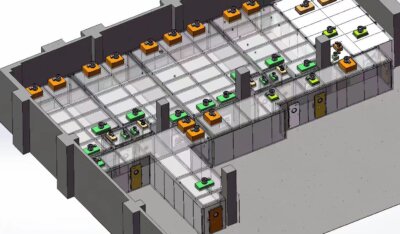
Direction and route matter for a related but distinct reason: they determine which side of the transfer point is the source and which is the destination, and they determine how the equipment’s openings and interlocks need to be arranged relative to the surrounding room layout. A route drawn only in general terms leaves the supplier to assume a direction that may not match how the room is actually used, which affects door orientation, interlock logic, and how the unit sits against adjacent walls or equipment. Stating the load families, peak mix, physical envelope, packaging tolerance, and route together gives a supplier enough to propose a chamber and interface built for actual use rather than a generic placeholder configuration.
Show room conditions, pressure relationships, utilities, and access constraints
| Состояние проекта | Information to provide | Proposal aspect to compare |
|---|---|---|
| Room environment | Room classifications or containment states | Fit of the proposed interface to each room condition |
| Pressure relationship | Pressure relationships across the transfer boundary | Treatment of the stated boundary conditions |
| Утилиты | Utilities available at the installation point | Alignment between the proposed system and available services |
| Physical interface | Opening sizes and access constraints | Fit, access, and installation feasibility |
| Installation timing | Available installation windows | Compatibility of the proposed installation scope with site access timing |
A transfer unit is not a self-contained device; it is an interface between two defined environments, and its configuration depends on what each side of that interface requires. Room classification or containment state on each side tells a supplier what kind of boundary the unit must maintain and what materials, seals, or interlocks are appropriate at the opening. A transfer point connecting two rooms of similar classification carries different interface requirements than one bridging rooms with materially different environmental control, even where the physical chamber looks similar in both cases.
Pressure relationship across the boundary is a separate variable from classification, and it drives airflow and interlock behavior independently of what each room is rated for. Where the pressure differential across the transfer point is fixed and well understood, the supplier can configure door interlocks and airflow management around that known relationship. Where the differential varies by mode of operation or is still being finalized by the project’s HVAC design, the supplier is being asked to configure a device around an unsettled boundary condition, and that uncertainty should be resolved, or at least flagged, before a firm proposal is issued.
Utilities available at the installation point determine what the unit can actually run on without additional site work. A unit configured assuming a particular utility capacity or quality that the site cannot supply will either underperform or require field modification after delivery, which is a correction that costs more to make on site than to specify correctly in the RFQ.
Opening sizes and access constraints affect two different things: whether the finished unit can physically reach its installation location, and whether the installed unit’s door clearances work within the available room layout. A chamber that fits through the building’s access route before wall closure may still be unsuitable if the room’s final layout leaves it without enough clearance to deploy at its stated opening, so both constraints need to be checked, not just one. Installation windows matter because a transfer unit interacts with the surrounding room construction and may require coordination with wall penetrations, utility tie-ins, or adjacent equipment commissioning sequences. A supplier who knows the installation window can state what portion of their proposed installation scope fits inside it and what may need to happen outside the normal construction sequence.
Request equipment scope, interfaces, exclusions, and site responsibilities
| Bid element | Supplier statement requested | Comparison use |
|---|---|---|
| Equipment scope | Equipment included in the proposal | Compare the physical system included in each bid |
| Исключения | Items excluded from the proposal | Identify scope gaps before comparing price |
| Control interfaces | Control interfaces included and their boundaries | Compare how the proposed system connects to project controls |
| Site responsibilities | Work and inputs assigned to the site | Expose differences in the customer-side scope |
| Consumables and spares | Consumables and spares included or offered | Compare ongoing and handover support scope |
Two proposals describing similar-looking equipment can carry very different scope underneath that description, and a buyer comparing only the headline configuration will miss where the real differences sit. Equipment scope stated clearly tells the buyer exactly what physical components arrive as part of the bid, as distinct from items referenced in passing but not actually included. This distinction matters more as a transfer system becomes more integrated with surrounding infrastructure, because the line between “included equipment” and “site-provided interface” becomes less obvious the more connected the system is to the facility around it.
Exclusions deserve equal attention to inclusions, because an exclusion discovered after contract award shifts cost and schedule risk onto whichever party did not expect to own it. A bid that is silent on exclusions is not necessarily complete; it may simply not have stated what it is leaving out, which the buyer only discovers during detailed design or installation.
Control interfaces are a frequent point of divergence between bids that otherwise look similar. Where the transfer unit’s controls are meant to operate independently of the facility’s building management or process control system, the interface requirement is comparatively simple. Where the unit must report status to, or accept commands from, a broader control architecture, the interface needs to be specified in both directions, and a supplier’s silence on this point usually means the integration work has not been scoped rather than that it is trivial.
Site responsibilities are the mirror image of equipment scope: work and inputs the project is expected to provide so the supplier’s equipment can be installed and commissioned as proposed. These vary by project, and a bid that does not state them clearly leaves the buyer unable to tell whether a lower price reflects genuinely lower equipment cost or simply a larger share of the work pushed onto the site team. Consumables and spares included in the proposal affect the system’s readiness for sustained operation after handover, and stating them alongside equipment scope lets the buyer compare not just what arrives on delivery day but what is available to keep the system running afterward.
Define cycle development, controls, data, and failure recovery expectations
| Expectation area | Project input to state | Bid response to compare |
|---|---|---|
| Разработка цикла | Expected cycle performance and required cycle-development support | Scope of the proposed cycle-development support |
| Контролирует | Required control interfaces | How the proposed controls address those interfaces |
| Данные | Required data expectations | Data included in the proposed system and support scope |
| Восстановление после сбоя | Required failure recovery expectations | How the proposal addresses the stated recovery expectations |
Cycle performance is not a fixed property of a перегрузочная камера; it is the outcome of a chamber configuration paired with a specific load, packaging, and decontamination approach. Where the project already has a defined and validated cycle in mind, the supplier’s task is narrower: confirm the proposed hardware can execute that cycle as specified. Where the cycle still needs to be developed against the actual load mix, the supplier’s scope necessarily includes cycle-development support, and that support is a distinct deliverable from the equipment itself. A buyer who does not distinguish these two cases cannot tell whether a quoted price includes the work of developing a working cycle or assumes that work is already done.
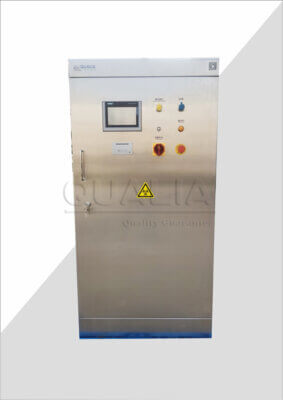
Control interface requirements connect back to how the surrounding facility manages the transfer process. A standalone control scheme is adequate where the unit operates independently, but where facility-level monitoring, alarming, or sequencing depends on the transfer unit’s state, the control interface has to be specified precisely enough that the supplier can confirm compatibility before, not after, installation.
Data expectations are often treated as an afterthought to controls, but they are a separate requirement. A project needing only local indication of cycle completion has a simpler data need than one requiring recorded cycle parameters retained for later review. Where sustained data retention or integration with a plant historian is required, that expectation needs to be stated explicitly, because it affects what instrumentation and data-handling capability the proposed system needs to include.
Failure recovery expectations address what happens when a cycle does not complete as intended, whether because of a utility interruption, a sensor fault, or an operator action. A transfer system configured only for successful cycles leaves the project without a defined path when something goes wrong mid-cycle, and the consequence of an incomplete cycle differs by what is being transferred and what environment the material was headed toward. Stating the required recovery behavior lets a supplier design the control logic and physical safeguards to match, rather than defaulting to a generic failure response that may not suit the project’s actual need. Related RFQ considerations for VHP-based transfer equipment, including cycle evidence and load-pattern documentation, extend this same logic into the specific evidence a supplier should provide to substantiate a proposed cycle.
Compare proposed documents, tests, training, spares, and handover support
| Project stage or support area | Proposal detail to request | Граница сравнения |
|---|---|---|
| Анализ проекта | Proposed design-review documents | Compare the document package available before testing |
| Приемочные испытания на заводе-изготовителе | Proposed FAT documents and tests | A justified vendor FAT may still require supplementation after receipt |
| Приемочные испытания объекта | Proposed SAT documents and tests | Compare what will be repeated or supplemented on site after transport and installation |
| Installation and operational qualification | Proposed IQ and OQ documents and tests | Compare the qualification support included in the bid |
| Training and handover | Proposed training and handover support | Compare the support available for transfer to site operation |
| Spares and consumables | Proposed spares and consumables | Compare the items included for operation and handover |
A proposal’s equipment description tells the buyer what will be delivered; its documentation and test package tells the buyer how that equipment’s performance will actually be demonstrated and accepted. These are separate questions, and a technically strong piece of equipment with a thin verification package leaves the project to improvise acceptance criteria later, which is a harder position to recover from than specifying the package upfront.
Design review documentation lets the project team confirm the proposed configuration against the stated requirements before fabrication begins, which is the point at which changes are cheapest to make. A proposal that moves straight to fabrication without a design review step shifts that confirmation later, where corrections cost more.
Factory acceptance testing and site acceptance testing serve related but distinct purposes, and the relationship between them follows the logic set out in EudraLex Том 4 Приложение 15, which treats the user requirements specification as a life-cycle reference and allows a justified vendor FAT to be supplemented by SAT after the equipment has reached the installation site. This means FAT performed at the supplier’s facility does not substitute for every verification step; what gets repeated or supplemented at SAT depends on what changes between the factory and the installed site; transport, installation conditions, and interface connections made on site can all affect performance in ways that FAT, performed before shipment, cannot fully anticipate. A proposal should state plainly what is proposed for FAT, what is proposed for SAT, and how the two connect, so the buyer can judge whether the acceptance sequence matches the project’s own qualification plan.
Installation and operational qualification documents extend this same logic into the project’s formal qualification stage, and a supplier’s proposed IQ/OQ scope indicates how much of that qualification burden the project will carry internally versus how much is covered by the supplier’s documentation package. Separately, ISO 14644-7 notes that user requirements for separative devices are a matter agreed between customer and supplier and does not itself specify the process installed inside the device, which is a reminder that the standard sets a negotiation framework rather than a fixed specification the supplier can simply apply by default.
Training and handover support, along with proposed spares and consumables, determine how ready the project is to operate the system independently once the supplier’s direct involvement ends. A separate reference on validation documents a containment equipment supplier should provide before FAT and SAT addresses this same comparison in more detail, for readers who need to evaluate documentation completeness beyond what a single RFQ response states.
Normalize the technical bid before commercial evaluation
Once load, route, room interface, scope, cycle expectations, and documentation have been requested from each supplier, the resulting proposals still need to be read against each other on the same basis before price becomes a meaningful comparison point. Two bids quoting different figures are not actually comparable if one includes cycle-development support and site acceptance testing while the other excludes both; the lower number may simply reflect a narrower scope, not a more efficient solution.
Where proposals diverge on equipment configuration, for example a different chamber size or a different decontamination approach, the buyer should trace that divergence back to the load matrix and tolerance information supplied in the RFQ. A supplier who has configured a larger chamber than a competitor may be building in margin for a peak load case that the other proposal has not accounted for, and that is a meaningful technical difference rather than a simple cost variance. Similarly, where one proposal includes facility-level control integration and another proposes a standalone unit, the gap reflects a scope decision tied to the control interface requirement stated in the RFQ, not an arbitrary pricing choice.
Documentation and test package differences follow the same logic. A proposal offering a fuller FAT and SAT package, consistent with the acceptance framework described in EudraLex Annex 15, may carry a different price than one offering a minimal factory test with little site supplementation. Neither is automatically the better choice; the right answer depends on how much of that verification work the project is prepared to absorb internally and how the qualification plan has already allocated that responsibility.
Where the project’s own requirements remain unsettled, for instance an HVAC pressure relationship still in design, or a control architecture not yet finalized, the proposals received will reflect that uncertainty by making different assumptions, and those assumptions should be made visible rather than left implicit in each bid. At that point, the project information QUALIA or any supplier receives during configuration and quotation review is only as useful as the inputs behind it; a bid built on an unstated assumption about room pressure or load tolerance cannot be fairly compared to one built on a stated value. Normalizing the bids means identifying where each supplier filled a gap with an assumption, confirming whether that assumption matches the project’s actual conditions, and only then comparing commercial terms across proposals that are addressing the same configured scope.
Часто задаваемые вопросы
Q: Should the RFQ name a specific transfer system before the operating requirements are defined?
A: Only if that choice is already justified by the project. Otherwise, describe the loads, packaging and decontamination tolerance, route, transfer direction, and room boundary conditions, then require each bidder to explain how its proposed system fits those inputs.
Q: Can an RFQ be issued while room or installation details are still provisional?
A: Yes, but label each provisional item and require the proposal to state the assumptions it uses. Identify which opening sizes, utilities, pressure relationships, access limits, or installation windows still need confirmation so their effect on configuration and site scope remains visible.
Q: How should cycle-development responsibility be divided in the bid?
A: State the expected cycle performance and ask each bidder to separate the support it provides from the work and inputs assigned to the site. The response should also show how controls, required data, and failure-recovery expectations fit within that responsibility split.
Q: Is a factory acceptance test enough for project acceptance?
A: Not by itself. Ask for a stage-based test matrix that distinguishes factory acceptance testing from site acceptance, installation qualification, and operational qualification, including what will be repeated or supplemented after transport and installation.
Q: What is a warning sign that two technically similar bids are not truly comparable?
A: Look for unstated assumptions, unclear exclusions, missing control-interface boundaries, or site responsibilities hidden outside the equipment price. Resolve those differences in the technical comparison before using commercial totals to rank the proposals.