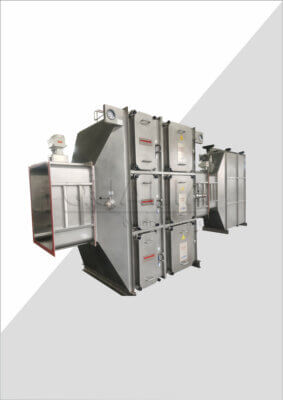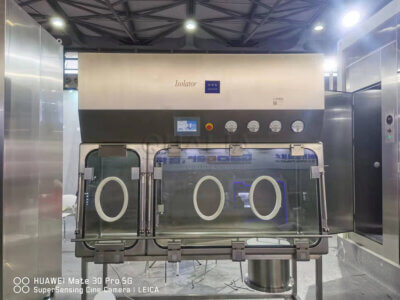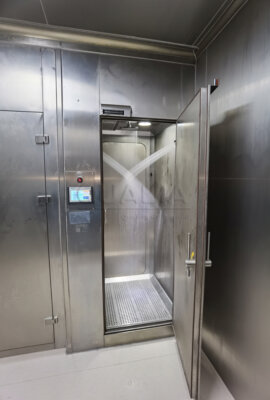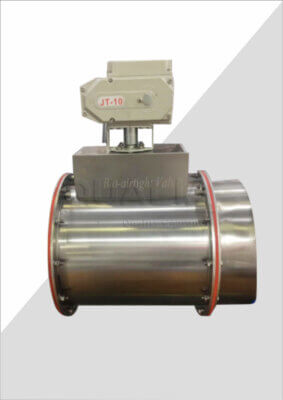
Selecting a filter housing before confirming that in situ leak testing is physically achievable is the most common and costly sequencing error in BSL-3 exhaust design. The gap rarely surfaces during design review — it becomes visible at commissioning, when ductwork has already been routed and ceiling space has already been claimed, leaving rework as the only path forward. Beyond the immediate schedule impact, inaccessible components create longer-term risks: components that cannot be reached cannot be verified, and components that cannot be verified can fail silently for years without triggering a corrective response. The practical judgment this article helps you build is how to sequence filter housing selection, scan access confirmation, safe-change procedure validation, and FSAP approval so that each decision reinforces rather than undermines the ones that follow.
Filter Housing Location and Scan Access Before Exhaust Procurement
Filter housing selection should not precede a confirmed answer to one question: can a technician physically reach every surface of the filter face with a scanning probe under field conditions? If that answer is uncertain at the time of procurement, the housing type, size, and mounting position are all provisional, and the design is not yet ready for commitment.
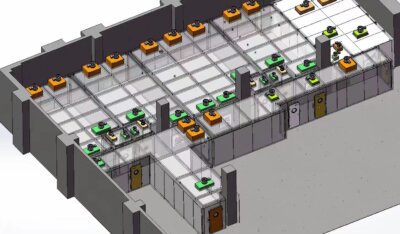
The strongest spatial arrangement for BSL-3 exhaust is a dedicated mezzanine level above the laboratory that provides direct access to ductwork, isolation dampers, control valves, and the HEPA filter bank as a group. This is not a code-mandated configuration — it is a planning criterion grounded in operational experience. What it provides is scan access that is repeatable, defensible, and achievable without shutting down adjacent spaces or constructing temporary access scaffolding at each testing interval. Without that dedicated access layer, in situ leak testing becomes a logistical problem rather than a routine maintenance task, and the risk of deferred or incomplete testing rises significantly.
The consequence of poor scan access is not simply inconvenience. A filter housing that cannot be scanned fully cannot be certified as leak-free with confidence, and a housing with undetected leaks in a BSL-3 exhaust stream creates a containment breach that may not be identified until a scheduled audit forces a full teardown. Procurement decisions that lock in a housing location before this access question is resolved shift that risk downstream to commissioning teams and biosafety reviewers — neither of whom has leverage to correct a structural spatial problem without major cost.
The practical check at this stage is straightforward: before issuing a purchase order for any exhaust HEPA housing, confirm that the proposed installation coordinates allow for probe access to the full filter face, that scan clearance meets the requirements of the applicable test method, and that this access is achievable at every future replacement interval, not just at initial installation.
In Situ Test Ports, Bagging Sleeves, and Shutdown Sequence
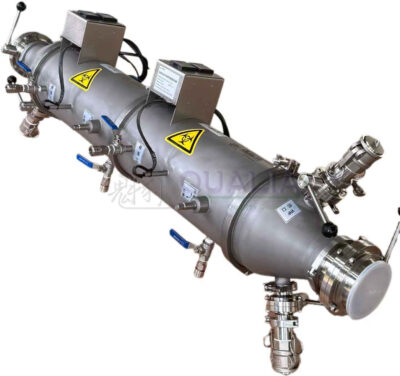
Test ports and bagging sleeves are not optional refinements — they are the physical infrastructure that makes in situ leak testing and safe filter changeout possible at all. A housing without integrated test ports requires field-drilled penetrations or external aerosol injection fixtures, both of which introduce variability and add time to every future testing event. A housing without bagging sleeves requires the development and approval of alternative containment procedures for each changeout, creating a recurring documentation burden that slows biosafety officer sign-off.
The shutdown and restart sequence adds a separate layer of verification complexity. For programs operating under a Facility Safety and Assurance Program (FSAP) or equivalent institutional oversight, initial HVAC design verification must be documented by a qualified person before the lab operates. This verification is not limited to normal operating conditions — it must include testing under exhaust fan failure, power failure, and return-to-normal scenarios to confirm that no air originating from the BSL-3 space reverses outside the containment boundary under any of those conditions.
| Условия испытания | Что проверяется | Почему это важно |
|---|---|---|
| Отказ вытяжного вентилятора | No reversal of air from the BSL-3 lab to clean areas during fan stoppage. | Validates containment integrity when the primary exhaust fan stops unexpectedly. |
| Отказ питания | No reversal of air originating from the lab migrates outside the containment boundary during total power loss. | Prevents contaminated air from escaping during a blackout scenario. |
| Return-to-normal sequence | Airflow direction is re-established after restoration without transient reversal. | Avoids a temporary containment breach during the restart phase. |
Field certification methods developed for biosafety cabinet validation — including HEPA filter leak testing, down-flow and in-flow velocity measurement, and airflow smoke pattern testing as documented in the WHO Laboratory Biosafety Manual, 4th Edition — provide a well-established framework that can be adapted for exhaust HEPA system validation. These methods are not direct governing standards for exhaust systems, but the protocols are proven and the adaptation logic is sound. Using them as a reference framework reduces the risk of developing inadequate in-house methods under time pressure during commissioning.
| BSC Test Method | Original Purpose | Exhaust HEPA Adaptation |
|---|---|---|
| Проверка герметичности фильтра HEPA | Check filter media and seal integrity. | Directly applies to in situ leak testing of exhaust HEPA filters and housings. |
| Down-flow velocity measurement | Measure airflow speed through the filter face. | Can be used to verify exhaust airflow velocity across the HEPA bank. |
| In-flow velocity measurement | Measure air entering the BSC work zone. | Adaptable to confirm airflow entering the exhaust filter housing inlet. |
| Airflow smoke pattern testing | Visualize airflow direction and turbulence. | Used to confirm no flow reversal or dead zones near exhaust HEPA installation. |
The design implication is that test ports need to be specified and positioned during housing procurement, not retrofitted during commissioning. Upstream aerosol challenge ports and downstream particle counter sample ports must be sized, located, and pressure-sealed before installation. If bagging sleeve dimensions are determined after the housing is mounted in a service corridor, there is often insufficient clearance to complete a bag collapse during changeout, which returns the team to the access problem the bagging system was intended to solve.
Maintenance Access Failures That Extend Lab Downtime
Poor maintenance access does not create immediate failure events — it creates silent ones. The most operationally costly pattern in BSL-3 mechanical systems is not the component that fails visibly and triggers a rapid response, but the component that fails in a way that cannot be detected without access that was never provided.
The cases that illustrate this pattern most clearly involve airflow control components installed in locations that precluded routine inspection. When access to verify correct installation or ongoing function is structurally unavailable, minor errors — a reversed valve orientation, a disconnected control input — can persist for years without generating any observable alarm or differential reading significant enough to prompt investigation. The problem surfaces only when an external event, such as a scheduled third-party audit or a commissioning review of a renovation, forces a physical teardown.
| Access Failure | Undetected Consequence | Операционное воздействие |
|---|---|---|
| Filter replacement access is poor | Changeout requires extended shutdown or is rejected by biosafety/EHS reviewers. | Prolonged lab downtime; potential non-compliance with safety requirements. |
| Supply venturi valve installed backwards | Went 10 years undetected due to lack of access and detection capability. | Required complete system rework and major shutdown when finally discovered. |
| Supply and exhaust venturi valve controls not interconnected to HVAC | Valves failed to modulate for 10 years; improper air balance went unnoticed. | Extended period of undetected failure, necessitating major corrective rework and downtime. |
The consequence pattern in each of these cases is the same: what would have been a brief correction at installation becomes a complete system rework after years of undetected non-compliance. For HEPA exhaust systems specifically, the equivalent risk is a filter housing mounted in a location where the scan access for leak testing cannot be achieved without disassembly, meaning every testing interval either skips the scan or requires partial demolition of the surrounding structure. Over a ten-year operational period, that becomes either a compliance gap or a recurring capital expense — neither of which was visible at the time of housing selection.
The maintenance access check should be treated as a binary gate, not a scoring criterion. If a proposed housing location cannot support the full in situ test sequence at regular intervals with normal maintenance staffing, the location is not acceptable regardless of the capital cost savings achieved by avoiding a more accessible configuration.
BIBO Housing Versus Simpler Filter Housing Tradeoffs
The BIBO versus simpler housing decision is often framed as a capital cost question. It is more accurately a risk allocation question: BIBO housings contain contamination during filter changeout mechanically, while simpler housings transfer that containment burden onto maintenance procedures, PPE protocols, and the personnel performing the changeout.
For programs operating under NIH guidelines or in NIH-affiliated facilities, this is not a judgment call — NIH mandates that BSL-3 exhaust systems use HEPA filters housed in bag-in/bag-out enclosures. The apparent cost saving of a simpler housing does not eliminate the exposure risk associated with changeout; it relocates that risk to maintenance personnel and to the procedural controls that govern their work. Procedural controls are harder to verify consistently than mechanical containment, and they are harder to defend to biosafety officers and EHS reviewers when a filter change record is reviewed after an incident.
| Аспект | BIBO Housing | Simpler Housing |
|---|---|---|
| Containment during changeout | Sealed bag-in/bag-out mechanism contains contamination. | Relies on maintenance procedures and PPE; exposure risk is shifted to personnel. |
| Соблюдение нормативных требований | Required by NIH for BSL-3 exhaust systems. | May not meet NIH mandate; acceptable only if rigorous procedural controls are approved. |
| Первоначальная стоимость | Typically higher capital cost for sealed housing and bagging system. | Lower upfront cost. |
| Maintenance risk | Reduces personnel exposure; faster, safer filter changeout. | Higher exposure risk, longer downtime, and greater chance of EHS rejection. |
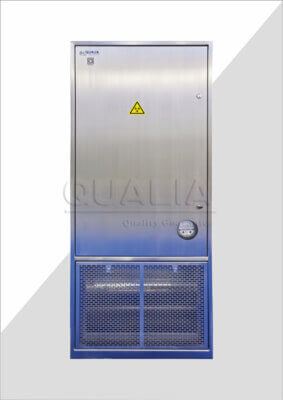
| Scan-access integration | In situ test ports and bagging sleeves are integrated; scan access is built in. | Scan access must be separately engineered; testing can be more cumbersome. |
Beyond the regulatory consideration, BIBO housings carry a practical advantage that is underweighted in early-stage cost comparisons: integrated in situ test ports and bagging sleeves are standard features of most BIBO designs, meaning the scan access problem and the shutdown-sequence verification infrastructure are largely resolved by the housing selection itself. Simpler housings require those elements to be engineered separately, and that separate engineering effort often does not occur until commissioning — at which point the spatial constraints of the installed configuration may make full compliance impossible without modification.
For teams evaluating whether a simpler housing can be made compliant through robust procedure writing, the threshold question is whether biosafety and EHS reviewers will accept procedural controls as equivalent to mechanical containment in the specific facility context. If that acceptance is uncertain at the time of housing selection, the capital cost differential between the two housing types is a poor basis for the decision. For guidance on specifying BIBO systems for BSL-3 applications, Системы Bag In Bag Out для лабораторий BSL-3: Как определить безопасную смену контейнеров addresses the specification decisions in detail.
Service Corridor and Ceiling-Space Coordination for HEPA Exhaust
HEPA exhaust routing decisions made early in schematic design create spatial commitments that are difficult to reverse without cost. The specific risk is that ceiling plenum space, service corridor width, and mezzanine access provisions are allocated by multiple trades simultaneously, and the exhaust HEPA system’s access requirements are frequently subordinated to structural, mechanical, and electrical routing priorities that are represented more forcefully in early coordination.
The consequence is predictable and documented: exhaust HEPA housings end up installed in locations that cannot be accessed for testing without removing adjacent ductwork, or in ceiling plenums where the clearance above the filter face is insufficient for scan probe manipulation. These are not design oversights that can be corrected by writing a more detailed maintenance procedure — they are physical constraints that require physical correction, and correcting them after construction means cutting into finished ceilings, relocating ductwork that serves other functions, and revalidating the sections of the system that were disturbed.
The coordination requirement is that the exhaust HEPA housing location must be established as a fixed constraint early in the coordination process — before structural framing, ceiling grid, and competing mechanical routing are locked. This means identifying required service clearances around the housing on all sides, confirming that the service corridor provides sufficient width and height for a technician performing a bag-out procedure with a used filter still enclosed, and verifying that the access path to the housing does not require passing through an area that will be locked, occupied, or environmentally controlled during a maintenance event.
The connection to the maintenance access failures documented in the previous section is direct. The venturi valve examples are not anomalies specific to airflow control components — they represent a pattern in which spatial decisions made during construction prevent the inspection and correction activity that would catch errors before they become multi-year compliance liabilities. Exhaust HEPA systems deserve the same access discipline applied to any other critical containment boundary component, and that discipline has to be enforced at the coordination stage, not recovered at commissioning.
For teams evaluating Системы фильтрации на месте или Корпуса BIBO in these configurations, spatial coordination drawings should be reviewed specifically for probe access clearance and bag collapse space before installation locations are finalized.
Safe-Change Approval Gate for BSL-3 HEPA Systems
The approval gate for safe-change procedures in BSL-3 HEPA exhaust systems is the point at which documentation gaps — not hardware gaps — most often stall projects. A system can be fully installed, physically accessible, and equipped with the correct housing type and still fail to receive approval for safe-change operation if the failure-mode verification sequence has not been documented and submitted in the required form.
Under FSAP policy, this means that before a BSL-3 laboratory operates, a qualified person must verify and document HVAC system performance under normal conditions and under failure-mode conditions, including exhaust fan failure and complete power failure. The performance threshold is specific: under neither of those conditions may air originating from the BSL-3 laboratory reverse direction and travel outside the containment boundary. That threshold must be confirmed by testing, not by calculation or design assertion, and the documentation must be submitted to the approval authority before operation begins.
| FSAP Requirement | What It Mandates | What Must Be Documented for Approval |
|---|---|---|
| Initial HVAC design verification | Verification by a qualified person before operation, including failure-mode conditions. | Submit documented design verification to the approval authority. |
| Exhaust fan / power failure test | Demonstrate that no air from the BSL-3 lab reverses outside the containment boundary under these failures. | Verification documentation confirming no reversal during simulated fan and power failures. |
| Return-to-normal test | Show that after restoration, airflow is re-established without transient reversal. | Documentation demonstrating safe restart sequence and no momentary containment loss. |
| Safe-change procedure confirmation | Leak-testing access and safe-change procedure must be confirmed before finalizing the exhaust approach. | Documentation of validated leak-test access and approved safe-change protocol. |
The operational consequence of failing to pass this gate is not simply delayed startup. A safe-change procedure that has not been validated against the failure-mode test conditions cannot be approved, meaning filter changeout cannot proceed under institutional authorization. If the exhaust filter reaches end of life before approval is obtained — which can occur if commissioning is extended and the facility has been running on a construction-phase schedule — the team faces either an unauthorized changeout or a forced shutdown, neither of which is operationally or reputationally acceptable.
The upstream implication is that the approval gate requirements should be used as a design input, not as a post-construction checklist. The shutdown sequence tests required for FSAP documentation must be executable with the installed system, which means damper sizing, controls integration, and backup power provisions must all be specified with those test conditions in mind. A system that cannot demonstrate no-reversal under fan failure because the isolation damper closes too slowly, or because the control sequence was never programmed to handle that event, cannot be made compliant by documentation revision alone.
Exhaust system procurement decisions in BSL-3 laboratories are structurally linked to spatial decisions, procedural decisions, and institutional approval decisions that are made at different project stages by different teams. The risk created by treating these as independent decisions is that each one can appear locally reasonable while the combination produces a system that cannot be tested, cannot be changed safely, or cannot be approved for operation. The sequence that reduces that risk is simple to state: confirm scan access before locking in housing location, confirm test port and bagging sleeve integration before issuing the housing purchase order, confirm failure-mode test executability before finalizing the controls sequence, and confirm FSAP documentation requirements before setting the commissioning schedule.
The practical pre-procurement check is to work backward from the safe-change approval gate. If the documentation package required for approval cannot be assembled with the system as designed — because scan access is insufficient, because failure-mode test sequences cannot be demonstrated, or because the safe-change procedure relies on procedural controls that biosafety reviewers are unlikely to accept in lieu of mechanical containment — then the design is not ready for procurement regardless of how well the individual components have been specified.
Часто задаваемые вопросы
Вопрос: Что произойдет, если лаборатория уровня BSL-3 уже построена, а расположение корпуса вытяжной системы с фильтрами HEPA не позволяет обеспечить доступ для полного сканирования?
A: Единственными допустимыми способами являются физическая модификация или согласованное ограничение зоны доступа — не существует документального обходного решения, которое могло бы заменить физически осуществимый доступ для сканирования. Если в реальных условиях невозможно полностью просканировать лицевую поверхность корпуса, фильтр нельзя с уверенностью сертифицировать как герметичный. Как правило, это означает прорезание готовых потолков, перенос соседних воздуховодов или согласие на конфигурацию с ограниченным доступом, которую эксперты по биобезопасности и охране труда, технике безопасности и охране окружающей среды (EHS) должны явно одобрить с учетом компенсационных мер контроля. Влияние данной корректировки на стоимость и график является прямым следствием того, что зазор для сканирования не был подтверждён до завершения строительства. Рассматривать подтверждение доступа как этап, предшествующий закупкам, а не как задачу в рамках ввода в эксплуатацию, — это единственный способ избежать подобного исхода в будущих проектах.
Вопрос: После утверждения процедуры безопасной замены, как часто необходимо повторять полную проверку возможных режимов отказа?
A: В статье установлено, что первоначальное оформление документации по FSAP является обязательным этапом перед началом эксплуатации, однако не указан интервал повторной проверки испытаний на режимы отказа после этого момента. На практике частота повторных испытаний регулируется требованиями соответствующей институциональной программы биобезопасности, органа по аккредитации объекта или программы по особо опасным агентам. Любые изменения в системе отопления, вентиляции и кондиционирования воздуха (HVAC) — перепрограммирование систем управления, замена заслонок, техническое обслуживание вытяжных вентиляторов — как правило, влекут за собой необходимость повторной проверки независимо от запланированного интервала, поскольку пороговое значение «без реверсирования» должно подтверждаться заново всякий раз, когда изменения могут повлиять на результат. Перед утверждением графика технического обслуживания команды должны уточнить условия, требующие повторной проверки, у своего специалиста по биобезопасности и у органа, ответственного за FSAP.
Вопрос: Можно ли в системе вытяжной вентиляции уровня BSL-3 с фильтрами HEPA использовать процедурные меры контроля вместо корпуса BIBO, если учреждение не входит в систему NIH?
A: Можно предложить процедурные меры контроля, но их принятие полностью зависит от того, будут ли конкретный специалист по биобезопасности и эксперты по охране труда, технике безопасности и охране окружающей среды (EHS) на данном объекте рассматривать их как эквивалент механической локализации — и такое принятие не гарантируется. Принадлежность к NIH определяет, применяется ли требование BIBO в качестве обязательного условия, однако институциональные комитеты по биобезопасности на учреждениях, не входящих в NIH, сохраняют право применять эквивалентные или более строгие стандарты. Поскольку процедурные меры контроля сложнее поддаются последовательной проверке, чем механическая локализация, и их труднее обосновать после инцидента, разницу в капитальных затратах между корпусом, соответствующим требованиям BIBO, и более простым корпусом следует сопоставлять с реальной вероятностью того, что эксперты примут процедурный подход, а не с предположением о том, что они это сделают.
Вопрос: Является ли специально отведенный антресольный этаж единственной конфигурацией помещения, отвечающей требованиям к доступу для сканирования, или существуют приемлемые альтернативы для лабораторий, в которых обустройство антресольного этажа невозможно?
A: В статье выделенный мезонин указан в качестве наиболее важного критерия проектирования, основанного на эксплуатационном опыте, а не как конфигурация, предписываемая нормами — поэтому альтернативные варианты не являются автоматически неприемлемыми, но сопряжены с более высоким риском при координации работ. Любая альтернативная схема должна по-прежнему удовлетворять тому же функциональному требованию: технический специалист должен иметь возможность достичь сканирующим зондом любой поверхности фильтра в полевых условиях при каждой будущей замене, без демонтажа соседних систем или сооружения временного доступа. В помещениях с ограниченным пространством используются люки доступа в потолке, промежуточные механические полы или конструкции корпусов с сквозным проходом, однако в каждом случае перед утверждением места установки требуется четкое подтверждение свободного пространства для зонда, пространства для сжатия мешка и доступности пути доступа во время проведения технического обслуживания в рабочем режиме.
Вопрос: Если ввод в эксплуатацию затягивается и срок службы выхлопного фильтра подходит к концу до получения одобрения по программе FSAP, какие варианты действий возможны?
A: На данном этапе вариантов с низким уровнем риска нет — возможные пути включают несанкционированную замену, принудительную остановку или процедуру получения разрешения в чрезвычайном порядке, и ни один из них не является приемлемым с эксплуатационной или организационной точки зрения в обычных условиях. Единственное надежное средство снижения риска — это меры на ранних этапах: требования к документации FSAP должны быть определены в качестве исходных данных для проектирования достаточно заблаговременно, чтобы последовательность управляющих действий, расчет размеров заслонок и возможность проведения испытаний на режимы отказа были подтверждены до начала ввода в эксплуатацию. Если сокращение сроков уже привело к возникновению этой угрозы, команда должна немедленно обратиться к специалисту по биобезопасности и уполномоченному лицу по FSAP, чтобы определить, существует ли ускоренная процедура рассмотрения и какие временные эксплуатационные ограничения применяются на период подготовки документации.