Cycle approval for VHP decontamination in a BSL-3 laboratory fails most often not at the generator stage but at the load-mapping stage — when teams discover mid-validation that their biological indicator placement was never defined for the actual loaded room, or that condensation is forming at an injection point that was positioned for an empty-chamber profile. The downstream cost is not just a repeat cycle run: a failed biological indicator in a BSL-3 context creates a containment status question that BMBL and WHO guidance require be resolved before the space can return to normal operation, which can stall material release, delay HEPA filter replacement schedules, and generate audit findings that outlast the validation event itself. The decision that resolves the most common rework is defining load pattern, injection points, worst-case BI locations, aeration endpoint, and material compatibility as a single pre-approval package rather than as a sequence of independent sign-offs. What follows will help you judge where each of those parameters creates a genuine constraint versus where it is safe to rely on existing data.
Load Pattern and Injection Points Before VHP Cycle Approval
Cycle development for room-level VHP decontamination is not primarily a generator-selection decision. It is a spatial and load-configuration problem, and treating it otherwise is the most consistent early error seen in BSL-3 commissioning.
The load pattern defines where VHP will be absorbed, shadowed, or unevenly distributed. Dense equipment clusters, storage racks with shelved materials, and enclosed sub-spaces such as biosafety cabinet interiors all create local environments where the concentration profile will differ from the open room. Injection point placement must be selected against this mapped load geometry, not against the empty room dimensions. A generator positioned to achieve rapid concentration rise in an unloaded room may produce a poor distribution profile once workbenches, BSCs, and ancillary equipment are in place — and the condensation risk at that injection point may increase substantially because loaded surfaces have different thermal characteristics than bare walls and floors.
Humidity control during VHP injection is an operational planning criterion with real consequences for condensation management. Unlike formaldehyde, VHP operates effectively at lower relative humidity, which is an advantage for ambient-temperature materials — but it also means the cycle is more sensitive to local humidity variation near injection points, particularly if HVAC is not fully controlled during the decontamination phase. The ±3% dosing accuracy achievable with precision-controlled generators is a meaningful design figure for cycle repeatability, but it only translates into a repeatable sterilization outcome when the injection point placement has already been validated against the real load configuration. Dosing precision cannot compensate for poor spatial distribution.
Before cycle approval, the minimum pre-defined parameters should include: the full load configuration that will be present during each operational cycle, the number and position of injection points relative to that load, the HVAC state during injection and dwell phases, and a condensation management plan for any surface that exceeds the local dew point. These are pre-approval decisions, not post-qualification corrections.
BI/CI Placement, Aeration Endpoint, and Residue Control
Worst-case biological indicator placement is where room-level cycle approval most frequently accumulates undeclared risk. The practical failure pattern is placing BIs at accessible, representative locations rather than at genuinely challenging ones — which produces a passing qualification run against a test that was not rigorous enough to detect the actual worst-case zone.
Per BMBL guidance and the WHO Laboratory Biosafety Manual, BI placement for room-level decontamination should be at positions where VHP distribution is expected to be slowest or least uniform: inside BSC cavities, within ducted areas, behind dense equipment, and at the floor level of enclosed spaces. Geobacillus stearothermophilus spore strips are the standard biological indicator organism at this scale. The specific regulatory framework governing BI placement and pass criteria will depend on the facility’s jurisdiction and applicable standards, but the underlying logic of worst-case positioning is consistent across guidance documents.
| Parametr | Kluczowe wymagania | Praktyczne implikacje |
|---|---|---|
| Biological Indicator (BI) Placement | Geobacillus stearothermophilus BIs placed in worst-case locations per BMBL and WHO LBM | Ensures regulatory compliance and confirms decontamination effectiveness across the entire space |
| Aeration and Residue Control | VHP residues are water vapour and oxygen; no toxic by‑products remain | Eliminates the need for post‑cycle wipe‑down or neutralization and simplifies aeration endpoint validation |
One practical consequence of VHP’s residue profile that is worth isolating: because VHP decomposes to water vapour and oxygen, the aeration endpoint is defined by confirmed safe hydrogen peroxide concentration levels in the room air — not by a wipe-down or neutralization procedure. This simplifies the aeration validation task considerably compared to formaldehyde, where surface neutralization and air monitoring for toxic residues add time and labor. For aeration endpoint decisions, a calibrated monitoring instrument rather than a fixed time-based rule provides better assurance that the room is safe for re-entry, particularly when load density varies between cycles.
Chemical indicators used in parallel with BIs provide cycle mapping data during development but should not substitute for BI evidence at approval. CI patterns across the mapped space help identify distribution deficiencies early and support injection point revision before full BI runs are committed.
Failed Biological Indicators and Delayed Material Release Risks
A failed biological indicator during room-level VHP validation is not resolved by re-running the cycle. In a BSL-3 context, it triggers a sequence of questions about what the failed zone means for the containment status of the space — and those questions cannot be closed quickly if the decontamination was required before a HEPA filter replacement, decommissioning activity, or a post-spill clearance.
| Czynnik ryzyka | Why It Happens / Evidence | Impact on BSL‑3 Operations |
|---|---|---|
| Decontamination skipped due to lengthy formaldehyde cycles | Formaldehyde cycles require 12‑24 h; VHP completes BSC‑scale volumes in 3‑5 h | Heightened risk of containment breaches and delayed material release from extended downtime |
| Failure to validate room‑level decontamination | BMBL and WHO LBM mandate validation before renovations, HEPA filter replacement, decommissioning, or after significant spills | Compliance failures, undetected contamination, and direct threats to facility safety and regulatory standing |
The cycle time comparison in the table is worth examining from a risk management angle. When decontamination cycles are long and resource-intensive, facilities sometimes skip or defer them — a pattern that carries compounding risk in BSL-3 environments where BMBL and WHO LBM requirements explicitly mandate validated decontamination before specific activities. The shorter cycle times achievable with VHP at BSC-scale volumes reduce the operational incentive to defer, which has a direct effect on the likelihood that decontamination is actually performed on schedule rather than deferred to a less disruptive moment.
The downstream consequence of skipped or unvalidated decontamination is not always visible immediately. It often surfaces during an inspection or audit triggered by an unrelated event, at which point the documentation gap creates a regulatory status problem that is much harder to close than the original validation would have been. Facilities that have relied on formaldehyde cycles primarily because of inertia rather than performance preference should re-examine that decision on both safety and schedule grounds.
Room VHP Versus Chamber VHP Capacity and Control Tradeoffs
The decision between room-level VHP decontamination and chamber-level VHP is frequently framed as a scale question, but the more important dimension is control granularity versus coverage breadth — and the trade-off between those two properties has direct consequences for cycle development complexity.
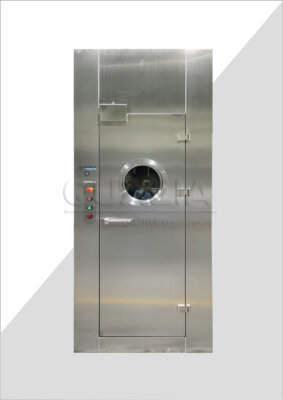
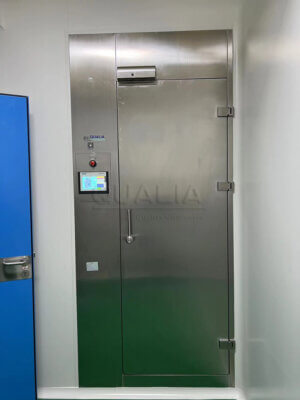
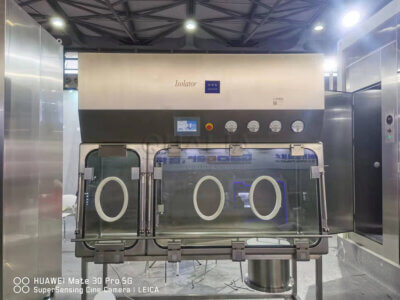
Chamber VHP systems — used in isolators, pass boxes, and enclosed transfer systems — offer tight control over volume, concentration, distribution, and dwell time within a defined geometry. The load is bounded, the injection points are fixed, and the aeration path is engineered into the chamber design. For materials entering a BSL-3 space through a Skrzynka przepustek VHP, the cycle parameters are qualified against a defined chamber interior, and the load variability is manageable within that constraint. Validation of chamber systems is correspondingly more straightforward.
Room-level VHP operates across a different scale of complexity. An integrated closed-loop room system that connects the core laboratory space, BIBO filtration units, isolators, and HVAC ducts enables simultaneous decontamination of the full space with a single generator — but the distribution path is longer, more geometrically variable, and more sensitive to load configuration changes between cycles. The approximately four-hour cycle time achievable in large-space room decontamination is a useful planning benchmark for downtime estimation, though actual duration depends on room volume, load density, generator capacity, and the required dwell profile. That benchmark should not be used as a fixed specification without site-specific confirmation.
The control tradeoff shows up most clearly when load configurations change between qualification and routine use. A room-level cycle qualified for a specific equipment layout may not perform equivalently if BSCs are repositioned, large storage units are added, or sub-room barriers change the airflow geometry. Chamber systems are largely immune to this problem because the load space is defined and fixed. Facilities that anticipate frequent room reconfiguration should factor this into the choice between room and chamber decontamination strategies, since each significant layout change in a room-level system should trigger at minimum a distribution verification and potentially a partial requalification.
Real Material Compatibility Versus Empty-Chamber Assumptions
Material compatibility data developed during empty-chamber VHP qualification is not transferable to a loaded-room configuration without additional verification — and this is where the most silent qualification gaps occur.
| Czynnik | Empty‑Chamber Assumption | Real‑Load Evidence |
|---|---|---|
| Kompatybilność materiałowa | All load materials tolerate VHP exposure without effect | VHP is suitable for stainless steel, glass, silicone, and many cleanroom‑compatible materials; after aeration it decomposes to water and oxygen, leaving no toxic residues |
| Distribution and Kill Efficacy | Achieving a target concentration ensures complete kill | Efficacy depends on distribution and dwell time; complex geometries and enclosed areas require load‑specific mapping and verification beyond concentration alone |
The compatibility column in the table identifies the commonly cited compatible materials: stainless steel, glass, silicone, and most cleanroom-rated materials. These are reasonable starting points for a load assessment, but the list is a planning criterion rather than an exhaustive cleared-materials inventory. Materials with painted or coated surfaces, certain plastics, adhesive labels, and electronic components with exposed connectors all require independent verification before they are included in a VHP cycle without qualification data specific to the exposure conditions — particularly concentration and dwell time — that the cycle will produce.
The distribution and kill efficacy row in the table carries the more consequential implication for cycle development: achieving a target concentration in the room does not guarantee uniform kill across all load surfaces. VHP must physically reach a surface and maintain contact at adequate concentration for the dwell period. Complex geometries — the interior of a closed drawer, the underside of a dense shelf unit, the internal plenum of a BSC — are not automatically reached just because room-level concentration targets are met. This means that load-specific mapping, using both distribution sensors and CI placement within enclosed areas, is a prerequisite for establishing that the qualified cycle actually contacts the surfaces it is intended to decontaminate. Empty-chamber concentration data does not answer that question.
The practical consequence of skipping load-specific mapping is a cycle that passes qualification and fails in routine use — either by producing a failed BI at a location that was not mapped during development, or by causing unexpected material degradation in a load component that was assumed compatible without verification. Both outcomes require cycle rework under conditions that are more constrained than initial qualification, because the space may be operationally committed by the time the failure is detected.
For teams building cycle development plans, the VHP sterilization validation framework for isolators offers practical context on how load-specific mapping and distribution verification are structured in enclosed systems — a methodology that scales meaningfully to room-level planning even when the geometry is more complex.
Routine VHP Use Gate for BSL-3 Decontamination
Declaring a VHP cycle ready for routine use requires a specific category of evidence that development cycles alone do not provide: confirmed, repeatable kill at worst-case locations in the actual loaded configuration. Without that evidence, routine use rests on a qualification basis that is difficult to defend in an audit.
| Rodzaj dowodu | Quantitative Result | Relevance for Routine Use |
|---|---|---|
| Sporicidal and virucidal efficacy | 5‑7 log₁₀ reduction for spores and enveloped RNA viruses | Demonstrates the broad‑spectrum kill necessary for BSL‑3 environments |
| Biological indicator performance in challenging locations | ≥6‑log reduction of Geobacillus stearothermophilus in ducts, HEPA filters, and isolator interiors | Confirms reliable kill in worst‑case locations that could otherwise prevent routine adoption |
| International validation standard | ISO 22441:2022 (FDA‑recognised) | Provides a regulatorily accepted framework for cycle qualification and ongoing routine use |
The efficacy figures in the table — 5–7 log₁₀ reduction for spores and enveloped RNA viruses, and ≥6-log reduction of Geobacillus stearothermophilus confirmed at ducts, HEPA filters, and isolator interiors — represent the threshold evidence that supports a routine-use gating decision for BSL-3 environments. These figures are not mandated minimums under a single governing regulation; the applicable log-reduction target will depend on the specific agents handled, the facility’s biosafety risk assessment, and the regulatory body with jurisdiction. What they do establish is the category of performance that makes routine adoption technically defensible rather than presumptive.
The ISO 22441:2022 framework, which is FDA-recognised for low-temperature vaporized hydrogen peroxide sterilization, provides a structured pathway for cycle qualification that creates a documentable, auditable basis for routine use. Using this framework as the qualification reference means that the cycle’s evidence base aligns with a recognized testing standard, which matters when the decontamination record is reviewed in the context of facility biosafety compliance. The standard should be confirmed as locally applicable by the facility’s regulatory affairs function before it is cited as the governing framework in qualification documentation, since recognition by a particular regulatory body does not automatically confer jurisdiction in every country or inspection context.
The practical gate for routine adoption is repeatability across the full intended use scenario: the same load configuration, the same room state, the same BI placements, producing the same or better kill result across multiple independent runs. A single successful qualification run at a reduced load is not sufficient. Facilities that gate routine use on anything less than repeatable performance under real operating conditions create an audit exposure that typically surfaces not during commissioning review but during the first inspection after an operational incident — precisely when the qualification gap is most consequential.
A przenośny generator VHP used for room-level decontamination should have its cycle parameters confirmed against the specific room volume and load before routine use is approved, since portability introduces configuration variability that a fixed integrated system does not.
The clearest pre-decision judgment this article supports is the distinction between a cycle that has been demonstrated to work and a cycle that has been assumed to work based on generator performance or empty-chamber data. In a BSL-3 environment, that distinction has regulatory consequences that extend well beyond the validation record: a failed biological indicator or an unvalidated decontamination event before a required activity creates a containment status question that is resolved only through documented evidence, not through procedural correction.
Before approving a VHP cycle for routine use, the minimum confirmable items are: load pattern documented and fixed, injection points validated against that load, worst-case BI locations defined by distribution mapping rather than convenience, aeration endpoint confirmed by instrument monitoring, material compatibility verified for every load component at the actual cycle exposure conditions, and kill performance repeatable across independent runs at challenging locations. If any of those items is unresolved at the point of routine-use approval, the cycle should be treated as development status regardless of how the commissioning documentation is labeled.
Często zadawane pytania
Q: Does the article’s cycle development guidance apply if the BSL-3 room layout changes frequently between decontamination runs?
A: Room-level VHP cycles qualified for a fixed equipment layout cannot be assumed equivalent when that layout changes significantly — each meaningful reconfiguration should trigger at minimum a distribution verification and potentially a partial requalification. The article’s cycle development logic is built around a stable, documented load pattern; if BSCs are repositioned, large storage units added, or sub-room barriers altered, the injection point placement and BI worst-case locations defined during original qualification may no longer reflect the actual distribution profile. Facilities with frequently reconfigured rooms should either stabilize the layout before qualifying or plan formal reverification into their change-control procedure.
Q: Once routine VHP use is approved, what should happen the first time a biological indicator comes back with a growth result?
A: A positive BI result in a BSL-3 context should be treated as an unresolved containment status question, not a simple cycle failure requiring a re-run. The immediate consequence is that any activity the decontamination was required to enable — HEPA filter replacement, decommissioning, post-spill clearance — cannot proceed until the failed zone is formally assessed and re-decontaminated with documented evidence of kill. The cycle should revert to development status, the load configuration and injection points at the failed location should be reviewed against the original qualification mapping, and the re-qualification should target that specific worst-case position before routine use is reinstated.
Q: Is VHP cycle qualification under ISO 22441:2022 sufficient for regulatory acceptance in all BSL-3 jurisdictions, or does local recognition need to be confirmed separately?
A: ISO 22441:2022 being FDA-recognised does not automatically make it the governing framework in every national inspection context — local regulatory acceptance must be confirmed by the facility’s regulatory affairs function before it is cited as the qualification standard in documentation. The standard provides a structured, auditable pathway for cycle qualification, but jurisdiction-specific requirements from national biosafety authorities or health ministries may impose additional or different criteria. Using ISO 22441:2022 as a reference while also documenting alignment with locally applicable biosafety guidance is the more defensible approach for facilities operating under multiple regulatory bodies.
Q: How does portable VHP generator use compare to a fixed integrated room system when weighing cycle control reliability for BSL-3 decontamination?
A: A fixed integrated room system offers more consistent distribution control because injection points, HVAC integration, and closed-loop geometry are engineered and fixed — configuration variability between cycles is low once qualified. A portable generator introduces positional variability: where the generator is placed relative to the load affects the distribution profile, meaning the cycle parameters confirmed in one room position may not transfer directly to another placement in the same or a different room. For BSL-3 routine use, this means portable generator cycles require room- and position-specific confirmation before approval, and any repositioning between qualification and routine use should be treated as a configuration change requiring verification rather than an administrative adjustment.
Q: At what point does the investment in full load-specific VHP cycle development become disproportionate relative to the risk profile of the BSL-3 work being performed?
A: Full load-specific cycle development is not disproportionate for any BSL-3 activity where decontamination is a regulatory prerequisite — BMBL and WHO LBM mandate validated decontamination before HEPA filter replacement, renovation, decommissioning, or significant spill response, and an unvalidated cycle in those contexts creates an audit exposure that is harder to close than the original development cost. For routine transfer decontamination through an enclosed chamber system such as a VHP pass box, the development burden is substantially lower because the load space is fixed and bounded. The disproportionality argument is more defensible for enclosed chamber systems with stable, well-characterized load configurations than for room-level decontamination, where load variability and spatial complexity make abbreviated development genuinely riskier.