Większość projektów dotyczących komór przekaźnikowych kończy się niepowodzeniem właśnie dlatego, że komora jest projektowana w oparciu o ogólne normy dotyczące pomieszczeń czystych, a nie o rzeczywisty przebieg procedur operacyjnych na sali operacyjnej. Bezpośrednie konsekwencje tego rzadko są widoczne na etapie zamówienia — ujawniają się one dopiero sześć miesięcy po instalacji, gdy personel kliniczny zaczyna omijać urządzenie, ponieważ czyszczenie między kolejnymi zabiegami trwa zbyt długo lub ręczne mechanizmy drzwi spowalniają obsługę w warunkach presji panującej na sali operacyjnej. Taki schemat omijania urządzenia trudno jest odwrócić bez modernizacji lub przeprowadzenia nowego cyklu zamówień. Zrozumienie, na czym naprawdę polegają decyzje specyfikacyjne — klasyfikacja stref, metoda dezynfekcji, rodzaj blokady oraz obciążenie robocze — pozwala zespołowi odróżnić komorę, która będzie faktycznie wykorzystywana, od takiej, którą personel będzie omijał.
Procedury przenoszenia OT, które determinują wymagania dotyczące komory
To właśnie procedura przenoszenia określa, co komora musi fizycznie pomieścić, i właśnie na tym etapie podejmuje się – lub pomija – decyzje dotyczące wymiarów i etapów. Przedmioty wprowadzane do środowiska klasy A muszą być sterylne przed przekroczeniem progu, a w przypadku instrumentów wielokrotnie zapakowanych konieczne jest usunięcie zewnętrznej warstwy opakowania przy każdym przejściu między strefami. To etapowe rozpakowywanie wymaga przestrzeni wewnątrz komory — wystarczającej, by obsłużyć przedmiot, usunąć opakowanie bez zanieczyszczenia warstwy wewnętrznej i przepuścić go w sposób higieniczny. Komora, której wymiary są dostosowane wyłącznie do rozmiarów przedmiotu, bez uwzględnienia ruchu związanego z rozpakowywaniem, zamienia prosty transfer w niewygodną operację, którą personel rozwiąże, pomijając niektóre etapy.
Drugim kryterium projektowym wynikającym z rzeczywistego przebiegu procedury przekazywania jest dobór par stref. Statyczne komory transferowe — czyli takie bez aktywnego dopływu powietrza filtrowanego przez filtry HEPA — stanowią rozsądne rozwiązanie, gdy obie strony komory mają tę samą klasę czystości. Gdy transfer odbywa się między różnymi poziomami czystości, komora statyczna nie zapewnia zarządzania jakością powietrza niezbędnego do ochrony strony o wyższym poziomie czystości podczas przekazywania. Nie jest to różnica marginalna: niewłaściwe urządzenie w niewłaściwym połączeniu stref stanowi problem bariery sterylnej, który może zostać wykryty dopiero podczas kwalifikacji lub audytu. Typ komory musi wynikać z mapy klasyfikacji stref, a nie ze standardowej specyfikacji stosowanej w sposób ogólny.
Konsekwencją popełnienia tego błędu jest to, że komora albo nie przejdzie walidacji, albo zostanie przeklasyfikowana jako środek kontroli administracyjnej z zastrzeżeniami, a żaden z tych wyników nie był przewidziany podczas procesu zamówień publicznych.
Istotne informacje dotyczące łatwości czyszczenia w poszczególnych przypadkach
Komora przelotowa, której nie da się szybko wyczyścić między kolejnymi seriami, nie zostanie odpowiednio wyczyszczona między seriami. Nie jest to problem związany z materiałoznawstwem — jest to problem związany z przebiegiem pracy, który przeradza się w problem zgodności z przepisami. Szczegóły konstrukcyjne, które decydują o tym, jak szybko i niezawodnie można przygotować komorę do kolejnej serii, są konkretne i mierzalne, a podczas opracowywania specyfikacji często traktuje się je jako kwestie drugorzędne, dopóki nie doprowadzą do awarii.
Chropowatość powierzchni wewnętrznej oraz geometria narożników mają największe praktyczne znaczenie. Wykończenie powierzchni o wartości Ra ≤ 0,8 µm oraz promienie narożników R ≥ 30 mm to parametry projektowe, które decydują o tym, czy powierzchnię można wyczyścić jednym ruchem chusteczki, czy też w jej trudno dostępnych miejscach gromadzą się cząstki stałe i obciążenie biologiczne. Nie są to powszechnie obowiązujące progi regulacyjne, ale odzwierciedlają one praktykę specyfikacyjną, która stanowi podstawę wiarygodnego oświadczenia o możliwościach czyszczenia. Jeśli dostawca nie jest w stanie potwierdzić tych wartości, ciężar udowodnienia możliwości czyszczenia poszczególnych przypadków spoczywa całkowicie na walidacji czyszczenia przeprowadzanej przez użytkownika końcowego, co zdarza się rzadko.
| Funkcja projektowania | Wymagania techniczne | Dlaczego to ma znaczenie |
|---|---|---|
| Chropowatość powierzchni wewnętrznej | Ra ≤ 0,8 µm | Zapobiega gromadzeniu się cząstek i umożliwia skuteczne czyszczenie |
| Promień narożnika | R ≥ 30 mm | Zaokrąglone narożniki eliminują trudne do wyczyszczenia szczeliny |
| Dzięki wzornictwu | Panele wpuszczane, zlicowane z powierzchnią | Zapobiega gromadzeniu się kurzu i ułatwia wycieranie powierzchni |
| Materiał zawiasów | Stal nierdzewna SUS304 | Jest odporny na korozję i zapobiega gromadzeniu się zanieczyszczeń, co wymusza czyszczenie obejściowego |
| Rodzaj uszczelki i wyciek | Trójwarstwowy silikon, ciągła kompresja, przeciek < 0,11 TP7T przy różnicy ciśnień roboczych | Zapewnia sterylność i zmniejsza nakład pracy związany z czyszczeniem między kolejnymi zabiegami |
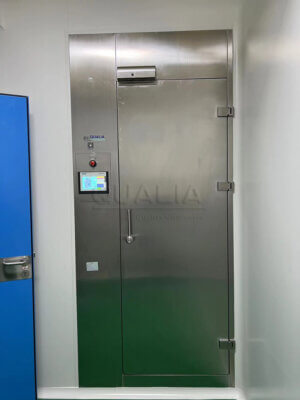
Konstrukcja drzwi i szczelność uszczelek to dwa elementy najczęściej pomijane podczas przeglądu specyfikacji, a jednocześnie najczęściej odpowiedzialne za nieprzestrzeganie procedur czyszczenia. Wpuszczane, płaskie panele drzwiowe eliminują występy i rowki, w których gromadzą się zanieczyszczenia. Zawiasy ze stali nierdzewnej SUS304 są odporne na korozję i gromadzenie się zanieczyszczeń, które występują w przypadku materiałów niższej jakości w trakcie cykli czyszczenia. Uszkodzenie uszczelki stanowi mniej widoczne ryzyko: trójwarstwowa uszczelka silikonowa o ciągłym ściśnięciu i współczynniku przecieku poniżej 0,11 TP7T przy różnicy ciśnień roboczych utrzymuje barierę sterylną między kolejnymi operacjami. Uszczelka, która uległa nierównomiernemu ściśnięciu lub zaczęła się rozsuwać, nie sygnalizuje tego wprost — tworzy powolną ścieżkę zanieczyszczenia, która staje się widoczna dopiero wtedy, gdy wyniki badań wymazów zaczynają wykazywać niekorzystną tendencję. Stan uszczelki powinien być rutynowym punktem przeglądu w każdym harmonogramie konserwacji, a nie kontrolą reaktywną wywołaną nieudanym audytem.
Kompromisy między przebiegiem pracy a sterylnością podczas użytkowania sali operacyjnej
Wybór między komorą statyczną a dynamiczną jest najważniejszą decyzją projektową przy tworzeniu komór przekaźnikowych w teatrach i wiąże się z kompromisami w obu kierunkach, które zespoły często nie doceniają. Dynamiczne komory przesyłowe wyposażone w wentylatory z filtrami HEPA zapewniają aktywne oczyszczanie powietrza, dzięki czemu nadają się do przenoszenia materiałów między strefami o różnych klasach czystości. Urządzenia statyczne nie oczyszczają powietrza wewnątrz komory podczas przenoszenia, co ogranicza ich zastosowanie do par stref o tej samej klasie czystości. Różnica w kosztach i konserwacji między tymi dwoma typami jest realna, ale ma drugorzędne znaczenie w porównaniu z prawidłowym doborem par stref.
| Czynnik | Skrzynka przelotowa statyczna | Dynamiczna komora przesyłowa |
|---|---|---|
| Aktywne oczyszczanie powietrza | Nie | Tak, wentylator z filtrem HEPA |
| Możliwość przeniesienia w ramach różnych klas | Nie zaleca się stosowania między różnymi poziomami czystości | Nadaje się do przenoszenia uczniów między różnymi klasami |
| Obciążenie związane z konserwacją | Minimalny | Wyższy; konieczna konserwacja filtra i wentylatora |
| Koszt | Niższy | Wyższe koszty początkowe i eksploatacyjne |
Porównanie systemów blokad wiąże się z odrębnym zestawem kompromisów, które mają wpływ raczej na codzienną niezawodność niż bezpośrednio na zapewnienie sterylności. Mechaniczne systemy blokad działają bez zasilania, co ma znaczenie w warunkach sali operacyjnej, gdzie przerwy w dostawie prądu – choć rzadkie – nie mogą zakłócać kontroli sterylności. Elektroniczne systemy blokad oferują wskazanie stanu i informacje zwrotne dla użytkownika, których systemy mechaniczne nie są w stanie zapewnić, jednak wymagają one ciągłego zasilania i wprowadzają elektroniczną warstwę sterowania, która wymaga uwzględnienia w zakresie konserwacji.
Metoda dezynfekcji to kwestia, w której zespoły najczęściej popełniają błędy, a nie da się jej rozstrzygnąć poprzez porównanie metod statycznych z dynamicznymi czy mechanicznych z elektronicznymi. Ręczna dezynfekcja wewnątrz komory przekażnika wymaga czasu kontaktu z roztworem – środek dezynfekujący lub sporobójczy musi pozostawać w kontakcie z powierzchnią wystarczająco długo, aby doprowadzić do inaktywacji mikroorganizmów. Wycieranie w celu zapewnienia tego czasu kontaktu z roztworem jest metodą prawidłową z operacyjnego punktu widzenia. Natomiast rozpylanie nie jest: nie zapewnia równomiernego pokrycia powierzchni ani niezawodnego czasu kontaktu, a ponadto stwarza ryzyko aerozolizacji. Różnica ta staje się luką w zgodności z przepisami dopiero wtedy, gdy audyt lub niekorzystny wynik skłania do przeglądu faktycznie stosowanej procedury czyszczenia. Potwierdzenie, że protokół dezynfekcji danego obiektu przewiduje wycieranie, a nie rozpylanie, jest kontrolą przed wdrożeniem, którą warto wyraźnie przeprowadzić, ponieważ jest to rodzaj szczegółu, który w praktyce ulega zmianie bez odnotowania tego jako zmiany.
Problemy związane z akceptacją przez użytkowników, które często uniemożliwiają wdrożenie
Komora, którą personel kliniczny postrzega jako powolną, niewygodną lub niezgodną z intuicją w warunkach panujących na sali operacyjnej, zostanie pominięta. Nie jest to kwestia postawy — jest to konsekwencja projektu, którą zespoły ds. zaopatrzenia często odkrywają dopiero po instalacji, gdy rozwiązanie problemu wymaga albo wymiany sprzętu, albo programu ponownego szkolenia, który koliduje z faktycznym obciążeniem pracą zespołu.
Dwa elementy konstrukcyjne, które w najbardziej niezawodny sposób wpływają na zachowania związane z omijaniem procedur, to mechanizmy drzwiowe oraz sygnalizacja alarmowa. Automatyczne drzwi przesuwne skracają czas przenoszenia i eliminują opór związany z obsługą ręczną, który personel wskazuje jako powód omijania komory podczas intensywnej rotacji przypadków. Drzwi ręczne nie są z natury złym rozwiązaniem, ale w środowisku, w którym liczy się szybkość obsługi, stwarzają one ciągłą pokusę do skracania sekwencji przenoszenia. Skrzynka bezpieczeństwa biologicznego W projekcie uwzględniono tę kwestię bezpośrednio poprzez konfiguracje drzwi i blokad, które umożliwiają szybsze działanie zgodne z protokołem.
Elektroniczne blokady z alarmami dźwiękowymi i wizualnymi pełnią funkcję zapewnienia zgodności z przepisami, której nie są w stanie odtworzyć blokady mechaniczne. Gdy obie drzwi komory transferowej mogą zostać otwarte jednocześnie — przypadkowo lub celowo — bariera sterylności zostaje naruszona. Alarm, który uruchamia się natychmiast po naruszeniu blokady, zmienia sposób reagowania na to naruszenie: uwidacznia błąd w czasie rzeczywistym, co wywiera inny rodzaj presji niż przypomnienie o zasadach. Są to kryteria planistyczne, a nie wymogi regulacyjne, jednak ich brak zazwyczaj ujawnia się w wynikach audytów lub analizach zdarzeń niepożądanych, w których przyczynę źródłową przypisuje się niezauważonemu pominięciu procedury.
Praktyczną metodą sprawdzenia każdego wdrożenia jest przeprowadzenie przed zatwierdzeniem symulacji obsługi kolejnego przypadku, z wykorzystaniem rzeczywistego protokołu dezynfekcji oraz pomiarem czasu trwania procesu od zamknięcia ostatniego przypadku do pierwszego przekazania kolejnego. Jeśli symulacja ta wykaże, że protokół jest wolniejszy niż akceptowalny dla zespołu czas realizacji, projekt zostanie pominięty w rutynowym użytkowaniu, niezależnie od jego zgodności technicznej.
Radzenie sobie z obciążeniem jako punkt wyjścia dla bardziej kontrolowanych projektów
Istnieje punkt, w którym połączenie wielkości transferu, klasyfikacji strefy i skutków zanieczyszczenia sprawia, że szybkie czyszczenie w miejscu przekazania staje się niewystarczające — i właśnie ten próg stanowi kryterium, które powinno determinować przejście od rozwiązania statycznego do dynamicznego, a następnie do zautomatyzowanego. Błędna decyzja dotycząca eskalacji w dowolnym kierunku wiąże się z realnymi kosztami: nadmierna specyfikacja oznacza obciążenie związane z konserwacją, którego obiekt nie jest w stanie udźwignąć; niedostateczna specyfikacja oznacza lukę w zgodności z przepisami, która może ujawnić się dopiero podczas audytu.
W przypadku transferów w strefach klasy A i B decyzja ma obecnie charakter regulacyjny, a nie uznaniowy. W aktualizacji załącznika 1 z sierpnia 2023 r. usunięto możliwość stosowania statycznych komór przejściowych bez dopływu powietrza dla tych klasyfikacji. Obiekty, które nie przeszły na konstrukcje dynamiczne lub zautomatyzowane w zakresie transferów klasy A/B, działają poza obecnymi ramami zgodności, a ta niezgodność zostanie wykryta podczas kontroli.
| Scenariusz lub warunek | Minimalne wymagania systemowe | Uzasadnienie |
|---|---|---|
| Przejazd do/z stref klasy A/B | Dynamiczna komora transferowa (z filtrem HEPA) | Zgodnie z załącznikiem 1 z 2023 r. statyczne przepuszczanie bez dopływu powietrza nie jest już dozwolone |
| Przelewy wysokiego ryzyka lub o dużej wartości | Zautomatyzowana komora do dekontaminacji biologicznej (np. opary H₂O₂) | Przy dużej liczbie urządzeń ręczna dezynfekcja staje się niejednolita; zautomatyzowany cykl zapewnia skuteczniejszą inaktywację mikroorganizmów |
| Przesyłanie danych o dużej przepustowości powodujące ręczne wąskie gardło | Zautomatyzowana komora transferowa zintegrowana z przenośnikiem | Ręczne przenoszenie zwiększa ryzyko zanieczyszczenia i wydłuża czas realizacji; obsługa bez użycia rąk rozwiązuje oba te problemy |
| Ograniczone zasoby konserwacyjne | Stacjonarna komora przekaźnikowa (o ile jest to dopuszczalne) | W systemach dynamicznych należy wymieniać filtr wstępny co 6 miesięcy, a filtr HEPA co 6–12 miesięcy; tam, gdzie pozwala na to poziom ryzyka, systemy statyczne zmniejszają nakład pracy związany z konserwacją |
Przejście od dynamicznej do zautomatyzowanej dekontaminacji biologicznej — takiej jak cykliczne stosowanie oparów nadtlenku wodoru — wynika z ryzyka związanego z wielkością i powtarzalnością, a nie wyłącznie z klasyfikacji. Ręczna dezynfekcja jest uzasadniona przy umiarkowanej częstotliwości przenoszenia, o ile protokół jest prawidłowo przestrzegany. Przy dużej skali operacji powtarzalność ręcznej dezynfekcji ulega pogorszeniu, ponieważ trudno jest niezawodnie kontrolować czas kontaktu z roztworem w wielu cyklach wykonywanych pod presją czasu. Zautomatyzowany cykl eliminuje zmienność wynikającą z działania operatora na etapie dekontaminacji, co stanowi argument przemawiający za zgodnością z przepisami i uzasadniającą inwestycję. Kompromis związany z konserwacją jest realny: dynamiczne komory transferowe wymagają wymiany filtra wstępnego mniej więcej co sześć miesięcy oraz wymiany filtra HEPA co sześć do dwunastu miesięcy. W przypadku obiektów o ograniczonych zasobach inżynieryjnych harmonogram ten jest często niedoceniany na etapie zamówień i staje się powtarzającym się ograniczeniem operacyjnym.
Systemy komór transferowych zintegrowanych z przenośnikami stanowią najwyższy poziom w procesie stopniowego udoskonalania — bezdotykowy transfer, który eliminuje ręczną obsługę zarówno jako źródło ryzyka zanieczyszczenia, jak i wąskie gardło przepustowości. W środowiskach operacyjnych o dużej wydajności, gdzie ręczny transfer stanowi już etap ograniczający tempo pracy, integracja na tym poziomie jest zarówno rozwiązaniem usprawniającym przepływ pracy, jak i środkiem kontroli zanieczyszczeń. W środowiskach, w których dobrze utrzymana dynamiczna komora transferowa spełnia wymagania dotyczące klasyfikacji stref, a wielkość transferu jest możliwa do opanowania, taki poziom złożoności systemu wiąże się z kosztami konserwacji i integracji, których profil ryzyka nie uzasadnia.
Zespoły, które oceniają, na jakim etapie eskalacji znajduje się ich proces roboczy, powinny przeanalizować częstotliwość transferów, klasyfikację stref oraz dostępne zasoby konserwacyjne przed wyborem systemu — a nie po nim. Powyższa tabela powiązań między scenariuszami a systemami stanowi punkt odniesienia, jednak ostateczna ocena zależy od konkretnej kombinacji tych trzech zmiennych w danym obiekcie.
W przypadku zakładów prowadzących działalność lub planujących wprowadzenie środowisk aseptycznych, które wymagają czegoś więcej niż tylko komory przelotowej — gdzie pełna izolacja i kontrola warunków atmosferycznych stanowią część wymagań procesowych — Izolator aseptyczny / Izolatory do badań sterylności Platforma ta stanowi kolejny poziom zaawansowania konstrukcji zabezpieczającej, charakteryzujący się odmiennymi wymogami kwalifikacyjnymi i czynnikami operacyjnymi.
Decyzją, z którą większość zespołów ds. zamówień zwleka zbyt długo, jest dobór par stref i ocena obciążenia operacyjnego. Nie da się racjonalnie dobrać typu komory — statycznej, dynamicznej czy zautomatyzowanej — bez uprzedniego ustalenia, które strefy są ze sobą połączone, jaką objętość transferu muszą one obsłużyć oraz jakie zasoby konserwacyjne będą dostępne po instalacji. Te trzy czynniki decydują o tym, czy statyczna jednostka z blokadą jest uzasadnionym wyborem, czy też stanowi zagrożenie dla zgodności z przepisami, a także czy system dynamiczny jest właściwym rozwiązaniem końcowym, czy też etapem pośrednim na drodze do zautomatyzowanej dekontaminacji biologicznej.
Przed sfinalizowaniem specyfikacji warto przeprowadzić przeduruchomieniową kontrolę polegającą na symulacji rzeczywistego protokołu dezynfekcji i przenoszenia w realistycznych warunkach, z uwzględnieniem ograniczeń czasowych. Jeśli symulacja wykaże rozbieżność między wymaganym w protokole czasem kontaktu z roztworem a dostępnym zespołowi oknem czasowym na wykonanie zadania, rozbieżność ta nie zniknie po instalacji — spowoduje to zachowania omijające protokół, które podważą funkcję sterylizacji komory, niezależnie od tego, co stanowi dokument specyfikacji.
Często zadawane pytania
Pytanie: Czy aktualizacja załącznika 1 z sierpnia 2023 r. dotycząca statycznych komór przepływowych ma zastosowanie do sal operacyjnych, czy tylko do środowisk produkcji farmaceutycznej?
Odp.: Załącznik 1 ma bezpośrednie zastosowanie do aseptycznej produkcji farmaceutycznej klasy A/B, a nie do środowisk operacyjnych podlegających szpitalnym normom kontroli zakażeń. Jeśli jednak sala operacyjna zawiera sklasyfikowane strefy aseptyczne — takie jak te wykorzystywane do przygotowywania preparatów sterylnych lub terapii zaawansowanych — obowiązuje ograniczenie dotyczące komór statycznych bez dopływu powietrza w przypadku transferów klasy A/B. W przypadku standardowych skrzynek przelotowych na salach operacyjnych, gdzie klasyfikacja stref opiera się na wytycznych dotyczących pomieszczeń czystych w szpitalach, a nie na załączniku 1, próg regulacyjny jest inny, a statyczne jednostki z blokadą mogą nadal stanowić rozwiązanie zgodne z przepisami, w zależności od połączenia stref.
Pytanie: Jeśli personel kliniczny zaczął już przekazywać materiały z pominięciem zainstalowanego przejścia, jakie jest najskuteczniejsze działanie naprawcze, zanim rozważy się zmianę sprzętu?
O: Zanim uznasz, że problem leży po stronie samej komory, przeprowadź najpierw symulację rzeczywistego protokołu obsługi przypadków z pomiarem czasu. Zjawisko obejścia jest zazwyczaj spowodowane konkretnym punktem tarcia — prędkością mechanizmu drzwi, czasem trwania etapu czyszczenia lub przerwaniem alarmu — a nie ogólną konstrukcją komory. Określenie, który etap symulacji przekracza akceptowalny przez zespół czas realizacji, pozwoli ustalić, czy rozwiązanie polega na zmianie procedury, modyfikacji sprzętu, czy też całkowitej wymianie. Próba ponownego przeszkolenia bez przeprowadzenia takiej diagnostyki zazwyczaj prowadzi do ponownego wystąpienia tego samego schematu pomijania procedur w ciągu kilku tygodni.
Pytanie: Czy dynamiczna komora transferowa z filtracją HEPA jest wystarczająca w przypadku transferów materiałów cytotoksycznych lub zakaźnych, czy też taki profil ryzyka wymaga innego poziomu zabezpieczenia?
A: Dynamiczna komora przekaźnikowa nie jest przeznaczona do izolacji materiałów cytotoksycznych ani zakaźnych — kontroluje ona stężenie cząstek stałych i jakość powietrza w miejscu transferu, ale nie zapewnia ochrony operatora ani pełnej izolacji atmosferycznej. Przenoszenie niebezpiecznych materiałów biologicznych lub cytotoksycznych wiąże się z ryzykiem, które wymaga zastosowania technologii izolatorów hermetycznych zamiast komór przelotowych. Logika klasyfikacji stref, która reguluje wybór między komorą statyczną a dynamiczną, opiera się na systemie kontroli czystości, a nie na systemie izolacji zagrożeń, dlatego tych dwóch rozwiązań nie należy traktować jako zamiennych.
Pytanie: Które rozwiązanie — blokada mechaniczna czy blokada elektroniczna z alarmami — wiąże się z mniejszym ryzykiem dla teatru, w którym sporadycznie występują przerwy w dostawie prądu?
O: Żaden z tych typów nie wiąże się bezwarunkowo z mniejszym ryzykiem — właściwy wybór zależy od tego, który rodzaj awarii ma poważniejsze konsekwencje dla konkretnego obiektu. Blokady mechaniczne zapewniają utrzymanie sterylnej bariery nawet podczas przerwy w dostawie prądu bez konieczności jakiejkolwiek interwencji, co czyni je bardziej niezawodnym rozwiązaniem w sytuacjach, gdy nie ma pewności co do stabilności zasilania. Elektroniczne blokady zapewniają informacje zwrotne o naruszeniach w czasie rzeczywistym, co wpływa na zmianę zachowań personelu w zakresie przestrzegania zasad dotyczących drzwi, a tym samym pozwala przeciwdziałać innemu, częściej występującemu rodzajowi ryzyka. W przypadku sal operacyjnych z niezawodną infrastrukturą zasilania korzyści wynikające z przestrzegania zasad dzięki dźwiękowym i wizualnym sygnałom alarmowym zazwyczaj przeważają nad obawami związanymi z zależnością od zasilania. W placówkach, w których przerwy w dostawie prądu są udokumentowaną rzeczywistością operacyjną, bardziej uzasadnionym rozwiązaniem jest blokada mechaniczna lub konstrukcja hybrydowa z funkcją alarmową zasilaną z baterii.
Pytanie: Przy jakiej objętości transferu obciążenie związane z konserwacją dynamicznej komory przesyłowej — cykle wymiany filtrów wstępnych i filtrów HEPA — staje się silniejszym argumentem przemawiającym za automatyczną biodekontaminacją niż za zakupem drugiej dynamicznej komory przesyłowej?
O: Próg ten nie zależy wyłącznie od wielkości przepływu, ale przede wszystkim od tego, czy placówka dysponuje dedykowanymi zasobami inżynieryjnymi umożliwiającymi utrzymanie przewidywalnego harmonogramu wymiany filtrów. Pojedyncza dynamiczna komora transferowa, w której filtr wstępny wymienia się co sześć miesięcy, a filtr HEPA co sześć do dwunastu miesięcy, jest możliwa do obsługi w ramach planowej konserwacji zapobiegawczej. Argumenty przemawiające za zautomatyzowaną dekontaminacją biologiczną stają się silniejsze wtedy, gdy duża wielkość przepływu powoduje pogorszenie spójności ręcznej dezynfekcji — a nie wtedy, gdy konserwacja filtrów staje się uciążliwa. Jeśli trendy w wynikach badań wymazów lub ustalenia z audytów wskazują, że czas kontaktu z roztworem dezynfekującym nie jest niezawodnie osiągane w cyklach transferów o wysokiej częstotliwości, ta luka w spójności stanowi sygnał, że automatyczna dekontaminacja jest uzasadniona, niezależnie od liczby już zainstalowanych komór dynamicznych.